The Voidz – Virtue

20 Dec

Over the years, there have been numerous side projects of The Strokes’ members. Lead singer Julian Casablancas had a short-lived solo act, while lead guitarist Albert Hammond Jr has had a string of well-received albums (including one that we loved this year). However, the most intriguing project has consistently been the New York group known as The Voidz.

Consisting of six musicians (and led by Casablancas), The Voidz are perhaps an alternate-reality version of The Strokes: one where the immense mainstream success of the latter’s debut Is This It did not stop them from fully exploring their musical capabilities. Quirky, eclectic, and mind-numbingly creative, Virtue is perhaps Casablancas’ most inspired music since the matchless Is This It.

What stands out the most on Virtue is the vast number of musical styles that it manages to touch. The band has mentioned in interviews that their creative push comes from the members’ wide-ranging tastes – and it’s easy to see that here.

QYURRUS” can perhaps be described as Arabic Autotune, with Casablancas’ literally unintelligible vocals often sounding like a foreign language (and / or a cult leader). Strangely, though, the song’s freakishly morphed melody gets stuck in your head; sort of like musical Stockholm Syndrome. On the immediate next song, The Voidz swerve with “Pyramid of Bones”, featuring hard rock verses that devolve frequently into a full-on death metal chorus.

Pink Ocean” is something else altogether: a slinky, vaguely pessimistic number that relies on Casablancas’ famous falsetto (see: “Instant Crush”). Toward the end of the album, “We’re Where We Are” frazzles the soul with its barked-out political commentary (“New holocaust happening / What, are you blind? / You’re in Germany now, 1939”) and hell-raising anger.

Not to say that all of Virtue is crazy stuff, either: Casablancas thankfully dips into Strokes-y brilliance once in a while. Album opener “Leave It in My Dreams” is an instantly nostalgic tune with clean guitars, sharp drums and some of Casablancas’ most emotive vocals. “ALieNNatioN” is more sinuous and mysterious, but has many of the same broadly pleasant elements. There may be a lot of strange sounds on “All Wordz Are Made Up” (cowbell, anyone?), but the classic dance-pop beats push the marker from weird to fun. “Wink” and its cousin “Lazy Boy” could make frequent rotations on your favorite pop station, with lush rhythm guitars, laconic vocals and beautiful melodies.

There are fifteen songs on Virtue, and frankly, each of them deserve their own page-length homage. This is an album that rewards you with something new on every single listen. Highly recommended, no matter what your tastes are.

Best songs: “Leave It in My Dreams”, “QYURRYUS”, “All Wordz Are Made Up”

P.S. The album has generated many great music videos, but perhaps the best is the one for “All Wordz Are Made Up”. If it’s this interesting while sober, we can only imagine…

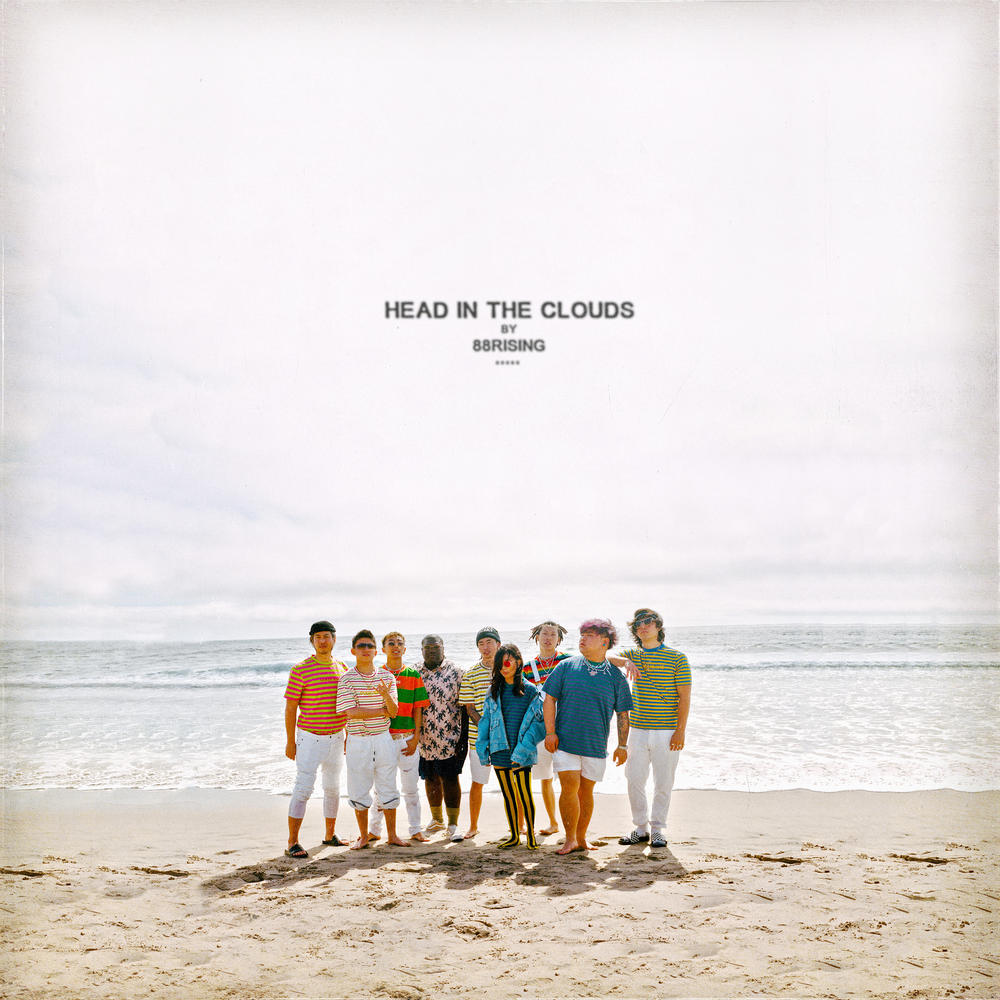
88Rising – Head In The Clouds

19 Dec

88rising is my pick for the most exciting label around right now. There’s a lot of talent in East Asia and some truly excellent music is coming out of the area. Some people have already seen some amount of crossover appeal and Head In The Clouds is a solid attempt at expanding that reach.

A good amount of the album is quite good. Most of the music with the headliners of Higher Brothers, Rich Brian and Keith Ape are quite good. “Disrespectin” is a really interesting cut with a fascinating trap / world beat, a great chorus from AUGUST 08 and excellent rapping from DZ and Maswei that mixes Chinese and English. The polylinguism is one of the coolest things about the album. Many of the artists are fully capable of smooth transitions from one language to another and it makes for quite impressive listening. Keith Ape switches both language and flow on a dime in “Japan 88”, although unfortunately the chorus and beat both drag a little too long in that song.

Unfortunately, past the main attractions, the music is largely a little weak. Some of the guests, like BlocBoy JB do nothing and I’m not into “La Cienega”. Even “Midsummer Madness” is just unlistenable due to the terribly trite chorus and beat. The rapping is solid in parts, but not solid enough to save the song and it’s actually bad in the rest.

However, much of the music is excellent. “Nothing Wrong” is solid Higher Brothers and “Lover Boy 88” is quite fun with some excellent crooning. It’s not a flawless album, but it is a very worthwhile look at some really interesting music coming from contemporary East Asia.

@murthynikhil

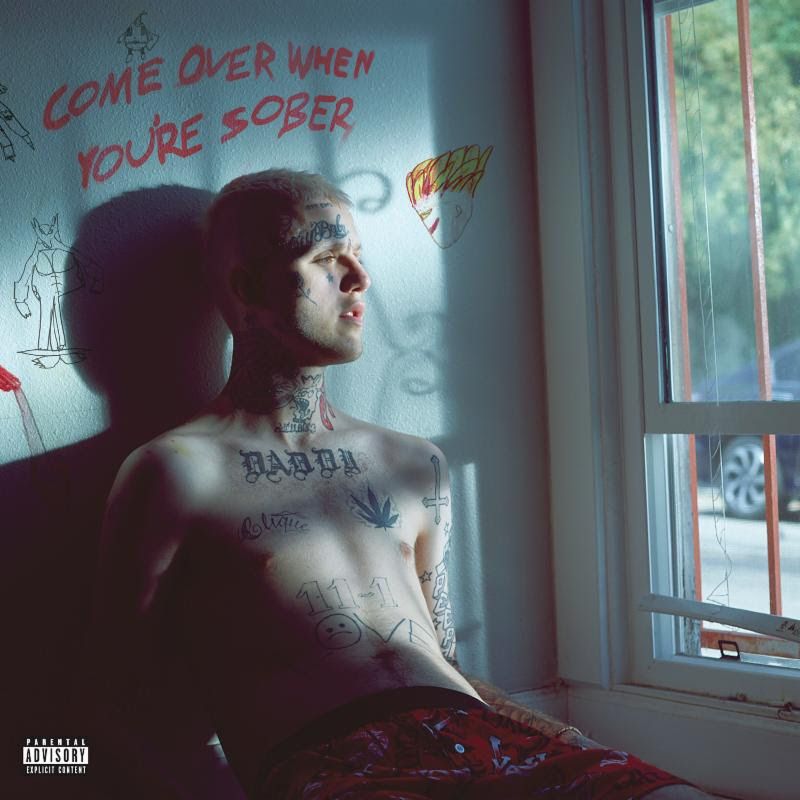
Lil Peep – Come Over When You’re Sober, Pt. 2

15 Dec

Lil Peep was the best of the emo rappers. The shape of music to come has been altered by his absence.

This posthumous album doesn’t really change or expand the legacy that Peep was able to leave behind, but it does a lot to consolidate it. Songs like “IDGAF” and “White Girl” continue the drowned, sluggish sound he broke out with and “Broken Smile” is also a standout track.

The highlight though is “Life Is Beautiful”. This might be the dark anthem for a whole generation. It is able to both be completely sincere in the titular chorus and completely honest about the pain he describes. There’s a lot more to this than the sophomoric point of finding beauty in the pain that every emo high schooler has thought original to themselves. He found the humanity in the sentiment.

This is an album that is completely open about what it feels. Lil Peep cut straight to what he was feeling and straight to your heart with the same stroke. I just wish he had more time.

@murthynikhil

Albert Hammond Jr. – Francis Trouble

14 Dec

Albert Hammond Jr. is perhaps best known for being the Strokes’ lead guitarist, and later for three decently-received solo albums. On his fourth album, Francis Trouble, Hammond Jr. knocks it out of the park with a record that rivals the his best output with Julian and the boys.

The story behind Francis Trouble is fascinating, and perhaps hints why Hammond’s fourth outing is, so far, his best. According to Rolling Stone, Francis was Hammond’s twin, but died in utero while Albert survived. In a way, Francis Trouble is a posthumous rendition of this long-lost, never-found twin’s personality: boisterous, spirited, and not bogged down by the baggage (positive and negative) that might plague his more-famous sibling.

In between the frenetic drums on “Muted Beatings”, we hear Francis’ hesitant but passionate claims of not caring about his lover (“Like awaitress, too good to forget”), if he had the chance to be around for that sort of thing. “Screamer”, with boastful snarks and heady solo, is practically a rambunctious theme song for the hell-raising Francis “Trouble” Hammond.

However, the best songs on here are – no surprise – the ones where Hammond meshes this newfound inspiration with his Strokes-esque sensibility of structure and rhythm. On album opener “DVSL”, he affects a punk rock scowl that Julian Casablancas would envy, over an almost trademarked perfect-fit between drums and guitars. The intro on “Tea for Two” even fits the famous Strokes formula: one guitar hits downstrokes, another guitar explores a melody, and the vocals form a third, complementary layer. He mixes it up enough, though: the bittersweet chorus reminds the listener of the Police, and the jazzy interludes are a true touch of genius.

But none of these songs come close to “Set to Attack”, a gem that falls squarely between jangly early Beatles and Room on Fire-era Strokes. Hammond alternates between old-timey verses, sung through what seems to be a 1940s radio broadcaster’s microphone,and an impossibly catchy chorus, with a signature, neat solo at the end.

What makes the Strokes so enduring is their ability to structure tight, upbeat music as a foil to Casablancas’ tone – sometimes remorseful, sometimes angry, always passionate. On Francis Trouble, Albert Hammond Jr. takes all of that and makes it much more, in a dramatic re-discovery of his enormous talent. 

Best songs: “Set to Attack”, “Muted Beatings”, “Tea for Two”

Arctic Monkeys – Tranquility Base Hotel & Casino

13 Dec

In many ways, the Arctic Monkeys’ sixth studio album Tranquility Base Hotel & Casino is the antithesis of their break-out debut (Whatever People Say I Am, That’s What I’m Not).

For starters, Tranquility is much slower-paced, relying heavily on dreamy piano bits and understated bass-lines, while the debut practically rewrote the book on fast-paced guitar riffs. Lyrically, Tranquility has lead singer Alex Turner making circuitous, often self-important statements, differing vastly from the sharp observations on “From the Ritz to the Rubble” or on “A Certain Romance” – and ironically becoming the same person he lambasted on “Fake Tales of San Francisco”.

And that isn’t the biggest irony. The Monkeys’ debut propelled to instant fame partly because it was precisely at the right point in music history to become one of the Internet’s first “viral” hits – but Alex Turner, in an unfortunate turn toward the geriatric, devotes many lines on Tranquility to the supposed evils of a connected world.

It isn’t all bad news, though. “Four Out of Five”, with its bass-laden brilliance, details Turner’s fascinating album concept. Apparently, the very real Tranquility Base now houses a hotel and casino on the moon, complete with a house band (Arctic Monkeys as the Martini Police) and a taqueria on the roof. There’s also a hint of a futuristic dystopia (“Since the exodus, [the moon’s] all getting gentrified”), which the music video builds upon with intrigue.

Batphone” is another stand-out track, with a subtly sexy bass and an old-school thriller vibe that perhaps makes the Monkeys great contenders to soundtrack the next Bond movie. The title song also shines through O’Malley’s bass-line, and a dollop of magical realism (“Jesus in the day spa / filling out the information form”). By the time you get to the chorus, you almost feel like you are, indeed, at the Monkeys’ hotel and casino complex.

However, the album betrays a steep decline in Turner’s lyrics. “Technological advances / Really bloody get me in the mood”, he complains on the title song, and seconds later beseeches his lady love, “Pull me in close on a crisp eve, baby / Kiss me underneath the moon’s side boob”. Yuck, on both counts. On “She Looks Like Fun”, he descends into simply yelling out non-sequiturs (“Good morning” / “Cheeseburger” / “Snowboarding”) – apparently, they are all references to his now-ex-girlfriend Taylor Bagley’s Instagram feed, but that knowledge cannot excuse these lyrics (and somehow makes them worse). On “Batphone”, he talks about using “the search engine” and the time he “got sucked into a hand-held device”. Perhaps the technological ignorance is meant to be quaint?

Apart from the lyrics, the album’s other big travesty is the criminal under-use of Matt Helders’ drums. Other than Turner’s (erstwhile) quick wit, Helders’ drumming was perhaps the key reason to be a Monkeys fan. On Tranquility, he is relegated to simple beats that a drum machine could have probably provided, while Turner takes front stage with an often-rambling persona. On the music front, the silver lining is that Nick O’Malley really outdid himself on the bass, practically carrying otherwise-unmemorable songs.

With Tranquility Base Hotel & Casino, the once-cool Arctic Monkeys have taken a worryingly avuncular turn. Hopefully, Alex and co. will be able to take the best parts of this album for a livelier seventh output. This one, though, is a dud.

Best songs: “Four Out of Five”, “Tranquility Base Hotel & Casino”, “Batphone”

The 1975 – A Brief Inquiry Into Online Relationships

9 Dec

For an institution to survive, it must adapt. IBM doesn’t sell hardware anymore, Sony makes its money through life insurance, and the grand old genre that is Britpop looked like it was heading due The 1975. This album came in with a lot of hype as the next big thing of the once big genre and I’m not sure if it has pulled it off. As an album, it skews good if not great, but some of the songs here are nothing short of magnificent and that may be enough.

Both “TOOTIMETOOTIMETOOTIME” and “Love It If We Made It” are excellent singles with great music videos that I’m sure have already seen heavy rotation. However, the rest of the album is blameless, lacking both in major defects and in memorable qualities. It’s solid music and has some decent points, but lacks any elevating factor. It’s unfortunately tame.

The singles are very solid though. They skew hard to pop, even for a band that was already on that side of the pop-rock spectrum. “TOOTIMETOOTIMETOOTIME” is catchy and infectious and “Love It If We Made It” is anthemic and relevant. Its grab-bag of current events is blazed through at a hectic pace and its recasting of the Trump tweet on Kanye deserves awards.

There’s a few other points here that stick out. I like “Give Yourself A Try” and while I find “The Man Who Married A Robot / Love Theme” terrible, it at least fits into the album. It’s dumb and self-important and pretentious but an occasional moment like this was always the price of admission for an album like this. Something like “Surrounded By Heads and Bodies” is pleasant, but lacking in ideas, and the album lets a few too many slower songs like that in near the end. This gets to the point where “I Couldn’t Be More In Love” is bland enough to be an actual misfire.

However, the album has defined a different, more eclectic direction for the genre, even if only off the back of a couple of singles, and that’s noteworthy in itself. Now it’s on everyone else to catch up.

@murthynikhil

Sheck Wes – MUDBOY

3 Dec

This is an absolute monster of an album. First of all, it goes hard. It’s actually punishing to listen to. I wouldn’t call it refreshing, but it is excellent to see an album so unwilling to compromise.

The result is something that is unquestionably unique. MUDBOY barrages you with ideas and inventions. Sheck Wes’ flow is constantly surprising and the production is endlessly clever and somehow he manages all of this genius in the most unpretentious of albums.

The other factor to this uniqueness is how much of Sheck Wes comes through on the album. It’s unquestionably him on every track. Some rappers are defined by their equivocation and by how much of their style feels like it has come from someone else. You cannot confuse a Sheck Wes song with anyone else. He even takes a moment to rap in Wolof in “Jiggy On The Shits” and there’s just so much of the real NBA in here.

On top of everything else, this is just good rap. His flow is strong, if still a little raw and, as I said before, the album just goes hard. “Mo Bamba” is a huge hit and most deservedly so. Those elongated vowels are primal in their resonance. You can’t help but respond to them and then he switches the song on you. It’s just excellent music.

This was a massively hyped debut and it delivers. This is the start of something important and you should be part of it.

@murthynikhil

Jorja Smith – Lost and Found

26 Nov

Jorja Smith’s debut is the kind that has it all. She has a strong, emotive voice, a clever R&B fusion sound and an absolute stand-out single in “Blue Lights.”

There’s a little rawness in her singing and a little too much looseness in the album as a whole, but those are minor faults and only serve to make the prospect of her follow-up all the more exciting. This isn’t a singer that you need to watch out for, this is a singer that you should listen to now.

Second Sight – The Violet Hour Tour

24 Nov

I’ve always been apprehensive of house gigs. My earliest memories of living room shows in high school have been of parents and relatives mixed in with friends, and a whole lot of “wait hang on let me start over”s. Until recently I hadn’t exactly been convinced by the most recent wave of professional house gigs put on by Indian bands looking to find an escape from the festival and pub circuits. I understand the motivation (pubs are exploitative and no one likes playing over the dinner rush, festivals are exploitative and no one wants a Saturday 3PM slot), but it seemed like more of a fad trying to stem the stagnation in the non-electronic Indie circuit. My opinions have radically changed in the past 48 hours, however, thanks to Second Sight’s The Violet Hour Tour, organised by LVNG.

Anusha Ramasubramoney and Pushkar Srivatsal are a Civil Wars-inspired duo that have put together a 45 minute acoustic set that makes the house gig concept work on a level I’ve not seen before. It’s magical, it’s captivating, and (based on my experience at their tour’s first leg in Delhi) definitely worth your time. The show was organised by LVNG, an indie-r version of Sofar Sounds. They’re young and hungry (their Delhi gig was their 43rd overall and 6th in the city), but that only works in their favour. The lack of distance between the organisation and the audience/performers made the whole process that much more authentic and less corporatised, and the limited resources they used to set up the space arguably upped their creativity. The first 15 minutes of the evening weren’t exactly convincing, of course. The Vasant Kunj apartment that served as the makeshift venue was nice enough, but the combination of me being late, sober, and a complete stranger to the mostly friends-and-family crowd meant a lot of awkward standing around and trying to think of interesting answers to the question “so how did you end up here?” Then the music started, and everything fell into place.

Andrew Sabu, the founder of LVNG, served as the singer-songwriter opening act. He’s a more-than-competent singer, with a strong voice that was underserved by his constant self-deprecating commentary on his music. I’m a fan of less-is-more guitarists, but that sort of performance requires you to really lean into and accept it for what it is, which didn’t happen. There are enough elements that hint at greatness, though, so here’s hoping that his eventual musical output matches the promise I could see. As an opening act though, it was pretty much spot on: enough to whet our appetites and set the mood for the music to come.

A short break later, and Second Sight took to the “stage” (read: two stools, a guitar and some mic stands). And then the magic happened. Second Sight normally play with drums and a bass but their absence in this gig only strengthened their performance. Melodies and rhythms were instead provided throughout the night by guitar (played by both Pushkar and Anusha alternately) and finger clicking (provided by the audience), with additional support on occasion by electric guitar stand-in Vignesh. This stripped down set-up meant that their best assets (harmonies, strong songcraft, and live performing energy) could be displayed to full effect.

Take their first song of the night, “Little Plastic Raincoats.” I first heard the song as part of Patio Unplugged’s video series, but this stripped down version worked so much better in the DIY aesthetic of the living room gig. You couldn’t help but be drawn into the story Anusha and Pushkar were trying to tell.

“Blood,” the first song they played from the Violet Hour EP (and incidentally my favourite from the list) is an even better example. The EP version is haunting enough, but taking away the strings and ambient sounds really helped to highlight the fact that the duo have substance to back the style they’re pushing. They keep talking about their Civil Wars influences, but I could (consciously or unconsciously) detect some hints of Beirut and Kings of Convenience creeping in too.

Strong writing and music is just one part of a good live performance, though; thankfully, Anusha seems to be a master at the second part, i.e. audience engagement. They owned that audience, letting us peek behind the curtain with anecdotes about the songwriting process and their influences, and infusing us with an energy that you don’t often see in live gigs. I’m still humming the little back-and-forth they had us singing for their last song, the bolero-style “La Hermoza Tristeza” (I’ll let you Google the double- entendre).

One of the best aspects of the night, ironically, were the little flubs and mistakes and sound issues that crept in. A perfectly orchestrated live show is fine enough, but often the best moments come when something goes wrong and performers have to adapt. The same held true here: every little hiccup served to highlight just how amazing it was to be so close to a performance. At one point Vignesh’s switchboard shorted, but you could still hear the twangs from his electric guitar at the back of the room. That was the moment that sold me entirely on this whole format.

It’s always gratifying to get in on the ground floor of something that you just know is going to explode and that’s what I felt at the end of the night.

Second Sight have two more nights left in their tour (one in Pune and one in Bombay), so go see them if you can still score tickets. Also buy their CD, which has some beautiful artwork, inserts, and stickers: I’m a sucker for bands that go that little extra mile with stuff like these.

– Karthik

https://www.instagram.com/lvng/
https://www.facebook.com/media.secondsight/
https://www.instagram.com/secondsightmusic/

Yves Tumor – Safe In The Hands of Love

22 Nov

Safe In The Hands of Love is the most interesting album of 2018. It’s boldly experimental and absolutely undefinable. There are parts that could be a standard R&B track and parts that are straight rap, but then there are parts that are electronic and parts that are dream pop and a lot that is just noise and the whole set bounce off each other as though Brownian.

It actually reminds me a lot of some of the newer rap coming out. It shares something of the same 90s alt-rock roots and a song like “Noid” with its story about mistrusting 911 could have conceivably fit in any of those albums. In other places though, there’s music far too experimental for even that fringe. The distortion to break up the otherwise smooth “Licking An Orchid” is excellent, but then the unexpected bass lick is as well and the whole thing plays well against the love story too.

It is an album of tremendous variety. The opening of “Lifetime” is clear dream pop and even when the vocals shift it into something harder, the production stays dreamy. The closer “Let The Lioness In You Flow Freely” however is industrial and punishing and yet still works.

There are points that don’t do as well though. While “Economy of Freedom” is an interesting sound and compelling listen, the pace of ideas is a little too slow. These stretches of slowness show up much more often than would be ideal and are the one real complaint to be had with the album.

It is an excellent album however and well worth the time and effort it asks for. There’s a lot here to reward you for them.

@murthynikhil