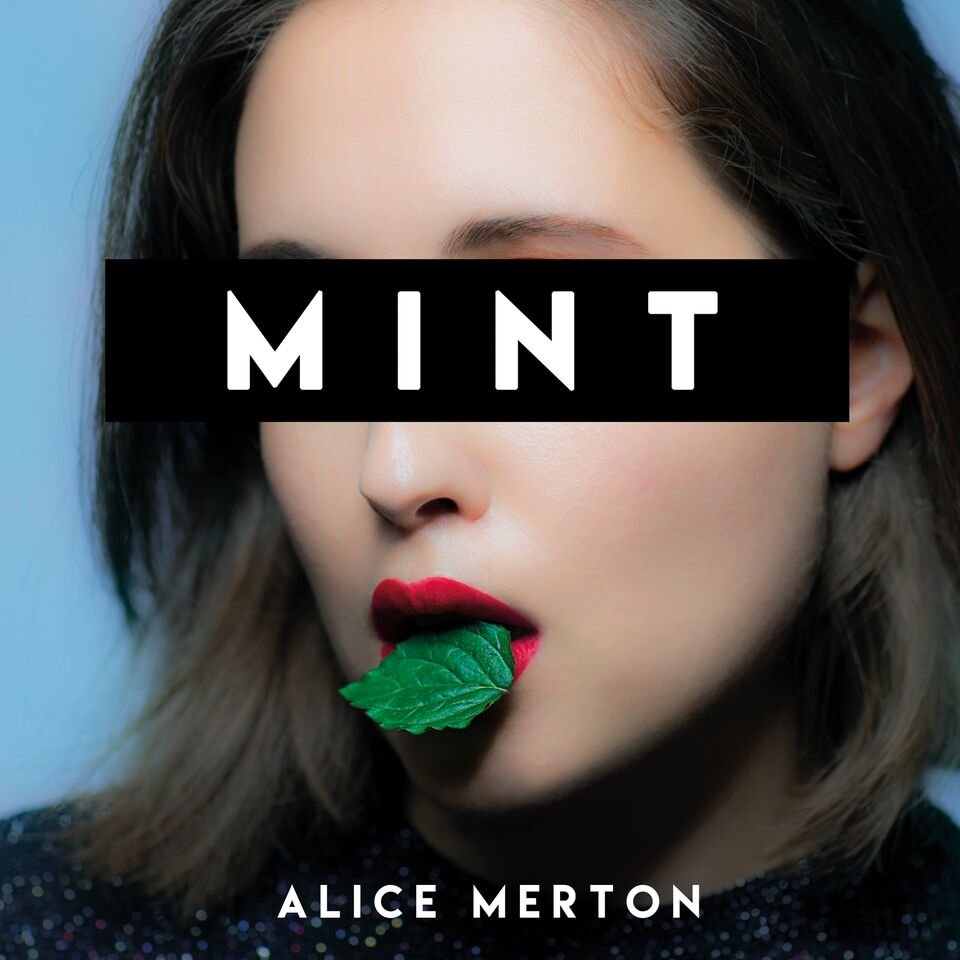
Alice Merton’s debut album is really good pop-rock. She has solid, solid grooves with an energetic bass and a highly personable voice.
The single “No Roots” is definitely where to start with this album. It’s fun, up-tempo and immediately catchy. If you’ve ever wondered what Maroon 5 would sound like if talented, this hook is the answer.
There is also a fair bit of variety in this album. “Honeymoon Heartbreak” is a slightly more upbeat Lana Del Rey and “Why So Serious” is a slightly more sober Pipettes. “Lash Out” has some great riot-grrrl energy while staying true to its pop-rock roots.
The album occasionally falls too far into basic pop, like in “Funny Business”, but both “2 Kids” and “Learn To Live” are strong without the deviations of the other standouts.
Overall, in fact, it’s fairly straightforward pop-rock and would possibly have benefited from a slight bit more innovation. It’s just that it’s also well done. This is really quite a good album.
There’s a pocket of quiet British rap that’s well worth paying attention to and Grey Area might be the best thing to come from it yet. Little Simz is a very talented rapper and she throws a varied assortment of ideas at you over the course of this album. The cartoon effects over the hard beat and strong rapping in “Offence” and the Eastern-tinged beat of “101FM” are particular standouts.
Unfortunately, I feel that this is not the album to really transcend the limitations of the subgenre. Like the contemporaneous Kate Tempest’s work, the album is very impressive to listen to in the moment but a little forgettable after. I feel it just lacks the few real moments of honesty and personal truth that would have drastically elevated it. It could even use some moments of cleverness. It’s just a little too freewheeling where it would have benefited from drilling down into a couple of points that it developed.
There’s a lot of strong music in the album though. The storytelling of “Sherbet Sunset” and the groove of “Selfish” and beat of “Pressure” are all excellent. Little Simz is already a brilliant rapper going from strength to strength and GREY Area is well worth your time.
Given the Mediterranean undercurrents to Beirut’s music, it wouldn’t come as a surprise to anyone that Zach Condon spent his pre-Beirut years backpacking around Europe, soaking in the sights and sounds of Sicily and the Balkans. Five albums, a bunch of EPs and 15 years since, those influences still burn bright in his music. Condon has a penchant for drawing a range of different soundscapes with the same set of ingredients. All of his songs sound somewhat similar on the surface but each one surprisingly tugs at a different chord. On Gallipoli, he and his brass army proudly carry on the tradition with predictable but entertaining results.
The album opens with “When I Die”, a classic track showcasing the familiar trumpet-ukulele-kick drum trifecta that’s been a staple with Beirut’s music. Then comes the title track, “Gallipoli”, the musical embodiment of a cavalry of soldiers bidding their kingdom farewell before heading to the frontlines.
That’s the beauty of Beirut. There’s always a very vivid mental picture that gets tied to each song even when there’s barely any lines sung. “On Mainau Island” is a pretty instrumental track that sees Beirut dabble with electronics, a side of him we would like to see more often. The very hypnotic “Corfu” again offers glimpses of where Beirut’s sound could head next, tastefully combining jazz melodies with an almost-tango beat.
On the whole, the album sounds a bit less rough round the edges than what Beirut fans are used to – but not in a jarring way. Experimentation outside Condon’s forte has been kept to a minimum on Gallipoli. It’s still the organ and the brass instruments that take center stage. While songs like “Corfu”, “On Mainau Island” and “We Never Lived Here” attempt to fuse the past with the future, the extent of experimentation seems frustratingly measured. Gallipoli might have met every old-time fan’s desire, but it is also a sign that Zach Condon is in urgent need of evolution. His sound is at risk of growing stale and we’re hoping we get to see a never-before-seen side of him on future releases.
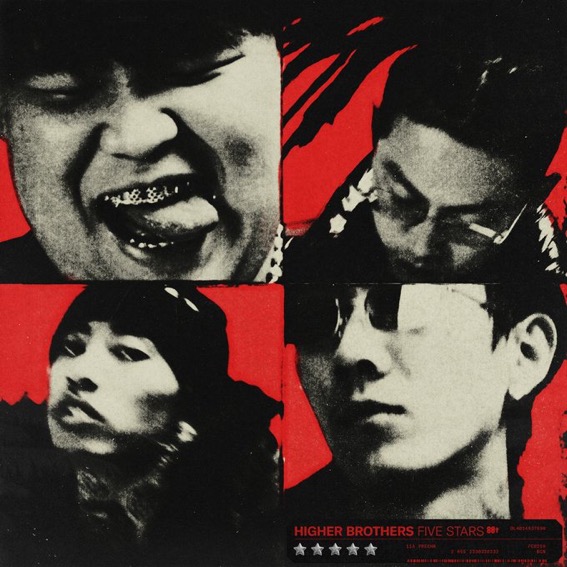
It’s an exciting period for rap and Higher Brothers are one of the most exciting things in an exciting period. This Chinese rap group is talented and raw and innovative. Songs like “Flexing So Hard” and “Sunshine” have some of the most interesting flows that I’ve ever heard. The choppiness is novel and their free-switching between languages endlessly novel. These songs and “Gong Xi Fa Cai” are them at their best.
Unfortunately, the album as a whole is a little inconsistent. “Do It Like Me” and “No More” are not particularly good. The big name guests of ScHoolboy Q and Soulja Boy just don’t do that much. Q is forgettable and Soulja Boy is anaemic. However, “16 Hours” and “Open It Up” are bangers and “One Punch Man” is quite interesting.
Whatever quibbles can be found with the album, this is simply the bleeding edge of rap and so music as a whole and if you’re at all interested in seeing where things are going then you should be listening to Higher Brothers. Also, they’re just a ton of fun to listen to.
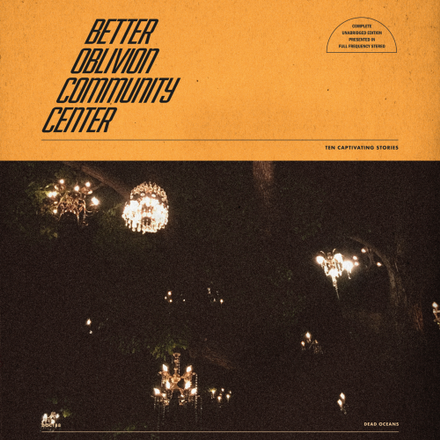
There’s a style of book that I always and incorrectly call modern writing. It’s wry, understated, cynical, honest and very, very clever. It’s also just a little bit precious. It’s Early Work by Andrew Martin but it’s not quite Rabbit, Run by John Updike. It’s also this album.
This shouldn’t be surprising. Both Phoebe Bridgers and Conor Oberst have made their names in this space of indie folk-rock and they’re both very good at it. This album is simply excellent. It’s good, solid guitar work, clean singing and incisive lyrics.
The stand-out is the wonderful “Service Road.” It’s lo-fi and minimal and beautiful. It’s a slow walk in Autumn when you’re sad. Conor Oberst’s voice is excellent here and it delivers the standout stanza of “Asking strangers to forgive him/ But he never told them what it is/ He did to them that made him feel so bad” with so much depth.
That’s far from the only highlight of the album. “Big Black Heart” is excellent with Phoebe Bridgers putting some great snarl into it and with very strong distortion at the end to cap the fuzziness of the song. “My City” is nice and low stakes and relaxing and has a fun jangle behind the verses. “Dylan Thomas” is very clever lyrically and also musically.
Better Oblivion Community Center is a gorgeous album. The singers’ voices mesh well with each other and they think in similar ways. They also have the confidence and sense to know when to let their guitar work stand alone and when to leave space for extended chords and for heavy feedback. It’s a clever, accomplished album and one that’s well worth your time.
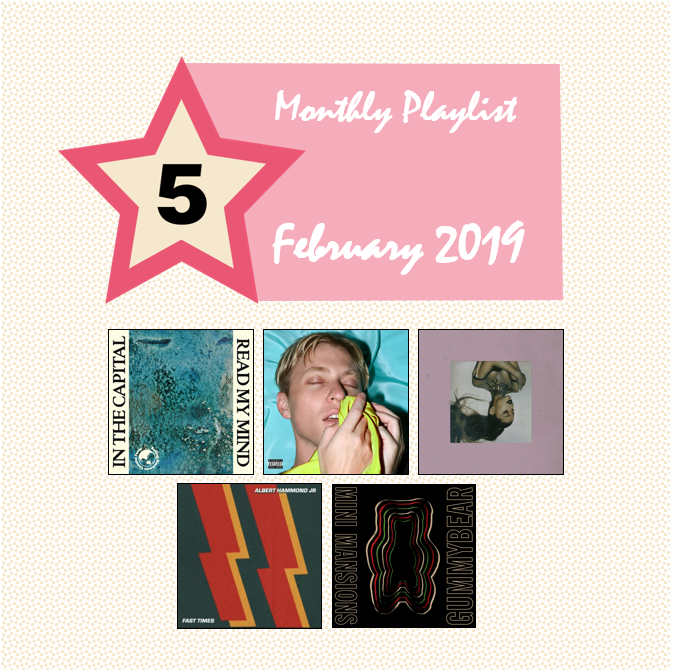
Last month, we started a new feature here at Top Five Records: a run-down of the top five songs from every month. We heard from quite a few of you that you loved it – so without further ado, here’s our list for this month!
5. “Body Chemistry” – The Drums
Don’t let the unrelenting bassline on “Body Chemistry” fool you into thinking it’s a harmless, upbeat bop. On this new track from the NYC-based indie-pop band The Drums, lead singer Jonathan Pierce provides a peak-millennial take on anxiety, romance, and the crippling self-awareness in between. “I know some good luck, and a good fuck, a nice glass of wine and some quality time is gonna make you mine,” he acknowledges, “but it’s not what I’m trying to find.” The song itself reminds us of some of the best tracks on Spoon’s last album, so that’s always a good thing as well. The Drums are set to release their fourth album in June.
4. “In the Capital” – Rolling Blackouts Coastal Fever
Melbourne-based pop-rock quintet Rolling Blackouts Coastal Fever (there’s a mouthful!) had a very well-received debut album (Hope Downs) last year. Their sound is essentially a cross between the woe-is-me melancholy of Deerhunter and the sparkling pop of Real Estate – but it’s not as odd a combination as you would think. “In the Capital”, a new track that was released earlier this week, apparently came about as lead singer Fran Keaney was swimming. “I can’t neatly describe it, but something like connection despite distance. I was thinking about transience and water and death and big cities and fishing towns and moon river,” he says. Have a listen for yourself – we think he’s got it down spot-on, actually.
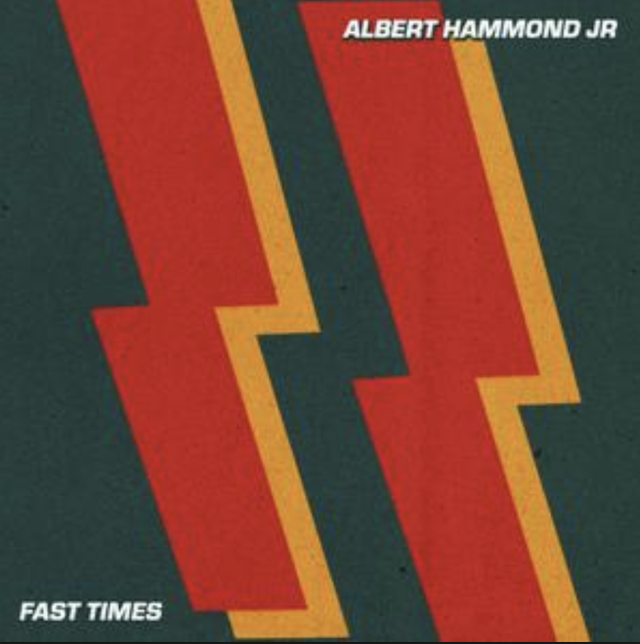
3. “Fast Times” – Albert Hammond Jr.
Albert Hammond Jr.’s third full-length album, Francis Trouble, won us over last year with its boisterous yet clean-cut vibe. With “Fast Times”, Hammond is back with a track that is equal parts nostalgic and melancholic. “I was over there, completely unaware / It was me, that you saw / How little did I know / All the things would go,” Hammond sings, wistfully reminiscing about carefree days long gone. The music is of course immediately evocative of the early 2000s-heyday of crisp, fast-paced rock, for which Hammond’s past (and present!) band, the Strokes, were a primary driver. After “Fast Times”, we’re certainly keeping an eye out for more music from Hammond.
2. “GummyBear” – Mini Mansions
Mini Mansions are an LA-based three-piece band comprising The Last Shadow Puppets’ bassist Zach Dawes, QOTSA bassist-turned-singer Michael Shuman and Tyler Parkford. If that line-up sounds like the band would make fun, bass-driven tracks that could fit well within Humbug-era Arctic Monkeys, you are exactly right. In fact, Mini Mansions are just coming off of a supporting tour on that band’s North America leg, and something great seems to have rubbed off of on them. “GummyBear” is an instantly accessible dance-rock track about a love-hate relationship (“Boy, I thought you was sweet, girl, but you’re just sugar-free”). Mini Mansions plans to release their third full-length album, Guy Walks into a Bar… in July – look for them!
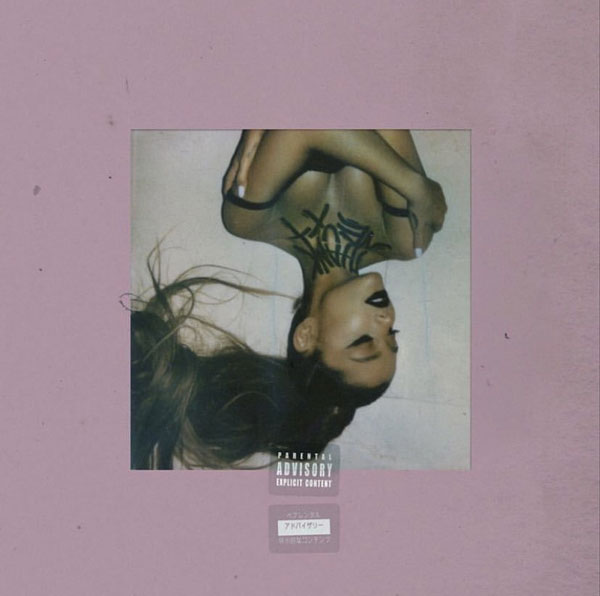
1. “NASA” – Ariana Grande
This month, Ariana Grande released thank u, next, her much-awaited follow-up to 2018’s blockbuster hit, Sweetener. New converts to Arianaworld, such as yours truly, were skeptical that a brand-new album mere months after the monstrously successful Sweetener could live up to the hype that Ariana has created for herself. However, those thoughts can be laid to rest and buried under six feet of earth, because Ariana is almost definitely the new queen of pop music.
The title track from the new album, of course, has been in constant rotation on radio stations and Spotify playlists since late last year, but there are actually a shockingly high number of other great songs on there, too. The best of these, in our opinion, is “NASA”, a space-themed ode to modern romance. “I’d rather be alone tonight / You can say ‘I love you’ through the phone tonight,” she says, an on-the-head flip of decades of popstars who’ve told us that they need to be around their men 24/7. Of course, being an Ariana track, there is also a maddeningly catchy chorus – this one involving a playful spell-out of the titular government agency. We’d be surprised if this song alone doesn’t play a part in raising the brand value of NASA.
It’s an unlikely thing to say about someone who’s already pop royalty, but thank u, next is Ariana Grande taking herself to the next level. She’s already a superstar and a household name, but this is the album that really pushes herself as maybe the most important act in pop today.
This felt clear from the moment the title track dropped. There’s a maturity to “thank u, next” that was expected at this stage of her career but is no poorer for that. This could have easily come off as cynical and trite but Ariana has an effortless sincerity here that carries the song. Her conclusion of self-love would have been cliche in less skilled hands but instead you find yourself happy for her. Pop has always played out at least in part in the E! News of the day but Ari has made it service her music and not the other way around.
Her voice is the centerpiece of the album. Powerful when it needs to be, delicate when it needs to be, it gets the showpiece here that it long deserved. Her musical instincts are likewise impeccable. “7 rings” felt like a misstep at first as repurposing “My Favorite Things” needs to be handled with care and her interpolation is unconventional. She pulls it off though and pulls off the tonal shift of flossing as well. This is a large part of what makes this album such a statement. She’s built the confidence to inject some strength and variety into her work and the result is eye-popping.
Unsurprisingly, I also really like the sexy, playful Ari you see in songs like “make up.” “NASA” is a lot of upbeat fun. It even feels a little retro and I’m always a sucker for spelling titles out like it’s the 80s again. Also, the metaphor still makes me smile. “needy” reminds me pleasantly of the last SZA album.
I like her harder stuff more though. “bloodline” has a great, assertive beat and the callousness is delicious. “bad idea” is very sharp. “break up with your girlfriend, I’m bored” is supercilious and excellent for it. This is the Ariana Grande that I am now here for.
This album is Ariana’s best yet and hopefully a blueprint for what is to come next. This album apparently only took a few weeks from alpha to omega and the result is more free-flowing, more honest and more confident than ever before. It’s time to crown a new pop queen.
This song is easily one of the best of the new year. First things first, it’s a good beat and a good flow. That opening feels like trumpets before a war and the song itself is a salvo.
What’s shocking though is the positivity. His lines on Drake giving him a watch as a gift are strong and rejecting manufactured beef are interesting in the genre famous for war being mutually beneficial. The game seems to be turning away from the aggression that once codified it and it’s a fascinating development to watch.
I also appreciate him talking about bringing your people up with you. I appreciate him sending love to the new rappers and sending love to the OGs. Generational strife almost always feels like both sides are out of touch. J. Cole stepping away from that, despite the many calling for him to kill trap or take the torch or whatever other narrative du jour is floating around, is heartening to see.
The contradictions here are interesting. He claims all love, but there are still shots at Kanye and Drake here. The lines are barely subliminals. This makes some sense as he criticizing actions like theirs, but this seems to be swallowing your beef and having it too. Also, look at the refrain “Niggas been countin’ me out / I’m countin’ my bullets, I’m loadin’ my clips / I’m writin’ down names, I’m makin’ a list / I’m checkin’ it twice and I’m gettin’ ’em hit.” It’s this aggression that makes the song though. This isn’t a call for ahimsa, it’s a militant call for love.
On that note, the hook is amazing. The drawn out “feel” with the sung notes is excellent. It lets him put a lot of emotion into very few words. That said, the words of the hook are extremely clever. I love the image from contrasting a pistol in the hand and money in the palm. Playing the drink in his hand giving him something to feel against his foot on their neck is similarly strong. Also, the hook just gives the song a swagger. It’s a boastful song for something meant to bring people together and that’s why I love it.
The corniness is a bit of a sour note though. His advice to the young rappers is painfully cliche when it comes to specifics. Also, is he really Jay-Z’s younger brother? It made sense when Kanye took that epithet in 2007, but J. Cole really feels like Jay’s grandson. He’s always made a habit of giving himself titles that I don’t feel he’s fully earned and it comes off as grasping.
This is the song that makes the case for him though. This is really strong rap and uniquely J. Cole’s. I hope we see a lot more like this from him soon.
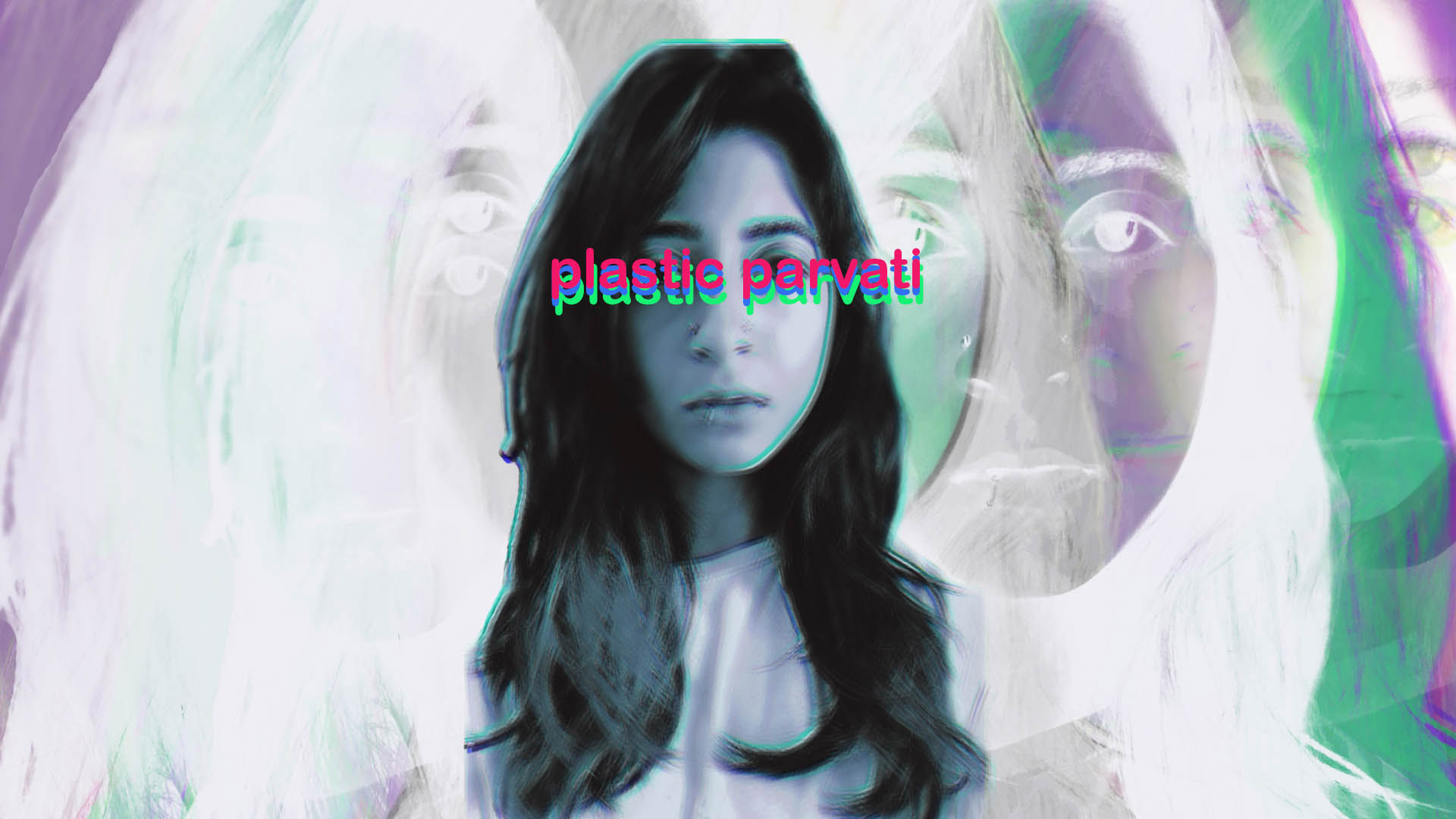
If you’ve been paying attention to the music coming out of Kolkata for the past few years, you’d have heard of Suyasha Sengupta. She was the lead singer for the Ganesh Talkies – a rare frontwoman / guitarist – and went on to form her own electronic solo act called Plastic Parvati.
Last month, the reputed Toto Awards chose Plastic Parvati as the winner of their Music award for 2019, from among a formidable list of upcoming musicians. Recently, we caught up with Suyasha for a long-ranging interview covering the prestigious award, new music, artistic influences, and so much more. Read on below:
Top Five Records: Hi Suyasha!
Suyasha Sengupta: Hey!
TFR: Thank you so much for doing this! Just to give you a little bit of an introduction – we are Top Five Records, an independent review website that’s been online for about six years now. You may not remember, but we actually featured one of your songs a long time ago.
SS: Oh, yeah, was it before the album or something?
TFR: Yeah, it was literally like in 2013.
SS: Oh yeah, had to be one of the first ones.
TFR: Yeah, we’re really big fans of you and Ganesh Talkies, so we’re really glad that we could take the time to speak. So let’s get started, from the beginning. When did you start to get interested in music?
SS: Well, I come from a very Bengali household, so there was always some kind of music on when I was growing up. The stereotype is, you know, that Bengalis always have Rabindra sangeet on somewhere in the background, and that was quite true. There was a lot of folk music, traditional Bengali music, and there was also a lot of Elvis, the Beatles, Nat King Cole and all of that. Even before I started playing music, I would say that since I grew up with music, it helped the process.
I think I was about 10 or 12
years old when I realized I wanted to start singing and writing music. I
started taking guitar lessons when I was about 14. And then of course, I
discovered Nirvana and Alice in Chains and Stone Temple Pilots – the whole
grunge scene. I think I always knew that I would pursue something in the arts,
but music was always my release, my go-to. It was a very natural process.
TFR: Right. And so, do your parents like the fact that you’re a musician?
SS:(Laughs) Well, I’ve been doing this for a while, so they’ve kind of abandoned the hope of me pursuing something else. It wasn’t very smooth in the beginning, but since I’m an only child, I played that to my advantage. For Indian parents, to let their children go into a creative field, it’s a little bit scary, because the future is always uncertain, and it’s an unstable profession. It doesn’t have the comfort of a steady 9-to-5. My parents were obviously apprehensive.
I started singing professionally
at 18; this was when I was still in school, playing a gig on the weekends,
going back to school the next day – for pocket money. They figured out that I
would pursue something in the arts, but they encouraged me to at least get a
bachelor’s degree. After graduation, they were like, “If you can manage both,
then go ahead”. I actually ended up quitting my Master’s program after a
semester and moving back to Kolkata, and that’s when I had a more serious
conversation with them. Initially, they weren’t happy but I think they’ve
gotten around to it.
TFR: Yeah, especially if you’ve always had music in your home, they would be semi-okay with the idea anyway.
SS: Yeah, and they were happy that I was doing my own thing and taking care of myself. And unlike the sex drugs and rock ‘n’ roll stereotype, she hasn’t turned up in a ditch somewhere yet (laughs).
TFR: Haha, right. So at what point did the whole Ganesh Talkies thing start, and when did you decide that you wanted to start the Plastic Parvati project on your own?
SS: Going back to the band when I was 18, we were primarily a covers band, and we used to play at this place in Kolkata called Someplace Else. The bass player, Roheet, and I eventually wanted to play our own music, from our own set of influences. One of the things we bonded over was ‘90s Bollywood. Not the music necessarily, but like a certain Govinda movie or some dance step. That’s how Ganesh Talkies started, and then the guitarist and drummer joined in. We came from different sets of influences, but the common love for – I wouldn’t say trashy – but the over-the-top Bollywood helped us.
TFR: Yeah, that ostentatious element.
SS: Exactly. Unreal, gaudy. So that’s how we started Ganesh Talkies. We focused on making our own music rather than covers. When I was in the band, I started experimented with production. I was the primary songwriter for the band, and sometimes I’d have a keyboard or drum idea in my head, but I couldn’t always explain it to them. So I was like, okay, if I could map it out on a software, then maybe they can understand.
At the same time, I also realized
that some of the stuff that I was writing was a little bit too intimate for the
band. It was just my stuff and my moods. So Plastic Parvati started off as a
passion project – and a learning project. I would use it to learn how to
produce and how to write music personally.
TFR: For sure. Earlier on, you were mentioning that Nirvana and grunge is a very big influence for you. Does that carry on to Plastic Parvati?
SS: Nirvana for sure, that’s going to have an influence on everything I do. I think grunge in general has had a huge impact too. Apart from Nirvana, I was discovering a lot of female artists – musicians, directors, poets. I stumbled upon Hole, Garbage and Bikini Kill. These women have left a deep influence on me – because of their music, I don’t feel inhibited to say how I feel with Plastic Parvati. I’ve always been attracted to the fringes, the left-of-center artists.
TFR: That actually reminds me of this VH1 show called Left-of-Center.
SS: Exactly! I remember watching Nine Inch Nails and Marilyn Manson videos, and I thought it was so cool. I’m a sucker for commercial pop too, but I really related to that. And that was the only good thing on TV around that time, and I feel privileged because they actually used to play music on TV back then. Now it’s just reality shows.
TFR: Yeah, now it’s just trash.
SS: Yeah. I don’t even own a TV anymore.
TFR: Same here. Going back to your album [Songs About Lovers, 2017], what was going on through your mind when you were putting that together?
SS: So with the album, we – by we, I mean me and my mentor Miti Adhikari [noted Kolkata-based producer] – we were putting together these snippets when the Ganesh Talkies was having an off-season period. I played him a bunch of unfinished scratches, about 20 of them, because I had all of these clips but I didn’t know what to do with it. There were some that we rejected outright and some that we picked out to work on more. That’s when the idea for the album came about. Miti is someone that I feel extremely comfortable with, so it was a very collaborative process. While I was songwriting, he gave me all of these ideas in terms of instrumentation or production. We’d worked together on Ganesh Talkies but that was as a producer; this was a more intimate process. I’d share the ideas and record the vocals at his place.
I didn’t initially plan on releasing it – it was originally for my mental health, that I could finish the project, because I was trying to tell these stories through my songs. The theme in my head was essentially a chronicle of my experiences as a woman in India, and an exploration of my sexuality.
TFR: Right. We’ve heard great things about Miti from Nischay Parekh as well, about how he was instrumental in developing his sound, too.
SS: Yeah, he’s really one of the key figures in the music that comes out of Kolkata. It’s a small city, and we’re all friends with each other.
TFR: Yeah. So I wanted to ask you about your experiences as a female Indian musician. What kind of changes would you like to see as a performer, for indie musicians to really get the recognition they deserve?
SS: It’s still a tiny bubble. For Indian musicians to get the recognition they deserve, we have to break out of the bubble. We all play gigs in the major metros or the tier-2 cities, but it’s not enough. How many people actually hear anything indie? Firstly, we need a scene which is not just, like, 10 people from Bombay; more inclusive of other people, other voices. And we need more female, trans, LGBTQ voices – moving away from the straight, upper-caste Hindu, male thing. We just need more involvement.
In fact, I was recently looking
at some of the American festivals – there’s always one or two women headliners,
but we don’t have that here. Like, last year, there was this festival on
Women’s Day, that had an all-women lineup, but it was organized by men! The
point is not to have an all-women line-up. The point is to normalize the role
of women or other communities amongst what exists now.
TFR: Exactly. They essentially didn’t do much except filter by gender.
SS: Yeah, like there’s a “genre” called “girl-band”. For other bands, there’s genres like rock, hip-hop, whatever, but for these girls, there’s a genre called “girl-band”. That doesn’t make sense! The conditioning needs to change, basically.
And another aspect is that I’m
basically in the black-hole of the country [musically]; we in Kolkata don’t
always get the push we deserve. But I love Kolkata, it’s very comfortable.
TFR: Yeah, this is what we hear from the Chennai bands, too: “No one really cares what we do in Chennai, so we just have a lot of fun by ourselves”.
SS: Exactly. If you look at the music that’s coming out of these two cities, it’s extremely different and diverse. We have to work harder, and we don’t get the kind of recognition in other cities, so we have to focus on our craft more. We have no infrastructure, just us musicians. We have to travel to Bombay or Bangalore just to play a gig.
TFR: Speaking of gigs – what’s on the radar for Plastic Parvati?
SS: The next gig I’m playing is Control Alt Delete. It’s actually my first as Plastic Parvati in Bombay. I’ve consciously stayed away from club gigs because I’ve done that extensively with Ganesh Talkies. I also want to put out some music by the end of the year, because there’s been a change in my musicality. I want to see how that works, in the context of an EP.
TFR: Nice! So do you have anything down already?
SS: I’m still writing, so it’ll take some time. I don’t like giving myself a deadline, because I feel pressured, but I have some scratches down.
TFR: Cool! So the last thing we wanted to ask you is about the Toto Award, which you won recently for Music. That’s a great achievement, congratulations! What does the award mean to you?
SS: Honestly I didn’t expect it at all! Although I’ve been playing music for a while, Plastic Parvati has just been a year of me seriously trying to do something. In terms of independent arts in India, this has been one of the groups that has been supporting artists for a long time. And the previous winners are all artists I deeply admire – it’s great to be one of them now! Toto has always been great at selecting the non-mainstream, slightly underdog artists – there’s some pressure on me now to live up to their support. It’s also encouraging to know that there’s an organization like that that appreciates artists like me. I’m hoping that it’s a message to younger girls, too: there’s people out there who do support you.
TFR: Well, that’s all the longer questions we had. We just want to do a quickfire round now, cool?
SS: Sure, yeah!
TFR: Who would be your favorite Indian artist, apart from yourself and Ganesh Talkies?
SS: Fuck. This is hard. I can’t pick one! I’ll go with Parekh & Singh, and Peter Cat (and LIFAFA and Begum).
TFR: Awesome! I guess our tastes match exactly, because the last two interviews we had were with Parekh & Singh and LIFAFA.
SS: Nice! Yeah, I feel like they’re very representative of Indian indie. They’re not trying to do like weird raga type things with Western instruments, but they are writing their amazing songs, and their sound is incredible.
TFR: It’s very desi.
SS:Desi, but perfectly balanced. Oh, I actually really like Disco Puppet as well. But that’s a personal bias! And… can I name one more? I’ll say Pulpy Shilpy [Gowri Jayakumar’s solo project]. Spoken-word, hip-hop, R&B. And she’s doing everything by herself, so I’m a deep admirer of that aspect.
TFR: Right, ties in with who you are as well. So moving on, which musician, dead or alive, would you most love to work with?
SS: Definitely Sandunes. I love everything that she does, her music, who she is as a person. Her music is very calm, thoughtful. I’m the opposite, like a hurricane – would be very interesting to see what a collaboration would be like.
TFR: Third question. What’s your drink of choice?
SS: Royal Stag, with water.
TFR: Nice. Classic. What’s one track or album on constant rotation lately?
SS: An LP that I found recently – Yellow Magic Orchestra. It’s these three Japanese dudes who made weird stuff in the ‘70s. All analog stuff.
TFR: Very left-of-center, as we were talking about. Final question – what’s been your favorite gig so far as Plastic Parvati?
SS: This is also a little difficult, all gigs are so different. I did this one REProduce session in Varanasi. We were on the roof of a hostel overlooking the Ganges, full-moon night. The crowd was an interesting mix of foreigner tourists and some locals, who were listening to non-Bollywood Indian music for probably the first time in their lives. It was super interesting, and the lineup was great, too. Fun gig.
TFR: Absolutely. So, that’s all from our side. Thank you so much for speaking with us! We’ll keep an eye out for the new EP, and it was a blast speaking with you!
SS: You, too. This was so fun.
You can listen to Plastic Parvati on SoundCloud,Spotify, and iTunes. And keep an eye out for her new music!
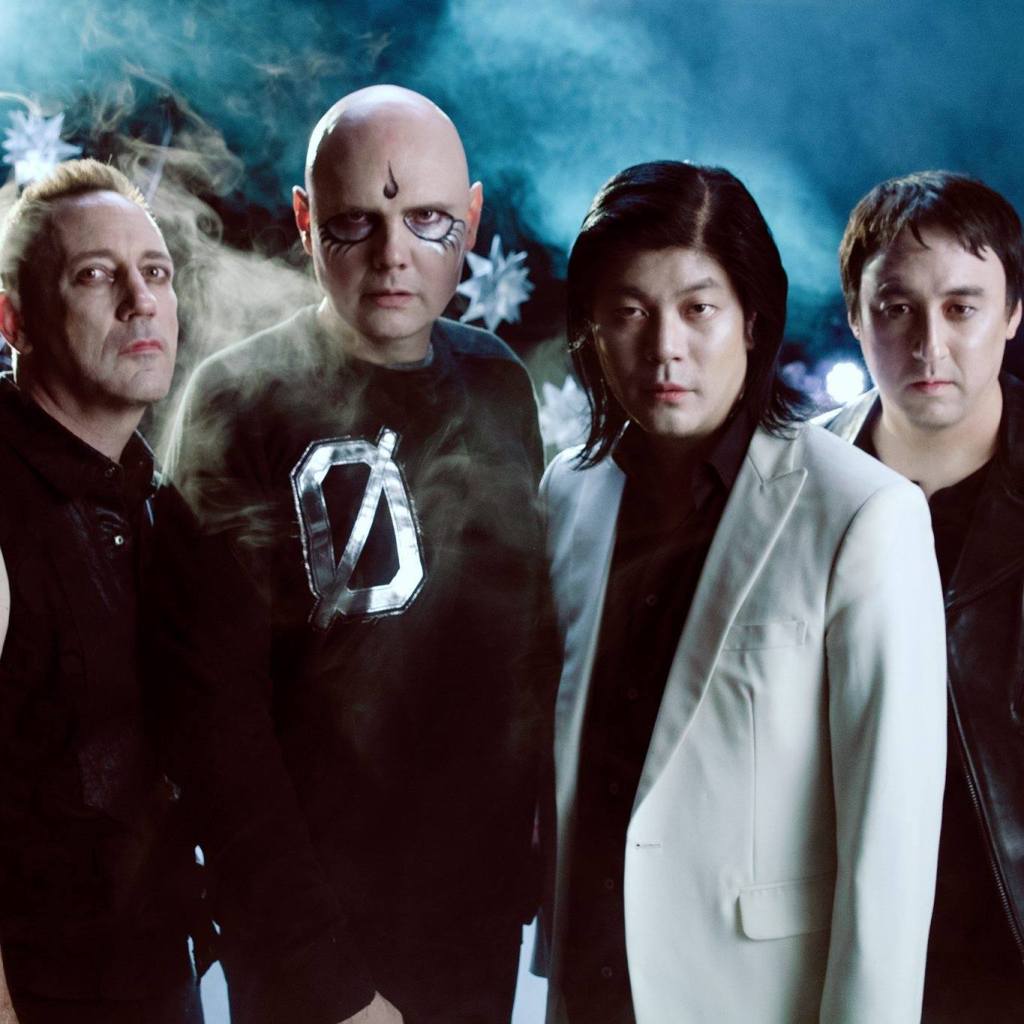
Since 2005, eternal frontman Billy Corgan has rotated through several lineups under the Smashing Pumpkins banner. Each incarnation’s musical output covered wide-ranging territory, but sadly offered mere glimpses of the classic Pumpkins sound of the original foursome. Corgan had always maintained that he wanted his band to be something more than a nostalgia act, but occasional potshots at original members D’arcy Wretzky and James Iha didn’t help reunion prospects.
Then, the unthinkable happened. In March 2016, James Iha joined Corgan on stage to perform “Mayonaise”, sending a legion of Pumpkinheads around the world into a frenzy. The Pumpkins would eventually reunite (albeit without Wretzky) for a glorious arena tour, playing a three-hour long setlist carved out of their ’90s years.
Miraculous reunion aside, the tour setlist made
abundantly clear just how deep the
band’s catalog runs. A boxset of the band’s B-sides and
outtakes (The
Aeroplane Flies High) went platinum; so
did Pisces Iscariot, a less elaborate
compilation of rarities. The Pumpkins belong to an exclusive club of bands
whose deep cuts offer as much depth and quality as their singles.
As the band and its fanbase get ready for another tour this summer, we bring to you our top five Smashing Pumpkins deep cuts. Enjoy!
5.
“Glynis”(1993)
In our opinion, “Glynis” was the stand-out track
of No Alternative, an AIDS-relief project
that boasted the who’s who of 90s alternative rock (Pavement, The Breeders,
Pumpkins). Apart from his angsty nasal whines, the Corgan of those days was a
master of the dreamy semi-whispers that perfectly complemented the blanket of
riffage underneath them. “Glynis” is a prime example of this era, with flanging
guitars and a shimmering strings section.
4.
“Set the Ray to Jerry” (1995)
This track, written during the Gish (1991) era, is widely considered by
the fanbase to be one of the band’s best. Allegedly written about bassist Wretzky’s
dad (who Corgan found to be extremely intimidating), “Set the Ray to Jerry” is
carried by a thumping drum and bass backbone, set to an emotional vocal
delivery by Corgan. Perfectly oscillating between dreamy croons and impassioned
outbursts, it is still considered to be one of Corgan’s finest vocal
performances to date. Although it failed to make the final cut of the band’s
third album Mellon Collie and the
Infinite Sadness, it was included as a bonus track on a 2012 re-issue.
Hurrah!
3.
“Stellar” (2007)
As a reunion album, Zeitgeist was not exactly what fans had been waiting for, but it certainly
had its moments. “Stellar” is a sonic journey that harks back to the Siamese Dream (1993) days when Corgan’s
guitar lines had an ethereal element to them. That vibe, locked in with drummer
Jimmy Chamberlin’s thumping fillers, makes “Stellar” one of the best tracks to
come out of the Zeitgeist era.
2.
“Meladori Magpie”(1995)
The lead up to Mellon Collie and the Infinite Sadness was a particularly
productive period for the band: to realize his vision for an elaborate double
album, Corgan was churning out demos at a brisk pace. Naturally, the period also
saw a lot of experimentation with singing styles and arrangements; a few demos are
especially notable for a bizarre carnival-themed undercurrent that accentuated the
rough concept of the album. In our opinion, the best example is “Meladori
Magpie”, originally released as a B-side to the album’s third single, “Tonight
Tonight”.
1. “Waiting” (1998)
“Waiting” was a product of the Adore sessions that took place at Sunset
Studios in late 1997. It was a trying time for the band: their touring keyboardist
died of a heroin overdose, and longtime drummer Jimmy Chamberlin was fired. Chamberlin’s
void left by Jimmy gave way to a lot of experimentation with drum machines and
other electronic elements. “Waiting” is a gloomy but surging track pulled out
of this very same bag of tricks. Surprisingly, it was left out of the original Adore tracklist, but found its way back
on a 2014 re-issue.
















 Top Five Records