There’s no question that there is now space for music that would never have earlier seen the light. Una Rosa is too Caribbean, too Latin and too individual to have been successful earlier. It’s also proof as to how lucky we are that we get music like this now.
The most interesting music here actually reminds me of Laurie Anderson more than anyone else. With tracks like “Did My Best,” Xenia Rubinos goes deep into a very experimental sound. She takes notes and just sees how far they will go. She takes this base and brings in a lot of Latin for “Si Llego” and the mixture is heady.
The centerpiece of “Don’t Put Me In Red” is far more approachable music. It’s still magnificent, her dragging through each word in the chorus is spectacular. It ends up very reminiscent of Fiona Apple’s last album both in terms of being excellent music and, much more strangely, of internalizing the white gaze too deeply in her politics. There’s a powerlessness in the lyrics that I don’t understand.
The same can be said for “Who Shot Ya” but naming Breonna Taylor holds power in itself and that power can be felt throughout the album, especially in the music. It is, after all, a bold and inventive album from a bold and inventive musician and likeable to boot.
I don’t think that I’ve ever come across a psychedelic rock album with as much in the details as HEY WHAT. There’s so much going on in every song. It’s all understated enough not to break the flow of an album more than meditative enough for you to slip in, but any part that you focus on will have little moments of brilliance right underneath the surface. This album is still water over a coral reef.
Take the magnificent “More” for instance. There’s a very good opening static that’s brought into a loop with absurd cleverness and then against this aggressive fuzziness, the vocals play an excellent softness for contrast and the whole thing has top-tier base work behind it. There’s just so much going on. All of the pieces are wonderful in themselves, and yet the whole is so much more than the sum of the parts.
For all of that intelligence, the album never feels purely cerebral. There’s a percussion in “The Price You Pay” that pulsates through the back of my neck and then grows and grows. There’s just uninhibited, raw emotion in “White Horses” that sticks with you. This album really does it all.
Even if you don’t have the bandwidth to spare to focus through this album, it’s an excellent listen. Like all good psychedelic rock, it forms a fantastic soundtrack to anything that you might be doing. If you do pay attention though, it’s nothing short of magnificent and you owe it to yourself to find some time to give it the attention it’s due.
Jazz certainly loves outer space. Something about the vast expanse of the night sky above speaks to jazz musicians from John Coltrane to Sun Ra and now to Nala Sinephro.
Over 8 songs, Nala Sinephro and her band construct detailed soundscapes. Interstellar space is never as exciting as when jazz musicians get to draw it in. It’s mostly very gentle music. From the opener “Space 1,” there’s a lot of ambient music in here. It has some wonderful tones that are given complete room to breathe and ripples that evoke nature.
It goes into some very classic gentle jazz in “Space 2.” It’s never smooth, but it’s relaxing. “Space 4” works the same way. There’s very good sax work in both. It’s the aggressive saxophone and fuzz in “Space 6” that’s really interesting though. This is a very relaxing album, but there’s more than enough challenge in here to keep you engaged.
This is really an album that does it all and does it well. It’s a relaxing soundscape that you can submerge yourself and an excellent space jazz album and, of course above all, absolutely wonderful music.
With Certified Lover Boy, I feel like looking back a bit. Drake has always loved his nostalgia anyway. I remember with Take Care, there was a lot to get excited about. “Headlines” was the single and was necessary as that, but it’s not what I look back at. Even “HYFR’s” excited Weezy isn’t quite it. I don’t think anyone really expected how deep he would delve into the sounds of “Marvin’s Room” and “Take Care.” I don’t think we every really saw how normal they would sound.
The thing is that Drake is now a superstar. In fact, he’s now the superstar. His singing in his raps perfectly meets a world where pop has moved toward hip-hop. His corniness is now virality. Everyone’s a Toronto sadboy in this online world.
Also, there’s no one left on the throne. Kanye’s self-destruction is probably far from complete, but it has done its work. Taylor is off in the wilderness. I haven’t heard from Kendrick or Beyoncé in forever. The new kids are all still too new, too formless and too unaccomplished. Pop royalty is relentless and Drake’s the only person to have kept pace.
It’s very much in character that he does so with an album that’s almost unambiguous trash. When the most exciting thing in your album is a Kawhi cameo, there’s just not much that one can say. It’s just a lot of music that I’m happier not hearing and very little that I’m happy having heard. Something like “In The Bible” is irritating. There’s so much music here that’s just bad.
There’s stuff that could be decent if you squint. He’s got his sound down in “Girls Want Girls” even if the chorus is mind-numbingly stupid. “Fountains” is decent Afrobeats, if nothing special. You have to credit Drake with always keeping up with new trends in rap and he’s always passable at them, but they are never his highlights. He’s got solid beats in “7am On Bridle Path” and “The Remorse” but can’t put a good rap in front of either of them.
“7am On Bridle Path” is the album’s failures in a microcosm. He’s clearly the biggest person in music right now, but it’s such a poor look to stunt about it when he got it by default. It’s a diss track in a supremely uninteresting beef. This is the same guy who ended a feud by going on LeBron’s YouTube channel. There was once a time when he bodied Meek Mill but now he just can’t play it straight. Stick to the topic and go hard. Also, “wheel me to defeat like we rollerbladin'” is unacceptable. In a fair world, that would be sufficient for defeat in itself.
At least “7am On Bridle Path” has some decent music to make up for that though. The lyrical failures elsewhere don’t even have that going for them. “They’re doing something that’s not Pepsi” in “Papi’s Home”? The only thing they should be doing is writing Drake better lyrics because he needs all the help he can get. He gets off one solid line in the whole album with “Look, don’t invite me over if you throw another pity party” and the imitation line has a good sneer, but then he throws away all that goodwill and more by trying to rhyme “disability” with “this ability”. That’s just unacceptable.
It’s very often just impossible to understand. He opens a song with being jealous of a handbag. “You Only Live Twice” makes you regret living the once. I don’t know who told him and Future that “Way 2 Sexy” was a good idea but that person was wrong. Forget all of Drake’s tired Bernie Madoff comparisons, if that person was paid for that advice, that’s the greatest scam the music industry will ever see.
He finds himself on “F***ing Fans,” but that’s the kind of track that should be solid filler on a decent album, not one of the best tracks on the whole project. Certified Lover Boy is so bad that any moment of decent music is an oasis in the desert though. He preceded this album with “POPSTAR” and “Toosie Slide,” both of which were some of the best music that he’s ever made. He will follow this soon enough with more great singles, which has anyway always been his greatest strength, but for now, there is nothing in his past, present or future enough to make this album worth listening to.
There’s a lot that can be said about Kanye and his music and there’s a lot that has been said about both. Donda marks a new epithet though and one that seemed inconceivable before; unnecessary. This is just a fundamentally inessential album. For an artist who has long thrived in controversy and in polarization, it’s just jarring to have something that’s honestly uninteresting.
It’s especially strange as this was the situation was ripe for another career-defining album. The last time that Kanye really got away from himself, the result was MBDTF, possibly the greatest album of the millenium. Instead, we get possibly the strangest part of Donda, that it has nothing animating it.
There’s a voice interlude in “Donda” that features Kanye’s mother talking and it’s one of the strongest moments of the album. It’s a very rare bit of meaning in an album that sorely needs some. 808s had the heartbreak, MBDTF had the controversy, Yeezus had the industrial and even JiK had the gospel. Donda has no new ground to break and no larger meaning either.
Is it for his mother? For Kim? For his excess? For the controversy? Donda has space for all of them and addresses none of them.
When “Lord I Need You” plays, you feel like you’re in the middle of an album for Kim and it feels like that would be a great album, but it ultimately doesn’t work because the rest of the album does nothing to support the song. It’s just too incoherent. “Come To Life” continues the thought, but it’s impossible to keep a thread in this album.
Similarly, the story of Larry Hoover in “Jesus Lord” is a strong part of a strong song. There’s impact in hearing him call out the capitalist society. It also goes well with Jay Electon’s verse in the song, which works really well. It brings in the right religious tone and the right fearlessness in calling out DC and Downing Street. However, there’s just once again no support. This is not the conscious album it could have been.
For all of this though, he’s at least partially redeemed by the quality of music. There are missteps and there is bloat, most egregiously in the second cuts of some songs, but elsewhere too. It’s not a finished album. However, he can still make music. Donda is more willing to meld and play with his different styles than anything before. His later career seems to have him using other artists for more and more of his sound and he’s a master at putting people together, like in “Hurricane” and with Baby Keem in “Praise God.”
Even here though, he can’t help but let us down a bit. There’s no true single in this album and even one highlight would have made a tremendous difference. There’s not much that’s very weak, but I don’t think there’s a single song here that’s going to go into a Kanye rotation. “Blood on the Leaves” is what made Yeezus work and “Selah” and “Yikes” did so much for their albums and there’s nothing here quite on the level of even the latter two. “Junya” is a banger, but it’s doesn’t deliver much beyond that. There’s lots and lots of solid music here, but nothing that really goes beyond that.
That’s really all that can be said about the album. There’s lots of decent music. Kanye is still Kanye after all. It’s just that there’s nothing really interesting in the album and very little of substance and it’s time to start wondering if the same is true for the man.
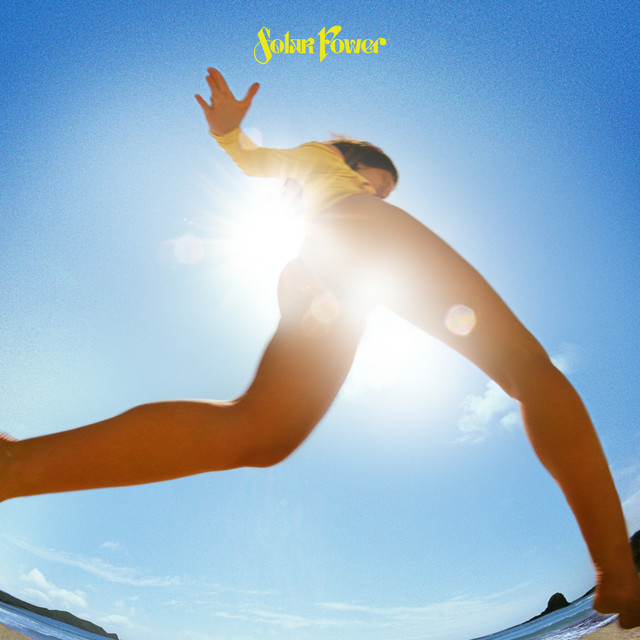
New Zealand singer-songwriter Lorde (real name Ella Yelich-O’Connor) is back with third studio album Solar Power. The album follows the four-year intervals set by her monumental debut album Pure Heroine in 2013 – which featured chart-busting single “Royals” – and then her synth-led party album Melodrama in 2017. A notoriously camera-shy and anti-pop star individual, Lorde uses the time away to recharge, mostly in her native country; both times, she’s come back with a starkly different sound.
In 2017, we were blown away by Melodrama – the pulsing electro-pop sounds, a greater diversity in her vocals, and the surprising focus on the piano throughout the party songs. Melodrama was a concept album, documenting the whirlwind of emotions that goes through the mind of a young twentysomething at a house party. The album was in direct contrast to Pure Heroine which focused on a can’t-be-bothered teenaged rebellion against popularity, trends and, yes, house parties. Between Melodrama and Pure Heroine, Lorde’s range was astounding, and the future looked rosy for fans of the reclusive young artist.
Lorde has said that each of the two albums is based on the different vices she was hooked on at the time – alcohol for the first (despite the seeming reference to heroin) and MDMA for the second. With Solar Power, the vice of choice was apparently weed (she attempted it to be LSD but that didn’t quite work out). While musical history has no shortage of iconic albums that were invigorated by marijuana, the results are mixed for Solar Power.
It’s is not a bad album by any stretch. The title track, which we’ve previously covered, is a pleasant summery track with a catchy outro hook (“That solar-olar-olar power / Solar-olar-olar power”) and lyrics about unhooking oneself from the outside world (“And I throw my cellular device in the water / Can you reach me? No, you can’t”). “Dominoes” is a stripped down track that’s pretty much her voice and a plucky guitar – in a way, it’s the closest match to her Pure Heroine discography. Her voice is bright and shiny when it’s unencumbered by too much production.
“Fallen Fruit” is beautiful with its folksy vibe and guitar strums that are part Renaissance Faire (think Greensleeves) and part Laurel Canyon singing circle. “Mood Ring”, the third and final single from the album, is a light, airy track that apparently critiques another peak California culture – wellness culture. “I’m tryna get well from the inside / Plants and celebrity news, all the vitamins I consume / Let’s fly somewherе eastern, they’ll havе what I need,” is perfectly fair satire of new-age Californian hippies. (We must note that the satire is a little hypocritical when Lorde herself just came off from what seems like a four-year recovery-from-fame break on New Zealand beaches, but we’ll save that for another day.)
Speaking of California, “California” is an interesting take compared to the thousands of other odes to the Golden State; this one’s a break-up song. California – or specifically, Hollywood – proved to be the fertile ground for this album, but Lorde’s had enough of the place and who she is there. “Goodbye to all the bottles, all the models / Bye to the clouds in thе skies that all hold no rain,” she sings in the lilting pre-chorus, “Don’t want that California love”. It’s a nice, pretty song that somehow evokes Tarantino’s Once Upon a Time in Hollywood (which is also how the song starts) while rejecting the pop cultural idea of California as a success metric.
That’s the thing though – they’re all nice, pretty songs. And if that’s what you were looking for, then Solar Power is the Lorde album for you. “Big Star” is a sweet yet ultimately featureless track. Ditto with “Leader of a New Regime” – it’s pretty tough to latch onto a detail in the song’s 2 ½ minute run. Second single “Stoned at the Nail Salon” is yet another gentle track that features Lorde on multi-level harmonies with herself and also a truly telling lyric: “’Cause all the music you loved at sixteen you’ll grow out of”.
And really, that’s the whole story: Lorde grew out of who we thought she was. She isn’t the rebellious young teenager who made Pure Heroine, and not even the partying early-twentysomething who made Melodrama. She’s a blissed-out, media-phobic young woman with a strong love for folksy guitar music, and that’s what’s reflected in Solar Power. Props to her for putting out exact reflections of her life stages; unfortunately, for us, this one just didn’t stick all the way through.
Rating: 6.5/10
Best songs: “Solar Power”, “California”, “Dominoes”
Worst songs: “The Man with the Axe”, “Big Star”, “Leader of a New Regime”
Happier Than Ever is the highly-anticipated sophomore album from superstar Gen Z singer-songwriter Billie Eilish. Her debut album, cryptically entitled WHEN WE ALL FALL ASLEEP, WHERE DO WE GO? (2019), rocketed her to worldwide fame and success – highlights include sweeping the Grammys, creating a flagship AppleTV+ documentary, and meeting her idol Justin Bieber (after all, she was until recently just a teenager). Happier Than Ever is in many ways a snapshot of Billie at this moment, that encapsulates all of those things that happened to her (and for that matter, to any huge pop star) in the past few years of her crazy life. Is it as earth-shattering to the world of popular music as her debut was? No. But it does have its moments, and points to a new direction for the still-growing artist.
Although Happier Than Ever released on July 30th, 2021, Billie’s been leading up to the album for exactly one year prior. Moreover, she’s been carefully laying down the foundational tone of Happier Than Ever – especially the confident and, well, happier persona – through the numerous singles that she released in that one year timeframe. These singles kicked off on July 30th, 2020, with the light and tender “my future” – which we mentioned at the time was a rare light-pop departure from the usually gothic Billie. In November 2020, she released “Therefore I Am”, which further highlighted her bloom out of the larger-than-life teenage years into a life where she has more control. “Your Power” (April 2021), “Lost Cause” (June 2021) and “NDA” (July 2021) spoke to adult themes like betrayal, power dynamics, growing out of substandard teen relationships and more.
Outside of this admirable singles-driven chunk, the album has other great tracks too. We’ve already spoken about “Oxytocin”, a heady electropop song that grips you from the first second. “OverHeated” is in the same vein, a sultry and intoxicating track that plays like the soundtrack to every bad romantic decision you’ve ever made (“Stop being flirty / it’s kinda working,” she says with a laugh). Another stand-out track is “Billie Bossa Nova”, which as the name suggests is jer pitch-perfect take of the seductive genre of bossa nova. It’s not just her musical knowledge that is growing; Billie is a woman now and not a teen any longer. “I’m not sentimental, but there’s somethin’ ’bout the way you look tonight, mm / Makes me wanna take a picture, make a movie with you that we’d have to hide,” she croons on this track.
And a note on the suggestive lyrics here in general. On this album, they actually sound like they’re really her words, in contrast to the vaguely edgy lyrics from her debut album (e.g. “bruises on both my knees for you”) – which often came across as performative given that she was a teenager still living in her childhood bedroom.
On the eight or nine tracks that we haven’t called out above, there are definitely a few winning moments – for example, the reverberating pre-chorus break-down on “GOLDWING” – but on the whole, we’d be hard-pressed to remember too much of them. Billie is still discovering her voice as an adult, as a woman, and as a teen pop idol who’s experimenting with other genres, and hopefully the proportion of “forgettable” tracks will be much fewer on future albums.
Billi’s debut album clicked so well with so many millions of people for a few reasons. First – the truly unique beats courtesy her genius producer slash brother Finneas O’Connell; second – her creepy yet old-timey vocals; third – the multimedia experience that she offered for each hit track, including a typically creepy music video. All of these parts are still there where it counts, and she’s also added a few things to her arsenal, such as an authenticity to her lyrics that only comes with more grown-up experiences and life choices. Happier Than Ever is a fine addition to her discography, but she definitely has room to grow.
Rating: 7.5/10
Best tracks: “Oxytocin”, “Therefore I Am”, “Billie Bossa Nova”
There are some really interesting pieces in Yellow. The chorus of “Third Eye” is a very interesting progression. The haunting in “Spectre” is also very well done. Unfortunately though, the whole doesn’t add up to anything quite so interesting itself. The genre-spanning music here has a lot going for it. There’s plenty of technical skill and some really clever moments, but there’s just not enough to grab attention or really reward it.
“Yellow,” for instance, would fit well on an Erykah Badu album, but not as one of the stronger cuts. The voice is a little weaker than it should be and the music doesn’t do enough. Overall, it’s just not interesting enough. It fades too easily into the background. It’s also not helped by the bog-standard spirituality either. The Hinduism in particular feels like a shallow reading.
Yellow still ends up a pretty decent album though. As it turns out, good jazz is good jazz and this is definitely good jazz.
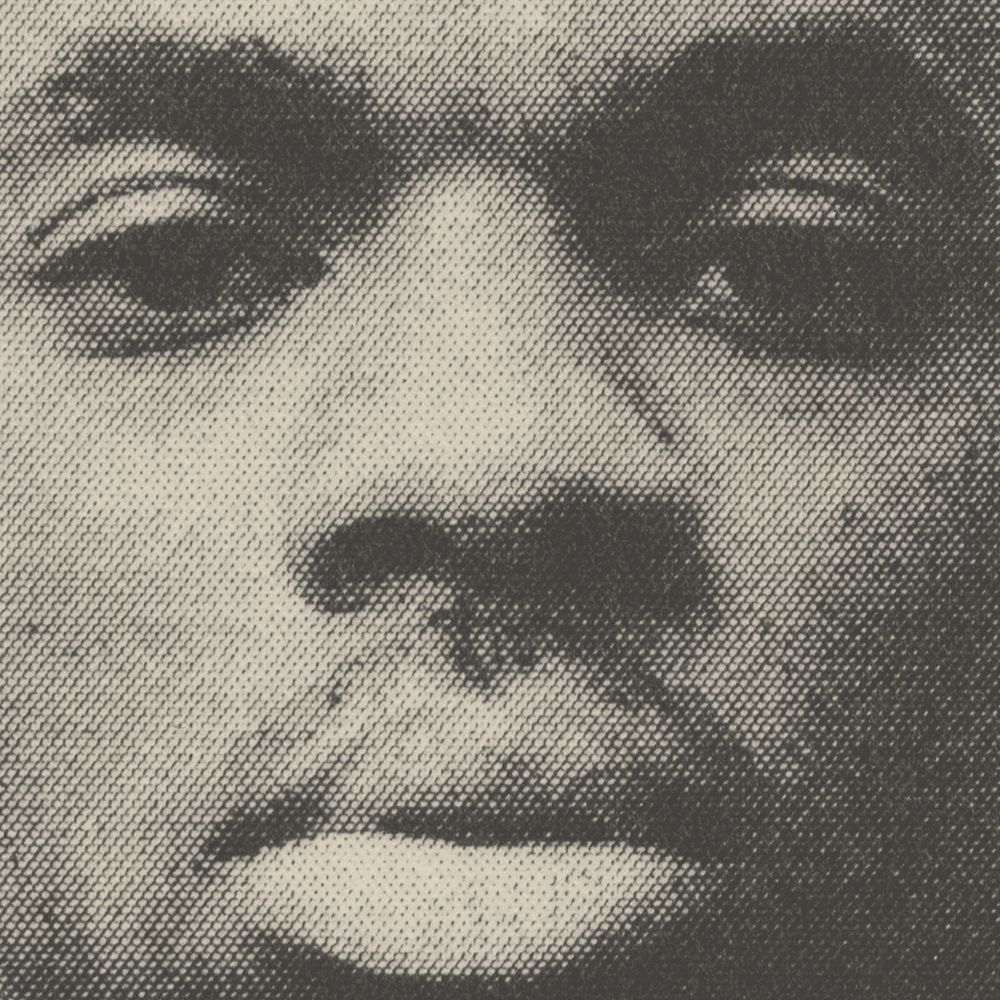
Vince Staples has always felt like the most straightforward person in rap. No matter how honest someone may come across in a song, we only fool ourselves when we think we know the person behind the music. Nevertheless, it just feels like Vince Staples makes fewer concessions to marketing, to a persona than anyone else out there. It comes through in things like putting out a 22-minute album with no weak spots instead of the bloated albums built to top streaming charts that are now de rigeur. It comes through in how much this album just lets him rap.
The thing about letting Vince rap is that he is very good at just rapping. You can see it in “THE SHINING” or “SUNDOWN TOWN” or “TAKING TRIPS” and you can really see it in cuts like “MHM” and “LIL FADE.” His flow and his control are nothing short of superb and are enough to carry an album in themselves.
It’s true that Vince Staples maybe takes that a little too far. I would have liked some more variety or a couple of particularly inspired cuts. There’s nothing here that is less than excellent, but there is also nothing here that truly transcends.
Sometimes though, you can do without the egg in your beer. It’s just such a pleasure to hear Vince rap. Any album that gives you more of that is more than good enough.
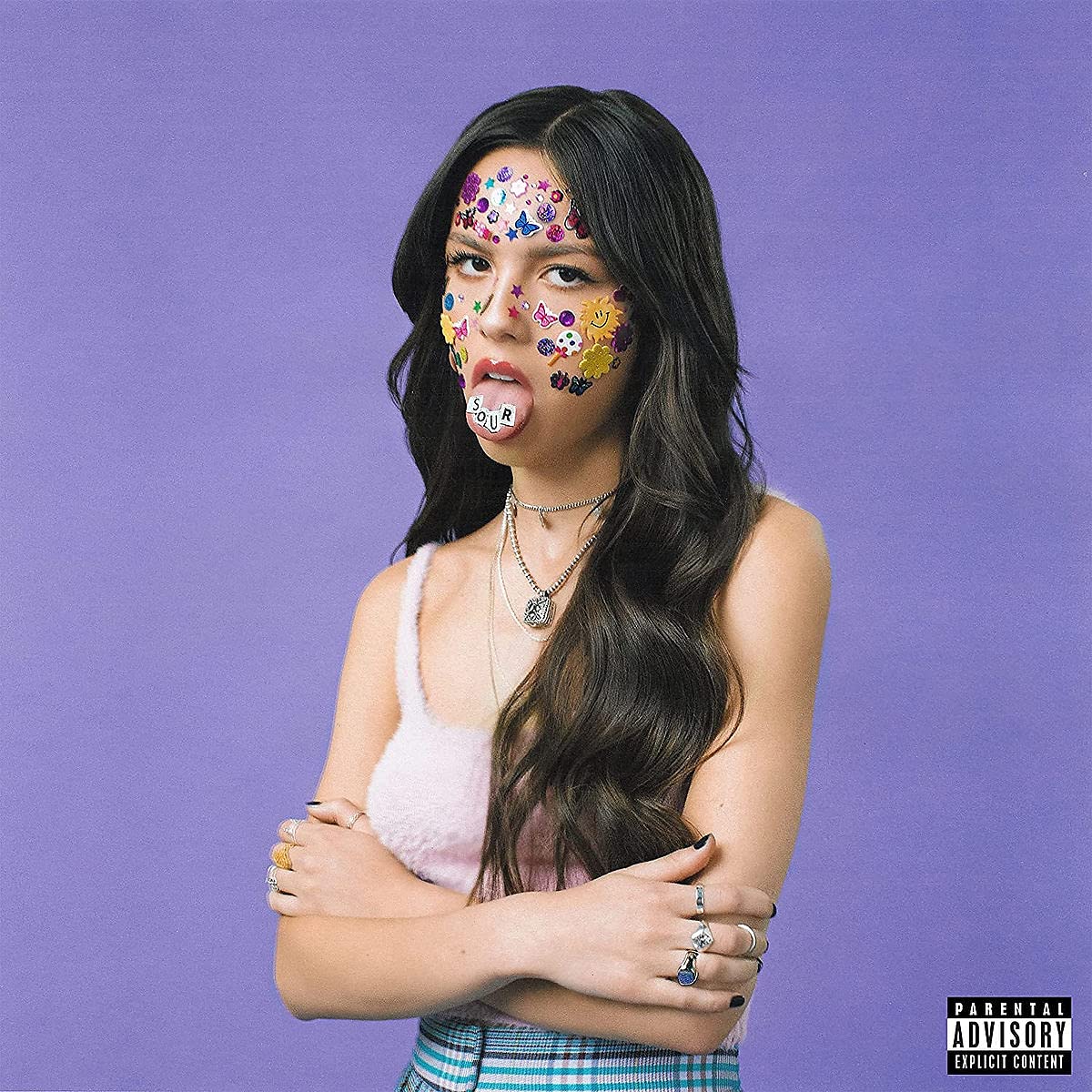
If you haven’t heard of Olivia Rodrigo yet, we hate to break it to you but you are living under a musical rock. The singer-songwriter – not even out of her teens yet – is comparable in her pop culture heft to other voices-of-the-generation; think Britney, Miley and so on; so powerful, in fact, that she recently received a highly-covered White House invite. After a break-out year of songs permeating every corner of TikTok, Rodrigo has finally released her much-awaited debut album SOUR – and happily enough, it lives up to the hype.
At its essence, SOUR is a break-up album – but don’t let the cliché fool you. Where Olivia excels is in capturing every shade of the period after a young person’s break-up, from the heartbreak to the misery to the angst.
Her famous single, the one that put Olivia on the map, is the chilling “drivers license” (all caps and no punctuation, as is the wont of Gen Z). There is very rarely a song that’s catchy, well-written, truly heartfelt and universally beloved; and no song in recent times has come as close as “drivers license”. The song essentially follows Olivia’s train of thought after getting her driver’s license. Her initial motivation in wanting to drive to her now-ex’s house; imagining what the ex must be doing while she’s aimlessly driving around; and finally to her sad-schmuck jaunt around suburbs imagining a parallel-universe life with him. The backstory behind the song, and who the guy was, is the subject of many a gossip rag page, so we won’t bore you with the details here. What really sells the song is Olivia’s tenor – moving from warbly near-tears to straight-up misery at a forever-lost love. Of course, she’s young and probably won’t remember this heartbreak in as much detail ten years hence; but for a moment, the listener is transported to the dramatic, emotional turmoil of their late teens.
But it’s not all misery after the break-up. The pop-punk banger “good 4 u” is Olivia at her most sneery with some great burns (“And good for you, I guess that you’ve been workin’ on yourself / I guess that therapist I found for you, she really helped”) and an insanely catchy 90s-style chorus. However, she’s still hurting behind the sneer (“Well, good for you, you look happy and healthy, not me / If you ever cared to ask”). It’s perhaps a perfect pop song in its endless relatability. The softer “deja vu”, with hints of Lorde-style vocal stylings – cleverly claims the upper hand in the bitter break-up. “She thinks it’s special but it’s all reused / That was our place, I found it first / I made the jokes you tell to her when she’s with you,” she croons, and you can’t help but be on her side. The piano-driven “happier” sees Rodrigo at her most jealous and insecure: “But she’s so sweet, she’s so pretty / Does she mean you forgot about me?”
Beyond the core material around the break-up, there are several other great tracks; for example the would-be teenage anthem that is “brutal”. We’ve already spoken about this track back when the album first came out, but “brutal” is essentially a teenager’s look at the world. The hard-hitting riffs are straight out of a 90s teen movie where the young lass or lad slams the door on the parents’ faces and plots an escape to a nearby rock venue (yes, we’re channeling Freaky Friday on this one). The lyrics are somewhere between a rant session and a diary entry, with Rodrigo listing out various things that she’s not good at (making friends, parallel parking – see: “drivers license”).
Overall, the subject matter is undoubtedly a little limited, but it’s content that really speaks to her generation. Moreover, her voice is quite undeniably powerful, with an ability to switch between sugar-sweet and angst on the flip of a coin. Plus, her Disney Channel experience ensures that she has the connections – and commercial wit – to keep churning out hits and make it far in the industry. SOUR is a great start, and we’d be curious what the sophomore album would like – assuming there’s not another break-up to write about.
Rating: 7/10
Best tracks: “drivers license”, “brutal”, “good 4 u”