There’s a lot to like about The 7th Hand. The music is immaculate. There is obscene skill behind the whole thing. There are moments of transcendence. For all of its strengths though, it is just short enough of challenge to mire the whole album.
It oscillates quite sharply between pleasant and aggressive throughout and in the opener “Emanation” you have some very energetic sax work followed by a relaxing piano solo. They both end up flat however. The sax starts strong and is played very well, but it lacks challenge and ends up going nowhere you wanted to visit. The piano solo is a little off-kilter but needed to be fully askew. It’s the same story in “Lift.” There’s a lot of sound and fury, but it’s ends up signifying nothing.
Sometimes, the album takes a turn more towards the pleasant, such as in “Fugitive Ritual, Selah” and it does it well. It may have done better with stronger focus on that side, but that does nothing to help the lack of challenge.
The 7th Hand has moments though. The opening of “Witness” evokes a deep, verdant, arboreal scene and thread some ominousness through it to great effect. These moments just are not enough to lift an album that can never quite escape falling flat.
Charli XCX knows that pop music isn’t about reinventing the wheel. In the age of social media ubiquity and its accompanying cult of authenticity, she doesn’t just play with the deja vu quality of pop music, but leans into it fully— a master of the art of making chart-friendly bops. In Charli’s hands, veering into radio-friendly territory is anything but conventional.
Charli is no stranger to pop music. She is a vocal fan of Britney Spears and the Spice Girls, and her smash hits “Boom Clap”, “I Love It” with Icona Pop, and Iggy Azalea’s “Fancy” dominated the 2010s. As a bankable songwriter, she has also penned some of the most indelible earworms sung by other singers like Selena Gomez, Camilla Cabello, and Blondie among others. Pushing against the constraints of being a Hyperpop singer – a genre she pioneered – Crash sees her return to form in a slick pop music vein.
Playing with the decidedly mass market image of the pop diva, Charli revitalizes mainstream pop through Crash. Anointed the queen of “the future of pop,” Charli slyly challenges this legacy with references to older pop music and audaciously sampling some of the most recognizable hits of the past twenty years. The album is informed by the illusion of the singularity of the major label pop star, all by herself at the very top. Charli hurtles into self-aware pop, with a sonic palette ranging from the ’80s, 2000s and 2010s. The result is an instant classic pop album.
Crash is bangers from the outset, clocking in at a little over half an hour, and opens with the slow, rhythmic adrenaline injection of the title track. The warm, synthy, and ‘80s inspired “New Shapes” featuring Christine and the Queens, and Caroline Polachek (formerly of Chairlift fame) may as well be a tongue-in-cheek kiss off to Hyperpop, if only for the time being. “Constant Repeat” is an arena-sized dance floor scorcher. Its title alludes to the behavior of someone obsessed with a person the way one would be with a song. “You could have had a bad girl by your side,” sings the iconoclast who has proven that she can play the pop game with finesse. “Good Ones” has an intro resembling Eurythmics’ “Sweet Dreams (Are Made of This)” and embodies a catchy ’80s revival sound of the 2000s that Charli grew up on.
Thematically, Crash spans a broad swathe, ranging from aesthetic odes to the witchy, from the occult to David Cronenberg’s risqué, critically-acclaimed movie of the same name. There is also a full circle aspect to Crash having an association with cars: many of her past songs have been about cars, such as “Vroom Vroom”, “White Mercedes” and the unreleased fan favorite “Taxi”.
Charli’s songwriting presents the pop staple of love and romance in all their different dimensions. Through the tracklist, she regularly interplays between provocative songs and softer, more ballad-like tunes. “Move Me” is a ballad with the tempo of a Justin Timberlake & Timba joint with some delicious R&B “oohs”. It is followed by the effortlessly sultry “Baby”, designed to make one do something between dancing and stripping. An unexpected guitar makes a startling appearance and contrasts beautifully with the melodious staccato of Charli’s occasionally manipulated voice at the end of the Kate Bush-by-way-of-New Order anthem “Lightning”.
Charli’s gift of using decade-defining sounds from synths to the scant use of autotuned vocal creates a sound all her own and totally new in the XCX world. For example, the posturing of a pop star in all its manufactured mass appeal goes one step further when Charli sings the chorus of “Beg For You” in a manner that’s a perfect mondegreen of the song she’s sampling from (“Cry For Me” by September). This track in particular (featuring our favorite Rina Sawayama) has all the best elements of Britpop aided by Charli’s touch: a nostalgic disc scratch, Jamie XX-like bass, the sampled breakbeat and melody of Milk Inc.’s “Don’t Cry”, and a duet about heartache that is irresistible to avoid dancing to. “Used To Know Me” takes the recognizably ‘90s club sound of “Show Me Love” and transforms it into a Britney-esque danceable bubble-gum pop bop.
In 2020, Charli released the raw, vulnerable how i’m feeling now – an album that closely involved Charli’s fans (or Angels, as they’re known across the internet), including features in in her music videos. In comparison, the contrast to her new era as a main pop girl baddie couldn’t be more extreme. With its carefully manufactured mystery and allure, this album is nothing short of an enormous pivot.
Pop stars are part of a larger commercial music machinery: cogs in collaborative efforts from record labels to songwriters, singers, and producers. In contrast, Charli is known for her collaborations with other musicians and producers as much as for her signature glitchy sound. Long resistant to the singularity of the pop star, Charli’s new album dives headlong into the illusory concept of the lone pop star while serving the very finest pop music out there. Crash shows a departure for a musician who refuses to be boxed into a genre at the top of her game making timeless catchy pop.
MOTOMAMI is the greatest reggaeton album ever made. Rosalía was already a superstar and yet she has found a way to be larger still, and even more impressively, to do so on her own terms. MOTOMAMI does not fall cleanly into any box, but instead draws from apparently every influence that Rosalía can bring to the table and the result is dizzying.
This shows up well in the fun “CANDY.” She brings great emotion and fascinating sounds from a range uncompromising in its scope and makes the song fun to boot. She is every bit as fun in “CHICKEN TERIYAKI.” The music is clever, lively and so very individual.
For all of that though, she is still capable of “HENTAI,” a slower indie rock cut. She does it well, even if I prefer the reggaeton and her versatility is stunning. This is what allows for the standout “LA FAMA,” not only the best track on the album, but also The Weeknd as good as he has ever been, but somehow in Spanish.
MOTOMAMI is everything you could ask for and yet does not have a single fragment of pandering from Rosalía. This is her album entirely and we are all the better for it.
PAINLESS is an imperious album. It’s effortless in its ability to capture. you. Many of the other great albums of the present work with intricate details. PAINLESS just finds the right grooves, adds the right textures and is rightly confident in their ability to keep you captivated. Yanya then adds to this with insistent and undeniable storytelling that runs as a dark whisper underneath the shimmering dream pop.
In something like the standout “L/R”, the narrative both powerful and sparse. “Sometimes it feels like you’re so violent, autopilot” is a strong line for the chorus and contrasts very satisfyingly with the languor of the music.
Similarly “anotherlife” is buoyant, dreamy and resonant and then it will absolutely lacerate you the moment you let it in. “try” is very compelling and very relaxing music and Yanya’s voice is perfectly restrained and sublimely emotive.
PAINLESS is a consistently cohesive album. There’s nothing here that detracts from the vision or compromises the quality and both are unparalleled.
Big Thief has always been a band for whom I’ve had more respect than liking and there have been plenty of albums where I’ve had neither one. This is the first album of theirs that I really enjoy. It is somehow both deeper and more detailed than their previous work. It’s more intelligent and a little off-kilter as in the spectacular “Simulation Swarm.”
More enjoyably though, it’s also much more fun than their earlier work. The two hands clapping in “Time Escaping” is hilarious and on just the right side of camp and the song itself is nothing short of excellent. The country twangs that never move too far into the background of “Spud Infinity” are similarly just funny.
With this humor and humanity, they are more poetic than their usual and more resonant as well. This is really good music with none of the remoteness that often plagued their earlier albums. In fact, it’s hard to think of any real flaw to hold against the album at all.
I certainly didn’t expect such a relaxed Saba on Few Good Things. I’m used to a rapper more caught up in the throes of emotion. Here, we see him stretch out a little. He broadens his musical range as a result. “If I Had A Dollar” has him channel Kendrick and “Soldier” brings in something of an Outkast feel. He does well enough with both of them and with the album as a whole. There’s nothing here with much heft, but also nothing here that misses the mark.
Where CARE FOR ME was passionate and heartfelt, Few Good Things is much more muted. Saba is talented enough to make solid music nonetheless, but the album still ends up unfocused and unmemorable.
Laurel Hell will cut you if you let it. It’s a quiet album and that just makes the cuts deeper still. “Working for the Knife” is painfully sharp and very resonant. It’s great indie rock and pairs clever, evocative rock with clever, evocative lyrics. Her storytelling is top-notch throughout and unmatched in its subtlety. There’s something persistently elusive in the story of “Should’ve Been Me.”
Her music also doesn’t particularly worry about being noticed. The details are often stunning though. She tries sounds that are just a little off-kilter and puts a lot of care into some very small pieces. It’s unfortunate then there are also broad swathes of music that just don’t do anything particularly interesting and not all that much that truly transcends into the magnificent. However, there is still a lot that is quite good and some parts so clever they cannot help but linger.
FKA Twigs has made a habit of going from strength to strength over her career, a fact made even more incredible by how much she adds with each iteration and how strong she started in the first place. A mixtape like CAPRISONGS is naturally not going to be her strongest or most consistent work, but it is a space for her to stretch out and experiment a bit and it’s delightful for that.
To start with, she brings Afrobeats into the mix. “papi bones” is a lot of fun and has a lot of infectious energy to it reminiscent of Rihanna in her peak Barbados phase. However, there’s lots of innovation even in the more straight-edged pop. She brings in a fascinating high pitch for “minds of men” that elevates the track from merely good pop to something memorable. Similarly, while “ride the dragon” does have a slightly cliche flute and name tag, it’s mostly very intriguing music.
CAPRISONGS is also just good at being good music. “oh my love” is an excellent track and the chorus is a lot of fun. It is “tears in the club” though that is the real standout. Her collaboration with The Weeknd is a true superstar single. Both of the singers are absolutely at the top of their powers and they work so well with each other.
It’s far from a perfect album. The interstitials alone do more than enough to keep it from that. However, it is a lot of very good, very interesting music. FKA Twigs is always doing something new and always doing it very well and it’s a pleasure to try to keep up.
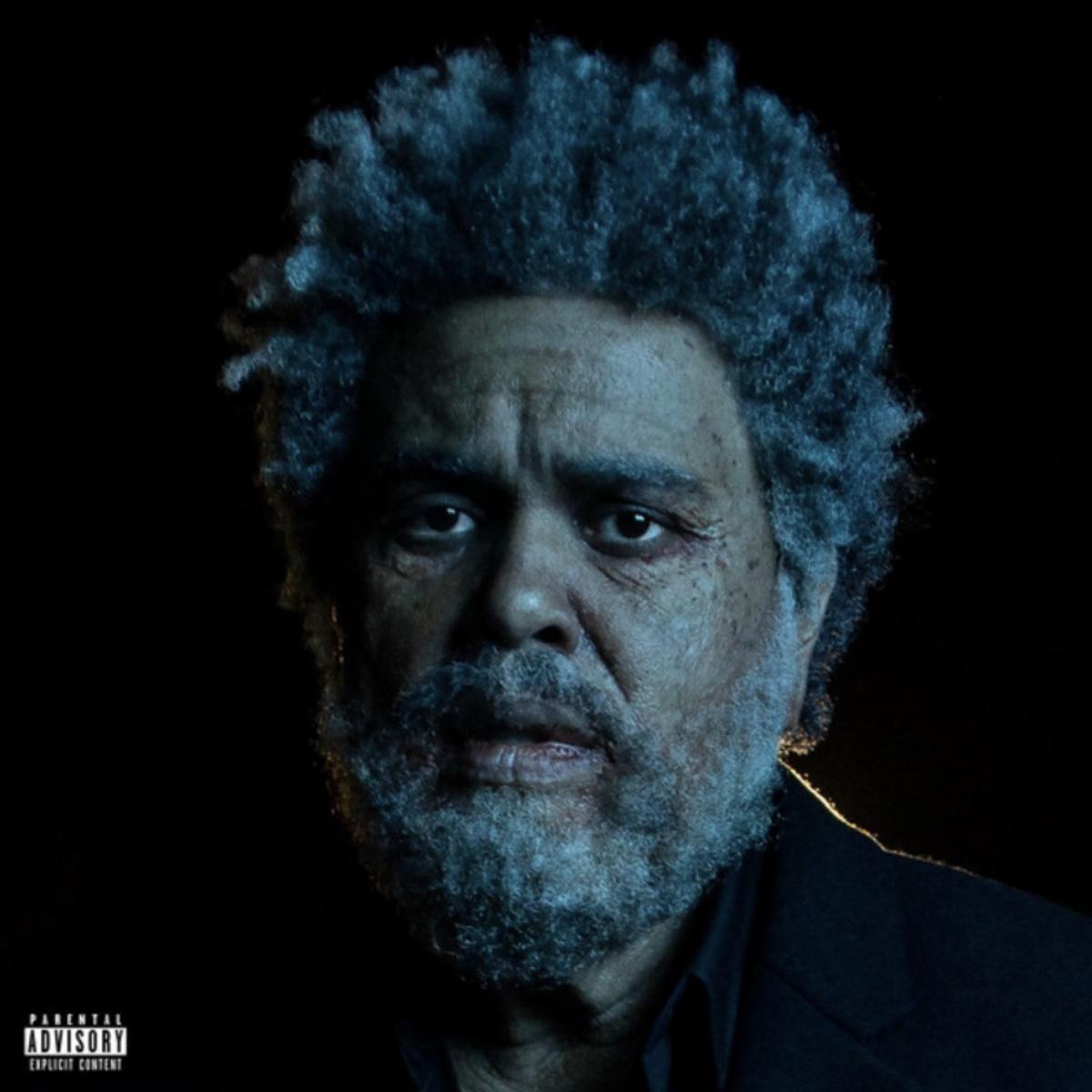
Superstardom was always a strange fit for The Weeknd, but Dawn FM is him conceding all the best parts of his music for it. Trading R&B for disco-pop isn’t necessarily a bad thing and he gets some good music out of it but the result is his weakest album yet.
The style works well for things like the extended and extremely danceable “Take My Breath.” It’s absolutely top-tier synth-pop and Abel gets to use his voice to its full effect in it. Similarly, “Best Friend” is a very good song and an excellent showcase for just how well The Weeknd can sing.
Going disco has highlights, but substituting it for the previous R&B really hurts something like “Less Than Zero” which ends up simply boring and bland. He’s also lost a lot of his edge here. He glories far less in self-destruction now that he’s won a Kids Choice Award.
Even something like the still quite good “Is There Someone Else” doesn’t carry the emotion that he once brought to bear. There’s no bite to this album. He’s much less scary and less debauched than he once was. I like what Wayne does in “I Heard You’re Married” and Abel has moments in there too, but it has replaced his razor blades with safety scissors. Also, while I love Jim Carrey, the interludes are the kind of bad poetry I expect at amateur singalongs.
The strangest thing is that The Weeknd has always been an artist defined by singles and not albums and this album has no single for me to really come back to. Dawn FM does come together in a way that none of his previous albums ever really came close to doing but that doesn’t do enough without the musical peaks that he once had. There used to be gold with the dross. Dawn FM is instead a pretty consistent bronze.
Some albums are more than ready to just come out punching. If I Can’t Have Love, I Want Power rocks hard and unapologetically. Trent Reznor and Atticus Ross do stellar production work, giving the whole album a strong edge, but it’s really in the emotion that Halsey herself brings to the table that makes the project so strong.
At it’s best, in songs like the magnificent “I am not a woman, i’m a god,” the music is maximal and anthemic. “I am not a woman, I’m a god / I am not a martyr, I ‘m a problem / I am not a legend, I’m a fraud / So keep your heart ’cause I already got one” is a good, strong, feminist chorus for a good, strong, feminist song.
“Girl is a gun” has a lot of the same strengths, but is fun and sexy to boot. “In The Lighthouse” has Halsey punch out a chorus over an absolutely filthy riff. It’s very grunge and very clever.
This is unfortunately balanced by a lot of filler though. “Darling” is forgettable, “You asked for this” has nothing interesting in it and some music that grates. “honey” is fine, but predictable and I want to get to the more interesting songs.
Additionally, it often falls into triteness. The surprisingly Foo Fighters cut “Easier Than Lying” is quite a good song, but the lyrics fall more into trite than truthful and that hurts it. “Whispers” features a fascinating flow and has a nice gear shift in it, but the clever music is once again undercut by the uninspired lyrics.
That there are flaws is undeniable, but when the music gets going, it more than overcomes any weaknesses. “I am not a woman, i’m a god” is a sublime achievement and the kind of song that defines an artist. If I Can’t Have Love, I Want Power is unafraid to just rock and the result is nothing short of stellar.