The Weeknd: Beauty Behind The Madness

6 Nov

Beauty Behind The Madness is the Weeknd striking out for more mainstream success. The is the end of the path that his Ariana Grande collaboration “Love Me Harder” started. This is still a Weeknd album and still has some interesting stuff, but feels something of a miss.

He had a specific emotion that he was emblematic of. The Trilogy is the feeling of walking home at night while knowing your relationship died at birth. His lyrics and his singular voice both pushed the theme to the point where the music became shorthand for the emotion. This has shades of that, and shades of a more mature look at it, in this album but it has missteps and diversions enough to distract from that core. This is not a bad album, but it is hard not to feel a little let down. “Shameless” and “The Hills” are where his music was always headed, both lyrically and musically and “Can’t Feel My Face”, while new ground for The Weeknd, is indisputably a great pop tune, but “Dark Times” for instance is just lazy tripe.

It’s hard to know who to recommend this album to. Weeknd fans will find some stuff to fall into and so will people looking for off-beat pop, but anyone looking for more than a serviceable new album is bound to feel disappointed.

– @murthynikhil

The Gloaming live in Philadelphia, 11/10/2015

14 Oct

Traditional Irish is probably not a genre of music that I am very well acquainted with. Far from it, in fact – it’s a style of music that I’d honestly never heard before. But then, last weekend, I had the opportunity to go for such a concert, and given my propensity to explore newer styles and genres, I decided to make full use of it.

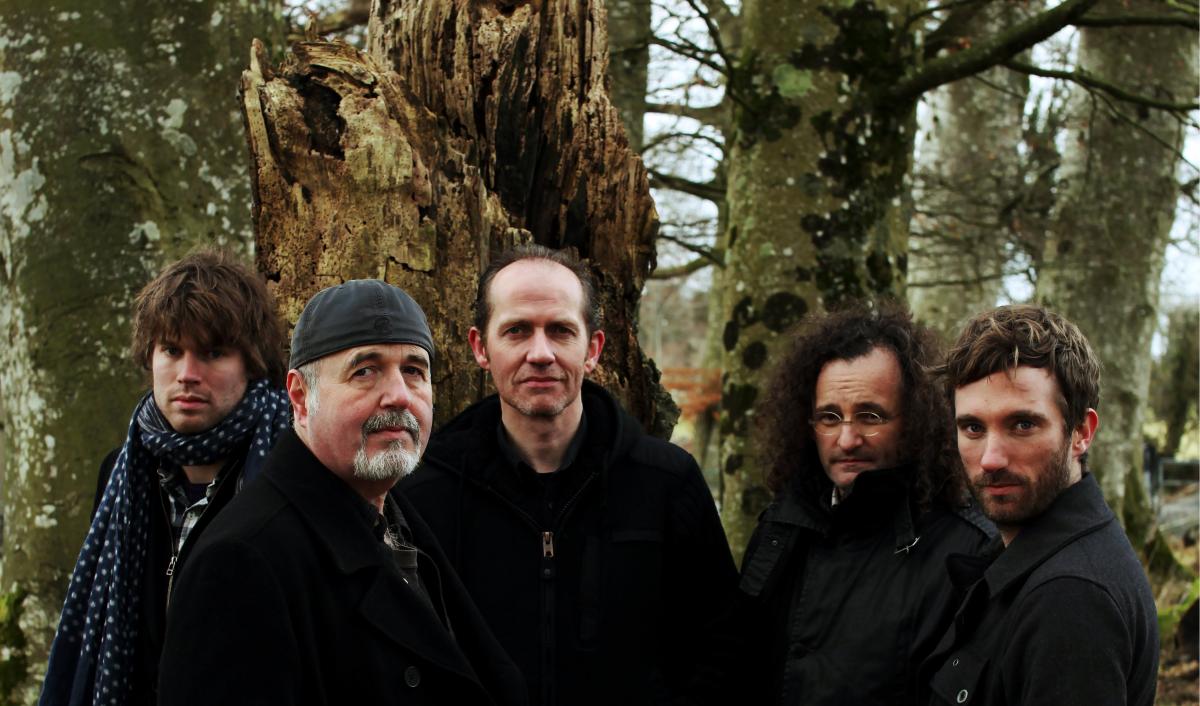
The Gloaming was formed in 2011 by an eclectic group of musicians who having already established themselves in their individuals careers, had decided to experiment with stretching the limits of traditional Irish music and presenting it to a wider audience. They are a five-man ensemble comprising of fiddle master Martin Hayes, guitarist Dennis Cahill, singer Iarla Ó , Lionáird, viola/hardanger innovator Caoimhin Ó Raghallaigh and New York pianist Thomas Bartlett.

The-Gloaming-Fergal-Ward-83

As I mentioned, I am a complete stranger to traditional Irish music, but the manner in which they  melded  Irish tunes into a rather contemporary arrangement was indeed commendable. The vocalist was a master of the classical sean-nós a-cappella song style, and his powerful, soaring vocals blended beautifully with the viola, the fiddle and the piano. Their lyrics, often haunting and emotionally charged, are drawn from old Irish literature and folklore. Hayes’ and Ó Raghallaigh’s mastery with the strings made for some delightful improvisations while Bartlett’s impassioned piano performance meant that he got so absorbed in his playing, that he managed to break the foot pedal twice in a frenzied bout of foot-stomping. The consummate ease with which he managed to repair it, during the performance was worthy of admiration as well.

The concert was definitely an ear-opener to a style of music that I had never been exposed to before.

Here’s a glimpse into their rich melodic oeuvre. 


–Subhayan Mukerjee

Speedy Ortiz: Foil Deer

31 Aug

Foil Deer is an impressive step forward for an already impressive band. Their lyricism, always unparalleled, seems stronger than ever as especially seen in the posturing of “Raising the Skate” and storytelling of “The Graduates”. Complemented by the noisy, aggressive melodies underlying the lyrics, their entire album has a density of ideas that are rarely seen and are a pleasure, if an intense one, to listen to. This album exemplifies what has always seemed to be the Speedy Ortiz promise; well-crafted and intelligent indie rock.

– @murthynikhil

Snoop Dogg: Bush

12 Aug


Snoop Dogg is as much of an institution as an artist. He’s been everywhere, knows everyone and now even does everything with what is legitimately a funk and R&B album, Bush. Sadly, as with much of his recent work, this quality is not quite all that it could be, but it is a very pleasant listen with some stand-out moments.

First of all, the music video for “So Many Pros” is excellent in all the right ways. Snoop Dogg has always been about personality as much as music and that is really what allows him to carry this video off. The simple density of imagery in that video is astounding. The song itself is also very good, continuing the trend of R&B/funk rap that seems to be making itself known.

Additionally, “Edibles”, “I’m Ya Dogg” and even “California Roll” make great work of their guest stars. Kendrick Lamar puts on a clinic in the latter, if a slightly antiseptic one, and while T.I. is quite overshadowed by Snoop’s inimitable laid back flow in the former, the song is wonderful. The album as a whole runs slightly dry after these brief spikes, but is never unpleasant to listen to. It’s only real fault is in the lack of an edge to the whole.

– @murthynikhil

Earl Sweatshirt: I Don’t Like Shit, I Don’t Go Outside

12 Jun

I_Don't_Like_Shit,_I_Don't_Go_Outside_An_Album_by_Earl_Sweatshirt

Earl Sweatshirt is busy making his own music. I Don’t Like Shit, I Don’t Go Outside is dark, honest and minimal in a way that is almost anti-commercial. It is also much harder than any of its peers. With his last album, Doris, he was already far in his own lane. Now, he has set up home there.

This is a confessional of an album. The stark beats perfectly frame his tales of depression and make his paranoia and pain even more jagged. He cuts through it with struts, going from “Focused on my chatter, ain’t as frantic as my thoughts/Lately I’ve been panicking a lot/Feeling like I’m stranded in a mob, scrambling for Xanax out the canister to pop” to “Fishy niggas stick to eating off of hooks/Say you eating, but we see you getting cooked, nigga” in the excellent “Grief” and from “And I’m low and I’m peakin/It’s cold in the deep end” to the anthemic “Ain’t no bitch in my DNA” in “DNA”, but the core is dark. It takes a lot from the artist to bare himself like this, and the fact that most don’t dare makes this all the more powerful.

I Don’t Like Shit, I Don’t Go Outside requires work from its listener but this is a person laid bare, and a person who doesn’t require effort is a person not worth listening to. This album is definitely worth listening to.

– @murthynikhil

Young Thug: Barter 6

4 Jun

This would be a unique album by any standard, but dropping The Barter 6 into the modern rap scene is almost iconoclastic. Young Thug does draw his fair share from Lil Wayne’s well, but his sound is very immediately distinct.

This album in particular does a masterful job of presenting what exactly that sound can be. His singing and rapping meld into each other smoothly, aided in part by his borderline unintelligible flow. There is just an awareness of sound here that is exceptional. His voice harmonizes with the beat enough to groove you in and then chops it to jolt you back up. While he lacks the awareness that normally comes with rap (despite a Mike Brown line in OD, this is not by any means a political album) this makes for a very new sound.

This is not a flawless album, some of the guest spots in particular leave a lot to be desired, but this is still a very good album and a very intriguing one as well. I can’t promise that you will like it, but you should definitely at least try it.

–@murthynikhil

Kendrick Lamar: To Pimp A Butterfly

13 Apr

Kendrick_Lamar_-_To_Pimp_a_Butterfly

I really like To Pimp a Butterfly. It’s hard not to like Kendrick Lamar right now, good kid, m.A.A.d city was a classic and his work since then has been exceptional. While not quite the masterpiece that his previous album was, To Pimp a Butterfly can at least raise the question when it comes to sheer quality and most certainly surpasses its predecessor in innovation.

That’s part of what made the album so hard to evaluate. There is no doubt that this is a challenging album. It bends genre incessantly, “These Walls” could have come off a Prince album and “For Free” is more slam poetry than hip-hop. A jazz band backs the entire production. Yet, despite those things, this is a hip-hop album through and through. Songs like “King Kunta” or “The Blacker the Berry” are fire for even the most die-hard rap purist.

It challenges the listener with content as well though. The entire album has a running storyline of temptations from Lucifer and tests from God with Kendrick as a messiah. “u” tears deep into Kendrick showing him holding himself responsible for his failings and tears into the listener as a result. “Mortal Man” questions the listener’s dedication to him, but comes off as self-doubting instead of accusatory. For all of the lows though, there’s the positivity of songs like “i” and “Complexion (A Zulu Love)” both of which break up the intensity of the album very nicely while also just being very good music.

To Pimp a Butterfly is very simply what you should be listening to right now and what you will be listening to for a long time.

– @murthynikhil

A Wednesday’s Mix – Five Records to Get You To The End of the Week

11 Mar

It’s the middle of the week! Top Five Records is here to break up the monotony of your depressing existence with 5 (sort-of) new songs that will hopefully tide you over until the weekend!


Fuck Art, Let’s Dance! – “Atlas”

Fald

 Fuck Art, Let’s Dance! bring more to the table than just a colourful name and a call-back to Lawrence Ferlinghetti. “Atlas,” FALD!’s title track from their debut album (released in mid-2014), is a gorgeous testament to the art of understatement. The Hamburg-based quartet eschew their moniker’s call-to-arms (or legs, at least) and instead have created a song that mixes Nico Cham’s half-swallowed voice with simple drum-loops, clean guitar lines and some heavenly synth sounds that urge you to sit down and quietly contemplate your life. The song’s music video takes the urge further with its sparse visuals of chinese martial artists and dragons; all the action and movement somehow leaves you standing still.


Shubh Saran – “Mission Man”

Shubh Saran

India’s jazz scene is arguably one of the most malnourished of all the already-starved non-Bollywood music scenes, despite the existence of the Mahindra Blues Festival and sporadic city-based attempts to create a culture for it. This may explain guitarist Shubh Saran’s decision to seek greener pastures at Berklee College of Music. His debut EP, however, is an emphatic underlining of why this was the right call. A Room With a View is a beautifully crafted work of smooth jazz and neo-soul, with just enough world-music to not be obnoxious. Mission Man stands out as a killer track that makes amazing use of a saxophone, creating a jazzy hook that’s coupled with just enough piano and bass to fill out and accentuate the song. Admittedly not without a few rough edges and odd phrasings, Mission Man (and indeed the entire EP) is a great way to shut critics up who lament the modern jazz scene.


Young Wonder – “Intergalactic”

Young Wonder

Ireland’s musical gifts to the world just don’t seem to stop coming. Young Wonder are an electronic pop due from Cork whose new single is vibrant, haunting, and all other good things associated with the word “sparkling.” “intergalactic” dreamily begins its space-bound journey right from the first screeching synth sound, guided shortly thereafter by Rachel Koeman’s reverb-laden vocals that are dripping with whatever the ethereal version of honey is. Just shy of 4 minutes long, Intergalactic makes full use of both Rachel and Ian Ring’s considerable talents before allowing you to float gently back to the round, hungry for more.


Pond – “Man it Feels Like Space Again”

Pond

What is the city of Perth smoking? It’s hard to imagine, but Western Australia’s capital is home to some of the most talented psychedelic bands in the world right now. Pond have not quite managed to break into the cultural parlance beyond the island nation to the extent that their contemporaries Tame Impala have, but they’ve arguably pushed the psychedelic envelope a good deal further with their single “Man It Feels Like Space Again.” It’s 8 minutes of sheer, unadulterated bizarreness; a cacophony of discordant, disjointed instruments and effects and voices that fall just short of being grating and instead end up in a surreal, blissful territory that is its own. It’s so good it’s good. The only thing more perfectly twisted is the music video: it would be unfair to describe the outlandish, almost unsettling faux-kid’s show as Kafkaesque or Dadaist because that would just be lazy writing unworthy of the lysergide-infused spectacle.


The Bots – “All I Really Want”

There must be an inverse relation between band-size and overdrive, because two-piece LA outfit The Bots have some of the fuzziest, grittiest, energy-driven tracks this side of the White Stripes. It’s unfair (though quite common) to make such a comparison, though; where Meg and Jack White often seemed held back, caged, brothers Mikaiah and Anaiah Lei are unfettered and free to unleash their zeal. Their first single “All I Really Want” blazes by in two-and-a-half minutes and demands another listen, if only to keep those energy levels up. A jacked-up bass-line kicks in only to quickly segue into fuzzy guitars and Mikaiah’s deliberately-bored voice. What follows are crests and troughs of shout-singing followed by periods of short refractory, that are over all-too-quickly. The song is arguably anthemic for the milennial generation not just because of its lyrics (“Make a cup of tea/sit down and stare at the screen until I see something that relates to me/but it’s all so boring”) but with the music video: A Mac scrolling through a click-bait-titled Buzzfeed article. Literally the only time that image has made me happy.


And that’s our list! Love it? Hate it? Swept up by some third emotion we’ve failed to grasp? Leave comments below! 


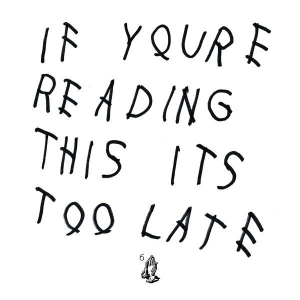
Drake: If You’re Reading This, It’s Too Late

9 Mar

Drake_-_If_You're_Reading_This_It's_Too_Late

It always takes a mixtape to get the best out of Drake, and while studio issues have pushed this into being a paid release, this album has a much more comfortable feel than his commercial work. There is a reason why Drake is one of the biggest names in rap right now and this is a much needed return to form for him.

Despite that If You’re Reading This, It’s Too Late has a strange feeling set of flaws. The biggest one is that it doesn’t feel as individual as is normal for Drake. There are places where his beats and even his flow feel like they’ve come from someone else. It’s not surprising that Drake would pick up some of what is floating around rap these days, it’s just a little disorienting.

The album as a whole though remains distinctly his. There’s more menace in here than normal, but it’s a good look for him. It does require quite a profound suspension of disbelief when you hear him talking about threatening people, but that doesn’t steal the ominous nature that both his stellar production and lyricism carries here. Also, his shot at Tyga is one of the better disses in recent rap history.

All told, this is a solid entry from a top tier rapper. It’s not a classic, but that doesn’t mean you shouldn’t be listening to it.

– @murthynikhil

Bringing Out the Big Guns: A Conversation with Sriram TT of Skrat

13 Feb

Chennai-based three-piece Skrat is one of the most original bands in India. Their brand of lager-laden rock ‘n roll riffs have captured the imaginations of thousands of fans across the country. Recently, they debuted their third full-length independent album, The Queen. Singer/guitarist Sriram TT sat down with Top Five Records to talk about formative musical influences, the Skrat crew, a comic book-style universe of Skrat characters, and much more. Read on for an excerpt of the conversation.

Picture courtesy Skrat's Facebook page.

Picture courtesy Skrat’s Facebook page.

Top Five Records: Let’s start from the basics. I’ve seen some interviews and things you’ve done, and I understand that your band name is from Ice Age. But beyond the name, how did you guys meet?

Sriram: The band formed around the time we were all getting into college. Tapass and I have been friends since kindergarten. I’d met Satish through school cultural fests and common friends, so I’d already known him for a few years. It all came together.

TFR: There’s a lot of varied influences I can see in your music. What did you grow up listening to?

S: Actually, my house was always filled with country music and old swing jazz, the Rat Pack and Davis and stuff like that. My dad’s a big audiophile, so all the music I’d listened to at that time was predominantly from my dad. So it was a lot of country, a little bit of blues, and a lot of the Rat Pack kind of music. There was some older R&B as well. My dad really likes to explore and find new music.

TFR: So your parents are cool with you guys having the band and everything?

S: Of course! They love it. My father’s a big fan of music, and my mum likes music as well. In fact, my dad always wanted to be in something like this but never got around to doing it. I wouldn’t say they are the incredibly forward-thinking kind of support that you may expect, but not forbidding [the music] is a big support for me.

TFR: I was at Weekender for the past few years, and your stage presence is just amazing! This time at the NH7 Weekender in Bangalore, Skrat played back-to-back with TAAQ, which I found really interesting because both of you were debuting new albums. Everyone loves your popular songs like “Tin Can Man” and “Samurai Badass”, but how do you get people to move away from that and listen to your newer material?

S: The biggest challenge for most musicians is, once you’ve created something that people like, how can you create something new that people are going to gravitate towards. A while ago, we had a band meeting to decide whether we should make music more like “Tin Can Man”, because people like that sort of thing. At one point, we realized that we’re not trying to make music, we’re trying to engineer it. So we dropped everything and decided to whatever we wanted to do. If people like it, they like it.

And it’s actually been a positive response. All of the reviews say that this album was a lot better. And I do feel that The Queen has caught on a lot faster than the older albums caught on at that time. In fact, we actually get people singing along to and shouting out for newer songs like “Machete” and “Stomp”.

TFR: Yeah, we really loved your album. It’s funny that you mentioned “Machete” and “Stomp”. I wanted to ask you about these two songs (since they don’t even have words in the chorus), and how they relate to your song-writing process in general. Does the riff come first, or do the words come first?

S: “Machete” is based on a big problem we have in Tamil Nadu, and everywhere really: about politicians and goons being the same thing, basically. We’ve always been subjected to torture by these guys, with their white cars and plastic flags – whether it’s something small like creating ruckus on the road, or something big like not letting a business deal go through because they didn’t get their cut. So on “Machete”, the two verses are kind of like a rant against all that, and the chorus is about how there’s nothing to lose when they have nothing to black-mail you with. And that’s why the chorus has no words. (Laughs)

“Stomp” is a similar thing, but more about a person being subjected to this kind of stuff. On this song, the words and riff kind of came to me simultaneously. I had originally made the song on an acoustic guitar. In fact, the reason we called it “Stomp” was because the whole song was supposed to be me on an acoustic guitar and a board; very Delta blues kind of thing. And then we tried it on electric and the whole thing became heavy and fun, so we decided to go with that.

TFR: A song that we mentioned before was “Samurai Badass”, which is probably your most well-known song. I think you guys are into manga and anime, so is it related to that?

S: (Laughs) Yeah, we’re big comic fans. More into cartoons and comic books than anime, but yeah. “Samurai Badass” is basically an alter ego of what we were feeling at the time. It boils down to the same thing that Skrat’s been talking about: the only way one person can be not pushed around is if he has nothing to lose.

I find my writing to be a lot more authentic if I am able to create a character having the qualities I want to sing about, rather than singing about the qualities themselves. Suppose I wanted to say, “A person who has nothing to lose can’t be pushed around”. I could have said these lines in a song, but I thought, why not create a character who has nothing to lose and can’t be pushed around? That was my original intent, when I wrote the song on acoustic guitar. But then Tapass came in and said, “Dude, let’s try this on electric!” and that’s how that happened.

TFR: You seem to have so many acoustic versions of Skrat songs. You should actually do an acoustic show!

S: Actually, all of the Skrat songs, whether you believe it or not, are made on an acoustic guitar! (Laughs) And “Samurai” was supposed to be like an Irish pub song, where you get together with friends and drink beer. It kind of became this heavy punk rock song with the electric.

The cool thing now is these characters that we have been developing. Our first album Design had a character called Gunslinger who we brought back in The Queen. I’ve now started working on an entire character universe, and all the characters on all Skrat songs belong to this universe: Tin Can Man, Samurai Badass, Gunslinger, The Queen, Loverider. It’s basically how I grew up. Wild imagination, imaginary friends, single child, all of that stuff.

TFR: Tell us about the Skrat crew. Who are these people, and how do you get them to follow you around?

S: Anyone who helps Skrat, like photographers and sound engineers, are basically part of the Skrat crew. The concept has really caught on ever since we introduced it in 2013. The crew has taken complete ownership. Now we’re coming out with a short movie, revolving around how the entire Skrat crew rode on bikes for our 20-day tour last year.

TFR: Oh, is this the Loverider Experience?

S: Yes, it is. On tour, sometimes I’d wake up in the morning, and these guys would already be in a Skrat meeting. They told me that my job is to write songs, play and do interviews. So they really take ownership. And the Skrat crew has slowly been expanding. It’s 40 to 50 people now! It gives me a little fear because I’m not even paying them, and they are just coming along because they like the music or they’re my friends. On our fourth album, which we’ve already started writing, we’ve put in a song dedicated to the Skrat crew.

TFR: Something we’ve all wondered at Top Five Records is about how Chennai is able to produce so many unique, well-formed bands: Skrat, the Shakey Rays, the F16s, Adam and the Fish-Eyed Poets. Is there something in the water there?

S: I think it’s because we’re slightly remote from any scene. Bombay has its scene, Bangalore has its scene, and you’ve got the scene people. We’ve had no “right way” to do it. We could do whatever we wanted because it was music in the end. It’s not like that in a lot of scenes. You know all those arguments saying, if you don’t like Pink Floyd, then how can you like RATM? So I’m one of those guys who says, I’m a big fan of Limp Bizkit but I don’t really like David Bowie, and people just lose their shit! “How can you say that? You have no taste in art!” and all that.

Another reason is that we’ve all kind of grown up together in Chennai, musically and otherwise. And of course, the fact that it’s Chennai adds a little bit of mystery. So we don’t really have a scene, and we just go off to Bangalore or Bombay to do shows.

TFR: There’s not many venues in Chennai, either.

S: Nothing, absolutely nothing, which is why there’s no scene. But, there’s always a flip-side to it. Chennai has no scene but it has a lot of good bands coming up.

TFR: You mentioned that things in the industry are geared towards more established cities like Bombay and Bangalore. Was it tough to break into the music scene as a Chennai band?

S: Very. Everyone knows Skrat as a band from 2012, but we’ve been a band from 2006. The first six years were just hell. During 2009 to 2010, we had about 20 shows that were cancelled on us in a matter of about 8 months. They’d book us, and then they’d cancel. It was very demotivating, and we’d never get gigs, let alone paid gigs. Even free gigs would get cancelled. Because of all this, a lot of bands contemporary with us broke up.

But Tapass and I had this one thing we’d always say to each other: we’ll play. We’ll play for two people, three people, doesn’t matter. There was no crew or anything at that time, absolutely barebones. We did these things called “sell-outs” where we did RATM covers. Even then, it sucked. Our original guitarist and original vocalist had quit. We ended up as a three-piece, and it really sucked. It was like one of those dreams where you’re running and you can’t run fast enough. It was depressing.

Around that time, we were in a jam session and we were really frustrated. Tapass threw his toms and said, “Fuck it, I don’t want to do it.” I plugged out of my pedal board and went directly into the amp, and we said, “Fuck it, let’s just play something, just for fun.” And in about an hour, we made all of the songs on “In the Shed”. We just jammed, and it suddenly gave us the answer we were looking for.

TFR: Nice. Like true punk in a way.

S: Yeah, or whatever punk means in India, at least. Listen, everybody in India has decent parents and grandmothers. There’s no way you’re punk rock, please. If someone comes up to me and says they’re punk, I’d say, “Fuck you, go home and eat thaiyir sadam.” Punk rock was invented to fight people like Lady Gaga, but in India we don’t have a Lady Gaga, we have Bollywood. Abroad, people may listen to both Lady Gaga as well as punk rock, but here, the people who listen to Bollywood don’t even care about us! That’s why I never go out and diss Bollywood. I think what they’re doing is genius, and we should figure out a way to cash in on what they’re doing.

TFR: Very true. So for this last part, I have a few rapid fire questions to ask you. First one. Who’s one artist in India that you really click with?

S: I would have to say the F16s.

TFR: Favorite venue, and why?

S: High Spirits, Pune. Everyone’s there to have a good time. They’re going have a good time whether you’re good or not, and if they think you’re good, they have an even better time. It’s a great vibe, and I love the management there.

TFR: Favorite album of all time?

S: Chocolate Starfish and the Hot Dog Flavored Water by Limp Bizkit.

TFR: Very left-of-centre. I’m glad you didn’t say Revolver by The Beatles or something.

S: No chance. I’m a Beatles fan, but no, man.

TFR: Last one. What’s on your playlist right now?

S: Dinosaur Pile-up. Got introduced to them in NH7 Weekender. A country artist called Shovels & Rope. And Ty Segal.