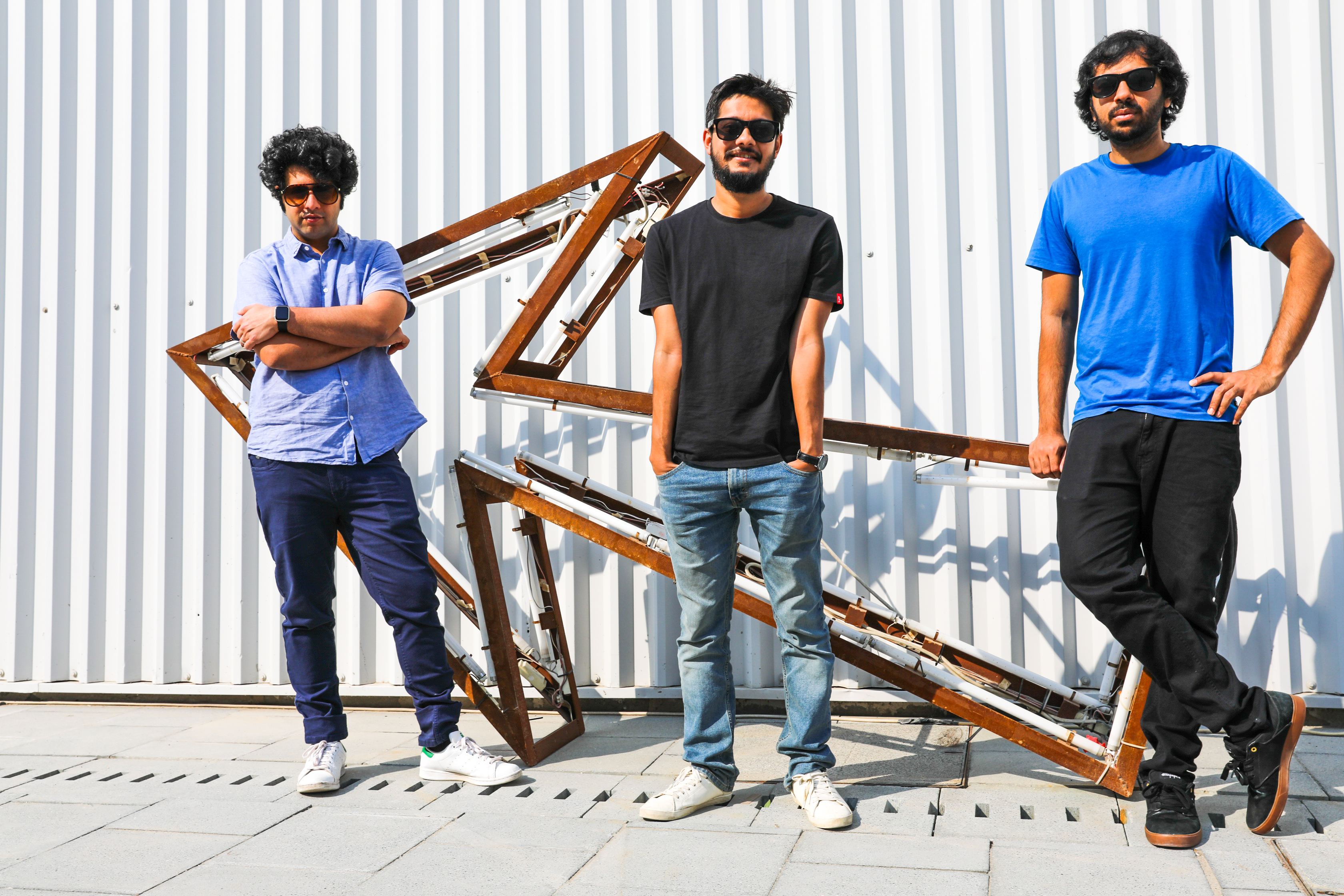
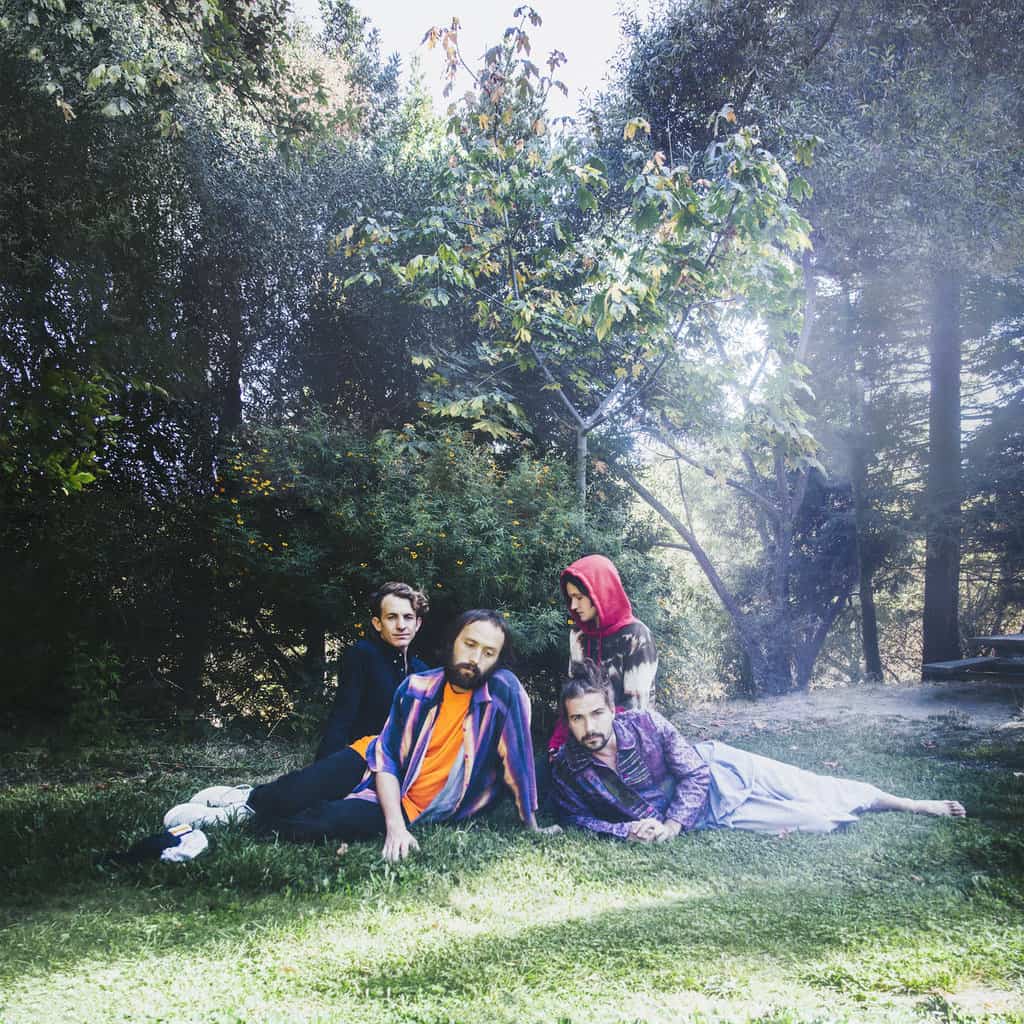
The first thing to strike you about Dharma is how good an ear for sound this band has. Track after track has something clean and sharp enough to make you sit up. There’s a surprising and clear horn in “Planet Hunter” that’s citrus-like in feel. It’s an album with the confidence to take things at the pace it wants and the skill to make fantastic music on its own terms.
However, this point also makes for the major flaw of the album. There’s just not enough here in terms of thought. Particularly egregious is the album’s habit of repeating a phrase multiple times to make sure that we’ve got it. It comes off as almost a tic and adds an unfortunate drag to the album. “Brooklyn Bound”, which should have started the album strong, ends up slightly tiring as a result.
With “Here We Go”, this flaw even makes for a light contrast with the title. The song keeps building up and makes promises for what is to come, but then pulls back to places that we’ve already understood. Right before the end of the track, it moves forward very cleverly, but retreats for the finish and the whole song ends up deflated as a result.
Despite that though, it’s a very jazzy piece with an excellent piano solo midway through. There are some very unexpected flourishes there that make for little jolts of brightness and the track is very pleasant to listen to.
Similarly, “Samsara” is beautiful every time and I do always love jazz that’s able to pull off a laid-back look. “Impermanence”, which precedes it, has a little more pace to it, but is no less skilled and is a stand-out worth paying attention to. Tarun Balani’s drums do a fantastic job underpinning this album and sets grooves that are effortless to sink into.
The highlight of the album is clearly “Malala’s Dream” though. The guitar and trumpet solos are fantastic and the bass work is quite noteworthy as well. I unfortunately still have to quibble a little with the time spent on essentially reiteration and there are a couple of small miscommunications, but those are minor, minor issues in a very strong jazz track.
This skill and nose for clever sounds leave a lot to recommend in this album. It’s a shame then that the result is just too predictable for my liking. Had Dharma had more imagination and a little more tightness, it could have been a masterpiece. As is, it’s still a worthy listen and an instant recommendation – for people seeking some accessibility in their jazz or for people interested in the exciting new things coming out of the Indian jazz scene.
The National is the band for whom consistency is a curse as much as a blessing. There is no other band in indie rock, and possibly all music, quite as dependable as The National. They are very good at what they do and it’s always worth listening to what they put out, but their albums have a way of blending together, at least until I Am Easy To Find.
The National have clearly defined their space over their time making music. They are the feeling of looking out a grey, rainy day from inside a warm house. There’s melancholy but there’s also enough coziness to let you fully wallow in it. This album has all of the melancholy and intimacy and gentleness that The National have always evoked, but this is also their first album to feature guest vocalists to such a degree.
The guests take away the major fault of The National to date, the self-centeredness. Making it so that Berninger is no longer the only perspective is a massive, fundamental shift to the way the album feels and this jolt is exactly what The National has needed for some time.
“I Am Easy To Find”, for instance, does really well for adding a female vocalist. What would have been a rather typical song about yearning becomes something much stronger by twinning singers. There’s much more depth and subtlety than before, especially when one voice fades in or out. It’s simple and understated in the way that the best songs of The National have always been, but much more mature than their previous work.
It’s the same, but slightly more so for “The Pull of You”, which most completely delivers on the album’s premise. From the start with a few seconds free of vocals before Lisa Hannigan to Matt Berninger allowing power to come into his voice in the chorus to the tautness of “I know I can get attached and then unattached / To my own versions of others / My view of you comes back and drops away,” there’s a lot in this song that works in a way very familiar and yet new and better.
The more skewed “Oblivions” is also a stand-out. Berninger puts down the base of the song, but it is Mina Tindle who does all of the work to elevate it. Berniger’s staging of the song is hugely important, but Tindle is absolutely excellent. As is “Roman Holiday”, which conjures quick image after quick image. However, there is still a lot in the album that never quite breaches the haze that The National so expertly sets up. There’s a lot of music that just fades into the rest.
The National basically started fully formed. Their aesthetic of cinematic, but shot in a soft and quiet black and white, has been there from day one. With I Am Easy To Find though, they’ve pushed it somewhere that feels completely novel and in doing so made one of their best albums to date.
It was always clear that Tyler, the Creator was talented. Out of the old Odd Future gang, despite his sort-of leadership of the crew, it was others like Earl Sweatshirt and Syd tha Kid and of course, the incomparable Frank Ocean that seemed to be the people to listen to. His first albums had enough in them to make you take notice, but their unfocused nature held them back, despite that being such a strong part of Tyler’s charm. His following was devoted, but you had to not only have a tolerance, but a desire, for the random.
Maturity has changed him though. His music is now much more fully developed and honestly much more interesting. Both lyrically and in the musical themes, he’s taken the sparseness of the old OFWGKTA days, fleshed it out fully and pruned some of the weirder things and the result is much stronger for it.
He still goes hard with songs like the excellent “NEW MAGIC WAND” but he’s also able to put in the much softer, but still wonderful, “GONE GONE / THANK YOU.” He’s still Tyler through and through. “EARFQUAKE” is unquestionably his and shows you why people have always been excited about what he makes, but “A BOY IS A GUN?” is also singular and exciting, but wholly different and being able to take that level of versatility and yet make music of this sustained quality is a major achievement.
Tyler, the Creator is still a misfit. The final song here is the winsome “ARE WE STILL FRIENDS?” It’s just that between this and Flower Boy, he’s developed it to the next stage. Now, he’s no longer the smart-but-weird kid at your school. He’s fully stepped into being the idiosyncratic genius instead.
And just like that, we’re halfway through 2019. So far, the year has given us some great music already. There have been some fantastic albums from well-established bands (Vampire Weekend, Foals) and break-out debuts from true diamonds-in-the-rough (see: slowthai). Read on for our picks this month – spanning old-school indie rock, beautiful folk-pop, and two of the best tracks all year from the Indian subcontinent.
Read on below for the goods:
5. “No Bullets Spent” by Spoon
As our readers know well, we at Top Five Records are huge fans of Austin-based indie rock veterans Spoon. Their 2017 album, Hot Thoughts, made it onto our year-end list that year, and “No Bullets Spent” perfectly espouses all we love about this band. In spades are the laid-back vibes undeniably sourced from their hometown of Austin, TX; lead singer Britt Daniel’s lackadaisical lyrics; the unmistakably subtle-yet-groovy Spoon chorus; and so much more. “No Bullets Spent” was released to hype up the release of the band’s greatest hits album (Everything Hits at Once) on July 26th. Whether you’re already a Spoon fan or not, we encourage you to check out this track, and of course the greatest-hits compilation when it’s out.
4. “Love Yourself” by Sufjan Stevens
“Love Yourself” is an electronic-tinged slowjam that works in two ways: one, as a plea to your lover to appreciate themselves more (“Love, can you love yourself”); two, as a note-to-self with the same message. Either way, it’s a gorgeous, lushly-produced song that perfectly features Sufjan’s emotive pipes. Sufjan Stevens has enjoyed a recent surge in popularity, in part due to the vital inclusion of a coupleof his songs on Call Me By Your Name, 2017’s sleeper art film hit. With “Love Yourself” – released as part of a four-song Pride Month EP – Sufjan fans both new and old are likely to be more than satisfied. We sure are!
3. “My Baby’s Beak” by the F16s
In the early part of this decade, something magical was
happening in Chennai’s indie music scene. There were suddenly a swathe of very
good, very unique and very closely-knit artists coming out of the southern port
city. Everyone seemed to know each other. Everyone wanted everyone else to
succeed. Everyone came out to each other’s shows. Was there something in the Chennai
water?
Over the years, we’ve spoken to and closelycoveredseveral of these bands, and what we’ve gleaned is the following. The city’s strong musical streak, combined with the centering of the Indian indie music away from Chennai to other metros (Mumbai, Bangalore) and the piteous lack of venues in town, meant that Chennai’s independent musicians had a truly DIY approach to their craft. People practiced in home spaces. Bands shared band members. And there was a strong support system that helped bands thrive and maintain their wholly unique sounds.
One of these bands is the F16s. For many of us at Top Five Records, songs like “Light Bulbs” and “Avalanche” (from 2013’s Kaleidoscope) exemplified the careful balance between restraint and decadence of our millennial existences back in the day. The band’s follow-up album, 2016’s Triggerpunkte, had a few stand-out tracks, but it felt like a stepping stone to the F16s’ next great output: and WKND FRNDS is it.
All four of the songs on this crisp new EP are great, but “My Baby’s Beak” really clicked with us. We can best describe the song as the soundtrack one might choose while writing desperate love letters, from a tropical island, pina colada in hand – in the 1980s. “Oh mama, can you tell me if I made it / My ego gets inflated with you,” croons lead singer Josh Fernandes, complementing the luxurious sounds from the rest of the band. The song’s a true treat for fans eagerly awaiting new F16s music, and for new listeners alike. P.S. If you liked this one, we’ll also take this time to recommend the EP’s eponymous track as a follow-up.
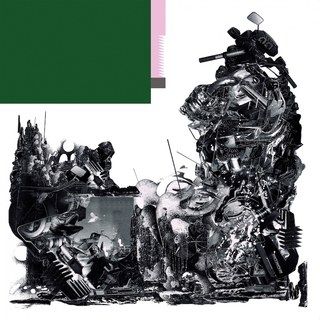
2. “Speedway” by black midi
The four young members of black midi met at BRIT School, the UK’s premier music school that has produced legends such as Amy Winehouse and Adele. Centered somewhere between the Foals’ math-rock and Animal Collective’s asymmetric ethos, black midi enthralls with a ridiculously ready-out-of-the-gate sound. Our favorite track off their debut album Schlagenheim is “Speedway” – a pulsing, hypnotic song filled with feverish stops and starts. Slightly nerve-wracking and more than slightly ominous, “Speedway” is testament to what the lads can pull off in a mere three minutes. If you like this song, check out “953” from the same album for some bewilderingly good punk rock.
1. “Floated By” by Peter Cat Recording Co
There is no other way to say this: Peter Cat Recording Co is
one of the best bands to ever come out of the Indian subcontinent. With meticulous
detailing and inimitable style, the Delhi-based gypsy / jazz band has long
excited us here at Top Five Records. The band’s new album, Bismillah,
dropped earlier this month, and suffice it to say, we cannot get enough of it.
Bismillah’s stand-out, in our opinion, is “Floated By”; a song so good that we wrote the rest of this list with it in a firm #1. “Floated By” finds the band in their element – a melancholic wedding band letting loose after a drink too many in hand and an hour too long on stage. (The twist here, as seen in the song’s music video, is that the wedding in question is lead singer Suryakant Sawhney’s own, real nuptials.)
As with most Peter Cat songs, the real star of the song is Sawhney’s powerful voice. In between the wedding-procession drums and slightly off-kilter horns, his voice rings out: true, wistful and imbued with astonishing range. A simple line (“I know that I should / I know that I would”) takes him ages to enunciate, as his voice floats across the vocal spectrum.
Simply put, “Floated By” is one of the best songs we’ve heard
all year. Look for a full review of Bismillah soon – and until then, please
give the album a listen.
I picked up this album off the strength of the single “i”. You can immediately see Lil Skies’ ear for sounds in it and he plays very cleverly around the foundation. I can never be quite sure when the shift will come and his stuttering keeps you off balance while staying on beat. He takes the same i and stutters and drags it in a way that stays unexpected. It’s very catchy and very sharp.
The rest of the album is unfortunately fairly generic SoundCloud rap however. It ranges from fair to good, but feels purposeless. “When I’m Wasted” does nothing, “Bad Girls” does nothing despite a Gucci Mane feature, but it does at least have a good hook. Even the hook is bland on “Through The Motions” though. It just cannot live up to its promise. “Stop the Madness” is nothing new. You just need to have something more to say if you want to stand out from what is quite the packed crowd.
“Nowadays Pt. 2” is quite good though, if brought down a bit by the guest spot. The twin central phrases of “Blue Strips” are excellent, but the song could have used a few more ideas in it. “Flooded” is unreservedly very good though. The hook of “they say I got next / nigga, I got now” is very strong and the song mixes itself up constantly. It’s a catchy earworm of a song.
It is true that there’s not enough here to really distinguish this album from the deluge of SoundCloud rap available now. As a whole, it is a little store-brand. However, between his clearly sharp ear for sounds and his now-proven ability to make top tier music, I’m sure that Lil Skies will put out something unmissable soon.
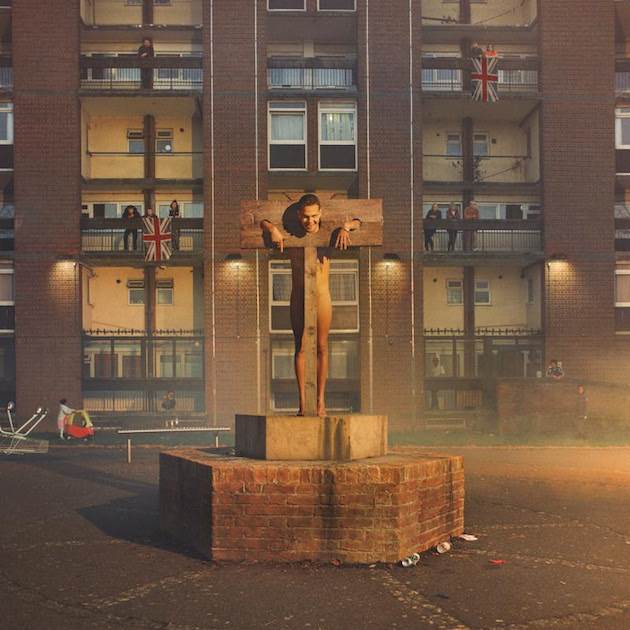
This is what I imagine it must have felt like when Never Mind The Bollocks… came out. Grime, that spectacularly and uniquely British style of rap, has had a couple of small coming out parties. Stormzy is picking up award after award and Big Shaq achieved ubiquity with “Man’s Not Hot”, but Nothing Great About Britain is the album that deserves to make the full breakthrough.
It’s also just the most punk album that I’ve heard in a long time. It’s aggressive and unapologetically in-your-face. It’s an intense album, both musically and lyrically. The heavy slice of life and the personal nature of the album all feed in to this redefined aesthetic. This is the natural evolution of punk for the late 2010s. This is the only thing that it could be.
It’s a lot more than three chords to make a band though. There is no shortage of technical skill here, either in the engaging flow or the compelling production and both of them change things up to a dizzying degree. Standout track “Northampton’s Child” showcases tremendous control as slowthai changes speeds, cadence and even speech patterns for emphasis and different impact. The key couplet of “You’re lucky I’m not as big as you/I would punch you till my hands turn blue.” hits like a sledgehammer. The autobiographical nature of the song and the thanking of his mother are sincere and real and raw and the sum of all of these parts is a completely unmissable track.
With his politics, with his soul and with his skill, slowthai has put together one of the most remarkable albums of the year and of the subgenre. Grime has arrived and it is Nothing Great About Britain that has opened the doors.
When I first discovered Jamie Cullum in the late 2000s, he had already recorded five studio albums, and was playing in jazz festivals around the world. And while he was the kind of musician who brought his grandmother’s carpet to lay out on the stage at Blenheim Palace, he was also full of irreverent energy: stomping his feet on the keys of the piano, slapping his palms all over and underneath it, jumping on top of it and leaping off. His vigour was electrifying, and even deeply moving for a reserved person such as myself.
The Pursuit (2009) marks a neat halfway point between the start of his career and now, and it was in the album that followed in 2013 that I first began to hear creeping hints of self-doubt and insecurity:
As I sit and wait for some answers The questions go round like a kamikaze pilot Enlightenment’s just a romancer I wish it were here burning brightly through the skylight .
Family life seemed to bring a new introspective quality to Cullum’s music. It’s not easy to slow down and take stock, to critically examine the costs and rewards of a glamorous profession in the arts, and to confront the fear of failure.
“Innocence is nice, but the world offers us more and it’s wrong not to take it.” As we grow older, so many of us feel that we have irrevocably lost our access to uninhibited creativity and joy. But the complications of being an adult unlock an unfamiliar kind of happiness, and an emotional depth we could never have imagined in innocence. The chords behind the crescendo of “Drink” conjure up with great accuracy the vertiginous relief and fear that accompany the first sensation of joy after a long unhappiness.
But the cheeky musician we’ve known is still around, and he
announces it in the title of his latest album. Taller marks a milestone
in a twenty-year-long career in jazz music. A bold, effervescent, and
unceasingly fun artist now stands at the sobering brink of his forties; and the
music inspired at this juncture is nothing short of a gift to everyone who has
followed his work over the years.
Jamie Cullum is a small, if dynamic, man, and there has been no dearth of leg-pulling in the tabloids and on the internet about his height, and about his marriage to a substantially taller woman. The fact that he addresses this perceived deficiency head-on indicates that he hasn’t lost his sense of humour, and also that the discontent that has been simmering in the previous two albums will be explored more fully in this one.
“Usher”, the fourth track on the album, is a full-blown sonic party reminiscent in the best way of James Brown and the golden age of Soul. It’s crunchy and granular in a way that is profoundly satisfying (especially if you, like me, have been unable to avoid Trap and American R&B, the slickness of which, though often soothing, can quickly lose your interest). But the lyrics are not quite as cheerful as the music. And it’s a similar story with “You Can’t Hide Away From Love”, another favourite from the album: its lush orchestral arrangement recalls Audrey Hepburn movies, but with menace.
It’ll give you two black eyes And discolour all your skies … It’ll have you on your back And break into your flat … So reel me in Till I’m gasping for air; There’s no love without despair … It’ll shake you to your core And leave you crying on the floor But I’m telling you you can’t hide away from love.
This album examines not only personal demons, but also shared anxieties. Volume 2 of The Eighty-Eight, “an adventurous magazine for the occasional thinker” (or “an occasional magazine for the adventurous thinker”), which Cullum puts together with his friends and family, features a poignant essay about his Indian and Burmese heritage. More than one song on Taller references Brexit, the refugee crisis, British imperialism, and perhaps even the Me Too movement.
Cullum dwells on the unease of living in these times.
There’s a stripped down version of “Mankind” on his YouTube channel
well worth a listen. The irony of this composition is that it combines gospel
music with lyrics that say “so long to sacred,” but there is a refusal to give
up on people and the idea that love will conquer all. As Kristin Scott Thomas’
character in Fleabag puts it, “people are all we’ve got.”
This album is an exploration of fundamentals, and Cullum sings repeatedly of digging and searching deep within the earth. One cannot help but think of Seamus Heaney’s poem Digging, and the hope and doubt it expresses about writing and creative work as activities that productively uncover and reveal. “The Age of Anxiety” quotes WH Auden (“only love is what survives of us”), and imbues the song with its apprehension of mortality.
Age of Anxiety, Live from Craxton Studios
Cullum’s interest literature and great works of poetry (his
favourite writers are Virginia Woolf and Paul Auster) is perhaps what gives his
lyrics their unusual and beguiling quality.
The fact that he has always been an expressive vocalist
only makes this better; and speaking of vocals, “Monster” showcases a falsetto
range we’ve never heard from him before.
Literary inspirations aside, Cullum draws from an eclectic
range of musical sources. For a few years now he has been reverse-engineering
pop music on his YouTube playlist The Song
Society, and curating more
challenging compositions for his program “The Jazz Show”
on BBC Radio 2. It’s fascinating to see these influences coming together to
form an album that sounds — fittingly for a crossover artist — unique, and one
that does not sit comfortably in either the pop or the jazz genre.
The great thing about the songs on this album is that
they’re more than just tunes. Each song develops; it meanders into different
moods and colours and tones. If you were to leave a song midway, you’d probably
miss the best part, and definitely miss the whole story. The album requires,
and rewards, patience. This is the kind of art I find myself most grateful for
these days.
Taller is an invitation to revisit Jamie Cullum’s oeuvre; because the seeds of inventiveness and thoughtfulness were always there. I’ve been rediscovering the deluxe version of Catching Tales, for instance, with its cover of “Everybody Loves The Sunshine”, which is a youthful, groovier expression of “Drink”, the backbone of the new album. I am so excited to dip back in to this amazing body of work. There is no doubt about it: Jamie Cullum is a peerless and towering talent.
Tejas has had quite a journey to get where he is now. He grew up in Dubai and moved to India after high school. Not quite fitting in with the academic environment of college, Tejas found his first calling as a Pune-based RJ, through which he got his first taste of the Indian indie music world. He then went on to release a debut EP, Small Victories, in 2014, and followed it up last year with an LP, Make It Happen – which was notable for an interesting set of reasons. First, it featured the same brand of lively, unpretentious music that put his EP on the map. Second, it came with a great design aesthetic – unique yet perfectly in sync with the music. Third, and most interestingly, it was crowdsourced online and received its funding in a matter of hours.
However, Tejas is more than just his music. He founded and manages Kadak Apple Records, an indie music label from Bombay whose roster features a number of rising stars. Another Tejas Menon venture – this one outside music altogether – is Geek Fruit HQ, a platform to discuss and enjoy all things nerdy.
Read on for our long-form interview with Tejas to find out more about his musical style, crowdfunding his first LP, how he came about founding his other ventures, and much more.
Hi Tejas, how are you?
I’m great, thanks. And thank you for doing this!
No problem! We’ve wanted to speak to you for a while now. So let’s jump right in and start from the beginning. What got you into music, when did you get into music, and what were you listening to when you were growing up?
Well, to start with, I was born in India, but we moved to Dubai when I was around 3 months old. I spent the first 18 years of my life there. I had some few Indian influences growing up – stuff from my parents, like cricket and Bollywood, and from going to an Indian school as well. But most of the time, my time was spent watching movies, reading comic books, consuming a weird amalgamation of Bollywood, Eastern influences, and Western influences.
As soon as I was old enough to discern an affinity to music,
I started discovering pop music – Michael Jackson’s Dangerous, and so on. I also happened to be a good Elvis
impersonator (even now, Elvis is like God to me). My friends were listening to
popular music like Bon Jovi and Linkin Park, and I started listening to a few
other artists on my own, like Madonna. I was a Backstreet Boys fan – still am,
unironically.
Yeah, it’s a very 90s kid thing to be.
Yeah, I was born in ’89 so I’m a through-and-through 90s kid. And then I was a singer in my high school band, drummed for a bit. The first instrument I ever learnt was actually the keys, after my mom bought me a keyboard. But not really a serious approach to music. I finally wrote my first proper song when I was around 18. I got a little more into songwriting after leaving high school and the pressures of the Indian education system behind – I was terrible at academics.
The other thing is, I had a tumultuous childhood – my parents
are separated and it was a tough time growing up. It was difficult for me to
focus on what I wanted to do in life. The kids in my school went on to study
amazing things abroad, but I really didn’t feel that that was for me.
Long story short, I ended up in Pune after high school, living
with my cousins. They sort of raised me a second time for the four or five
years that I stayed with them. I wasn’t sure what I wanted to do, but they made
sure I got a degree at least. So, I went to Wadia College, got a degree in
Economics.
But in that time, I did something really important in my
life. I went for what seemed to be a casual internship at Radio One. I was
there for about three years; learnt a lot from the artists that came in,
polishing my communication skills, and so on. I’ve found a lot more stability
in a work environment than a schooling environment, to be honest. I loved
school as a kid because it was a respite from home, but school ultimately
wasn’t for me.
So there I was at 19, an RJ with my own show, and I really felt like the Mayor of Pune (laughs). All this time, I was writing music at home, sharing it with mostly my friends, but it was really for me and me alone. I didn’t see any point of performing live. But that was because I really didn’t know the options out there for indie artists like me.
I eventually found some artists online, musicians like Gowri Jayakumar, and I was amazed that people were putting up their independent music. I was like, “Why am I not doing that, too?” So I started putting up music online, and went for a few shows.
And then – I don’t know if this was just timing or
serendipity – the first NH7 Weekender happened and they chose Pune for the
venue. I just happened to be the RJ at the radio station promoting the
festival. The first thought when I went to check it out was, “Oh my God. I can totally
do this. I can have a band.” My second thought was, “This is an amazing
feeling, to perform in front of people who wanted to listen to music.” Taking
that cue, I started playing more shows around Pune. This was around 2010 or
2011 – I’m actually coming up on my 10th year of playing music now!
So you’re a veteran of the Indian indie music scene, then. (laughs) Who do you play with when you’re on stage or recording the album?
Well, I’ve gone through a number of lineups. Some of my greatest friends have come from music. Warren from Blackstratblues used to play with us; in fact he produced the first album. Aalok from Something Relevant used to play with me back in the day, too. The core lineup of the band right now is [bassist] Adil Karwa and [drummer] Jehangir Jehangir (JJ). Adil plays with a number of bands here including The Colour Compound and the Koniac Net (who just put out an amazing album, by the way), and JJ is also a studio owner now – he owns Island City Studios, which is right now the place to record in Bombay. In fact, the album that we’re working on right now is the three of us working together. I’ve written the songs but we’re basically co-producing it.
And you recorded together as well for this album?
Yeah, all three of us played and produced it together. They’re like my brothers, basically.
Nice. Yeah, we actually interviewed David from the Koniac Net a while ago, so we’re glad to see that they’re finally getting the support and appreciation they deserve.
Man, that’s so true. Nail on head, really. I’ve been a Koniac fan for a while. It’s like the old-school 90s alternative stuff that I really love. And David is an awesome guy, really puts hard work into the Koniac Net. He’s like a true hustler of yore, you know? (laughs)
Yeah, we’ve been fans for a while too, so we’re really glad to see that they finally broke through with the latest record [They Finally Heard Us].
It’s arguably one of my favorite albums of this year so far, you know? And they’re just a guitar-heavy alternative band, but this one is a deeply immersive and emotional album. Something intimate about it.
Yeah. So we know this is somewhat of a cliched question to ask, but as the songwriter of the act, what comes first for you, the music or the words?
So I listened to this Song Explorer podcast with Wilco a while ago, and the front man was like, “I just sing, and words just come out of my mouth. I trust my own instincts and my body enough, that whatever is coming out of me is what’s relevant to what I want to sing out.” Since then, I kind of work along this philosophy. The essence of the themes come out very naturally. The song I did this most for was “Falling Out” from my last record [2018’s Make It Happen]. The melody and the words came out at the same time while I was playing the guitar. Usually the guitar parts come together first.
I used to try and be clever about writing lyrics. I wanted
to make funny and interesting rhymes, metaphors here and there, and I thought
this was songwriting is: to be cheeky and clever. As I got older, I found it a
little disingenuous to simply try to make a rhyme or to make something fit.
From my first album [2014’s Small Victories
EP] to the second, there’s a big shift in the lyrics, if you notice. It’s a lot
more abstract, a little less narrative, a lot more organic and real. I prefer
this a lot more to what I used to write like. I try to keep it as fluid and as
true as I can.
What was going through your head when you put together the songs on Make It Happen?
Well, my first record was as indie as it gets – arranged in three days, recorded in three days, mixed in four days, and then it was out. There was no room for experimentation, but that was how Warren and I intended for it to be. For Make It Happen, I really wanted a great, sprawling record with big sounds and big ideas. I wanted to be indulgent and create something that I was really proud of.
Two threads across the album are my vocals and the theme (centered
on my late 20s). I took every song individually rather than as an entire album
together. People may complain that some songs stick out or don’t fit in, but I
felt that this was a representation of my entire life. Nobody is just one thing,
and I hate being slotted into “Oh, this is a pop record, oh, this is that sort
of vibe”, so I liked the idea that it’s really dynamic. I wanted people to feel
positive, but also feel the depth and range of things I had to offer.
Everything was so important to me, from the design to the track listing, and
I’m really proud of what we put out.
But that being said, I’m proud of my first album, too.
That’s who I was then. Maybe it’s not true right now, but that’s exactly what I
wanted at that point. It’s a snapshot of who I was then.
We’re glad you brought up the design on your album. We really loved the color palette and the visuals on Make It Happen with the little Adventure Time type of cartoons, and so on. How did you come up with the aesthetic? Did you design it yourself?
Tejas: Well, I am a very poor designer, so it wasn’t me (laughs). After my first album, I felt that the design didn’t say that much about me visually. So I went and spoke to Neysa Mendes (@goodslice), who’s been really instrumental in a bunch of albums from the indie scene. She said, “Tejas, you have to close your eyes, and think about what you want people to visualize when they say your name.” After that, I spent a good amount of time thinking about the visuals and imagery that I wanted to project.
I then took the aid of Studio Kohl, and an amazing designer and conceptual artist called Mira Malhotra. I told Mira and the team that I wanted it to be representative of who I am – I love animation, cartoons, bright colors. I literally still watch cartoons and I’m turning 30 this year (laughs). And I love Adventure Time, as you pointed out, with its mythology and bizarreness. I wanted to create this universe of my own, with every track having its own single art, and all those pieces put together form the back art of the album.
We wanted to talk to you about another interesting aspect of the album, which is that you crowdfunded it online, and you raised the money you needed in a matter of hours! Talk us through how that happened, and why you chose that route.
Yeah, it was amazing. I had no idea it was going to happen in literally six hours! My friends put in good amounts, but there were so many folks I didn’t expect. I got Rs. 50,000 from a high school that I hadn’t spoken to in literally ten years. It was an incredible and humbling experience, to be honest.
As for the why. Sometimes, I feel that the independent music
scene in India is a rich person’s sport, you know? You need a benefactor’s help,
whether it’s your folks or your own savings, and so on. I’m on my own, with
some help from friends, so it’s an expensive affair. This helped a lot.
Also, the theme of Make
It Happen is basically about taking the right decisions to improve your
life. I have been a product of everybody’s goodwill – so thematically,
contextually, it made sense to fund the album this way. It got everyone
involved, and excited to hear more from me. Turned out great!
The other aspect of this was, I knew I had to work on the
marketing and promotion of the album anyway. The music industry right now is
set up in such a way that there’s not much money coming in from sales or from
streaming. Really, the money is coming from performances – everything you do as
a musician is only to promote your gig. Even your album! Think about it that
way, and you realize you have to spend a lot of marketing money. I’m from an
advertising background, so I get this. It’s not enough to be a talented
musician anymore. So this was a unique way to promote the album, too.
Yeah, for sure. Switching gears a bit, we wanted to ask you about your record label, Kadak Apple Records. We ourselves are named after a record label, so this is a particularly interesting aspect for us!
Well, I was releasing my album independently, and I wanted it come from someplace legitimate. In any creative industry, people take you more seriously when you’re coming from a legitimate source. I started Kadak Apple with my good friend and part-time manager, Krish Makhija. We wanted songwriters to be taken more seriously. There’s nothing wrong with playing three-hour brunches, but we felt songwriters in this town had more to offer.
Sometimes [before starting the label], I would get calls saying, “Hey, we want you to play at so-and-so but we can’t afford to pay you that much” – but I felt I deserved it. After I set up the label, I’d ask them, “Why don’t you get in touch with my record label”, and they’d send an email – and I’d respond to the email myself (laughs) but I’d get the gig or the deal this time.
You were just playing the game, basically.
100%. It’s a perception thing; it’s advertising. Right now, Kadak Apple has about nine songwriters on the roster, and I legitimately think that these are some of the best songwriters in the country. But beyond talent, they are mostly there because they are my friends, you know?
Kadak Apple is more of a collective than a label, really. I
facilitate opportunities, coordinate artist availabilities with gig requests,
coordinate media requests, provide industry contacts – whatever I can offer
from my knowledge. I don’t believe in a trade-secret kind of environment. The
Indian indie music industry is so small that it’s in my interest right now for
everyone to have a No. 1 record. I want to give people a choice of different
genres and artists to hear. We need more people to be part of the scene. Eventually,
we’ll get to a more commercialized industry. So that was the intention behind
Kadak Apple.
As for the name – Krish believes in the whole kadak
philosophy. He’s a cinematographer, so he believes the kadak kind of shots.
Kadak chai, and so on. And Apple because of Apple Records and the Beatles.
Cool, that’s a fun back story! So switching gears one more time to yet another thing you’re part of – Geek Fruit. Can you tell us a little bit about that?
Geek Fruit is something I started after I quit my job in 2015. I was working crazy hours in advertising, with three hours of travel every day and so on. After I quit, I had a lot of free time. I tried to focus on what could keep me occupied in the time that I didn’t want to do music. And I say that because I don’t really consider myself to be a musician’s musician. I think I’m good at it, and that the craft of songwriting has come to me, but I don’t feel very “artist-y” about the way I approach music. Sometimes, when I hang out with musicians, I still feel that imposter syndrome really hard.
But when it comes to movies, and watching them and talking
about them – that’s something I’ve been involved with far longer than I have
been with music. I’ve had opinions about movies forever, I love Marvel Comics,
DC, Star Wars, so on. And I really feel that the nerds won, you know? When I
was a kid and trying to talk about kyber crystals in a Jedi’s lightsaber, no
one cared. But now, everyone cares! The biggest TV show, the biggest movies –
they’re all from nerd culture now.
I wanted to start something where we can review stuff, do
podcasts, make content – this is something I genuinely love. I can say I love
it even more than I love music, in some ways. The ability to create is amazing,
but the ability to consume, and discuss, is fantastic. So I created Geek Fruit
with two friends from Kadak Apple – Jishnu Guha and Dinkar Dwivedi. We’ve been
doing podcasts for three years now, with 250+ episodes out – two episodes per
week, every week. I’m happy to say we have a humble but dedicated following
that come for our events and parties now.
Last year, for Halloween, we had a party called Super
Scary Awesome. We did a Disney tribute at the end with our entire band and
lots of Kadak Apple people. Everyone dressed up as weird characters. It was one
of my proudest moments because it was just so unique.
This has been amazing; thank you, Tejas. We wanted to wrap up with a few Rapid Fire questions, if you’re up for it?
Sure, go for it!
Since you mentioned Marvel, and that’s so big in pop culture right now – who’s your favorite Marvel character (from the comics or the movies) and what’s your favorite movie from the MCU?
I was a big Spiderman fan as a kid; Peter Parker and I go way back. So that’s my favorite. I also love some of the fringe characters: Iron Fist, Daredevil, Moon Girl, so on. Out of all the movies, it’s hard for me to not say [Avengers:] Endgame because they stuck the landing to a very difficult project. I also love [Captain America:] Civil War and [Captain America:] TheWinter Soldier.
The other big pop culture phenomenon right now is Game of Thrones – what did you think of the finale?
I have complicated thoughts on it. I’m not going around petitioning that they should remake the show (laughs), but it’s hard to not point out the glaring issues. So yeah, I was disappointed.
People our age are a lot more clued because of things like
Reddit. They know why they like or dislike something. This entire season was a
disappointment and there were huge pacing issues. There was also the overall
question of why they shortened it to six episodes, too. The moment the Night
King died, I kind of checked out. You shouldn’t be able to kill him in a
physical combat. Why is Jon alive? What was the point of Bran’s whole story? We
haven’t gotten the answers to all of these questions.
And if you had to pick a TV show where you loved it from start to finish, what would it be?
I don’t think there is a perfect show, but I think Adventure Time comes pretty close. Apart from that, I love Gilmore Girls, House, Breaking Bad (obviously). 30 Rock is up there, too.
What’s your favorite gig so far?
We played one gig recently in Humming Tree that was really great. We took some risk by taking 100% of the gate, so we had to make the sales on whoever’s actually showed up. We wanted to try out the format. About 120 people or so showed up, and we sold a lot of merch, had posters made, and so on. It was great.
I also really enjoy going to places that don’t get a lot of
live music. I went on a tour last year to the North East with Mali, and those
were some of the best gigs I’ve done. Playing to different audiences that we’ve
never played to before, and having our songs sung back at us – it was amazing.
Who’s one Indian artist that you’d love to collaborate with at some point?
I think Meba Ofilia is amazing. Young, new, R&B / soul kind of singer-songwriter. Chayan [Adhikari] from Advaita. Aditya Ashok from Ox7gen would be next on my list, too.
All images courtesy the artist. Check out Tejas’ website here for more information about him and where to listen to his music.
It’s 2008. The indie rock world is on a multi-year high – after the Strokes’ game-changing debut in 2001, there is a virtually non-stop stream of buzzy indie rock bands: Franz Ferdinand, the Libertines, Kaiser Chiefs, the Arctic Monkeys and so on. Many wonder: will there ever be a need for yet another indie rock band?
Through all that noise, Foals managed to prick up the world’s collective ears with their blistering math rock debut album, Antidotes. Math rock – with its frenetic arrangements and asymmetrical time signatures – had of course been around for a couple of decades (see: Slint, Polvo), but Foals served to bring it to the forefront of the ’00s resurgent indie rock scene.
Over the years, Foals released three more albums; but for many fans from the original Antidotes era, the band has strayed from its trademark sound into a slightly different tone. “Spanish Sahara” from 2009’s Total Life Forever featured on that era’s edgy prestige TV shows (Skins, Entourage). “Mountain at My Gates” from 2015’s What Went Down starred on the FIFA 2016 soundtrack. There’s nothing wrong with these things, of course; but the new material didn’t capture your undivided attention in the first two seconds – as did, say, Antidotes’ “Balloons” or “Red Socks Pugie”.
The fifth album, 2019’s Everything Not Saved Will Be Lost Pt. 1, changes that trajectory. Here, the band seems to have finally figured out how to piece together the irrepressible energy of the first album – jagged riffs and sing-shouted lyrics – with the more mainstream, polished feel of the latter albums.
There are several stand-outs on this album. We already wrote about “Exits” – a slithering majesty of a track that moves seamlessly from the dramatic to the psychedelic over the course of a showstopping six minutes. (Do also check out the music video, featuring Game of Thrones’ Isaac Hempstead-Wright.) Another must-listen is “Café D’Athens” – a fascinating juxtaposition of aloof vocals layered over nerve-wracking, tinny beats; think Radiohead meets Hercules & Love Affair.
What we really love about Foals is their ability to conjure up abstract feelings within decidedly non-abstract music. “White Onions” summons a claustrophobic feel with its repetitive riffs and non-stop drums; aptly, the lyrics reference lairs, mazes, cages, and fighting for air. “Syrups” is sexier: a thick bassline leads into heady guitars and steady drums, eliciting perhaps a mysterious road-trip into the clear night sky (“’Cause I’m about to take flight / Please don’t ask me why,” chime in the prescient lyrics).
This is the reason that Foals are featured on so many
soundtracks: they are exceptionally gifted at pinning down moods and feelings within
the confines of their spindly guitars and relentless beats. The band’s first
four outings tended to focus on one part of that two-part puzzle: either the
feelings or the music.
With Everything, the band has finally put it
together. Everything Not Saved Will Be Lost Pt. 1 is one of the best
albums of 2019 – and, as luck would have it, we are still due for Pt. 2.
We can’t wait.
U.F.O.F. is a beautiful, delicate and scarily intelligent folk-rock album. It’s gossamer and lovely in sound and filled with intricacies and flourishes and sparkles.
“Betsy”, for instance, is calm and unhurried and tranquil. “Jenni” feels like a gentler, slower “Jeremy” and while that may sound like it misses the point, the result is no less intense for how slow it burns. “From” is tender and sophisticated.
For all that softness though, the album is also able to carry off the Velvet Underground-like “Contact” which goes from a slow start to a distortion both unexpected in such a soft album and brilliant for it.
The vocal quivering in “Orange” engage and the lyric of “Orange is the color of my love” is novel. Similarly in “Century”, Lenker’s voice wavers around where you would expect and the unbalancedness that engenders is excellent. It slips a little at the end of the song though and it’s not quite strong enough to carry the vocal-only segments of “Magic Dealer”, but those are the exceptions in a mostly wonderful album.
For all of the innovation of the album, it’s still extremely approachable. The country jangles in “Cattails” are a fascinating evolution of this soft-rock sound, but it also works well on the surface. This is an album that greatly rewards effort from the listener. It has lots of little brilliances flowing through it and is confident enough not to clumsily draw attention to it.
However, no matter your approach, you will enjoy this album. Even at the most shallow listen, it’s exceptional. If you’re willing to meet it halfway though, it’s transcendent.