As 2020 draws to a close, and we start making the first drafts of our end of year lists, we took a look back at some of the best songs in October 2020. Read on for a quick spin through everything from dance-rock to synth-pop – to whatever Gorillaz is…
5. “I Love It” by Kylie Minogue
The firs of our big-name artists to feature on the list this month is Aussie pop legend Kylie Minogue, who blessed us this month with the 1970s disco-throwback gem called “I Love It”. Readers of Top Five Records will note that this particular aesthetic is rather chic among female pop singers this year, whether it’s Dua Lipa or Jessie Ware or Gaga herself. Kylie carries forward this year’s trend with this bouncy, Technicolor soundtrack to all the parties you wish you’d had this year.
4. “Straight to the Morning” by Hot Chip feat. Jarvis Cocker
Dovetailing right into Kylie’s above track is “Straight to the Morning” by British dance/synth-pop outfit Hot Chip, featuring none other than Pulp’s Jarvis Cocker. As you may expect from this combination of artists, “Straight to the Morning” is a classic heartbeat-speed of a dance track, supported by Cocker’s irreverent drawl. Hot Chip are, of course, famously known for making greatmusic videos, so be sure to check out the one for this track.
3. “Intercontinental Radio Waves” by TRAAMS
British indie rock three-piece TRAAMS is #3 on our list this with their catchy jam, “Intercontinental Radio Waves”. You simply can’t ignore the bluesy, sludgy bassline that hits you right at the start – and before you know it, you’re nodding along to lead singer Stuart Hopkins’ sharp, staccato pronouncements. The band last released an album a few years ago (2015’s Modern Dancing), so perhaps this is a sign of new music to come. If so, they’ve got new fans here at Top Five Records.
1. (Tie) “The Valley of the Pagans” by Gorillaz feat. Beck & “The Pink Phantom” by Gorillaz feat. Elton John and 6LACK
Over the course of this year, Gorillaz have been releasing a song every few months, including the recent ScHoolboy Q collab that we covered here at Top Five. All this new music from the virtual band was a lead-up to October’s Song Machine, Season One: Strange Timez. All tracks on this perfectly-titled album (for, after all, these are indeed strange timez) are collaborations between Gorillaz and an eclectic mix of artists, from niche (e.g. CHAI) to arena-filling (e.g. Elton John). Naturally, such a mix has resulted in a number of possible picks for a stand-out track this month, but we decided to go with two, both of which we’d rank as some of the best songs this month.
With its slick, dance-rock embellishments and playful pacing, “The Valley of the Pagans” is reminiscent of the golden Demon Dayz-era Gorillaz. “The Pink Phantom” features the one and only Elton John, whose vocals shine on this slowed-down, melancholy track. Elton’s voice is impressively – and surprisingly – complemented by American rapper 6LACK’s Auto-tuned, R&B-tinged verses. Props to Gorillaz’s Damon Albarn for putting all the pieces together!
Have you started thinking about your Albums of the Year and Songs of the Year? Let us know in the comments below!
There are some time-worn traditions when it comes to being a music fan. At some point, you realize that you’re older than the hot new popstars, you begin to appreciate some of the music your parents liked (although ABBA is still garbage) and some clever new musician takes your formative music and remakes it for the modern world. I’ve never seen someone take as much of it as Bartees Strange though.
“Stone Meadows” feels like a more cerebral Foo Fighters or like TV On The Radio at their best and Bartees Strange spends most of his time in this space, but then there’s plenty of art-pop and jolts of rap and house. “Kelly Rowland” is more emo-rap than anything else, but with some very intricate threads running through it.
The variety and the scratchiness give this album the feel of a personal mixtape, something compiled mostly from the sounds of the early 00s, but with snatches from other eras as well. For all of that variety though, Strange keeps the album cohesive. It’s a remarkable achievement.
For someone who came to music then, someone ever closer to their thirties, this album is undeniable. It doesn’t feel like nostalgia though, it doesn’t make me feel like I did back then. It is just very good music that speaks to something fundamental in me.
I watch the NBA a lot and there’s something that comes up every now and again. You’ll get a star player on the breakaway, an athletic player who you know can do something special, someone like LeBron James, and there’s no one between him and the basket. It’s the kind of moment that gets you on the edge of your seat. You see him go up, but instead of anything special, the ball just goes in the basket. No windmill, no arm cock, just two points. That feeling, the feeling of hoping for a highlight and getting a simple dunk instead, that’s the feeling of SAVAGE MODE II. There’s a sense of deflation, but two points are still two points.
21 Savage has already proven himself as a rapper. He’s already found success. And Metro Boomin is Metro Boomin. He’s an institution at this point. This is an album that was built for greatness. It’s a shame that it never does more than reasonable.
This is most evident with the recurring Morgan Freeman appearances. He’s meant to lend gravitas, to make the album cinematic, but instead he bores. His “Snitches & Rats (Interlude)” is uninspired and unintelligent and I can’t remember a single thing from his intro and outro.
The Drake feature is in the same vein of big rapper moves, but does a lot better than the Morgan Freeman parts. Drake feels a little by-the-numbers and 21 isn’t anything special here, but it’s still a fairly solid song. The Young Thug feature does better, but 21 doesn’t feel comfortable in it.
He hits his flow in a couple of places here though. “Glock In My Lap” is the cinematic sound that the rest of the album tries for and “Brand New Draco” is very competent. There’s no question about 21’s talent at this point. He just needs to learn how to relax again.
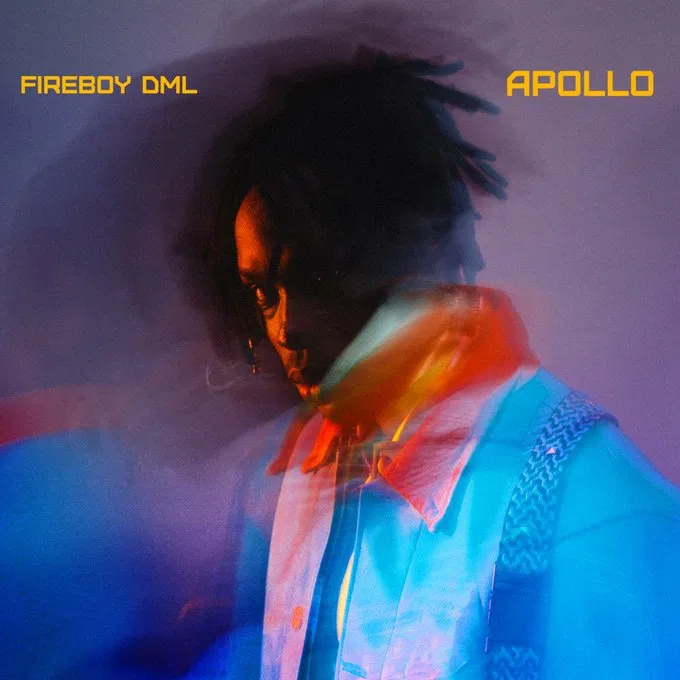
Nigeria is fast becoming a music powerhouse on the international stage. Fireboy DML makes it clear from the beginning that this is something you should be paying attention to. “Champion” starts APOLLO with a silky-smooth tone and then mixes in African themes. It also just means more to hear someone claim themselves a champion in Nigerian patois.
Those Nigerian inflections work well through the album. Songs like “Spell” and “Sound” are catchy, toe-tapping music but would have had nothing more to offer were it not for the Afrobeats elevating them. Meanwhile, “Shadé” has an interesting beat, but that gets completely overshadowed by the textured vocals of the songs. It’s an absolute stand-out and a strong pitch for stardom.
However, Fireboy’s other shots for the big stage miss more than they hit. “God Only Knows” is the outtake that even the direct-for-TV Lion King movies wouldn’t accept. While “Friday Feeling” is nice and upbeat and fun to listen to, it’s very shallow and doesn’t even stick to you when it’s playing. “Remember Me” ends the album on a similarly forgettable note.
When everything clicks for Fireboy though, APOLLO is a solid achievement. It may have flaws, but this is a signature moment for Nigerian music and another reason to be excited about what is to come.
You only get an album like this once or twice a year. It’s no mean accomplishment to make music this varied and Jyoti makes it with consummate skill. She skims across genres without a ripple, selecting pieces to meld into an album wholly her own.
She’s at her best in pieces like “This Walk.” It’s a slow, meandering song, but one where every path is interesting and filled with tiny, rewarding diversions. It’s very laid back, but so dense with thought that it’s very compelling nonetheless. It takes the ambient sounds that she uses throughout the album and cuts it to great effect with the clarity and jaggedness of her voice.
The serrated songs do well. “Ra’s Noise” is similarly jagged and unexpected, but moves further into jazz with a prominent and energetic saxophone. The barbed funk of “Hard Bap Duke” is noteworthy in the same way. This is not to disparage the other tracks here. The traditional jazz of “Swing, Kirikou, Swing” and the ambient of “Quarrys, Quarries” are both very good and the screeching guitar in “The Cowrie Waltz” is fascinating. However, while “Bemoanable Lady Geemix” is interesting for feeling like something out of a hip-hop producer’s album and makes for good background listening, it’s a little shallow. “Ancestral Duckets” is similarly listenable, but could have used more thought.
Mama, You Can Bet ends up with a lot going for it. The range and ability on display here is astonishing. A couple of the pieces here fall short of what one would hope and there’s no single piece that truly stands out, but those are minor blemishes in an album of excellent quality and singular execution.
I’m a sucker for a certain style of art. I love books by Kazuo Ishiguro and David Mazzucchelli. I love Machinarium and Old Man’s Journey. I loved the animated movie L’Illusioniste. I also love lo-fi indie rock records.
I love the gentleness and the intelligence and the melancholy. I love the quiet and the lack of hurry and the sincerity. I love the way they feel. And with this list, I’m going to give you 5 (plus a bonus) of the ones I love the most.
Honorable Mention. Sufjan Stevens – Should Have Known Better
This is a delicate, gossamer track. Sufjan’s singing is a caress and that softness animates the track. It’s a very hazy, very ambiguous track and that’s key to the whole aesthetic. You don’t want full sentences or a full story. The empty space is the point. This is magical realism as music.
That gentleness and obscurity accentuate the melancholy of the music. The title tells you the emotion that the song wants to convey, but by itself, it would be flat. The attraction of this music is in the texture. It’s in pushing a feeling that you can’t pin down, but can only hint at. He sings “I should have known better / Nothing can be changed / The past is still the past / The bridge to nowhere / I should have wrote a letter / Explaining what I feel, that empty feeling” but his voice doesn’t carry regret, but lightness instead. It’s accepting of what has happened, not recriminating. Melancholy doesn’t have to hurt.
5. Girlpool – Chinatown
This is still lo-fi, still indie, but this is a track with an edge to it. Where “Should Have Known Better” is soft and gentle, this is a track that’s not shy about its pain. It’s a misfit’s song and so sharp it cut itself. “I’m still looking for sureness in the way I say my name” is a razor blade and the loud of “I am nervous for tomorrow and today” after the soft of the chorus has all of the emotion of Nirvana but with millennial anxiety instead of 90s angst and “If I loved myself, would I take it the wrong way” is a line both painfully smart and just painful.
4. Ghostpoet – Meltdown
Ghostpoet may not be the most traditional pick for a list like this, but “Meltdown” hits all the right notes for inclusion. It’s the sadness of a missed opportunity and of the gap between knowing that you should act and acting itself. It’s a hazy and indeterminate song, it doesn’t feel like any particular moment, but instead of a period that blends together in memory into a singular feeling.
It’s also strikingly urban in a genre that’s typically small-town. Normally, these songs are situated in a suburb that’s easily painted sepia, but this song feels like I walk I once took at 2AM in San Francisco as things fell apart. It was cold and the mist muddled the brightness of the streetlights and passing cars and the blurriness contrasted with the sharp, wet pinpricks of the air outside. It’s every bit as cinematic as anything else on here, but with a very different palette and for all of its differences, it holds all the same quality.
3. The National – I Need My Girl
You cannot write a list like this without The National. They’re the poster child of this kind of cinematic melancholy. Indeed, movies of this ilk turn immediately to the National for a reason. I was tempted to pick “Pull of You” or “I Am Easy To Find” off their latest album instead of this track. I Am Easy To Find took the giant step forward of adding female vocalists to their track and so balancing out their biggest flaw, their preoccupation with themselves.
It is for that preoccupation that I picked this track though, to highlight that clear single point of view that so typifies the genre. It’s in choosing self-flagellation over making amends. It’s in how the fault was his and yet he is still centered in the song. He needs his girl.
That inability to understand animates the song though. This is the music of having made a mistake and being the kind of person who can’t fix it. Were it not for the delicate skill of the music, this song would be nothing, but instead it is the perfect distillation of the wistfulness of past wrongs.
2. Speedy Ortiz – No Below
I spent months singing the chorus of this song over and over again. I didn’t even sing the full thing, just “I was better off just being dead / Better off just being dead.” There’s something about the tone of Sadie Dupuis as she sings that I cannot resolve in my mind and so it sticks to me. Her singing is sweet and rough and jars so sharply against the song’s content, which in turn is so clearly enunciated that you cannot miss a single word and which itself communicates fatigue so cleanly.
Sometimes, things change you and you just stay changed. Some things are permanent. Sometimes, you can have all of the pieces you need to be happy, but you’re just not a person who can be happy in the way you used to be. It’s just not in your range anymore.
The distortion at the end of the song is everything here. The song is built on some very efficient storytelling. It’s honest, vivid narrative all the way through, and then the vocals stop and the guitar’s screech gives you some space for your own thoughts, and as this song describes, there are few better ways to lacerate.
1. Better Oblivion Community Center – Service Road
I’ve written a lot about things like magical realism and cinematic qualities in this list, but no song does that better than “Service Road.” It’s exceptionally clever and that results in truly excellent storytelling. “Asking strangers to forgive him / But he never told them what it is / He did to them that made him feel so bad” is evocative and open-ended and so the best of what the genre has to offer. Truly excellent melancholy is not mere sadness nor mere self-reproach, but needs the intelligence both to trap the singer and to enthrall the listener.
The comes through in the music as well. The simple, effective guitar frames the vocals very well and gives them space to be gentle, human and regretful. Where some of the other songs here have jagged edges, this one slips into you without a ripple and never leaves. I do wish that it had more Phoebe Bridgers though.
It ends on such an open note though. It ends with motion, with the feeling of freedom. Maybe that’s the only way for these to end. These are stories about life and there are no true conclusions there. Things go on.
The sharpness of a regret is not in it happening, but in living with it having happened, but maybe there’s a second side to that. It’s not in redemption or in self-improvement or forgiveness. It’s not even in having a fresh start. It’s just that tomorrow exists. It’s not a new day or a fresh page and it can’t change what happened today, but it still exists, both as blessing and as curse.
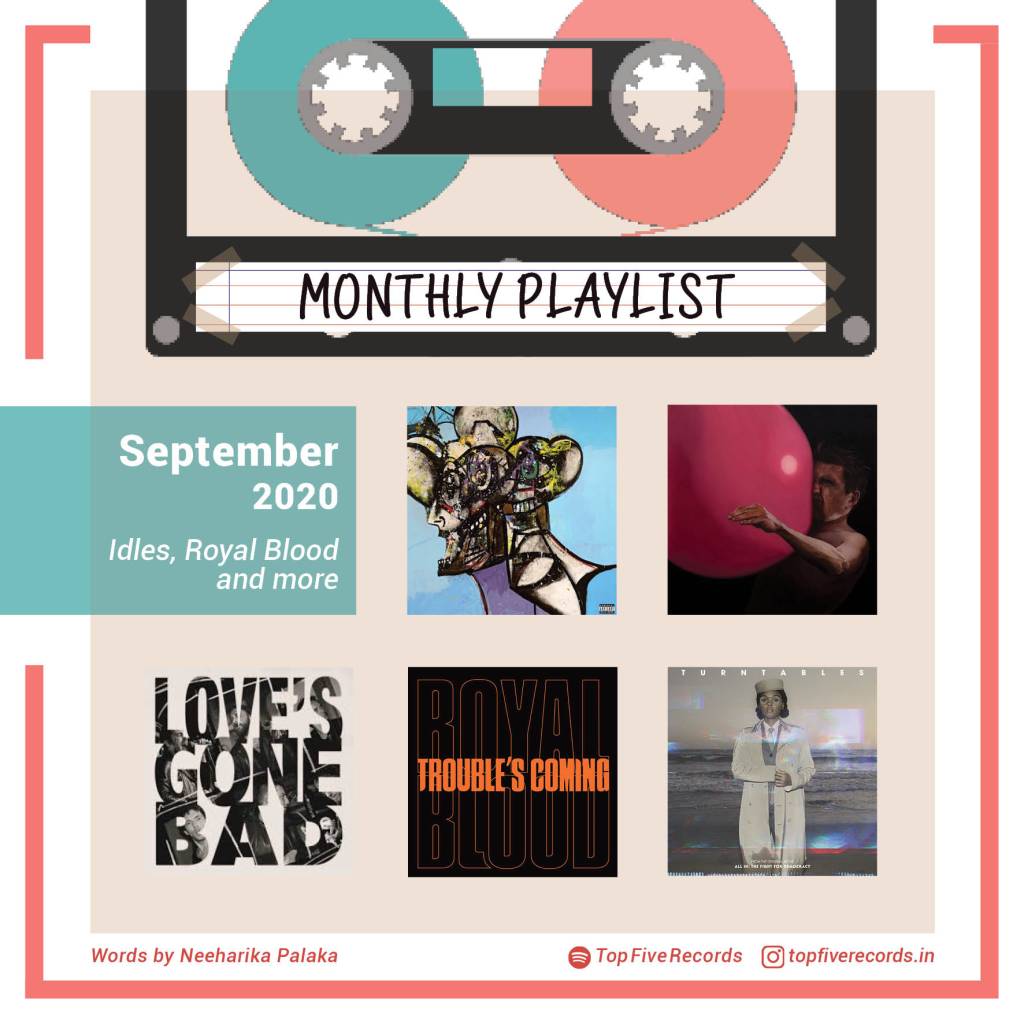
September 2020 saw the release of a surprise Fleet Foxes album, a much-awaited IDLES follow-up, emphatic returns from the likes of Alicia Keys and Sufjan Stevens, and lots more. Read on for our picks of the top five songs from the month that was.
5. “Love’s Gone Bad” from the Jaded Hearts Club
The Jaded Hearts Club is a supergroup featuring the who’s who of early aughts indie rock. Nic Crester from Jet and Miles Kane from the Last Shadow Puppets share vocal duties, with instrumentation from Muse’s Matt Bellamy (bass), Blur’s Graham Coxon (guitar) and a few other friends. Their music, as the obvious reference to Sgt. Pepper’s suggests, is a mix of these members’ indie rock sensibilities essentially converging into a Beatles tribute band. “Love’s Gone Bad” from early September features classic rock riffs and an energetic Lennon-esque presence from Kane. If you liked the Beatles and/or any of these gentlemen’s bands, it’s likely you’ll like this tune. Incidentally, the Jaded Hearts Club released their debut album You’ve Always Been Here just today, so be sure to check that out if you liked this track.
4. “FRANCHISE” by Travis Scott, feat. Young Thug and M.I.A.
You can recognize a Travis Scott beat anywhere. The dull boom of a thick bass line, paired with hypnotic notes and his lilting flow, became a signature on the well-received Astroworld, and it’s no different here. “FRANCHISE” sucks you right in – not just because of this things, but also because of a fantastic early chime-in from the one-and-only M.I.A. The British-Sri Lankan rapper holds her own with Scott and Young Thug, especially on her onomatopoeic turns with Sheck Wes (yes, he’s on here too). All in all, this is a slick and talent-heavy single from Travis Scott and friends – give it a spin.
3. “War” by IDLES
IDLES, much like their Irish counterparts Fontaines D.C., are key drivers of the rock scene across the pond these days. The British punk band has enjoyed widespread acclaim with striking debut Brutalism and equally-hard-hitting sophomore album Joy As An Act of Resistance. They returned this month with third album Ultra Mono, of which “War” is the opener. And open it does. The song hits like a shot of adrenaline, with brutal drumming that’s inter-cut with relentless guitar riffs. Despite lasting just about three minutes, “War” gives you a feel for senseless battle, from the mentions of Johnny and Sally being sent to their deaths right down to the explicit sound of a sword going in.
2. “Turntables” by Janelle Monae
We didn’t know this before, but apparently Amazon has funded an election-year, straight-to-Prime documentary called All In: The Fight For Democracy. While the thought of a Jeff Bezos vehicle talking about the fight for democracy in the context of billionaire-ridden modern-day America is a dubious proposition (to say the least), we can’t ignore this great track from multi-faceted legend Janelle Monae. The actress-singer-LGBTQ-icon here serves a rousing, patriotic ode to civil rights, liberties and all that the America-of-yore stood for: “I’m kicking out the old regime / Liberation, elevation, education / America, you a lie / But the whole world ’bout to testify”. Her lines work especially well on the music video that features striking visuals of the ongoing civil rights demonstrations in the US; check it out above.
1. “Trouble’s Coming” by Royal Blood
Royal Blood are a two(!)-piece rock band from Brighton, consisting simply of Mike Kerr on vocals / bass guitar and Ben Thatcher on drums. Their self-titled debut album blew us away with the sheer volume and breadth of sound that these two people can produce, as did their sophomore album How Did We Get So Dark?. Now, ahead of their third album next year, The band has released “Trouble’s Coming” – a searing ride through familiar Royal Blood territory. The song of course features all the Royal Blood trademarks (Thatcher’s relentless drums, Kerr’s sneering vocals), but what we found most interesting was its dance-rock undertones, especially on the earworm of a chorus (“I hear trouble coming, over and over again”). Beware while listening, though: this is the kind of song that will make you dearly miss live performances.
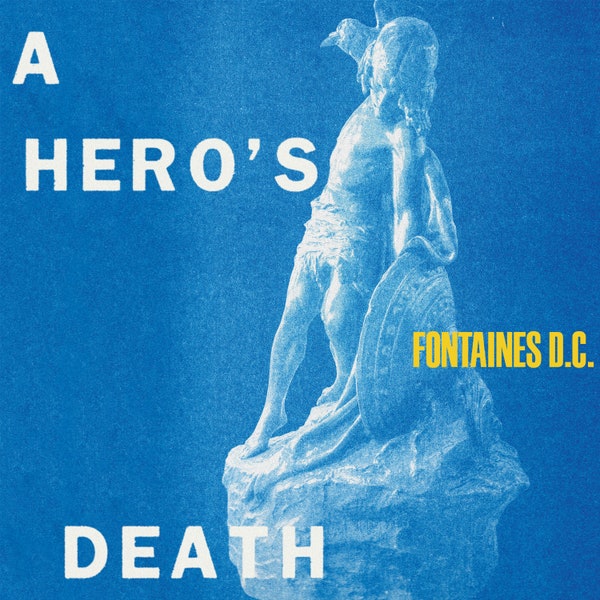
Fontaines DC burst onto the scene in 2019 with their rambunctious, near-perfect debut album Dogrel. The album’s mix of sneering punk, clever literary references and mesmerizing vocals won over many early fans, including us (as you might recall from our end-of-year lists). This summer, the Irish punk quarter returned with an engrossing, worthy follow-up called A Hero’s Death.
On the sophomore album, Fontaines DC keep their trademark self-confidence, but have somewhat smoothed out the edges. Fewer are the pub-fight-friendly tracks like “Big”; largely gone are the spoken-word punk bangers like “Hurricane Laughter”. A Hero’s Death was largely written on a massive global tour for Dogrel, and one can somewhat see the results. This album is more introspective, more cognizant of their growing fame, and perhaps a little dialed-down on the inimitable Irish-ness. Whether that’s a good thing or not depends on the listener.
If you’ve heard Dogrel, you’d have recognized the frequent mentions of America within lead singer Grian Chatten’s lyrics. The centuries-long migration pattern from Ireland to the United States seems to have made the latter a part of the Irish identity – not just for those who’ve left, but for those who stayed behind, too. Dogrel’s hit “Boys in the Better Land” centered on America as the titular “better land” that some folks in the old country still keep talking about.
On A Hero’s Death, “Living in America” adds another wrinkle to the Irish relationship to America: namely, the band’s own extensive tour through America and how it fits into the almost mythic Irish idea of the place. “We were kind of fascinated by that and fascinated by when we actually got to America and you travel across it, you do see that there is really a lot of inequality in a real way,” Chatten said on a recent interview. Fittingly, the track has the same kind of manic yet droning energy of a lot of hard-scrabble, dying American cities.
In fact, the band channels that same dissonance – between reality and imagination, between pre-fame life and post-fame life – on a few other tracks here. The album opener “I Don’t Belong” is a defiant rejection of the post-fame life, where Grian Chatten hypnotically repeats the phrase “I don’t belong to anyone” until all the layers stick with you. Screw you: they don’t want to belong to anyone. Too bad: they can’t belong to anyone. Mind yourself: they shouldn’t belong to anyone. Sadly: they don’t belong to anyone. “I Was Not Born” sounds like a song version of what the band may have precociously said to their tour managers; “I was not born into this world / To do another man’s bidding,” Chatten shouts in an echoing voice over incessant drums and guitars.
Although it’s just eleven songs long, A Hero’s Death takes the listener through many different moods and concepts. Right after the aforementioned brash “I Was Not Born” comes the wistful, sad-pop “Sunny” and the beautiful and gentle album closer “No”. Elsewhere, “Televised Mind” is a hypnotic extension of Dogrel’s “Television Screens” – a favorite theme of Fontaines DC regarding the decay of human thought in today’s consumerist society. “A Lucid Dream”, as the name suggests, is filled with trippy lines (“I was there / When the rain changed direction and fled to play tricks with your hair”) made tripper still with unpredictable volume modulations across verses and chorus.
Perhaps the best song on the album is, appropriately, the title track, which we’ve already spoken about extensively. Grian Chatten’s lyrics are intended to be satire on hypocritical, consumerist preaching, but they’ve accidentally come up with enough do-good edicts to start a small cult (we’re personally ready to sign up just with the line “Never let a clock tell you what you have time for”).
We had good things to say about all of the singles, and thankfully the rest of the album holds up too. A Hero’s Death may not be exactly similar to Dogrel, but it’s more multi-faceted and a little more grown-up in its outlook. Most importantly, it proves that there’s much more to Fontaines DC, and we can’t wait to see what’s next.
Best tracks: “A Hero’s Death”, “Televised Mind”, “A Lucid Dream”
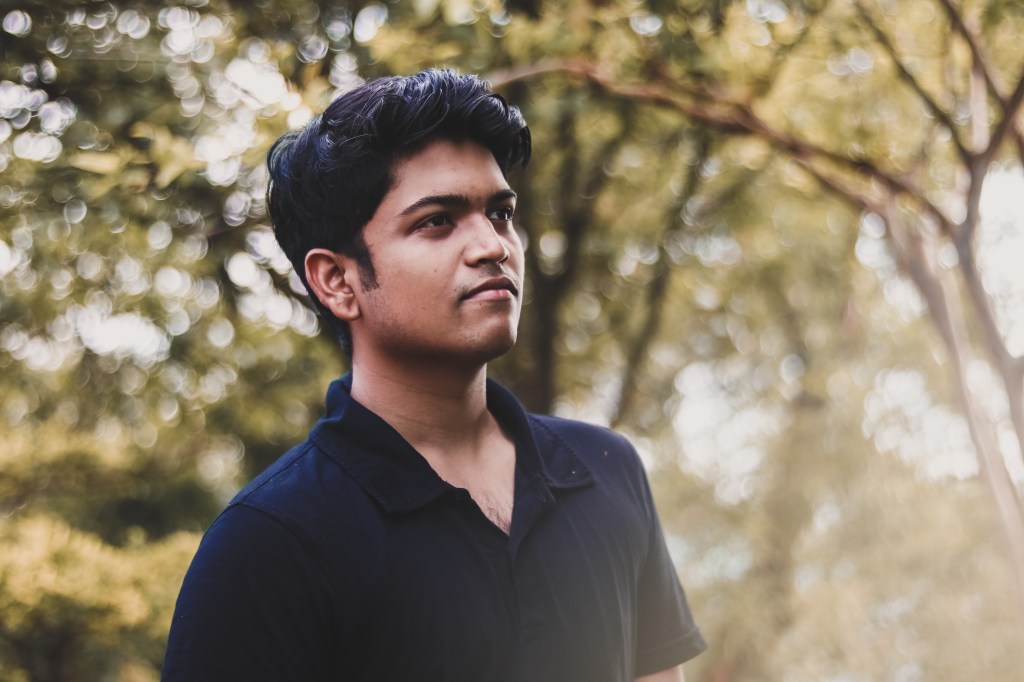
“Make It Alright” by young singer-songwriter Arham Fulfagar really caught our eyes and ears this August. The gentle, lilting guitar melody syncs well with Arham’s mellow voice, from the stark chorus into the jangly verses. We took a spin through the rest of his discography, and couldn’t wait to find out more about him. Read on for a short interview with the Guwahati musician about his influences, his musical awakening, and his upcoming EP!
Top Five Records: Hi Arham! Thanks for meeting with us. Tell us a little bit about yourself?
Arham Fulfagar: I am a singer-songwriter born and brought up in Guwahati, and I also have been working as a freelancer video editor during this lockdown. I have been writing this way for about a couple of years, and I also write poetry and make spoken-word videos besides making music. I love to travel and explore just as much as I love to explore new and underrated music from the corners of YouTube and Spotify.
I also love to show magic tricks to people and I’m also quite good at it! I love doing and learning new things. I’m not really a “talker” in a group, but I love to talk about things like the universe, life, popular conspiracy theories, and of course, music. I’m a believer of “everything happens for a reason” and that every little decision I’ve made has lead me here – and I’m proud of it!
I believe that sometimes things fall apart, but it’s only to make way for better things. I’ve come a long way when I look back and I have a long way to go, but I’m more excited than scared, as the universe works in its magical ways.
TFR: Quite multi-faceted! You mentioned you’re from Guwahati… How much does the North East shape your music and your art?
AF: The North East defines who I am and how I’ve grown over the years. But on the other hand, traveling and moving cities is what has given me experiences of a lifetime without which my art wouldn’t exist the way it does. There are obviously more than one influence that has lead me here. My music and my art has absolutely a lot to do with my life most of which I’ve spent here in Guwahati, Assam.
The North East is a beautiful place with lots of positive vibes and people who have an incredible love for things like music and art; and thus it has a major role in shaping me as a musician, too. At the same time, living away from my parents and family, on my own and blending in with people from different cities has also influenced my art and my style of music.
TFR: We loved your recent jangly, poppy new single “Make It Alright”. Talk to us about the story behind the song! What’s the idea behind it?
AF: “Make it Alright” is an experiment to make a sad song sort of groovy (or poppy). When I was writing it for the first time, I had a thousand things messing with my head, and I had recently started having some anxiety attacks. This was when I was in college back in Bangalore, and I was living with my friends. I remember sitting in my bed and just strumming these basic four chords until I had this image in my head of a boy sitting in the corner of my room, sobbing. That’s when these words came out of my mouth, “I know what you’re crying about, just hold my hand let me make it alright” – and that’s how the song started! Later, I just started sort of blabbering and throwing out random words and recorded them on my phone’s recorder.
TFR: Very interesting. Coming to your musical influences: We hear snippets of everything from Jason Mraz to Ed Sheeran in your vocal and instrumental style. Who are your big influences, musically or otherwise?
AF: There’s this one musician that I look up to the most and want to be able to write and perform like some day. His name is Damien Rice and he is a major influence to the way I write my songs and perform them. Besides that I am also inspired by lots of underrated musicians like Anson Seabra, Roo Panes, Ray LaMontagne, Gert Taberner, and more. I listen to a lot of artists including Ed Sheeran and Jason Mraz, and keep looking to get inspired. Besides these, there are artists that I see around me who also influence me as an artist, such as Raghav Meatle, Anuv Jain, Osho Jain, and my artist friends – most of whom I’ve met in this lockdown.
TFR: Another track we love is “Waiting For You / Intezaar”, especially in the seamless way you switch between English and Hindi. Do you have a preference in either language? Do you relate different emotions or feelings to the two languages?
AF: “Waiting for You / Intezaar” was a beautiful experience for me. It was the second single that I put out and the only single as of now to have crossed 10,000 and even 25,000 streams on Spotify. The lyrics are very honest and simple, and there’s no instruments in the song other than an acoustic guitar and very light keyboard.
Talking about language and what I prefer, I think it’s a lot easier for me to write in English but my listeners and even I love it when I write something in Hindi. I’m liking this mix that I have and I’m grateful to be able to use both the languages for my songs. Lately I’ve been trying to write more in Hindi as well. A song I wrote during the lockdown called “The Kabootar Song” is a Hindi song that has received the most love compared to all other songs, even though it hasn’t even been released.
I don’t always relate different emotions to the two languages, although I must say that lately I’ve been finding it easier to write happier songs in Hindi. But these are only phases and I’m pretty sure it’s all in my head.
TFR: It looks like you’ve been steadily releasing new songs all year, with “Red Wine” in February, “Waiting for You” in April, “Victim in Love” in June, and now this latest song in August. What are you leading up to? Is there an album in the works?
AF: I performed for the first time in October 2019 and it was the performance that changed my life. It was a DIY festival called The Yellow Festival and it took place in a place called Pulga in Himachal Pradesh. None of my songs were out and I performed my songs for the first time and it was so beautiful that I decided to start releasing music in 2020, which I did. I was living in Mumbai and I found an amazing studio and producer who helped me.
Thus, indeed I’ve been steadily releasing new songs this year and I am releasing my last single this year (in September) before I start working on my debut EP. The single is called “A Little More” and is one of the songs that I recorded back in November 2019 in Mumbai. I think it’s also one of the best tracks from that time!
The EP is going to be called Ham Chalein and it’ll be a Hindi EP with about five songs, and I’m super excited about it! I can’t wait to record them and get them produced and release them. I still have lots of original songs that I’m yet to record and put out. Moreover I’m writing new stuff almost regularly.
TFR: As a young, upcoming artist, how have you worked on building your fanbase at a time when the entire world is on lockdown?
AF: As you keep putting out newer stuff, you also build an audience for your past stuff, which is sort of what I’ve been doing. Moreover, I have been making friends by attending live events and shows. I have also been putting out poetry related content and even videos to reach more people. I have also joined some popular IG Lives such as that of Ehsaan Noorani, Armaan Malik and Remo D’Souza to reach more people with my talent. Staying connected with people who support you is also very important so it’s important to show my followers that I really am grateful for them, time to time.
TFR: If there’s one Indian musical artist you’d like to collaborate with, who would it be? And what about one non-Indian musical artist?
AF: I would love to collaborate with a lot of Indie musicians in the future and it’s really tough to pick one but if I had to, I’d go with Prateek Kuhad. As clichéd as it might sound, Prateek Kuhad is someone that has taken the independent music scene to another level, and a lot of us artist do look up to him. Moreover, his songwriting is so honest and simple and relatable.
If I’m to choose one non-Indian musical artists that I would like to collaborate with, it has to be Damien Rice. My admiration for Damien Rice is on another level, it’s almost like a crush. My friends have even started calling me “the long lost son of Damien Rice” because of how much I’m inspired by his style of writing and performing.
TFR: Haha, that’s funny. Thanks so much, Arham, for chatting with us! And best of luck for the release of your new track and the upcoming EP, too!
Listen to Arham wherever you get your music. And be sure to keep your eyes open for his new single this week!
I don’t think it’s possible to overstate how likable Aminé can be and how much that adds to his music. I’m always happy to see what he’s up to. He’s not the only rapper to be this upbeat or this insouciant, but he’s easily the one that I like the most.
Sometimes, this is exactly right. He has a talent for catchiness and so songs like “Compensating” really take off. He has fun, his personality gets to shine and Thugger is a good complement for him. When he gets into his flow, like in “Woodlawn,” he’s a lot of fun. “Riri” is him in his comfort zone, but better than he’s ever been before. That hook in particular is a top-tier earworm.
There’s a fair bit of air in the album though, as is unfortunately common for Aminé. “Pressure In My Palms” tries his standard formula but isn’t catchy or interesting enough. It doesn’t show him off at all and sort of feels like a Vince Staples outtake. Similarly, “Roots” reminds me of Saba and Kendrick, but I’d rather listen to them than this.
“Mama” has him trying sincerity, but it’s not a strong move. He doesn’t have the toughness for the move to feel like a softening and he’s too ironic for a straight-edge song. “Fetus” is slow and thoughtful and quite well done. It’s not innovative, but it is good and the grapefruit line hits.
You have to take Aminé for who he is. This isn’t the kind of album that’s going to stick to you long after it’s done. Instead, it’s an effervescent album with fun lines and catchy hooks and one that you’ll feel good for having heard.









 Top Five Records