Archive | Album Reviews RSS feed for this section

Glass Animals – Dreamland

24 Aug

British psychedelic pop act Glass Animals recently released their third studio album, Dreamland, earlier this month. The band’s previous outputs – debut Zaba (2014) and How to Be a Human Being (2016) – were fairly well-received, resulting in break-out single “Gooey” in addition to a Mercury Prize nod. With Dreamland, the band digs deep into deeply personal stories for a record that’s nostalgic, expertly produced and as dreamy as the name suggests. However, it remains to be seen whether this is the best that Glass Animals are capable of.

According to lead singer Dave Bayley, Dreamland has a grisly and quite recent origin story. In 2018, the band’s drummer Joe Seaward (and Bayley’s childhood friend, as are all the band members) got into a horrendous traffic accident that left his future uncertain. Although Seaward eventually recovered, Bayley’s experiences at his bedside got him thinking about their past, and then even before that: although Bayley is English now, he is actually American by birth and moved to the UK only in his early teens. This mishmash of trans-Atlantic experiences went on to provide the content for much of Dreamland’s lyrics.

Bayley’s date of birth – in June 1989 – forms another key piece of the album’s lyrics. Dreamland is consciously and explicitly centered on the specific lived experiences of Bayley’s cohort of Americans millennials. Peppered throughout the album are touchstones from the childhood of someone born in the 1989-1992 period – watching “The Price is Right” after-school; seeing school shootings; playing Pokemon; and much more.

Unfortunately, the hyper-specific focus on the personal past sometimes works; but more often than not, makes the songs trite and a little childish. If you are listening as someone born in that exact country and time period, great – chances are, you’ll love it purely out of your own emotional connections. If not – well, it does come across a little vapid.

Lyrics aside, though, the album is quite well-produced and diverse in terms of vocals, drums and beats. Dreamland starts off with the eponymous track and third single, which touches upon the key stories and emotions that will be brought up in the rest of the album. The song also sets the album’s dreamy (duh) tone, from the gentle xylophone to Bayley’s whispery falsetto. The last lines on “Dreamland” literally segue us into the rest of the album: “Oh, it’s 2020 so it’s time to change that / So you go make an album and call it Dreamland”.

Say what you will about Glass Animals, but they sure know how to pick their singles. The fantastic Denzel Curry collab “Tokyo Drifting” was released all the way back in November 2019 (remember 2019?); as regular Top Five Records readers know, it was one of the best tracks in 2019 period. Second single “Your Love (Déjà Vu)” from this February was and continues to be a Timberlake/Timberland-esque banger. Perhaps the most interesting track on this album is final single “It’s All So Incredibly Loud”, where the band trade in their hip-hop beats for an intense, Radiohead-like slow-burner. In line with the title, the song gets progressively louder as Bayley’s vocals paint a picture of the split-second after you’ve said something you oughtn’t have.

Among the non-singles, “Tangerine” stands out with catchy beats and a calypso beat that’s instantly reminiscent of Drake’s “Hotline Bling”. “Space Ghost Coast to Coast” deals with the quintessentially American topic of school shootings, and is apparently based off of a real-life friend who became a school shooter. Musically, the song features a wide array of blips, beat drops and droning synths that make for a snappy, crisp listen (despite its content).

But beyond these stand-out tracks, the album starts to falter. It’s not that the rest of the songs aren’t good tunes – on the contrary, the beats and production remain top-notch fairly throughout. However, they don’t quite break out of the casual-listen orbit. “Melon and the Coconut” is as forgettable as the name suggests; “Waterfalls Coming Out of Your Mouth” is just “Tangerine” without the Drake rip-off beat. “Heat Waves” is a great summer track, but you won’t probably remember it beyond the summer. In fact, the most memorable part about it is the music video (see below), which was shot entirely in quarantine. “Domestic Bliss” tackles an important subject matter – domestic violence between parents from a child’s perspective – but you could not hum a bar of it afterward if you tried.

Dreamland is a musical version of the 90s-kid meme, filled with the collective memories of 30-ish-year-olds from childhood to the present day – quinoa and online shopping included – through the filter of Dave Bayley’s personal memories. However, the autobiography theme is a little too specific, erring on the side of therapy or diary entries than the side of a meaningful creative output. Also, the chillwave-meets-Beach Boys vibe gets a little taxing and banal after a while, as does Bayley’s constant falsetto. Overall, Dreamland is a fun, crisply-produced listen – but you wouldn’t be amiss to hear the hits and skip the rest.

Best songs: “Tokyo Drifting”, “Your Love (Deja Vu)”, “It’s All So Incredibly Loud”

Rating: 7/10

Taylor Swift – folklore

19 Aug

It was not something I expected, but Taylor Swift has just made “the indie record much cooler than hers“, and she’s done it quite well at that. I’m not the biggest fan of TayTay personally. Normally, when I mention a TSwift, it’s something that I’ll say to Tom quickly, but her teaming up with the National’s Aaron Dessner has resulted in an album that I actually really like.

She handles understatement very well.  There’s nothing particularly loud or aggressive here, It’s just her voice and minimal instruments, which suits her well. She’s always had musical ability and this album showcases it well by stripping away the rest. She’s similarly deft lyrically. “hoax” has the clever line “You knew the password so I let you in the door / You knew you won so what’s the point of keeping score?” alongside similarly clever music and “my tears ricochet”  has the pointed “If I’m dead to you / why are you at the wake.”

She has a very cinematic bent to her music, which tends to pair well with the genre. There are a lot of scenes that feel set up for a movie and “exile” uses this quite well. “cardigan” is similarly reminiscent of Lana Del Rey and quite good for being so. It’s a little teenage for me with lines like “you drew stars around my scars/but now I’m bleedin'” but it’s still good music. This could be said of the whole trilogy that she embedded in the album. It’s all quite solid music though and I’m glad that her more diehard fans have something that feels built for them.

It’s not a top tier lo-fi record. She hasn’t really found her voice in this space and she’s just not got as many sharp things to say as someone like Phoebe Bridgers (who had an excellent album come out earlier this year) and the music is not quite as memorable as I would like. “this is me trying ” has a chorus that really uses her voice well, but the rest of the song doesn’t quite convert. She never fleshes out the premise and save for the chorus, the song is entirely forgettable. Also, in “peace,” she lacks delicacy. She emphasizes points that would have been better left to the listener to notice and that lack of subtlety weakens the song. Nevertheless, this is a very solid album. This may not be the Taylor I’m used to, but it is a Taylor that I will always be glad to hear again.

Jessie Ware – What’s Your Pleasure

14 Aug

Pop singer-songwriter Jessie Ware is familiar to most English audiences. Her debut album Devotion (2012) straight away bagged a nomination for the Mercury Prize, won that year by fellow Brit pop act alt-J. That album introduced listeners to Ware’s powerful voice, typically set against hefty drums and assertive synths. Subsequent albums Tough Love (2014) and Glasshouse (2017) followed the same theme, resulting in fantastic singles such as “Tough Love” and “Midnight”.

This June, Ware released What’s Your Pleasure, her fourth album – and undoubtedly her best. Over 53 minutes, Jessie Ware takes us on a journey back in time to the peak-disco world of late 70s, as epitomized by dance clubs like Studio 54. What’s Your Pleasure finds Ware at her freest – less bound by the rules of commercial pop music – and the result is a bold, highly enjoyable dance-pop extravaganza for the ages.

When we say dance-pop, we aren’t kidding. What’s Your Pleasure is filled to the brim with 70s-inspired dancefloor gems. Disco is, of course, the theme du jour among pop stars, but Jessie’s interpretation is slinkier than Dua Lipa, more refined than Lady Gaga and more inspired than Doja Cat.

From start to end, the album centers along the same few years – perhaps 1972 to 1978 – but manages to capture all the subtle nuances of that era. The album kicks off with “Spotlight”, which opens with a dreamy, vocal-heavy section in line with Jessie Ware of old – but then jumps right into the unmistakable disco synths that color the rest of the album. “Ooh La La” opens with a fat bassline that could soundtrack the entrance of a glamorous socialite into a plush dancefloor. A couple of songs later, “Save A Kiss” goes into the house music arena with a head-spinning beat, tempered by electronic blips and dramatic violins. “Read My Lips”, with its electric-guitar licks and distant synths, is pure flirty fun all the way through.

Lyrically, much of the album deals with obsession in all its facets – longing, lust, sex and sometimes just romance. Ware introduces the theme right at the start with “Spotlight”: “If only I could let you go, If only I could be alone / I just wanna stay, In the moonlight, this is our time in the spotlight”. “Adore You”, the first single off the album, is sweeter. “Stay ’cause I want you / We can tell everybody, tell everybody,” she suggests, perhaps the starting notes of what will soon become an unhealthy obsession. “Mirage (Don’t Stop)” is her paean for the morning-after: “Last night we danced, and I thought you were saving my life,” she confesses.

Both musically and lyrically, the album really hits its peak on the eponymous “What’s Your Pleasure”: a fast-paced, riveting, instant-classic disco hit that’s honestly one of the best songs of the year.

Recently, fashion godfather and Vogue legend Andre Leon Talley released an auto-biography entitled Chiffon Trenches. In the book, Talley describes his life through the fashion world in the past half-century, especially underlining the carefree, lascivious few years in the 70s between the sexual revolution and the AIDS wildfire. Jessie Ware’s What’s Your Pleasure is the perfect soundtrack to this era: confident yet vulnerable, joyous yet filled with longing, but above all – free.

What’s Your Pleasure is an audacious, glittery antidote to this godforsaken year, and we couldn’t be happier that Jessie has bequeathed us with this gift.

Best songs: “What’s Your Pleasure”, “Read My Mind”, “Spotlight”

Phoebe Bridgers – Punisher

27 Jul

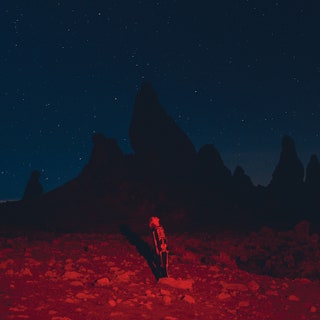
The music that 25-year-old Californian Phoebe Bridgers makes sounds like the antithesis of that sunny west-coast sound you’d expect. With a debut album (the critically acclaimed Stranger in the Alps) and two music groups (indie cult favourites boygenius and Better Oblivion Community Center) under her belt, Bridgers returns to the forefront with emo-folk Punisher.

Phoebe Bridgers has a talent for the unexpected; her lyrics swing between bitingly honest introspection and wry, deadpan humour, often in the same breath. On Punisher, Bridgers explores themes of resentment, fame and troubled relationships, but adds texture to her tracks with a subtle running motif of an apocalypse that’s right around the corner. The end result is an album that is simultaneously emotionally complex, and yet surprisingly funny.

Punisher sets itself up as sinister and cinematic on intro track “DVD Menu”, and immediately shatters that expectation with “Garden Song”, a Sufjan Stevens-esque track that conveys its message of resentment and nostalgia, through mixed metaphors of murdered skinheads and haunted gardens. Bridgers introduces us to the concept of a ‘punisher’, with her title track “Punisher“. According to her, it refers to a fan who doesn’t know when to stop talking. Throughout her album, she explores both sides of the narrative, of being a punisher and of dealing with a punisher. The track itself, though, is musically underwhelming and its lyrics veer on the edge of cheesy (“What if I told you/ I feel like I know you? / But we never met”).

Bridgers truly hits her mark on “Kyoto”, which was released as a single in April. Possibly the only uptempo song on the album, the track contrasts feelings of wanderlust and homesickness, a peculiar mix of emotions that every young adult has experienced at some point. Yet somehow, the track is also simultaneously about Bridgers’ strained relationship with an estranged parent, without sounding like the topic was shoehorned in.

On “I See You” (initially named “ICU” and changed because of the pandemic), Bridgers pulls a classic bait-and-switch. She draws you in with a beautiful, deep metaphor that makes you think about the nature of adult relationships (“If you’re a work of art, I’m standing too close/ I can see the brush strokes”) and immediately hits you with an almost laugh-out-loud petty complaint (“I hate your mom/ I hate it when she opens her mouth”). The closing track, “I Know The End” starts with some classic Americana lyrical imagery and suddenly shifts gear into visuals of apocalyptic billboards, government drones and alien spaceships. The album fades out with a literal cacophony of screaming voices, which is an oddly fitting end to an album that leaves you feeling raw, introspective and just plain sad, to be honest.

That’s the overall direction that Bridgers’ music seems to take. Punisher feels like a dream you wake up from with a sense of impending doom. The metaphors wander, the lyrics weave strange imagery, but you wake up with a general idea of what transpired. Punisher may not be for everyone. This is not, by any means, an easy listen: it’s complex and depressing at times, and Bridgers’ lyrics can be a little heavy-handed with the cynicism and gloom. But what you do get with Punisher, is flawless production value, interesting lyrical work and perhaps most importantly, a strong feeling of catharsis and closure.

Madhoo Palaka

Nadine Shah – Kitchen Sink

21 Jul

Nadine Shah is a 34-year-old English singer-songwriter of Norwegian-Pakistani origin. Her fourth album, Kitchen Sink, is an exploration of every part of that identity: looking ethnically ambiguous, being British in today’s world, and most of all – being an unmarried, childless 30-something woman.

If that sounds hefty, be heartened: it’s not. Shah navigates these weighty topics with ease, wit and humor, all bound together by her enchanting voice.

We’ve already lauded the title track “Kitchen Sink” here on Top Five Records – a sparse, tightly coiled ditty on not giving a damn about your detractors. We had made special note of Shah’s dark, deep voice; that instrument carries many more songs on the record. “Wasps Nest” could be a love child between PJ Harvey and Devendra Banhart: slow-moving mystique made more mysterious by Shah’s tremulous, rich vocals.

Of course, to be a great singer, it’s not enough to just have the voice: it’s also important to have the right milieu for the voice to shine. Kitchen Sink does well to showcase Nadine. For example, “Kite” is a chilling, sparse hymn built primarily on a few plucks and echoing chorals – a black-and-white outline for Shah’s voice to color in. “Walk” mixes South Asian street beats and jazzy quirks to produce a quirky stop-start rhythm – and no surprise, this suits Shah’s brawny pipes.

Beyond her awesome voice and great musical sense, Kitchen Sink is, as we noted at the start, remarkable in the way it encapsulates so many pieces of Nadine’s identity. On the aforementioned “Kitchen Sink”, Shah talks about the suspicious glances that her inscrutably ethnic looks invite from neighbors. Meanwhile, on “Ukrainian Wine”, she paints a striking picture of getting shitfaced on shady wine while others are “playing mummy and daddy” and buying homes (she’s still renting hers). “Trad” could be the morning after a night of hard drinking, where she visits the same themes in a much more sober light. “Shave my legs, freeze my eggs / Will you want me when I am old?” she asks an unseen man, before liltingly requesting: “Make me holy matrimony”.

In fact, it’s the naked balance she delivers on “Trad” – between want and need, vulnerability and boldness – that best defines the album. Kitchen Sink is an auditory banquet that alternates between fast and slow; between deep and tongue-in-cheek; between the slice-of-life and the quite surreal. And Nadine Shah’s powerful, expressive voice is the singular driving force through it all. Recommendation for this one: listen on good headphones. You won’t regret it.

Best songs: “Kitchen Sink”, “Wasps Nest”, “Ukrainian Wine”

HAIM – Women In Music Pt. III

18 Jul

HAIM’s debut album in 2013, Days Are Gone, instantly made them the most likeable thing in music. It just felt good to see three sisters making really good pop-rock together, like a Jackson 5 without all of the ugliness. Now, with their third album, the novelty is gone, but instead they have a sophistication to their music that wasn’t there before.

The core is still the L.A. pop-rock that they’ve always unabashedly been, but now more experimental than most of their earlier sound. There are excellent screams in “All That Ever Mattered”, for instance, that feel like something they wouldn’t have tried before and which elevate the song now.

The album highlight “3 AM” has a deep funkiness that they have flirted with before, but never fully committed to. It’s a sound that they pull off expertly though. The stuttered cadence is compelling and the groove is undeniable.

None of this pushes them to let up in their more comfortable songs though. “Man from the Magazine” is fairly straightforward guitar rock, but impressively stark, which works very well with the chorus of “I don’t want to hear / it is what it is, it was what it was.” I really like their single “I Know Alone” despite a mild dislike for the music video. It’s both gentle and heartfelt and the electronic twinges are very nice. “Summer Girl” is a standout with a memorable brass lick and clean, understated singing and is matched perfectly by the other bookend “Los Angeles” with its still-funny gratuitous put-down of New York winters.

Women in Music, Pt. III is exactly the album I wanted to see after HAIM’s mild sophomore slump. It’s bold, it’s confident, it’s intelligent and it’s very listenable music.

@murthynikhil

Bob Dylan – Rough and Rowdy Ways

12 Jul

It’s a little bit against the spirit of the man, but listening to Bob Dylan in 2020 is reassuring. His voice has just been a part of my life for my whole life, as with practically everyone else with access to American music and born anytime in the past 50 years. Despite the irony, Dylan is an institution.

Rough and Rowdy Ways may not be quite at the standard of his absolute best, but it’s not that far either. It’s alive and accomplished and empathetic and funny all at once.

The opener “I Contain Multitudes” contains the wonderfully bald line “I paint landscapes and I paint nudes / I contain multitudes.” that still makes me laugh. He drops in excellent body-horror in “My Own Version of You” that takes the high concept of the title and makes it an earthy thriller of a carnival.

For all of that though, he can still rock hard as in “Goodbye Jimmy Reed” and even throws a couple of harmonica licks in there. He follows it up with an equally good treacly ballad in “Mother of Muses” and goes from there to a strong laid-back blues rock track with “Crossing the Rubicon.”

The album ends with the 17 minute “Murder Most Foul” which naturally is quite a ramble, but Dylan has always been at his best when rambling. He has a gift for phrases with exceptional resonance and it’s always enjoyable to just float with him and let thoughts bubble up from the music.

It has been close to 60 years of Dylan now and with Rough and Rowdy Ways, we don’t have Dylan at his most urgent or meaningful, but we do have a wonderful, quiet and very human album to listen to and as I listen to it, there’s nothing more that I could want.

@murthynikhil

Norah Jones – Pick Me Up Off The Floor

29 Jun

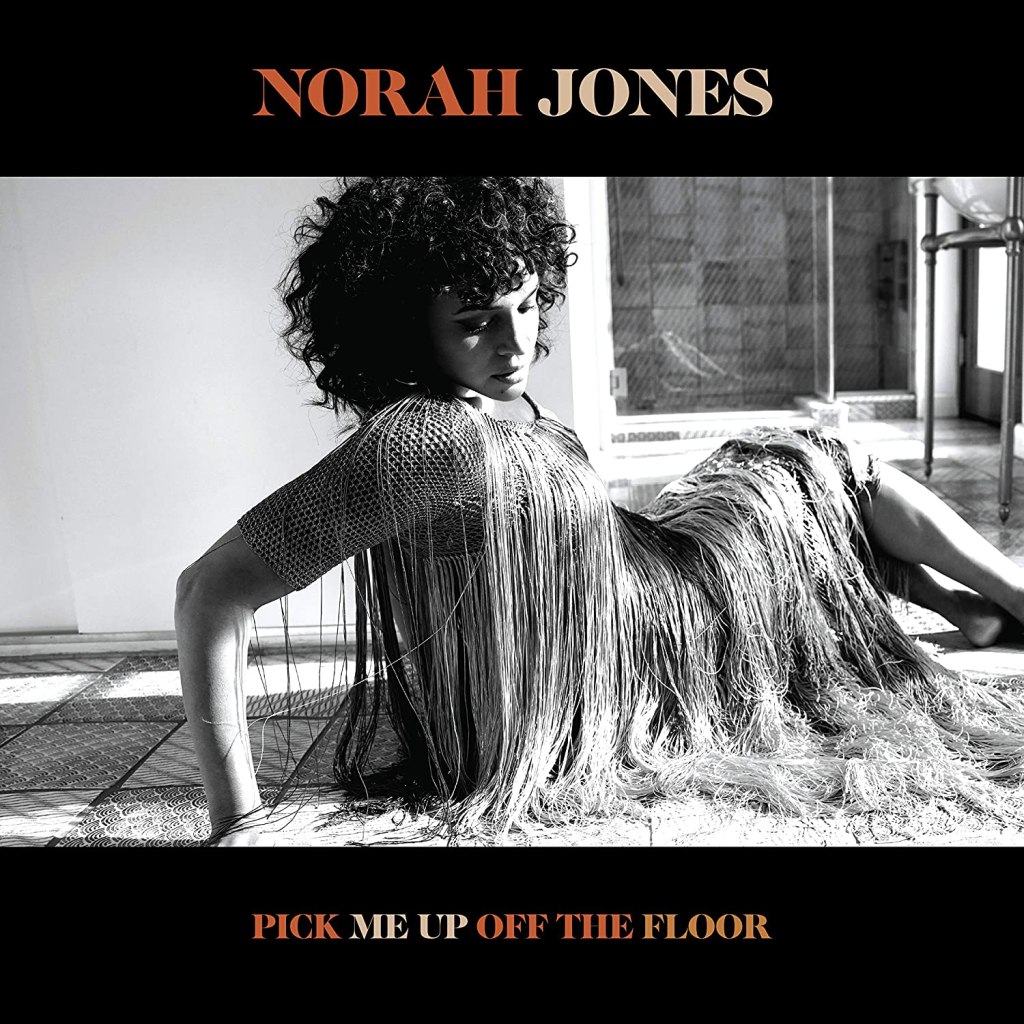
There’s nothing extraneous in Pick Me Up Off The Floor. It’s stripped down in the way of lo-fi rock, but has sort of come to it from the other side. There’s just a sublime confidence in this music. It never overwhelms. It just takes things out one at a time, gives you time to examine it and then puts it away so that you can see what’s next. It knows that everything it has for you is worth your consideration and so there’s no need to hurry you along.

It has the cleverness to justify that confidence too. Right from the opener of “How I Weep” which draws out the first two words into a hurried “weep” at the jump and then draws out that same “weep” on the next go-around. Norah Jones’ singing is impressive as ever. Her voice has the strength to pull off all her gambits and fluid enough to work as well in the barnstorming blues of “Flame Twin” as in the country / gospel ballad of “To Live.” It’s clever and jagged in “Say No More” and yet filled with personality and irresistibly seductive. She dances across genres with very light feet and never stumbles once. There’s not a single point here where she feels less than completely in control.

Furthermore, it’s a sharp enough tool to need little else. The stark structure of “Were You Watching” would have been repetitive with a lesser musician, but between her voice and the clean piano, there’s just no need for anything else. This is a delicate, understated album and an achievement as one. In a turbulent time, it is a respite to have this album playing. It might have benefitted from delving deeper into the current moment than it does. There are references to the world right now studded throughout the album, but there’s also a lot that floats context free. Still, it floats so beautifully that it’s hard to complain.

It is very satisfying that Pick Me Up Off The Floor is the perfect sound to get up to after a fall. It’s always the dream that you build something from an experience that helps others with the same one. I’m listening to the soft, noodling instrumental piece at the end of the final song “Heaven Above” as I write this and it has been a hard and disappointing day and this is the gentleness that I’ve forgotten I need. This is a deep breath and a quick stroke on the back before I get up and now, I get up.

Run the Jewels – RTJ4

20 Jun

With their debut album RTJ in 2013, hip-hop super-duo Run the Jewels broke the mold of what intelligent, anti-establishment rap would look like. Naturally, they then proceeded to create even better versions, with the well-received RTJ2 (2014) and RTJ3 (2016). In that time, Killer Mike and El-P have also been hugely successful in a commercial sense, sound-tracking everything from Black Panther to FIFA18.

But despite this commercial utilization of their music, Run the Jewels is, at their crux, an anti-establishment act. Like their pre-COVID planned tour-mates Rage Against the Machine, Run the Jewels excel in just that – raging against the Machine, whether that’s the police, racists, or the wealthy.

In the summer of 2020, the world is battling the triple threat of a global pandemic, racism and wealth inequality. In that environment, Run the Jewels’ latest output RTJ4 is prescient and essential – and to put it bluntly, the record of the moment.

Throughout the album, RTJ make mincemeat of current times with chilling lines that were, astonishingly, recorded sometime in 2019. On album opener “Yankee and the brave”, the zeitgeist fire delivers stinging burns. “Pardon them as they work until every pocket’s been picked and soul been harvested / I’m ready to mob on these fucking charlatans,” announces El-P, while Killer Mike follows up with a could-have-been-recorded-yesterday swipe at police brutality: “A crooked copper got the dropper, I put lead in his eye / ‘Cause we heard he murdered a black child, so none of us cried.” An eye for an eye indeed.

 “Walking in the Snow” sees El-P delivering a searing indictment of Trump-era pseudo-Christians (“Kids in prisons ain’t a sin? Shit / If even one scrap a what Jesus taught connected, you’d feel different”). The fantastic “JU$T” drops a deep thought: “The Thirteenth Amendment says that slavery’s abolished / Look at all these slave masters posin’ on yo’ dollar”; and somehow, this aligns perfectly with statues being pulled off their pedestals across the world just in the past few days.

But Killer Mike and El-P aren’t just eerily clairvoyant – they’re also eerily intelligent. We are so used to mainstream low-IQ rap that it’s honestly a thrill to hear clever, laugh-out-loud brags. For example, on “Out of Sight”, Killer Mike belts a stone-cold classic metaphor: “Colder than your baby mama heart when she find out you been fuckin’ with that other broad / And you ain’t got that rent for her”. Elsewhere, El-P casually drops the instant-classic line “Got a Vonnegut punch for your Atlas shrug” – pitting the socialist Kurt Vonnegut against the libertarianism of Ayn Rand (interestingly, of course, she herself clashes the same two archetypes on Atlas Shrugged, with Howard Roark and Ellsworth Toohey).

Yes, they’re intelligent. Yes, they’re anti-establishment. But lest you think this is a spoken-word recitation of the latest Jacobin issue, it must be said that this is, above all, a great music album.

Killer Mike and El-P are blessed with sonic gifts like few others.  “Out of Sight” in particular is a prime example of Killer Mike’s masterful flow, with four gerund-filled lines (“motivating, captivating, devastating…”) effortlessly hitting beats that you didn’t realize existed. El-P isn’t far behind; on “Holy Calamafuck”, for example, he plays with the same vowel sound on about 12 different words. The album is also packed with great riffs. We’ve already gushed about the fun single “Ooh La La” but don’t underestimate the hook on the aforementioned Pharrell Williams-Zach de la Rocha double-feature “Ju$t”.

Run the Jewels have been railing against all forms of injustice for their entire lives. But now, in a perfect storm of Black Swan-like events, the world has caught up to them. Like Killer Mike’s political hero Bernie Sanders, they get extra credit not just for saying the right things, but for having always said the right things – even when they weren’t considered right.

RTJ4 is prophetic, thoughtful, complex – and most of all, highly enjoyable. Whether this album is better than its predecessors is really up to the listener, but this one will always be memorable for perfect alignment with the moment in which it was released.

Best tracks: “JU$T”, “Out of Sight”, “Ooh La La”

John Coltrane Quartet – Africa / Brass

17 Jun

It’s easy to latch on to the monkeys and elephants that show up partway through the first piece and hear the clear jungle noises there and think that this album is less than it is, but this is first and foremost excellent, inventive jazz. Like Olé Coltrane, which was released in the same year, the theme comes through strong and the jazz is richer for the flavor, but the soul of the album is in the superb hard bop that it’s built on.

Most interesting though is the big band that backs the quartet throughout. Adding the larger band of older styles of jazz adds a lot of swing, both in “Africa” and in “Blues Minor” and also shows what big band jazz could have been had the genre not shifted to more intimate groups. Between that and the jungle themes, “Africa” comes off as very reminiscent of possibly the best known verdant jazz of all, Louis Prima as King Louie in Disney’s version of The Jungle Book, something I’m always glad to be reminded of.

“Greensleeves” is another classic Coltrane pop track, taking as it does a British folk classic and effortlessly reimagining it as post-bop and “Blues Minor” is fearlessly improvisational. However, it is “Africa” that is the clear highlight. Elvin Jones has a stellar drum solo in there and as always, Trane’s sax work is unparalleled.

This is something a bit out of left field for Trane and he never did revisit the ideas he played with in this album, but that should in no way be taken to imply a misstep. This is, if anything, more special for its uniqueness. It’s a legitimate masterpiece and an essential album for any fan of this style of jazz.

@murthynikhil