There’s no shortage of high-powered collaboration in music and there’s such a range of them that it’s hard for anything to really take one by surprise, but you don’t come across a trio of producer, saxophonist and orchestra everyday. You don’t come across an album this good everyday either. The three meld beautifully. It feels like the intersection of three separate strains – the ambient production of something like Green by Hiroshi Yoshimura, the nature-inspired classical music of compositions like Vivaldi’s Four Seasons and the spiritual jazz of people like Sun Ra and John Coltrane, both of whom Pharoah Sanders played with.
The album evokes lush, verdant scenes whether through Floating Points’ productions as in “Movement 7” or the Orchestra in “Movement 6.” This is not the jungle, because the jungle lacks the intensity of this music. The colors of these soundscapes are too bright, too intense to be nature. They instead capture the feel of nature at its most immersive and leave you with nothing to distract from it. It is that first moment of experiencing a new vista made into a full album.
It’s filled with detail though. The refrain that ripples throughout the album is distinctive and beautiful. It’s wonderfully open-ended and accents the ambient music very cleverly. You can also feel the presence of many different organisms in the music. There are little flourishes of background hollering and chirping that enliven the music and add depth.
It’s the saxophone that really brings the human element to this album though. Sanders’ jazz comes in hot and adds that heat to what might otherwise be a very austere album. He even vocalizes in “Movement 4” and that integrates beautifully with the ripples of the music. He doesn’t go for the sheets of sound you might expect, but instead plays pure, drawn-out notes that express so much in their tone. When he comes in at the 7th minute of “Movement 7” with a sax scream, it’s the perfect way to agitate the existing music. Pharoah Sanders brings such a strong voice to this collaboration and his saxophone is the most noticeable thing here.
This an astonishing addition to some of the more storied careers in music history, a very individual album and music of the absolute highest tier.
So much of art rests on thin margins. Lana Del Rey has made a career out of evocative music, music that conjures a lot out of a few scattered pieces. This understatement was the core of her appeal. With Chemtrails Over The Country Club, the insubstantialness finally takes over and the magic just doesn’t hold and the result is hollow instead.
The biggest failure here is just the music. LDR was always languorous, but here the album is simply mired in tar. She has moved away from the hip-hop that underpinned her debut and suffers for the loss of energy that came with it and her stabs at punk rock are inexecrable. I respect that she loves Joan, so do we all, but the rest of us know to keep our imitations to the privacy of bathroom walls.
Normally, she is cinematic enough with her music that its magnitude gives it momentum. Here, the music is flimsy. The moments of pace and energy that dotted her previous work are completely missing here. Even more damningly though, the album just has far too little emotion.
It does manage some highlights. The title track is quite good and I love the drums at the end and the repeated “My Cancer is sun and my Leo is moon.” “Yosemite” is absolutely gorgeous and there’s a wonderful little Spanish string tilt in there. “White Dress” has the amazing “Men In Music Business Conference,” which I dearly wish she had expanded on more.
It’s a shame that the rest has nowhere near the same quality. Despite “Breaking Up Slowly” being her comfort zone and despite the brilliance of “Are these my good years, or do I have none?/Are there really good years for everyone?”, the song has no substance to it. It’s okay to be vague if you allude to something interesting, and the premise of this song is not. Even so, it’s substantially better than “Not All Those Who Wander Are Lost” or “For Free.” These are unnecessary songs which traffic in the most uninteresting cliches and do so in the most boring manner.
Norman Fucking Rockwell was excellent and showed Lana Del Rey as so much more than just her debut album. This album adds nothing to her legacy. With any luck, we’ll remember this as nothing more than an unfortunate speedbump, but it’s more likely that we just will not remember it at all.
Tyron, the sophomore album from punky British rapper slowthai, is a twin-headed beast. On the first half, with titles in all caps, slowthai (real name Tyron Frampton) comes to the listener with full braggadocio. The second half, with titles all in lower case, finds slowthai in introspection – about his music, his journey and most of all who he is as a person.
A lot of the context for this album comes from a singular day in the Before Times – February 12th, 2020, the day of the NME 2020 awards. Slowthai was nominated for everything from Best Song to Best Album, and even won the famous Hero of the Year award – so far so good. However, things took a left turn when the inebriated rapper proceeded to hit on the comedian-host Katherine Ryan, and then, when folks started throwing drinks at him, tried to jump into the audience for a fight. Ryan soon after said that she was in on the “joke”, but the damage was done. Slowthai was to be cancelled; but unfortunately for his detractors, the lad wasn’t having it.
Swiftly following the event, Slowthai put out a thinly-veiled diss track called “ENEMY” – which is, of course, phonetically identical to NME (“Keep my name out your dirty mouth / Fightin’, don’t know what you keep on cryin’ ’bout”). In a way, Tyron’s first half represents a further exploration of the themes from that song; including his assertion that his steep rise to fame could not be cancelled by one bad night (really, a few bad minutes).
We’ve already talked about the Skepta-featuring hit “CANCELLED” which finds the grime legend joining slowthai in hitting back against today’s often-too-harsh cancel culture. On “MAZZA” featuring American rapper A$AP Rocky – no stranger to controversy himself – slowthai explores the mantra of “Any press is good press”. “Gin and tonic, I’m a bigger topic / Bigger pocket, can’t close my wallet,” he boasts, tongue-in-cheek reference to his boozy bad day. And he has a point; recent events have done nothing but fuel slowthai’s punk image, on which much of his music is based – surely that can’t be bad for business.
The few others on this half of Tyron see slowthai at peak bluster. “VEX” explores his refusal to get ruffled by things that would earlier bother him (“I used to get vexed, now I just, mmh / Been bad since I stepped out the womb”) while “DEAD” speaks to his legacy that, according to slowthai, is irreplaceable whether he’s alive or not. In line with the twist on the death theme, there are some YOLO lyrics on this track: e.g. “My vida loca, true I lead this crazy life / Tune banging in the motor, gun-fingers to the sky”.
After all that bravado, slowthai switches things up on the more hard-hitting second half. It’s not just the titles that are in lower case; these seven songs find the music toned down, his raps slower. If the first half was the drunken, belligerent NME evening, the second half was the morning after – with a heartfelt explanation of the personal events that led to an embarrassing show like that.
“i tried” is a heartbreaking tale of a kid from the wrong side of the tracks who wants to be loved but is shunned by a world that only sees the stereotype. It’s a tale as old as time, but the sharpness of his writing lends new texture to the story. “Hug the world with open arms and they treat me like a pest,” he says, followed soon by “Life got me in a headlock, back and forth like a hockey puck / Always wanted muscles, lack of strength made me headstrong”.
“terms” sees slowthai realizing the destructive patterns in his life: “Early bird wakes, catches the worm then reverts to its base, regurgitates / And nothing I’ll change / Do it again and I do it the same again and again.” Musically as well, the track’s a stand-out, featuring a surprisingly evocative chorus from rapper Denzel Curry and up-and-coming rapper / musician Dominic Fike. “push” sounds nothing like any other slowthai song, featuring the gentle vocals and guitars of LA singer-songwriter Deb Never. “I grew up ’round toxic / And people can’t see ’cause they live in a pond with some dumb fish,” writes slowthai, wrapping that pearl of truth with coming-of-age snippets from his rough background.
The best of this bunch is “adhd”, which sees slowthai at his most honest and vulnerable. On this track, he paints his hard persona as a shield to deflect from his varied and self-harming internal struggles. If the line “Tryna protect so I project / Deflect and they call it self-defence,” doesn’t get you, this one will: “Overthink, sink in my seat / Eat, sleep, repeat, what you know about T? / Smoke weed only way I fall asleep / Same routine, drink ’til I can’t speak”.
Overall, Tyron adds depth to the slowthai persona, offering up intriguing and well-penned origin storylines that further explain why this lad from Northampton ended up creating a debut album called Nothing Great About Britain. The introspective second-half of the album is far more interesting than the typical braggart first-half, and hopefully slowthai explores that side further in future albums.
Dimensional Stardust seems like the kind of album that would enjoy a good paradox and so it’s lucky that it brings one to the table itself. It is, at one and the same time, wildly novel and numbingly familiar. The album is a parade of fantastic soundscapes. Not only does it accurately evoke space, but it evokes space as interesting. This is not the untouched void. It is instead an explosion of shapes and colors. You can see the comets and nebulae and galaxies all whorling around with even the occasional life form drifting through.
“Sun Core Tet,” for instance, keeps a simple foundation, albeit complicated by shapeshifting instruments, but then puts so much color into the space left open. It is somehow strongly reminiscent of Saturday morning science fiction, especially due to the vibraphone and flute work. I’ve heard many musical representations of the wonder of space, this is the only one that really brings in the childishness of wonder. The good dynamic energy of the later “Parable of Inclusion” further builds this feeling.
There’s also a strong classical vein to this album. The sparse leading instruments and heavy use of polyphony do a lot to build this and there’s no real soloing here. It’s a very crafted album, which is a strength for how clearly the album speaks but a detriment as well. There’s a lot in this album that could use the inspiration that comes from the improvisation that defines space jazz.
“Autumn Pleiades” for instance, sounds like post-rock more than anything else, and as often happens with that genre, falls too far into repetition. It could have really used a little surprise somewhere. Similarly, “The Careening Prism Within” is just too predictable and it feels like the voiceover in “Abstract Dark Energy” never ends.
It’s a shame that this strain of predictability mars what would otherwise be an excellent album. In fact, if you’re looking for something in the vein of your favorite post-rock album, but with parts significantly more challenging, this album is tailor-made for you. If your tastes are more general, this album still paints some very vivid visuals, even if they could use some additional variety as well.
This review is for the 12-track international edition of Celeste’s Not Your Muse. The international deluxe edition features an additional nine songs that we highly recommend you check out.
British pop singer Celeste’s star has been on the up-and-up for the past couple of years. Starting off her career providing vocals for the likes of Avicii, Celeste built a name for herself in the British music press with a pair of well-received EPs – The Milk & the Honey (2017) and Lately (2019).
By the time Lately made its rounds around the world, the singer pretty much became an unstoppable force. Tastemakers of all swathes, from GQ to the prestigious BBC Sound of…poll, named Celeste as a breakthrough act for 2020, and she didn’t miss.
In January last year, she released “Stop This Flame”, a rambunctious jazz-pop number centered on her powerful and impassioned vocals. Her second single of the year, “Strange”, is a beautiful, downcast ballad that falls somewhere between an emotive Paul McCartney-penned Beatles track and – on the modern end of the scale – the whispered stylings of one Billie Eilish. And we’re not the only ones who thought that, for the track seemed to have brought in the talents of Billie’s Grammy-winning producer brother Finneas on the next single “I Can See the Change”.
If you thought that was the extent of Celeste’s star-making year, then you would be wrong. She then went on to perform three songs for The Trial of Chicago 7, a star-studded Aaron Sorkin-directed venture focused on the tumultuous anti-Vietnam war years. One of those three songs – “Hear My Voice” – is now nominated for Best Song at this year’s Oscars. Celeste closed off the year with a duet on the latest Pixar film Soul (“It’s Alright”) for which her soulful, playful vocals are perfectly suited.
So, yeah, Celeste has had one hell of a breakthrough year.
With so many well-known singles that have had their time in the sun, there was always a risk that Celeste’s Jan. 2021 debut album Not Your Muse would not hold up in its entirety. Luckily, that’s not at all the case. We’ve already spoken about the alluring “Tonight Tonight”, a poppy-yet-pensive track that sounds like Suzanne Vega’s “Tom’s Diner” set to an alt-rock drum beat. Another stand-out track is “Beloved”, where Celeste’s deft vocals and the romantic strings bring to mind a dramatically broken heart in, say, snow-covered Christmastime Paris. (Or something equally bittersweet.) The more rock-infused “Love is Back” sounds like it could be a hidden B-side to Amy Winehouse’s “Valerie” – and really, could there be a greater achievement for a young British jazz-soul singer?
As we wrote in our song review for “Tonight Tonight”, Celeste feels like an artist who’s just on the precipice of household status – think Adele the year before 21 was released, or Lizzo right before “Juice” came out. Not Your Muse is an ode primarily to Celeste’s magnificent voice; but also to her genre-bending sensibilities across jazz, soul, R&B, pop and even rock. It’s early, but we can see this being one of the best debuts of 2021.
Rating: 8/10
Best songs: “Love is Back”, “Tonight Tonight”, “Stop This Flame”
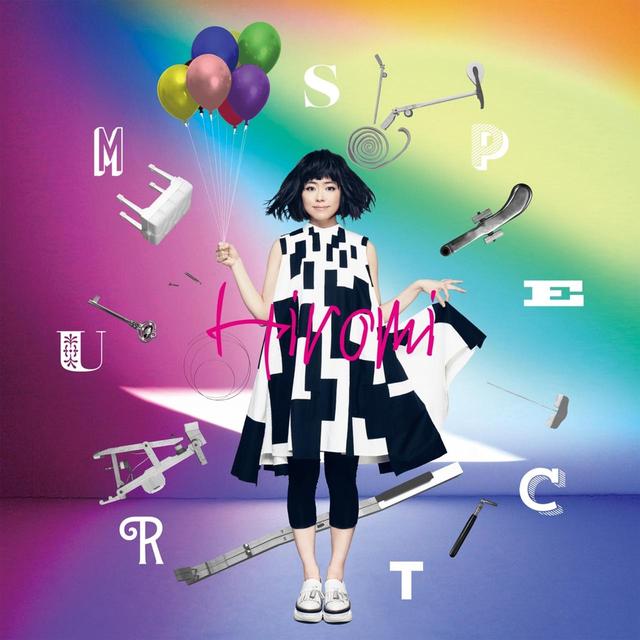
It’s very hard not to understate just how impressive Spectrum is. This is an overview of the past decade of musical learnings by Hiromi, an impressive enough conceit, but to tell you that misses the point. The incredible thing about the album is not the range of music here, but how the whole comes together. It’s not just that her familiarity with all of these threads, it’s that she has internalized them and, having digested them all, can now synthesize something wonderful. This is not just an album more than the sum of its parts, it is an album that developed new building blocks and then made a cathedral from them.
“Kaleidoscope” starts the album out in a Baroque manner, but then goes everywhere it can imagine. There are some threads in there that feel like they escaped from an action movie. “Rhapsody In Various Shades Of Blue” doesn’t stop at mixing in Gershwin and Trane, but even fits The Who in there. You can even see the namesake’s walk in “Mr. C.C.”
It almost goes without saying, but Hiromi is a highly accomplished pianist and this album makes full use of her ability. “Spectrum” is a tour-de-force of dexterity as the song hurtles through intelligent and challenging counterpoint at a breakneck pace. She then balances that with an incredible warmth that radiates through the piano in slower pieces like her take on “Blackbird.” Her rendering of the refrain here is lovely and her excursions express a beautiful wanderlust.
Spectrum is unquestionably the work of a visionary and a virtuoso. It is absolutely masterful jazz and a delight to listen to. It’s even an album that I would recommend to beginners. Due to its assimilation of showtunes, swing and even classic rock, it gives the novice plenty to latch on to. More simply though, it is just a delight to listen to and an album that you are richer for having heard.
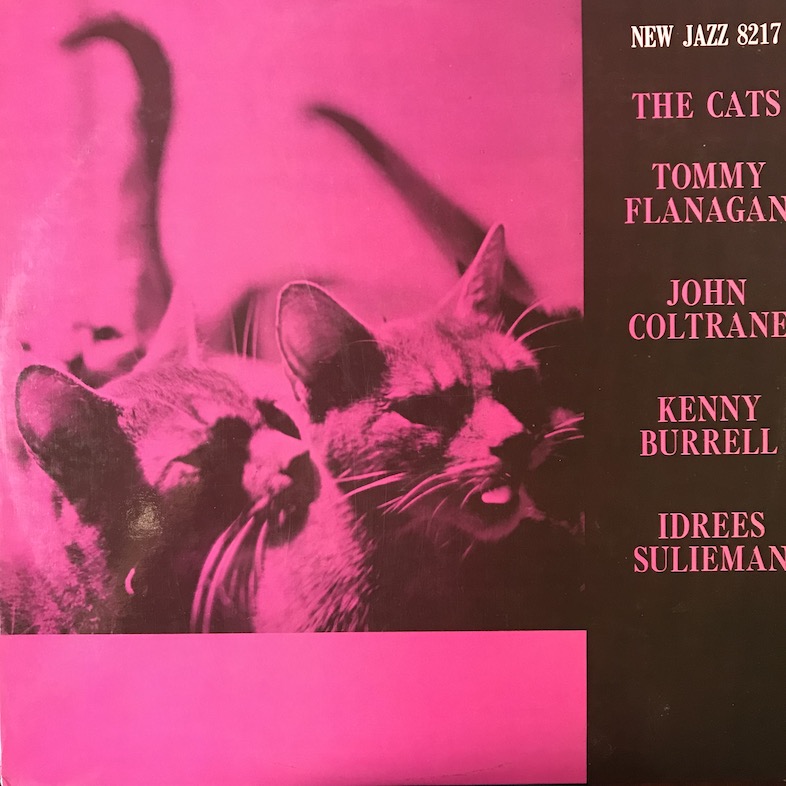
1957 was one of those hot periods for jazz. It was a time when you could throw together a bunch of jazz players who happened to be in Detroit and you would get something like The Cats. This is an album chock-full of clever, engaging solos. It’s never aggressive and very listenable no matter who you are. It’s also as sharp as you can ask for.
The album shows you its quality right from the opening of the excellent “Minor Mishap.” It’s a good opening. It’s fun and open-ended and immediately sets you up for interesting things to come and then Trane’s solo is excellent. Coltrane is not as aggressive here as he would very soon become, but you can see him reaching toward it and he’s just having fun with this album anyway.
That fun follows in “Ecypso” where his solo adds to an already great song. The upbeat refrain here is a great way to set the tone and then the noodling piano solo at the start follows it really well. Together, they give the song a good club jazz vibe and the rhythm really bolsters that. Idrees Suleiman is bubbly and having fun here. His solo puts a smile on your face, but there’s intelligence to spare with it and Kenny Burrell puts down a very cool solo as well. It plays things a little predictable in parts, but it’s enjoyable enough for that to be only a minor burr.
Later, “Tommy’s Tume” is just very jazzy jazz. Jazz is already inherently very cool and some jazz is cooler still. This is that jazz and fun to boot. Burrell speeds up in the middle of his solo for a very clever touch, the bass gets a chance to shine and finally Trane comes in for a very smooth touch.
The Cats is not the best that hard bop has to offer. “Solacium” does miss the mark a little, even if it is still music that I’m always glad to have on. The album is just a little too relaxed to really hold its own at the highest level. However, it’s still just wonderful music and one that can be approached from any skill level. This is a collection of jazz masters doing what they do best and it’s no surprise that they are some very cool cats indeed.
A lot of indie rock likes to use gentleness to disarm before it strikes. It’s a way to lull you into a placid mood before it lacerates you with insight. songs has moments as sharp as any of them, but is still delicate and somehow reassuring. One of the major cultural trends to recently emerge is that of wholesomeness, but that brand of wholesomeness feels inextricable from naivety. songs doesn’t hide its intelligence, but tempers it with immense gentleness and so does more to rejuvenate than any amount of shallower media.
It’s with “ingydar” that this is at its best. The song takes transience and distills it. It has a fantastic sense of place and it’s very evocative. It takes the repeated “everything eats and is eaten” and shows you that it is not a cruel statement of Darwinian logic, but instead one of profound beauty.
At its best, this is what the album manages to achieve. It takes the harder truths of life and, as if by magic, reveals the gentleness inside. It does mix that with a number of pieces that fizzle without much to say, but there’s still plenty in here well worth the listen.
Like with Lupe Fiasco before him, there’s always the worry with a Kid Cudi album that he’s found a new way to sabotage himself, or even just that he will reuse one of his old methods of sabotaging himself. Man on the Moon III doesn’t use any of his old tics of poor beats or weird idiosyncrasies. It’s Kid Cudi in the space where he’s at his best, and that should be a relief. It’s just a shame that it’s still so boring.
This is at its worst in the centerpiece of the album, “Elsie’s Baby Boy.” It’s built up, it’s got a story, it feels like it’s meant to be something and it does nothing. I’ve heard it many, many times and I still can’t tell you a single thing about it. It just doesn’t stick, and sadly too much of the album follows suit. There’s some forgettable trap and some forgettable rock-tinged rap and some other forgettable music and that’s most of the album.
It’s tempting to say that I’ve just outgrown Cudi and to internalize the problem, but that’s not the problem. The issue is that the songs just don’t resonate the way his best stuff did. He came in as an everyman in a time of rap excess, and now he doesn’t feel human at all. His old stuff can still hit hard. They were honest and that still shines through. MotM3 has none of that. Also, where’s the fun of taking something like “Poker Face” and making that into a beat?
There are moments here. I like the “get it, get it” in the middle of the solid “Sad People.” It’s mostly listenable, albeit uninspired. He’s definitely had worse albums than this, and during some of the low points, I would have killed to have even this. His single with Travis Scott had seemed to signal a shift for Cudi, it had seemed to be his breakout moment, but instead it looks like it was a lone bright spot and not a star taking shape.
This is the kind of jazz album that I love to review. You can’t get away from the fact that jazz is forbidding. The more that you give to jazz, the more that jazz gives back to you and so it can be hard to start. That’s why albums like Omega are so great to see, this is the kind of album that can start the virtuous cycle of jazz. It’s approachable, it’s very listenable and yet still smart and able to reward any kind of listener.
Despite simple, accessible foundations, the tracks quickly become clever, intricate pieces. “Warriors” opens the album in a very straightforward way, but then goes into a lovely, thought-provoking piano solo. It’s in the next song though that Immanuel Wilkins really takes flight. “Ferguson – An American Tradition” is fiery and filled with agony. It returns to a simple, but stimulating off-kilter refrain about 6 minutes in that gives a bit of respite from the emotion of the rest of the track, but ends with a heartfelt cry of pain. It’s a magnificent statement and, after “The Dreamer” as a nice bit of softness in between, the album goes into further injustice with “Mary Turner – An American Tradition.” This is a more muted track than “Ferguson,” but persistent. About two and a half minutes, there’s a straining horn that’s excellent and then returns to the persistent noodling of before and that journey makes for a very powerful statement. The song suffers a little from my one complaint with this album, I would have liked to see the musicians cut free a little more and really push their ideas as far as they would go, but this is a minor quibble and a choice that brings benefits as well.
This is not an opinion that you should let cut too deeply though. This is a very clever album. “Grace and Mercy” is delicate and soothing, but has a flair for the unexpected. It’s quick to surprise and filled with sharp ideas. “Saudade” is a nice shot of energy and change of pace. “Guarded Heart” both demands and rewards attention. It has aggressive saxophone riffs that are compelling and clever and a wonderful, minimal ending.
If you’re looking to pick up a recent jazz album, this is the one you should look to. If you’re new to jazz, this is a great place to start with. It’s just easy to appreciate that this is very good music. If you can invest in it though, it pays you back in spades. I highly recommend you give this a spin.