Tag Archives: jazz

Milton Nascimento, Esperanza Spalding – Milton + esperanza

8 Oct

An Esperanza Spalding album is always going to have some truly fantastic vocal work and it’s a pleasure to see her work with a legend like Milton Nascimento. The atonality in her singing is incredible in “Get It By Now” and she concludes the song on an excellent note. She also uses it well to challenge the listener in “When You Dream.”

It’s an album that could use a little more of interest, but Milton and Esperanza are both likable enough to make it immaterial and there’s enough energy to carry them through with aplomb.

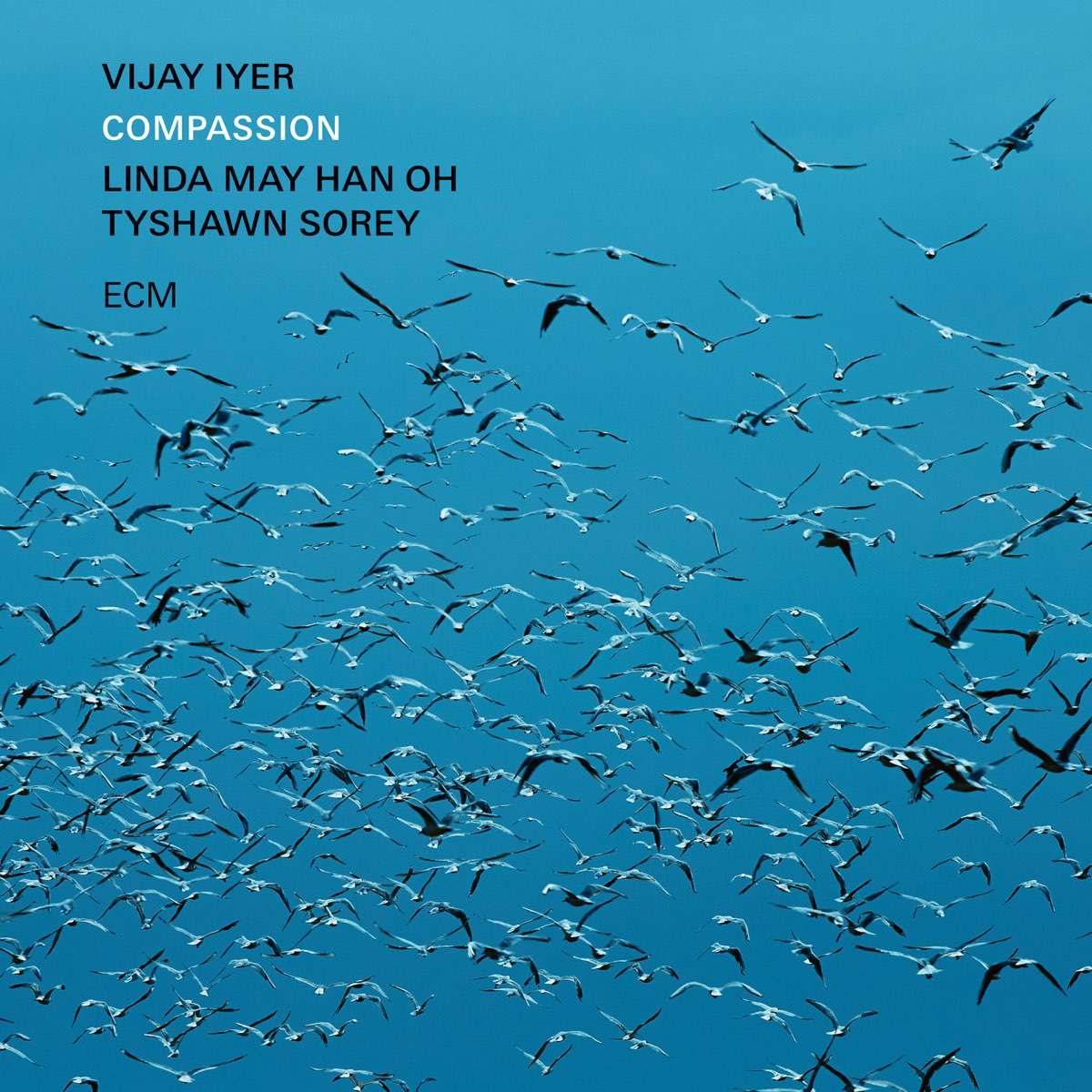
Vijay Iyer Trio – Compassion

6 Jul
1.83.0-NPBPE7VMRP36V7QYBA5BG3AISE.0.2-6

There is no one in music more consistently excellent than the Vijay Iyer Trio. Compassion is more of the frenetic, highly intelligent jazz they excel at. “Maelstrom,” for instance, lives up to its name and throws you right in the middle of the swirl. These are three virtuosos at work as you can see in the incredible solos of “Tempest.” They’ll take a straightforward base like in “Arch” and layer so much on top of it that the return to the origin is breathtaking. This is spectacular jazz through and through and unmissable for any fan of the music.

John Coltrane and Eric Dolphy – Evenings At The Village Gate

12 Feb

I’m often jealous of moments like this. John Coltrane and Eric Dolphy were both trying similar experiments in 1961 and these village gate sessions let both of them bounce off each other and refine their sound into what became their defining works. These collaborations are miracles and music is so much the better for each of them.

Both Dolphy and Trane are very energetic here. The bop gets quite hard and is excellent for the challenge. The album largely sticks to what are now classics but does plenty of interesting things with them. Adding Dolphy to a standard like “My Favorite Things” brings both freshness and spice to the classic and the teasing of the whole group in “Greensleeves” is immaculate.

This album is mostly the hits and, while they were brand new then, they can be ground that has been a little too-well trod when brought together like this. There is enough invigoration here to keep anything from sounding tired though and these songs are the hits because they are very good and that’s not diminished by putting them together. They may lack they impact they have in their own introductions but they are still just excellent music well worth listening to in a new incarnation.

Additionally, the sax is intricate in their take on “When The Lights Are Low” and the solos are excellent sheets of sound that overwhelm and immerse the listener. The piano solo is a little basic but there is magnificent, off-kilter percussion behind it that simply must be heard.

Both as a moment in time and as an album in itself, these sessions are a pleasure to listen to and fit well into the oeuvre of both artists.

Miles Davis – Ascenseur Pour L’Echafaud

6 May

As a jazz aficionado, I know a lot of people for whom the genre is really just background music. It plays in movies and lounges and at best it sets tone and at worst it fills space but it’s not really music to pay attention to. You might be one of those people right now. If you are and you’re looking to change that, this is the album for you and the nice thing is that even if you’re already a jazz fan, it’s still the album for you.

This album comes from the film Ascenseur Pour L’Echafaud, a French noir New Wave movie. The director Louis Malle gave jazz legend Miles Davis a private screening and then Miles and his band improvised the entire score. The soundtrack is quintessentially noir but elevated to a degree you have never heard before and so a great way to see what exactly makes the difference.

This is made easier by how immediate the difference is. The opening track “Generique” hits you with Miles’ trumpet from the first note and it is a revelation. He gets such a bold, confident sound from the instrument and it’s completely suffused with the melancholy of the noir. I don’t know if you normally consider the trumpet to be a lonely instrument, but the emotion that Miles builds in this track is undeniable.

His trumpet work in the following “L’Assassinat De Carala” is similarly spectacular. He holds his notes much further than you would expect and so keeps you off-balance. It’s never quite the notes you expect, but they’re never out of place.

There are however a couple of tracks that don’t quite fit. “At Bar Du Petit Bac” is closer to generic lounge jazz than I would like albeit done well enough not to warrant much complaint. Similarly, “Sur L’Autoroute” feels out of place. It’s solid frenetic jazz and the drum work deserves special attention for the amount it puts into the space behind the brass, but it still doesn’t really fit into the noir of the rest of the album. The trumpet and sax both get decent solos as well here. It would be quite the solid track in a different album.

On the other hand, “Visite du Vigil” is unique in the album for the space that it gives the bass, but it fits in perfectly with the rest. The way the track builds up perfectly with so few moving parts is a monument of skill.

The album finishes with “Chez Le Photographe Du Motel” which again brings back the focus on the trumpet and the noir. It’s cinematic and evocative. You can see the gumshoe on the rainy road as it plays. Barney Wilen’s sax is more muted but maintains the emotion and goes into some very interesting solo work. The trumpet solo over a very gentle piano and brush is astonishing though. Throughout this album, Miles sets tone and emotion in a way that’s deeply familiar but with a skill that’s exceptional. You may have heard noir jazz before, but you’ll never have heard any this good.

Fred Hersch & Esparanza Spalding – Alive at the Village Vanguard

15 Jan

Alive at the Village Vanguard does exactly what you would want; it places you right in the middle of the club. This is a recording of a live show at Village Vanguard and it manages to hold all of the energy of a live performance just to drop it on unsuspecting listeners. More importantly, it delivers the abundant charm of the two performers.

In particular, “Girl Talk” expertly recontextualizes an old, chauvinistic standard, refutes the original and reclaims the space with tremendous intelligence and humor. Spalding’s conversations with the crowd are both confident and fun and she interacts with the crowd throughout to great effect. In particular, they add a lot of charm to the already fun “Little Suede Shoes”

It’s not the most challenging album, however. Neither Spalding nor Hersch does much to complicate the music and the piano solos tend to move too slowly. Spalding does some great tonal work through the album though and Hersch plays excellent counter-point to her there.

It’s also just much more fun than your typical jazz release and much more approachable as well. If you’re looking for a pleasant evening with a couple of very talented, very likable performers, it’s hard to find something better than this.

Makaya McCraven -In These Times

15 Oct

I want to start this by talking about the magnificent “So Ubuji.” The track takes from so many inspirations to meld together something that remains delicate while layered and intricate. There’s beautiful, rain-like percussion flowing through the whole thing and a very nice, tripping cadence to the whole piece.

This mix of tastes surfaces again and again through the album. “High Fives” gets a very nice funk line running through some world music themes and a nice space-jazz screech every now and again. “In These Times” puts in a solid sax solo, but the later “The Knew Untitled” is essentially a rock guitar solo that is as unexpected as it is competent.

Possibly due to the mix, the album has very strong fragments, but ends up a little too smooth for my taste. There’s too much that doesn’t really demand attention and only has so much to offer when given it. However, when an album is unobjectionable at its worst and unmissable at its best, that’s more than enough to recommend it.

Harish Raghavan – In Tense

28 Aug

It’s always nice when an album starts with its best foot forward. “AMA” is In Tense at its strongest. There’s a great bass solo right at the beginning and the backing adds an arboreal element. It’s a verdant and lush sound as the bass puts in energetic work and a very clean vibraphone follows suit.

That vibraphone later finds an excellent groove in “In Tense” and has another excellent solo in “Eight-Thirteen.” This is a very pleasantly concise album and it takes the effort to say what it wants to say well. “Prayer” adds in a great tenor solo and “s2020” trips over itself delightfully.

However, there’s just not enough to provoke thought in this album. The songs are all very well done but tend to very predictable resolutions. Even “Circus Music,” the most complex of the tracks, could really have done with some of the whimsy of the title. It keeps a lot of balls in the air and watching the patterns they make as they cross each other is fascinating, but a little more of the unexpected would have brought in a much-needed lift.

However, In Tense gets too much right to worry about the little it gets wrong. This is an album put together with skill and care. It is clear about what it has to say and always well worth listening to.

Immanuel Wilkins – The 7th Hand

8 May

There’s a lot to like about The 7th Hand. The music is immaculate. There is obscene skill behind the whole thing. There are moments of transcendence. For all of its strengths though, it is just short enough of challenge to mire the whole album.

It oscillates quite sharply between pleasant and aggressive throughout and in the opener “Emanation” you have some very energetic sax work followed by a relaxing piano solo. They both end up flat however. The sax starts strong and is played very well, but it lacks challenge and ends up going nowhere you wanted to visit. The piano solo is a little off-kilter but needed to be fully askew. It’s the same story in “Lift.” There’s a lot of sound and fury, but it’s ends up signifying nothing.

Sometimes, the album takes a turn more towards the pleasant, such as in “Fugitive Ritual, Selah” and it does it well. It may have done better with stronger focus on that side, but that does nothing to help the lack of challenge.

The 7th Hand has moments though. The opening of “Witness” evokes a deep, verdant, arboreal scene and thread some ominousness through it to great effect. These moments just are not enough to lift an album that can never quite escape falling flat.

Nala Sinephro – Space 1.8

1 Nov

Jazz certainly loves outer space. Something about the vast expanse of the night sky above speaks to jazz musicians from John Coltrane to Sun Ra and now to Nala Sinephro.

Over 8 songs, Nala Sinephro and her band construct detailed soundscapes. Interstellar space is never as exciting as when jazz musicians get to draw it in. It’s mostly very gentle music. From the opener “Space 1,” there’s a lot of ambient music in here. It has some wonderful tones that are given complete room to breathe and ripples that evoke nature.

It goes into some very classic gentle jazz in “Space 2.” It’s never smooth, but it’s relaxing. “Space 4” works the same way. There’s very good sax work in both. It’s the aggressive saxophone and fuzz in “Space 6” that’s really interesting though. This is a very relaxing album, but there’s more than enough challenge in here to keep you engaged.

This is really an album that does it all and does it well. It’s a relaxing soundscape that you can submerge yourself and an excellent space jazz album and, of course above all, absolutely wonderful music.

Emma-Jean Thackray – Yellow

29 Aug

There are some really interesting pieces in Yellow. The chorus of “Third Eye” is a very interesting progression. The haunting in “Spectre” is also very well done. Unfortunately though, the whole doesn’t add up to anything quite so interesting itself. The genre-spanning music here has a lot going for it. There’s plenty of technical skill and some really clever moments, but there’s just not enough to grab attention or really reward it.

“Yellow,” for instance, would fit well on an Erykah Badu album, but not as one of the stronger cuts. The voice is a little weaker than it should be and the music doesn’t do enough. Overall, it’s just not interesting enough. It fades too easily into the background. It’s also not helped by the bog-standard spirituality either. The Hinduism in particular feels like a shallow reading.

Yellow still ends up a pretty decent album though. As it turns out, good jazz is good jazz and this is definitely good jazz.