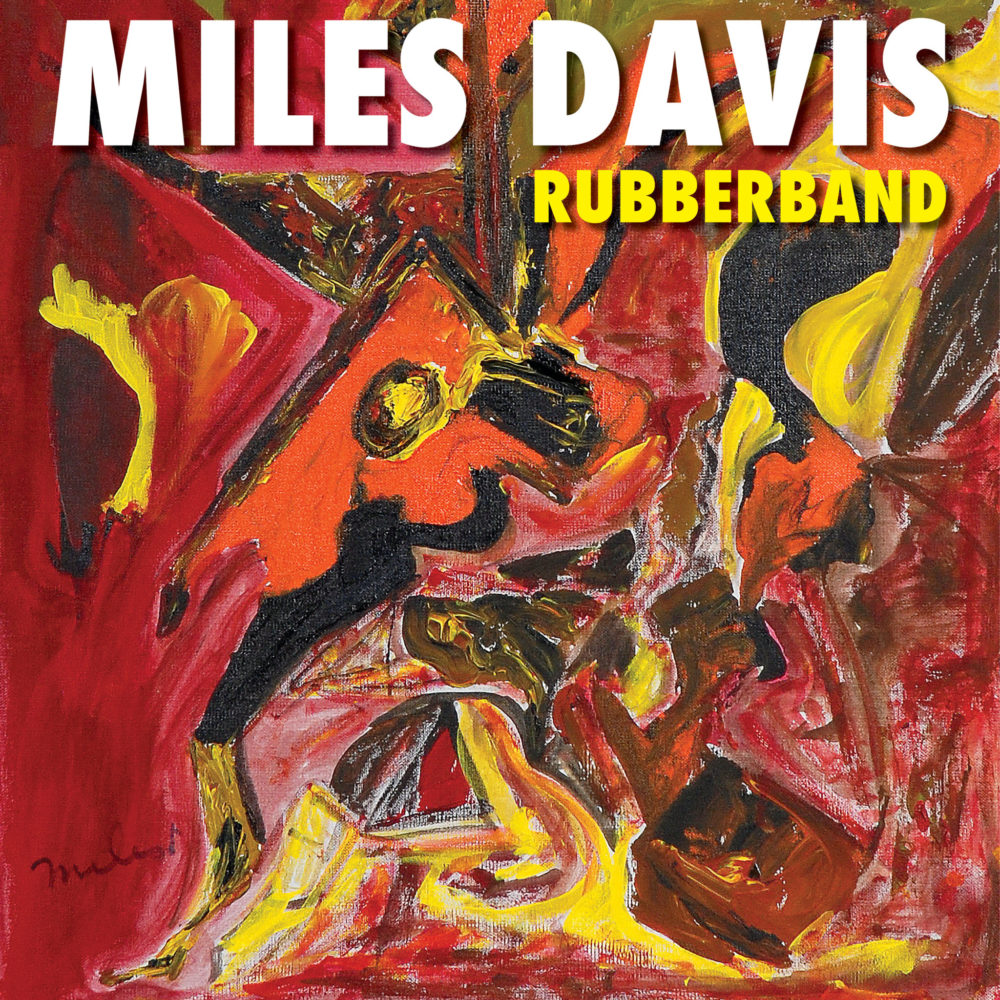
Rubberband was originally recorded in 1985, shortly after Miles’ five-year hiatus and shortly before his death. The original recording was never completed and ended up being archived until quite recently. It’s been dusted off and filled out and the result, while not exceptional, makes for quite a decent funk album.
The result is most notable not for any trait, but for a lack. There’s much less Miles than one would expect. The album required a lot of filling out and so Miles himself shows up far less than one would like. The songs that fully feature him, like “See I See” are very strong, but his absence tells. It’s an album that needs inspiration.
Still, if you’re looking for some new funk / R&B, there’s enough here to keep you engaged for a while. It’s also one of those albums that seems to be having fun and that’s always nice. If you’re new to Miles’ funk period, you will find You’re Under Arrest to be more the more rewarding listen, but you should still find a little time for an album that’s less accomplished, but still very sincere.
Immunity is a surprise of a debut album. Clairo was already a rising star before its launch, primarily due to the breakout “Pretty Girl.” That was a song that felt like everything bedroom pop could be. Between the literal bedroom of the music video, the smart-teen-feminism of the song and Clairo’s immense charm, it’s anything but inexplicable that the song was a hit and the EP that accompanied it explored even more of that vein. However, that EP was also meant to close that chapter and Immunity marks a significant change.
You can see the difference as soon as the album opens. “Alewife” is still understated soft rock, but it’s bigger and lusher and just more produced than her earlier work. It’s a transition that mostly works. The production is bigger, but never blunt or maximal and somehow her voice stands out more than ever before. Ever in places like “Closer To You” which features some very prominent AutoTuning, you never stray too far from the core that makes Clairo so promising a musician.
Her music is still a little unformed though. “Closer To You” does just need a little more both musically and lyrically. “Sofia” is very good soft rock and opens with distinct flair. The story of an early crush on another girl is a strong central conceit. However, the song ends up feeling a little immature in terms of narrative and of craft. “I Wouldn’t Ask You” has an appealing gentleness that works very well with its premise, but is undercut by falling a little too far into its slow tempo in the first half. It ends up being a beautiful, heartfelt song and it has moments like a very clever chorus of children in the second half, but as a whole is just a little short of the brilliance that it needs. Both “Sinking” and “Softly” are solid R&B, but unexceptional.
However, “Bags” is the best song that she has ever made. It’s clever, it’s heartfelt and it shows an impressive maturity and completeness. It’s a truly excellent song and filled with little things that sparkle. Her voice on the repeated lines of “Know you’d make fun of me” and “Walking out the door with your bags” is heavy with emotion and yet as understated as ever.
Immunity is a strong album. There are few missteps and a very consistent quality to the project. However, it’s clear that Clairo can do more, as she did with “Bags”, and it’s all but certain that she soon will.
It’s not just that Sleater-Kinney are cool, it’s they’ve always been cool. They’ve always been really cool. They’re the kind of band that makes songs that can define who you are for a phase of your life. They’re the kind of songs where you should let them.
Things change though. Times change. Riot grrrl doesn’t mean the same thing now that it meant in the early 2000s. Sleater-Kinney is just too smart not to change too and The Center Won’t Hold is definitely a shift slightly to the side. They’re still super-cool though.
The obvious difference is bringing in St. Vincent, but how much of the change in the music is from her and how much is from the band is impossible to dissect. “LOVE” starts as though it was Devo doing punk, which is new and interesting, but also maybe not quite as good as it would have been as a pure riot grrrl track. Especially with the rawness of a line like “There’s nothing more frightening and nothing more obscene / Than a well-worn body demanding to be seen / Fuck,” this could have been done as a harder track, but the backing works well with the sung chorus and the track is unquestionably novel.
However, some of the other tracks don’t do anything new musically despite being separate from the standard Sleater-Kinney songbook. “Restless”, “The Dog / The Body” and especially “Can I Go On” feel like they could have come from much lesser indie rock groups.
“RUINS” feels like modern riot grrrl though. The distortions are very sharp and the song carries so much attitude that you can forgive it being slightly stretched. “Reach Out” is excellent and Janet Weiss’ drumming in it is spectacular. The standout though is “Hurry On Home”, which is easily one of the strongest tracks of the year. It’s frenetic and so much fun and topical and so smart. It’s the reason that you fall for this band in the first place.
The Center Won’t Hold doesn’t quite merit a shrine in the Sleater-Kinney discography, but it is still a strong album and an interesting look at what might come next.
It’s a good time to be a talented young man in rap and YBN Cordae is as talented (and as young) as they come. The Lost Boy is the natural next step for him and it’s a very promising debut. YBN Cordae is already one of the more skilled rappers making music and that skill is more than enough to carry the album.
However, if you take the skill away, it’s hard to really see the point of the album. You would expect to see a lot of filler in a debut of this style and while it’s true here, that’s not too major a complaint to lodge against it. My real issue is that I just don’t really know what YBN Cordae is.
His claim to be a mix of the old and new school doesn’t really come through in the album. “Have Mercy” might have something like a trap beat, but it hasn’t internalized trap and nothing else feels even close to a fusion.
This doesn’t keep the music from being good though. The man is very talented. “Broke As Fuck” borrows very heavily from “HUMBLE”, but does it well and we can always use more music mined from that vein. “Family Matters” goes old-school instead and reminds me of Blueprint-era Jay-Z and Cordae’s lines about his family hit hard.
Where the flaw is most evident though is in the Chance and Anderson .Paak features. Both are excellent songs, but the Chance song feels like a Chance song and the .Paak one feels like a .Paak one. Both of these artists are well established by now and that clear definition lets them completely overshadow the voice of the still hazy Cordae.
This is still a debut worth checking out though. YBN Cordae’s potential is already clear, but future considerations aside, there’s enough very good music here to warrant your attention now.
The first thing to strike you about Dharma is how good an ear for sound this band has. Track after track has something clean and sharp enough to make you sit up. There’s a surprising and clear horn in “Planet Hunter” that’s citrus-like in feel. It’s an album with the confidence to take things at the pace it wants and the skill to make fantastic music on its own terms.
However, this point also makes for the major flaw of the album. There’s just not enough here in terms of thought. Particularly egregious is the album’s habit of repeating a phrase multiple times to make sure that we’ve got it. It comes off as almost a tic and adds an unfortunate drag to the album. “Brooklyn Bound”, which should have started the album strong, ends up slightly tiring as a result.
With “Here We Go”, this flaw even makes for a light contrast with the title. The song keeps building up and makes promises for what is to come, but then pulls back to places that we’ve already understood. Right before the end of the track, it moves forward very cleverly, but retreats for the finish and the whole song ends up deflated as a result.
Despite that though, it’s a very jazzy piece with an excellent piano solo midway through. There are some very unexpected flourishes there that make for little jolts of brightness and the track is very pleasant to listen to.
Similarly, “Samsara” is beautiful every time and I do always love jazz that’s able to pull off a laid-back look. “Impermanence”, which precedes it, has a little more pace to it, but is no less skilled and is a stand-out worth paying attention to. Tarun Balani’s drums do a fantastic job underpinning this album and sets grooves that are effortless to sink into.
The highlight of the album is clearly “Malala’s Dream” though. The guitar and trumpet solos are fantastic and the bass work is quite noteworthy as well. I unfortunately still have to quibble a little with the time spent on essentially reiteration and there are a couple of small miscommunications, but those are minor, minor issues in a very strong jazz track.
This skill and nose for clever sounds leave a lot to recommend in this album. It’s a shame then that the result is just too predictable for my liking. Had Dharma had more imagination and a little more tightness, it could have been a masterpiece. As is, it’s still a worthy listen and an instant recommendation – for people seeking some accessibility in their jazz or for people interested in the exciting new things coming out of the Indian jazz scene.
The National is the band for whom consistency is a curse as much as a blessing. There is no other band in indie rock, and possibly all music, quite as dependable as The National. They are very good at what they do and it’s always worth listening to what they put out, but their albums have a way of blending together, at least until I Am Easy To Find.
The National have clearly defined their space over their time making music. They are the feeling of looking out a grey, rainy day from inside a warm house. There’s melancholy but there’s also enough coziness to let you fully wallow in it. This album has all of the melancholy and intimacy and gentleness that The National have always evoked, but this is also their first album to feature guest vocalists to such a degree.
The guests take away the major fault of The National to date, the self-centeredness. Making it so that Berninger is no longer the only perspective is a massive, fundamental shift to the way the album feels and this jolt is exactly what The National has needed for some time.
“I Am Easy To Find”, for instance, does really well for adding a female vocalist. What would have been a rather typical song about yearning becomes something much stronger by twinning singers. There’s much more depth and subtlety than before, especially when one voice fades in or out. It’s simple and understated in the way that the best songs of The National have always been, but much more mature than their previous work.
It’s the same, but slightly more so for “The Pull of You”, which most completely delivers on the album’s premise. From the start with a few seconds free of vocals before Lisa Hannigan to Matt Berninger allowing power to come into his voice in the chorus to the tautness of “I know I can get attached and then unattached / To my own versions of others / My view of you comes back and drops away,” there’s a lot in this song that works in a way very familiar and yet new and better.
The more skewed “Oblivions” is also a stand-out. Berninger puts down the base of the song, but it is Mina Tindle who does all of the work to elevate it. Berniger’s staging of the song is hugely important, but Tindle is absolutely excellent. As is “Roman Holiday”, which conjures quick image after quick image. However, there is still a lot in the album that never quite breaches the haze that The National so expertly sets up. There’s a lot of music that just fades into the rest.
The National basically started fully formed. Their aesthetic of cinematic, but shot in a soft and quiet black and white, has been there from day one. With I Am Easy To Find though, they’ve pushed it somewhere that feels completely novel and in doing so made one of their best albums to date.
It was always clear that Tyler, the Creator was talented. Out of the old Odd Future gang, despite his sort-of leadership of the crew, it was others like Earl Sweatshirt and Syd tha Kid and of course, the incomparable Frank Ocean that seemed to be the people to listen to. His first albums had enough in them to make you take notice, but their unfocused nature held them back, despite that being such a strong part of Tyler’s charm. His following was devoted, but you had to not only have a tolerance, but a desire, for the random.
Maturity has changed him though. His music is now much more fully developed and honestly much more interesting. Both lyrically and in the musical themes, he’s taken the sparseness of the old OFWGKTA days, fleshed it out fully and pruned some of the weirder things and the result is much stronger for it.
He still goes hard with songs like the excellent “NEW MAGIC WAND” but he’s also able to put in the much softer, but still wonderful, “GONE GONE / THANK YOU.” He’s still Tyler through and through. “EARFQUAKE” is unquestionably his and shows you why people have always been excited about what he makes, but “A BOY IS A GUN?” is also singular and exciting, but wholly different and being able to take that level of versatility and yet make music of this sustained quality is a major achievement.
Tyler, the Creator is still a misfit. The final song here is the winsome “ARE WE STILL FRIENDS?” It’s just that between this and Flower Boy, he’s developed it to the next stage. Now, he’s no longer the smart-but-weird kid at your school. He’s fully stepped into being the idiosyncratic genius instead.
And just like that, we’re halfway through 2019. So far, the year has given us some great music already. There have been some fantastic albums from well-established bands (Vampire Weekend, Foals) and break-out debuts from true diamonds-in-the-rough (see: slowthai). Read on for our picks this month – spanning old-school indie rock, beautiful folk-pop, and two of the best tracks all year from the Indian subcontinent.
Read on below for the goods:
5. “No Bullets Spent” by Spoon
As our readers know well, we at Top Five Records are huge fans of Austin-based indie rock veterans Spoon. Their 2017 album, Hot Thoughts, made it onto our year-end list that year, and “No Bullets Spent” perfectly espouses all we love about this band. In spades are the laid-back vibes undeniably sourced from their hometown of Austin, TX; lead singer Britt Daniel’s lackadaisical lyrics; the unmistakably subtle-yet-groovy Spoon chorus; and so much more. “No Bullets Spent” was released to hype up the release of the band’s greatest hits album (Everything Hits at Once) on July 26th. Whether you’re already a Spoon fan or not, we encourage you to check out this track, and of course the greatest-hits compilation when it’s out.
4. “Love Yourself” by Sufjan Stevens
“Love Yourself” is an electronic-tinged slowjam that works in two ways: one, as a plea to your lover to appreciate themselves more (“Love, can you love yourself”); two, as a note-to-self with the same message. Either way, it’s a gorgeous, lushly-produced song that perfectly features Sufjan’s emotive pipes. Sufjan Stevens has enjoyed a recent surge in popularity, in part due to the vital inclusion of a coupleof his songs on Call Me By Your Name, 2017’s sleeper art film hit. With “Love Yourself” – released as part of a four-song Pride Month EP – Sufjan fans both new and old are likely to be more than satisfied. We sure are!
3. “My Baby’s Beak” by the F16s
In the early part of this decade, something magical was
happening in Chennai’s indie music scene. There were suddenly a swathe of very
good, very unique and very closely-knit artists coming out of the southern port
city. Everyone seemed to know each other. Everyone wanted everyone else to
succeed. Everyone came out to each other’s shows. Was there something in the Chennai
water?
Over the years, we’ve spoken to and closelycoveredseveral of these bands, and what we’ve gleaned is the following. The city’s strong musical streak, combined with the centering of the Indian indie music away from Chennai to other metros (Mumbai, Bangalore) and the piteous lack of venues in town, meant that Chennai’s independent musicians had a truly DIY approach to their craft. People practiced in home spaces. Bands shared band members. And there was a strong support system that helped bands thrive and maintain their wholly unique sounds.
One of these bands is the F16s. For many of us at Top Five Records, songs like “Light Bulbs” and “Avalanche” (from 2013’s Kaleidoscope) exemplified the careful balance between restraint and decadence of our millennial existences back in the day. The band’s follow-up album, 2016’s Triggerpunkte, had a few stand-out tracks, but it felt like a stepping stone to the F16s’ next great output: and WKND FRNDS is it.
All four of the songs on this crisp new EP are great, but “My Baby’s Beak” really clicked with us. We can best describe the song as the soundtrack one might choose while writing desperate love letters, from a tropical island, pina colada in hand – in the 1980s. “Oh mama, can you tell me if I made it / My ego gets inflated with you,” croons lead singer Josh Fernandes, complementing the luxurious sounds from the rest of the band. The song’s a true treat for fans eagerly awaiting new F16s music, and for new listeners alike. P.S. If you liked this one, we’ll also take this time to recommend the EP’s eponymous track as a follow-up.
2. “Speedway” by black midi
The four young members of black midi met at BRIT School, the UK’s premier music school that has produced legends such as Amy Winehouse and Adele. Centered somewhere between the Foals’ math-rock and Animal Collective’s asymmetric ethos, black midi enthralls with a ridiculously ready-out-of-the-gate sound. Our favorite track off their debut album Schlagenheim is “Speedway” – a pulsing, hypnotic song filled with feverish stops and starts. Slightly nerve-wracking and more than slightly ominous, “Speedway” is testament to what the lads can pull off in a mere three minutes. If you like this song, check out “953” from the same album for some bewilderingly good punk rock.
1. “Floated By” by Peter Cat Recording Co
There is no other way to say this: Peter Cat Recording Co is
one of the best bands to ever come out of the Indian subcontinent. With meticulous
detailing and inimitable style, the Delhi-based gypsy / jazz band has long
excited us here at Top Five Records. The band’s new album, Bismillah,
dropped earlier this month, and suffice it to say, we cannot get enough of it.
Bismillah’s stand-out, in our opinion, is “Floated By”; a song so good that we wrote the rest of this list with it in a firm #1. “Floated By” finds the band in their element – a melancholic wedding band letting loose after a drink too many in hand and an hour too long on stage. (The twist here, as seen in the song’s music video, is that the wedding in question is lead singer Suryakant Sawhney’s own, real nuptials.)
As with most Peter Cat songs, the real star of the song is Sawhney’s powerful voice. In between the wedding-procession drums and slightly off-kilter horns, his voice rings out: true, wistful and imbued with astonishing range. A simple line (“I know that I should / I know that I would”) takes him ages to enunciate, as his voice floats across the vocal spectrum.
Simply put, “Floated By” is one of the best songs we’ve heard
all year. Look for a full review of Bismillah soon – and until then, please
give the album a listen.
I picked up this album off the strength of the single “i”. You can immediately see Lil Skies’ ear for sounds in it and he plays very cleverly around the foundation. I can never be quite sure when the shift will come and his stuttering keeps you off balance while staying on beat. He takes the same i and stutters and drags it in a way that stays unexpected. It’s very catchy and very sharp.
The rest of the album is unfortunately fairly generic SoundCloud rap however. It ranges from fair to good, but feels purposeless. “When I’m Wasted” does nothing, “Bad Girls” does nothing despite a Gucci Mane feature, but it does at least have a good hook. Even the hook is bland on “Through The Motions” though. It just cannot live up to its promise. “Stop the Madness” is nothing new. You just need to have something more to say if you want to stand out from what is quite the packed crowd.
“Nowadays Pt. 2” is quite good though, if brought down a bit by the guest spot. The twin central phrases of “Blue Strips” are excellent, but the song could have used a few more ideas in it. “Flooded” is unreservedly very good though. The hook of “they say I got next / nigga, I got now” is very strong and the song mixes itself up constantly. It’s a catchy earworm of a song.
It is true that there’s not enough here to really distinguish this album from the deluge of SoundCloud rap available now. As a whole, it is a little store-brand. However, between his clearly sharp ear for sounds and his now-proven ability to make top tier music, I’m sure that Lil Skies will put out something unmissable soon.
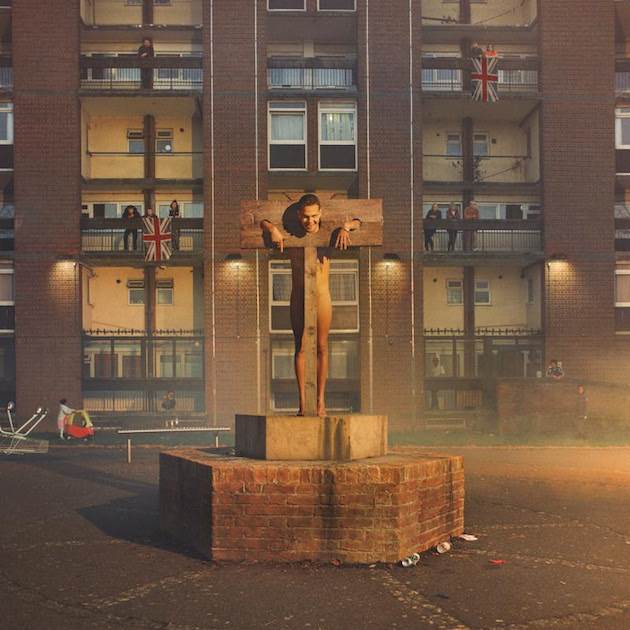
This is what I imagine it must have felt like when Never Mind The Bollocks… came out. Grime, that spectacularly and uniquely British style of rap, has had a couple of small coming out parties. Stormzy is picking up award after award and Big Shaq achieved ubiquity with “Man’s Not Hot”, but Nothing Great About Britain is the album that deserves to make the full breakthrough.
It’s also just the most punk album that I’ve heard in a long time. It’s aggressive and unapologetically in-your-face. It’s an intense album, both musically and lyrically. The heavy slice of life and the personal nature of the album all feed in to this redefined aesthetic. This is the natural evolution of punk for the late 2010s. This is the only thing that it could be.
It’s a lot more than three chords to make a band though. There is no shortage of technical skill here, either in the engaging flow or the compelling production and both of them change things up to a dizzying degree. Standout track “Northampton’s Child” showcases tremendous control as slowthai changes speeds, cadence and even speech patterns for emphasis and different impact. The key couplet of “You’re lucky I’m not as big as you/I would punch you till my hands turn blue.” hits like a sledgehammer. The autobiographical nature of the song and the thanking of his mother are sincere and real and raw and the sum of all of these parts is a completely unmissable track.
With his politics, with his soul and with his skill, slowthai has put together one of the most remarkable albums of the year and of the subgenre. Grime has arrived and it is Nothing Great About Britain that has opened the doors.









 Top Five Records