It’s easy to latch on to the monkeys and elephants that show up partway through the first piece and hear the clear jungle noises there and think that this album is less than it is, but this is first and foremost excellent, inventive jazz. Like Olé Coltrane, which was released in the same year, the theme comes through strong and the jazz is richer for the flavor, but the soul of the album is in the superb hard bop that it’s built on.
Most interesting though is the big band that backs the quartet throughout. Adding the larger band of older styles of jazz adds a lot of swing, both in “Africa” and in “Blues Minor” and also shows what big band jazz could have been had the genre not shifted to more intimate groups. Between that and the jungle themes, “Africa” comes off as very reminiscent of possibly the best known verdant jazz of all, Louis Prima as King Louie in Disney’s version of The Jungle Book, something I’m always glad to be reminded of.
“Greensleeves” is another classic Coltrane pop track, taking as it does a British folk classic and effortlessly reimagining it as post-bop and “Blues Minor” is fearlessly improvisational. However, it is “Africa” that is the clear highlight. Elvin Jones has a stellar drum solo in there and as always, Trane’s sax work is unparalleled.
This is something a bit out of left field for Trane and he never did revisit the ideas he played with in this album, but that should in no way be taken to imply a misstep. This is, if anything, more special for its uniqueness. It’s a legitimate masterpiece and an essential album for any fan of this style of jazz.
There’s nothing extraneous to Descendants of Cain. This is the leanest of lean cuts and glories in it. It’s serious, it’s to the point and it’s forceful throughout. Ka’s pairing of stripped down beats and muted raps is intense and claustrophobic. This album is a coffin that you’ve been sealed in with him.
He has plenty to tell you in there. The biblical theming played against the realities of his life is a strong conceit to build an album around. In “Patron Saints,” Ka uses this for irresistible storytelling and strong lines. The theming also just fits perfectly with the tone of the album. “My Brother’s Keeper” has an ominous, sunken beat and hushed rapping that just builds the scene. “Land of Nod” takes the same menace and has Ka change pace midway seamlessly.
However, here is the major flaw of the album. It bleeds together. There’s no real standout track in here and nothing to shake you out of the groove it lands you in. The closer “I Love (Mimi, Moms, Kev)” is softer and slower and might have done it, but it’s out of his range and he just can’t pull off the change in tone.
It’s still a strong album though. You have to respect something so single-minded and so proficient. Descendants of Cain is a solid addition to an always intriguing pocket of rap and one well worth listening to.
Pop is the medium of the present. Other genres can try to make an album that future generations will love or something that speaks to the older generation of established critics or just to be something their parents would listen to. Pop is about the now. Sometimes, like photos of ourselves from the nineties, we can only look back in bemusement, but that’s missing the point. how i’m feeling now is about just that, how I’m feeling right here and right now.
Make no mistake though, this is music of the present done very well. “claws” is a propulsive stream-of-consciousness with a chorus that extends exactly one beat longer than expected and is perfect for doing so. It forces the listener to pay attention and pulling out the phrase “I like” into the conclusion of “everything about you” is cute and yet intense in the way feelings are when you’re young. It’s some of the best pop that she has ever made.
She’s got that aesthetic down pat by now. “7 years” and “party 4 u” are good pop and very cute for that feeling of young love. Similarly, “i finally understand” puts a smile on your face for how well it expresses the feeling of being understood yourself. It’s upbeat and energetic and just feels happy. For an album about living in a pandemic, this is mostly a joyful album and it achieves that through just being honest. There is still a lot to celebrate in the now.
That’s one of the biggest strengths of how i’m feeling now, Charli brings the sincerity that great pop needs. It feels raw, it feels unpolished and it even feels a little rushed, but none of these detract. It’s not sloppy, it’s authentic. It’s straight from the feelings. It’s not an album to study, it’s one to experience in the moment. “pink diamond” opens the album strongly with just how uncompromising it is. The harsh noise and unforgiving beats hit you from the jump. It’s a very aggressive sound.
It’s also just masterful pop. Charli has been one of the most interesting musicians in pop for quite a while now and how i’m feeling now continues to prove how good an ear she has for pop. “detonate” is proper club pop in an age of no clubs and the breakdown at the end is genius for how it reminds you of that. “c2.0” has her at her most playful with her sounds. She lets pieces bubble into each other and burst through and it’s very clever. “enemy” has bright, blinding synths and while the lyrics never deliver on the promise, it doesn’t matter. It’s a shimmering, not a textbook.
This is an album of the moment and it’s transient in the way all pop must be. I don’t know if it will hold up at the end of the year or if it’s the kind of thing that I’ll ever come back to, but right here and right now, it’s perfect.
Nostalgia in pop is having a moment. The Weeknd and Dua Lipa, for instance, have mined this vein heavily, but no one has done it with the intelligence of Rina Sawayama. The trick to nostalgia is not to sound like what music used to sound like, but to sound like what you remember things to feel like. It’s not about the sound. It’s about the feel. I’m going to be honest, I wasn’t the most sophisticated of listeners in the early nineties and much of what I was listening to wasn’t that sophisticated either. Sawayama draws from wells like Korn, Evasnescence and above all Britney for the album, but through an astonishing alchemy serves something as sharp as any of the most experimental pop today.
The best tracks, “XS” and “Comme Des Garcons” have all of the energy of Britney, but with a complexity that it’s hard to imagine Britney bringing. “STFU!” is as hard and as fun as any Korn track, but it’s not dumb and that’s a pretty big difference. Her upbringing further sharpens the album. “Akasaka Sad” and “Dynasty” both layer in her personal story and in doing so further evolve the music. The pop she draws from never thought to speak of the immigrant experience. She astutely and cuttingly speaks of tourists in “Tokyo Love Hotel” and the storytelling there is made better for the earlier contrast of “Bad Friend.”
It does occasionally slip too close to the well and so “Paradisin” has nothing interesting. The sax there almost sticks it, but is just too cheesy and her voice is not enough to carry the song through. Similarly, “Chosen Family” is just a traditional pop ballad and can’t hold up to the more interesting music here.
At its best though, this is absolutely incredible pop. It’s whip-smart and yet highly approachable from its sources. Outgrowing old tastes has never been this fun.
Dark Lane Demo Tapes does one thing in particular, it reminds you that Drake has talent. That talent gets lost a little in all of the stuff around him. He’s a superstar in a real sense. He is the upper echelon of the upper echelon of fame and it can be easy to forget the music what with the shoes and the viral videos and all that, but even with a loosie like this, Drake just puts out very good music.
“Toosie Slide” has the viral dance that it was built around and the virtual tour of his mansion and it’s probably already something I can do in Fortnite, but it’s the song that’s stuck in my head, not the accessories. His flow is excellent. He’s greyed the area between singing and rapping so thoroughly by now that the question of what is what feels empty, but it’s still incredible. The pauses in his chorus are nothing short of genius. The song is infectious and every bit as good as anything Drake has ever put out.
He’s got a great sneer in this album. “When To Say When” takes well-placed shots at the people biting at his heels. The stunting in “From Florida With Love” is excellent bragging, even if the jetsetting lifestyle seems a little quaint at this exact moment, as is also the case in the fun “Landed.” Drake wears his superstardom well.
However, this is where the mixtape fails a little. Drake sticks to comfortable poses throughout. He plays superstar in the ones above, he plays Toronto sadboy in the rest, and I’d like to see him try something new. “Pain 1993” gestures at that growth, but it still feels like the old Drake. “Losses” talks about changing, but he’s still as quick to mope and as petty as he has ever been. “D4L” is quite good trap, but the man has worn these topics through. Even reimagining “Superman” in “Chicago Freestyle” while clever and solid rap feels a little pointless at the end.
Drake is a father now, and while it’s trite to expect family to change a man, it’s unbelievable that it doesn’t. Drake only ever shows us what he wants to show us, but his music suffers for running the same themes again.
Musically though, he’s as inventive as ever. His proficiency at trap is no surprise anymore, but “War” is excellent British rap. Drake has been both willing and able to experiment with everything in rap and beyond and he does it with consummate skill. His shapeshifting is as much a part of his legacy as any of the shinier parts.
This is where the mixtape ends up falling overall. This is some of the most consistent work that Drake has ever put out. It’s all good, high-quality rap. Drake has perfected his molasses sound, it’s sugared, but dark and viscous and it sticks to you, but he adheres to the same limited issues and it’s beginning to hold him back. Nevertheless, he’s good enough to make this mixtape stand out. This has some of the best music of the year and while Drake is definitely capable of more, he still delivers in a way that most cannot.
Today is the 8th of May , which marks exactly 54 days since 3.15.20 was released. Numbers are a recurring theme on this album, which is both intriguing and frustrating, because it is legitimately difficult to remember tracks – most of the track names are the actual timing at which they appear on the album, such as “42.26,” more familiar as last year’s Feels Like Summer. A nightmare for people like me with 0 memory ability.
But (as dozens of other critics have already pointed out) it does fit well with the current culture and our bizarre time-dilated COVID-19 shared lockdown experience. Day, date, time have all lost meaning in our socially-distant reality, just as the process of listening to this long flowy interwoven album renders time into a True Detective reference.
Meta-relevance aside, is it good? Short answer… yes?
We are, we are, we are…
3.15.20 is complex, rich, conceptually heavy. It is both musically challenging and easily consumed. It continues Childish’s ability to mix hard topics with soft sounds, complimented by long-time collaborator Ludwig Goransen’s steady producer hands. It is perfectly in sync with Gambino’s current downbeat vibe. It is critically and artistically important. It proves Gambino’s unchallenged dominance in the rapper/actor scene (suck it, Drake), and will no doubt be on pretty much everyone’s best-of- lists for the year, if not decade.
And yet…
I miss the old Childish. The straight from the go Childish.
The younger, more fire-fueled Childish ceded space to this new, chill Gambino years ago, but each new release still makes me miss that version. The kid still young and hungry and trying to prove himself with a high voice laden with anger and desperate braggadocio. The artist has long since moved on.
Jimmy Greene has made something of a name for himself in jazz circles since 2014’s Beautiful Life and while the sequel wasn’t quite as brilliant, it’s still always exciting to see new music from him. Unfortunately though, While Looking Up leaves too much to be desired.
There are some definite stand-out moments. “While Looking Up” has a very nice sax solo and some unexpected diversions in the piano solo and there’s good energy in “Always There.” I always like a vibraphone solo and the one in “April 4th” is a delight, even if would have benefited from some tightening. Jimmy Greene’s sax work is also excellent in the slower “Good Morning Heartache” and the equally heartfelt “I Wanna Dance With Somebody (Who Loves Me).” He’s good at getting emotion through, but the song stays too long without enough to say.
This happens with some regularity in the album and it pushes the whole thing too far into easy listening for my taste. There are some clever bits, but the album tends to predictability, a trait made worse by a number of songs refusing to end. It’s an often beautiful album, but one without depth and one ultimately that’s hard to recommend.
It has been a long time since we’ve seen an album release like Fetch The Bolt Cutters. Acclaim this universal comes by only about once a decade. The combination of storytelling and challenging, clever music is powerful and the album is unquestionably brilliant, but it lands just a little short of being a full fledged masterpiece for me.
Firstly, this is an album that rewards attention, even if it doesn’t do that much to force it upon itself. It’s a largely understated album but right underneath the surface are all kinds of interesting currents. It’s heavily layered, but delicately so. Despite all of the flirtations with noise pop, the album only rarely pushes at you. It’s content to just be itself. Should you spend the effort to focus on it then it is generous with its rewards, but should you not, it’s not going to make the first move.
For instance, in the excellent title track, there are beautiful little musical sparkles running below her already muted voice and percussion. You can spend the whole song chasing any one of them happily and then come back to do it again with a completely different strain. Small touches like the chimes and the barking dogs at the end substantially elevate the song as a whole. A trend through the album is ˙letting each song fade with the band noodling and Apple vocalizing and this both highlights and expands the music. They like messing with noise here, but instead of the tortured guitars of 90s alternative, this is gentle, gossamer noise. It’s the sound between radio stations at night. Instead of breaking the song down, it builds upon the foundation that it set.
“Fetch The Bolt Cutters” also has fantastic storytelling and sharp lines through it. “And you maim when you’re on offense / But you kill when you’re on defense” is a great couplet. The quiet, but determined, music works excellently against the dark humanity of the lyrics. It finds exactly the right tone to communicate a very specific feeling, that of understanding that it’s time to cut the links with a person. This is a very understated song in an already understated album and quietly one of the best in here.
The writing here can often be excellent. The album is exceptionally coherent and so the storytelling comes through strong. “Rack of His” is a clever and honest song built around a sublime pun and ”Newspaper” is sharp story. “I wonder what lies he’s telling you about me / To make sure that we’ll never be friends” is lean and yet complete. There’s nothing more that needs to be said after a line like that. On top of that, the music is inventive and unexpected. It’s pinned well by the percussion, but it’s very pleasingly jagged. It’s never quite where you expect it to be.
The album then takes a turn for the softer with “Ladies.” It’s softer and simpler than the rest of the album, but it makes for a lovely break because it’s a lovely song. She’s able to belt out vocals when she needs to and the bravery of the repeated “ladies” in the song is amazing to see. Also, having the song be a plea for cooperation and then ending it with the garbled, mumbled refrain of “Yet another woman to whom I won’t get through” is a body blow.
Unfortunately, from here we get to much of my issue with the album. “Heavy Balloon” is just too simple a song, especially right after “Ladies.” The blues in it should work well, but it just compounds the problem. The metaphor here is too weak to carry the song and so the whole song breaks down. It’s almost rescued by the instrumental ending. Deemphasizing the lyrics allows the music to really speak and it’s foot-stomping fun. The ending is one of the best parts of the album, but the core of the song is just too weak. Similarly, the following song “Cosmonauts” is great to listen to, especially once it takes off and just goes hard into the chant. However, the core simile, though clever at first glance, is just nonsense.
This problem is even worse with a few of the opening songs. “Shameika” has a kindergartner stomping around in it. It’s a heavy pace that’s childish and fun and the Alice-down-the-rabbithole bridge is excellent. However, the bullying just doesn’t have any heft to it. There’s too much comfort in the song. Similarly, “Relay” has a catchy chorus that’s anthemic, which is amazing given the meaning in it. That Apple wrote it at fifteen should be amazing, but the couplet of “Evil is a relay sport / where the one who’s burnt turns to pass the torch” sounds like it was written by a fifteen-year old and that takes a lot away from the song. It’s just too naive for me.
This is still all strong music though. “Under The Table” is too privileged in its politics for me, but the music is incredible. The couplet of “I would beg to disagree / But begging disagrees with me” is too wealthy a couplet for my taste with the dinner parties that it evokes, but the song fades it repeatedly into the background near the end and that’s excellent. Also, when she sings “I’d like to buy you a pair of pillow-soled hiking boots / to help you with your climb / Or rather, to help the bodies that you step over along your route / So they won’t hurt like mine”, the lyrics finally match the cleverness of the music and it’s sublime. I just wish that the album was more able to consistently line the two sides up. The songs with the best music tend to weak lyrics and those with the sharpest lyrics have music that, while extremely good, is not quite as great as the best here and the result is that there’s no single here that sticks with me.
These flaws are the exception, not the rule though. This is a stellar album. The opener “I Want You To Love Me” has a nice, arboreal sound to it. It’s a country song, but the country is a woodland. “For Her” places a nice summer pop sound against harsh lyrics, including the memorable “Well, good morning / Good morning / You raped me in the bed your daughter was born in.” That’s the kind of thing that wakes you right up. “Drumset” is the same kind of brutal in the lyrics, but manages to be healing nonetheless. Finally, the closer “On I Go” is a very intelligent set of variations on a repeated chorus that gives the album a good, open-ended sound. It leaves you with the feeling that the album hasn’t ended, it has just left space for you to fill in with your life.
This is an exceptional album all told. This is some of the best music that I’ve heard in a long while. There are enough issues here to hold it back from being a true masterpiece, but it’s still an astonishing accomplishment. This is the best album of Fiona Apple’s career and a highlight of the year. You should definitely check it out.
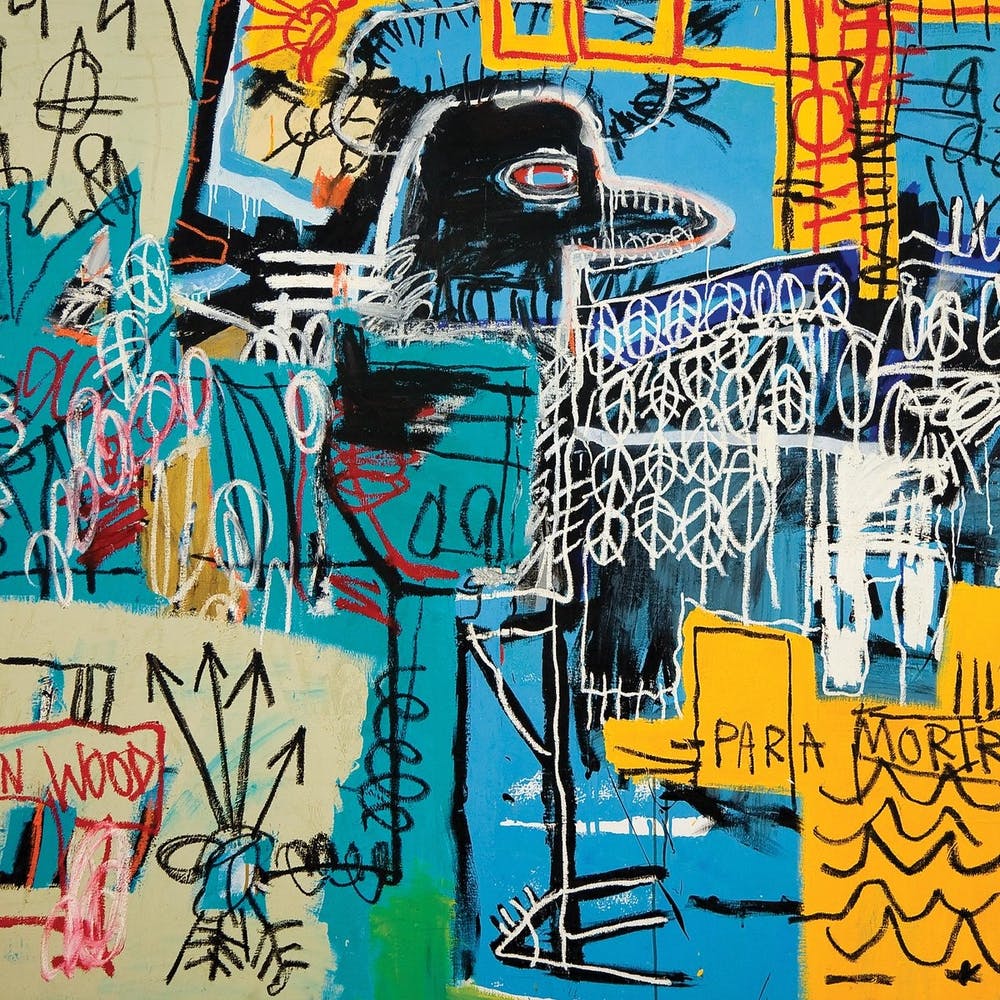
We last saw the Strokes with the three-song Future Present Past EP in summer 2016. The rather on-the-nose concept was that each song represented the eponymous phases of the Strokes, from futuristic “Drag Queen” to stylish “OBLIVIUS” to old-school “Threat of Joy”. With their sixth album The New Abnormal, it feels like the Strokes don’t think of themselves in quite so discrete terms – and the result is an inventive, cool and highly-listenable sixth album.
Famously, there is such a thing as “the Strokes sound”. Most songs on their first two records followed a precise formula: Interlocked guitars from Albert Hammond Jr. and Nick Valensi precisely sync with Fab Moretti’s machine-like beats and Nikolai Fraiture’s basslines, with Julian Casablancas’ unstructured vocals adding an exactly asynchronous vocal texture. It’s a carefully free-spirited aesthetic – the sonic equivalent of a get-the-bedhead-look hairspray or a tailored leather jacket (both of which were no doubt in their early wardrobes).
On The New Abnormal, there are certainly songs like these, but they’re often layered with more innovative elements that we first saw in Angles (2011) and Comedown Machine (2013). “Why Are Sundays So Depressing” is a traditional Strokes song – Velvet Underground-esque vocals set to crystal-clear beats – but there’s a pulsing, hypnotic underline that adds unusual heft to the humdrum. Album opener “The Adults are Talking” is as Strokes-y as they come, with a crisp riff that instantly pulls you in, but its latter portions involve jagged zingers from Hammond and Valensi, and, improbably, a Chris Martin-style falsetto half-verse from Casablancas.
And it’s not just the Strokes’ own repertoire that seems to have provided inspiration. In the album-free wilderness years from 2013’s Comedown Machine, every one of the Strokes embarked on a solo career – some successful and some not. As the rock-star cliché goes, these side projects were the result of a growing schism between the band members; but on The New Abnormal, these fractured elements have been successfully pulled into the main act.
For example, Casablancas definitely had his Voidz hat on when he wrote the magnificent “At the Door” –the dense, palpable sadness in his voice contrasted only against sludgy synths. The lyrics (“Use me like an oar / get yourself to shore”) are stark and chilling – a bit unusual coming from the erstwhile kings of nonchalance. “Selfless”, a simple, pretty ditty, is cut from a similar cloth as Fab Moretti’s too-shortlived Little Joy project, while “Brooklyn Bridge to Chorus” is filled with the sort of irrepressible Hammond riffs last seen on his well-received Francis Trouble (2018).
The overall sonic cohesion on the album, despite so many disparate pieces, is due in large part to Rick Rubin. The master producer has produced for a vast and varied list, from Run-DMC to Metallica to Justin Timberlake, and that genre-bending prowess has left its mark on The New Abnormal. For example, dance-pop track “Bad Decisions” is smoothly segued into the moody Childish Gambino-meets-the-Weeknd “Eternal Summer” – not an easy feat. The production on “Ode to the Mets” is startlingly beautiful – a kaleidoscope of quiet fury, nostalgia, wistfulness and everything in between (per the band, it’s an ode to the idea of a perennial failure).
And finally – the name. When the Strokes announced the album on February 10th at a Bernie Sanders rally, the world was unimaginably different. There was a mysterious virus in China, but they seemed to have controlled it; Bernie was leading the race for President in a bid to finally lift America out of modern-day feudalism; and so on. Exactly two months later, on April 10th – the day of their album release: that mysterious virus had taken more than 18,000 lives in America; Bernie had thrown in the towel two days prior; and a global recession now looms on the horizon. The New Abnormal, the Calpurnia of our times, couldn’t have been more perfectly titled.
Honestly, the only thing the Strokes had to do on their sixth record was to sound like the Strokes. Happily, they’ve overdelivered: a congruent Strokes-plus-plus. The New Abnormal is not the best thing they’ve ever done – Casablancas himself rates it his fourth-favorite output – but it’s proven that there’s more to the Strokes.
Best tracks: The Adults are Talking, Brooklyn Bridge to Chorus, Ode to the Mets
As albums go, there are far harder ones to sell someone on than I’m Your Empress Of. It’s frothy, compelling pop led by the skill of Empress Of herself. “Bit of Rain” starts the album with a great synth beat that’s elevated by her voice and it’s got sex both poetic and fleshy. “Not The One” is similarly a highlight both for the honesty in the sex and honesty in the singing.
It’s a very consistent album, there’s no bad music here. However, there are also just not enough highlights either. Something like “Love Is A Drug” is very well crafted, but lacks a little inspiration. There’s a lot of good music in this album, but not quite enough that sticks to you. I’m Your Empress Of is a good pop diversion and it doesn’t need to be anything more.




 Top Five Records