Archive | Indian RSS feed for this section

Oceans Apart: A Chat with Nischay Parekh

25 Mar
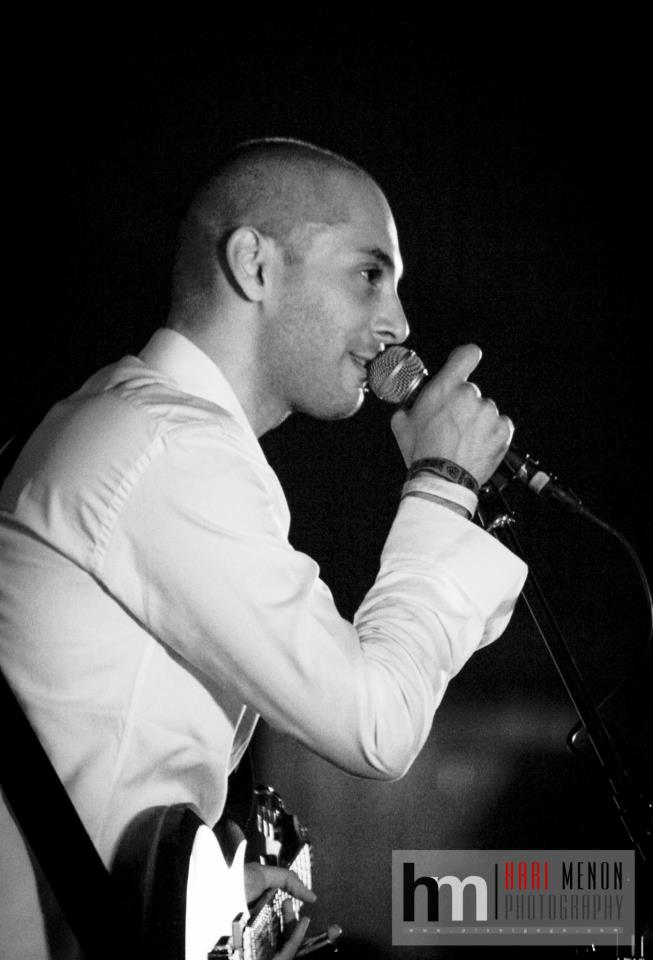
A man and his guitar

A man and his guitar

Nischay Parekh, 19, hails from Calcutta, a functioning chaos of a city famous (or infamous) for its poets and prose; a city that seems to have certainly rubbed off on the young singer-songwriter. We recently had the chance to listen to “I Love You Baby, I Love You Doll”, the spectacular first single from his debut Ocean. It’s a mix of 50s nostalgia and the breeze that causes the leaves to sway on a summer’s day, that hasn’t been heard since this side of an uncharacteristically mature John Mayer. Nischay’s better than Mayer, though, in our honest opinion.

A classic pop voice, burred with just a hint of heartbreak, is not the only thing in Nischay’s arsenal. The man seems to be a pro at the kind of graceful strumming that engender pretty pop ditties, and he has got quite the handy quill, too. If that wasn’t enough of a fix, you can check out more of his stuff on his SoundCloud, which features more than a dozen and a half brilliant, sometimes-glitchy-mostly-pop songs – including a pensive, stripped-down cover of “Crazy” by Gnarls Barkley that would put The Weeknd to shame.

A talent like this does not go unnoticed. Nischay played at the Bangalore edition of the Weekender last year, and shared stage space with none other than Norah Jones at the recent A Summer’s Day festival in Mumbai. India is rather inundated with its share of music festivals at the moment: there’s a new one mushrooming in every cognizant pocket of the country. It’s a world of ‘hear and be heard’ like never before out there, depending on whether you’re the audience or the artist.  The following is our humble attempt to connect these two sides of the spectrum. Top Five readers, meet Nischay Parekh.

Top Five Records: Hello, Nischay! We’re very honored to have you here with us today. Let’s start from the basics. Why music? How did this whole thing begin?

Nischay Parekh: Music started for me when I was 16 years old. I was taking ‘’recreational’ guitar lessons for a few years before that.  It was around that time that I started writing songs, and I really began to enjoy the process of building a song from scratch. It was like Lego, except the blocks were pieces of my own imagination. Once I began writing and playing more seriously I couldn’t imagine doing anything else.

TFR: What did you grow up listening to?

NP: My mother had a very interesting collection of cassettes and CDs. There was a lot of cheesy stuff like Rod Stewart, Geri Halliwell (ex spice girl), but then there was also some great stuff that had a bigger impact on me like Marvin Gaye, Stevie Wonder and Nat King Cole. The sound that came out of our old “deck” (yes that’s what they were called, CD and Cassette player!) has probably left a bigger impression than I care to admit. A lot of it is subconscious, of course.  I was lucky enough to have grown up with a lot of the ‘good stuff’.

TFR: Tell us about your first few bands. We understand your naming patterns for bands have an affinity for Kingdom Animalia.

NP: I have band in Kolkata called “The MonkeyinMe”. There are four of us. It basically consists of very close friends of mine that I started playing music with in school.  All of us are a little spread out geographically at the moment so it’s hard to put out material frequently. However, we are in it for the long run. A future MonkeyinMe album is definitely on the cards.

Then there was this group I was a part of in Boston called “Orange, the Panda”. I do have a fascination of animals and the general element of mysticism. Maybe it’s because I never had a pet?

Cover for Nischay's album

Cover for Nischay’s album

TFR: So we hear your upcoming debut album Ocean is being produced by someone who has done similar honors for the likes of Madonna and Radiohead [London-based Miti Adhikari]. Not bad for a debut! Has having Miti around changed your song-writing or music-making process in any way?

NP: Miti has been great. I am really fortunate that he was interested in working with me. Having him around has brought a lot of clarity and coherence to my music. I had all these songs and Ideas, which were flying around like loose pages. Miti has definitely helped me bind those pages into a book of sorts. He’s been a real collaborator on this album. Added to all this he’s really on top of his game as an engineer. So it’s been a great experience.

TFR: If you had to be sorted into a record collection based on similarity, which two albums would Ocean be slotted between?

NP: The Reminder by Feist and Plans by Death cab for Cutie. I’m probably giving myself more credit than I deserve, those two are great albums and I love them!

TFR: What kind of themes can we expected to be touched upon in your debut? Do you intend it to be a musical culmination of your nineteen years of life, or is the time frame shorter?

NP: Ocean is a collection of dreams I’ve had. I write exclusively about animals and relationships. It is definitely a culmination of my entire life. It’s full of mysticism. I enjoy the paradox between very ‘real’ human emotions and these stories that I tell with animals as central characters.

TFR: It’s always very interesting to know the kind of things that inspire each individual musician. What’s your trade secret(s)?

NP: I’m attracted most to design. The music I love most always has its own specific aesthetic.  I love creating a vibe and designing music that can live well in that world.

TFR: Congratulations on your success at A Summer’s Day! Word is that your performance gained you a legion of fans that day – quite a few of them being female, of course. What was it like to share the bill with Norah Jones? 

NP: It was a great concert. The audience was great. You can always tell when they’re really listening, and they were! The atmosphere was so relaxed yet charged with infectious positive energy.

TFR: What’s it like to be at Berklee? [Nischay is a current student at the prestigious music school.] Is Ocean different from how you imagined it before you got into Berklee?

NP: Berklee is a temple for music. Everyone and everything there inspires you. I’ve really learned the mechanics of music after spending time there. This has helped my music immensely, a lot of songs on Ocean were written in Boston during my first (and only) semester there.

TFR: Who’s one artist (Indian or international) that you’d give your right hand to work with right now?

NP: Leslie Feist and all her wonderful friends from Canada!

TFR: Give our readers one reason why they absolutely must listen to Ocean.

NP: It’s a happy album and it’s about love. Best reason in the world.

So there you have it. We are waiting with bated breath for Nischay’s debut album, and with this article we hope you are, too. 

A Shakey Picture

8 Nov

The Shakey Rays are a three piece rock and roll band from Chennai that have been creating waves of awed adoration wherever they bring their unique tunesmithery. Coming off of a brilliant show at BITS Pilani’s cultural fest Oasis, the boys are now gigging their way through Delhi, winning the hearts of hundreds of fans (and women) wherever they go. Top Five Records caught up with Dhruva, Vikram (Vicky), Niranjan (Ninju), guest bassist Abhinav (of fellow Chennai artists Adam and the Fish-Eyed Poets) and band manager Jolene for a quick fifteen minutes in between their hectic calendar.

Top Five Records: Congrats on the excellent show, guys! Those of us that weren’t lucky enough to be there to see you guys opening for TAAQ got regular, ecstatic updates from people that WERE there.

Pilani, as you guys know now, is in the middle of nowhere, which is quite a change for most bands gigging around India in the same five or six cities. Tell us a bit about what you were thinking when the cab driver was taking you through the seemingly endless rustic hinterlands of dust and Haryanvis.

Ninju: We saw our lives flash before our eyes.
Dhruva: Lord have mercy on our poor souls!
Abhinav: It was dusty.
Vicky: I was praying dude!
Abhinav: He (Vicky) was seeking divine intervention.
Jolene: It was exhilarating and scary at the same time. The drivers were racing each other, driving on the opposite side of the road and missing oncoming vehicles by mere feet of distance … we tried to alleviate the fact that our lives were on the line by alternatively trying to sleep, talking to each other and analysing the 90’s Bollywood love songs being played on the stereo. But all’s when that ends well, we got to campus alive and were later told that the sort of ride we had to campus was an important part of the BITS experience.

TFR: BITSians pride themselves on being, well, chilled out (sometimes a bit too much, actually). Tell us a little bit about your Oasis experience.

Dhruva: Brilliant!
Abhinav and Ninju: Special mention to Jashid and Champu (Vineet Chaudhury) for taking us around and being generally awesome.
Vicky: We didn’t steal any towels, though I hope I didn’t put one in my bag by mistake.
Jolene: I’m super glad we got to play this gig (thanks Neeharika, Karthik and the organizers). Playing in front of such a large audience, so different from the pub goers we’ve usually played to was an important step in itself, never mind the somewhat mixed reactions.

TFR: BITS was the first college gig that you’ve played as a band. How was that experience different from your usual gigs?

The whole band: More crowd! More people! Much better!
Vicky: We heard a horn from somewhere in the crowd during our set. That was sort of cool since we’ve been looking for a horn section since a while now and we randomly heard one; wonder where it came from?

TFR: One of the main concerns for most non-metal bands playing college gigs is that college kids expect metal and only metal bands. Did you feel that that was a concern at BITS? Did you get the crowd bobbing to the Diddley beat?

Dhruva: No, it seems like people only wanted to dance and we gave them that.
Jolene: I heard we were picked to play ahead of Scribe. That’s pretty cool, considering the band’s massive popularity.

TFR: Did you walk around campus a bit? Did anyone take you to Sarla, tell you what ‘putting’ is, or introduce you to the beauty of a Thunderbolt?

The band: Yes to all. Every item on the checklist, tick.

TFR: Tell us a bit about TAAQ. Did you meet/hang out with them?

The band: We met them, didn’t hang out with them. They seemed like nice people.
Ninju and Dhruva: Their drummer is awesome.

TFR: You guys have completed a country-wide tour recently. Do you have another such tour in the works? Tell us about some upcoming gigs.

Jolene: We’ll do another tour only after releasing an EP or album. We’re playing a lot around Delhi this month and charting out gigs for December/January as well. Details come up on our Facebook page as gigs are finalized.

TFR: If we still lived in a world of vinyl records rather than mp3s, then Shakey fans all over the country would have scratched their copy of Tunes from the Big Belly out of sheer over-use. We need new material! Is that happening?

Dhruva + Vikram: We are in the process of writing songs, most of them are still in the demo stage.
Jolene: 16th of this month is when we’ll digitally release a new single, hopefully with a B Side.

TFR: One of the biggest questions we’ve had about you guys, and one that shames us for not knowing despite being huge fans, is the origin of your name. Please tell us it doesn’t actually derive from “Shakira”.

 Vikram: No real history behind the band name. We were looking for something particularly interesting and Dhruva, being the most interesting member in the group, came up with “The Shakey Rays”.

Dhruva: I suppose there’s a degree of truth to that. It’s a question that often comes up, and I wish I remember how it sprung up- I think we we’d had a drink or ten when THE SHAKEY RAYS presented itself in bold letters.

TFR: A lot of BITSians read this blog. Is there anything you’d like to say, as a closing note of sorts?

Vikram: No, not really… Thanks for the chicken!
Dhruva: Thank you for dancing, BITS!
Abhinav: Thanks for Neeraj Shridar.

So there you have it. You can listen to each of the Shakey Rays’ pop gems of perfection here. Happy listening!

NH7 Weekender: Delhi edition

24 Oct

By Anjishnu Kumar (Photographer Siddharth Shah)

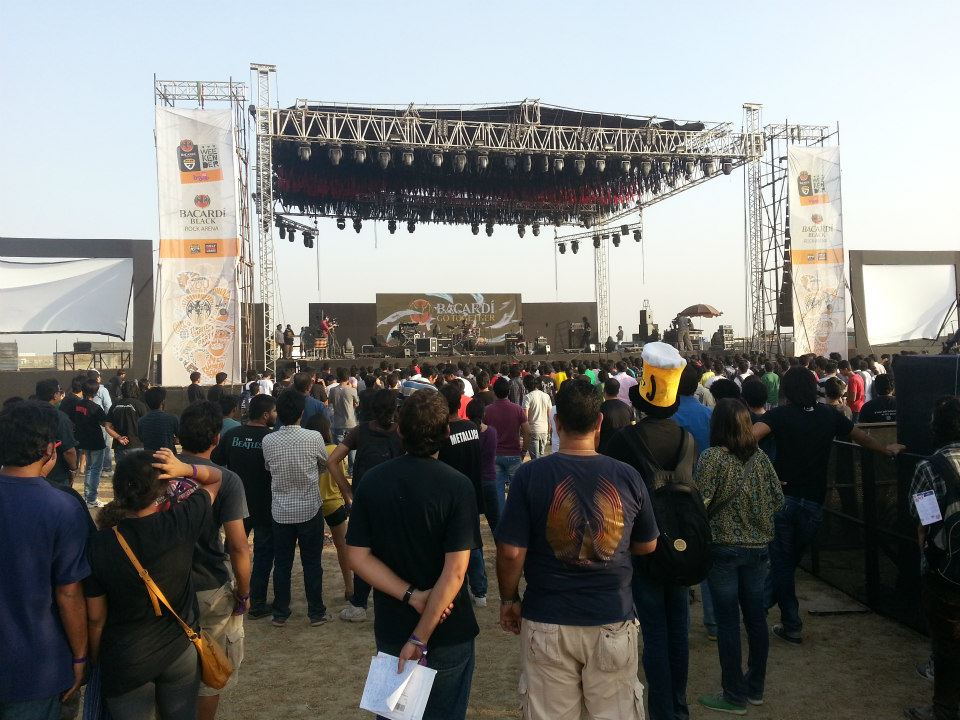
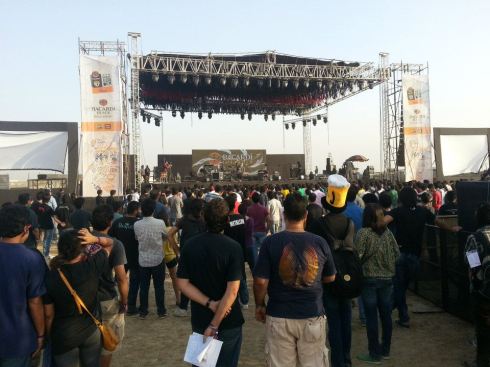
As soon as I got out of the car on the Saturday of the Delhi Weekender, I was struck by the scale and sheer ambition of the event that was unfolding.  Buddh International Circuit’s gargantuan Grand Stand stood tall beside the curtained enclosures housing six stages that were to host around sixty bands over the next two days.

This is NH7 Weekender, the biggest music event to ever happen near the national capital.
The last biggest-music-event-ever-to-happen-in-the-capital I’d gone to in the NCR was the Metallica concert in Gurgaon. That day ended with me standing in the sun for four hours without water, with a rather obese gentleman vomiting next to me in regular intervals and having to run away from the venue before the police arrived.

As you can imagine, I was going into this event with a perfectly justified sort of cynicism.

The event was already showing signs of better management than the Metallica affair. The parking lot was a small ocean of grass. I was handed a complimentary glass of water at the entrance, and led through the security check. Things looked good.

We followed the music and ended up at the largest stage, the Black Rock Arena, where a perfectly mediocre whiny alt-rockish band was just finishing up. I didn’t bother finding out who they were.

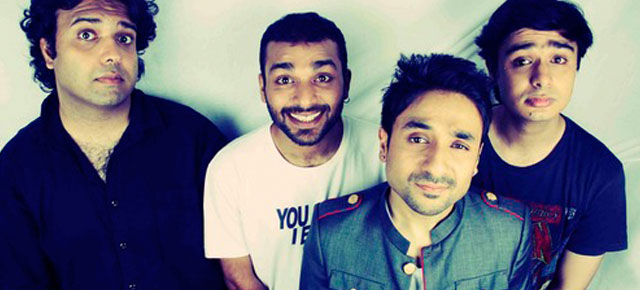
Next up was Vir Das’s Alien Chutney, boasting of the comedian plus two stalwarts of Indian rock- Warren Mendonsa and Sidd Coutto.

Alien Chutney was half rock-band and half stand up comedy act in which Vir Das regularly walked the thin line between acerbic wit and vulgarity. Alien Chutney started with the surprisingly addictive ‘Villageman’, a ballad about having sex with Haryanvis.

He followed with some more originals, such as his rendition of the Delhi Belly classic Bhag Bhag D K Bose (“Bhag Bhag Madarchod”) and the Heavy Metal Song (“Iron! Iron! Aluminum!”), before finally ending with his attempt at wizard rock, a piece entitled “Harry Is a Randi!”

One band down and nobody had puked near me: already better than Metallica. A pretty good start to the fest.

Up next was Indus Creed, which is apparently one of India’s best alt rock groups.

Stripped of the Alien Chutney’s novelty factor, it was clear that Indus Creed was lacking in a lot of ways. At their peak they came up with decent but somewhat generic alternative rock riffs, with lyrics reminiscent of Linkin Park.

Their seminal song “Fireflies” had an almost Porcupine Tree sensibility: a breath of fresh air in the middle of a rain of angsty power chords.

I found myself wandering to the Other Stage, a small set up next to the much larger Dewarists stage, where we found Barefaced Liar: a trio consisting of a vocalist, flute player and a guitarist that specialized in Spanish inspired music. However, the band relied heavily on lead vocals, and the other musicians did basically nothing but provide backup.

We moved on to the Dewarists stage where Advaita was playing. While their music was technically quite sound, I’m sorry to report that it did not get the blood running. This was a fest that was supposed to be headlined by Megadeth, and I did not feel excited.

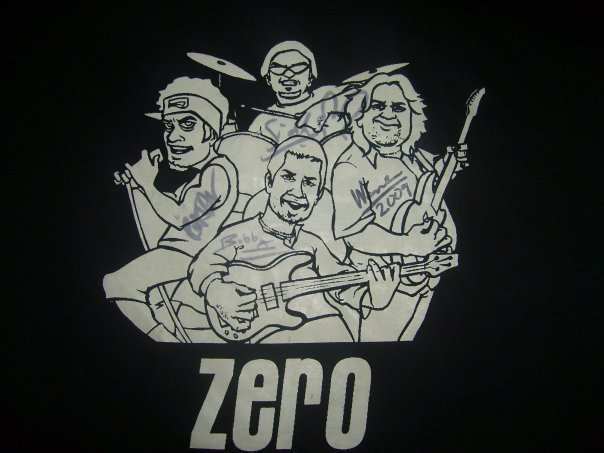
Back to the Black Rock Arena, where Zero was just going up on stage. Zero is one of the most critically acclaimed Indian bands, performing an average of only one gig per year.

But damn do they make it count.
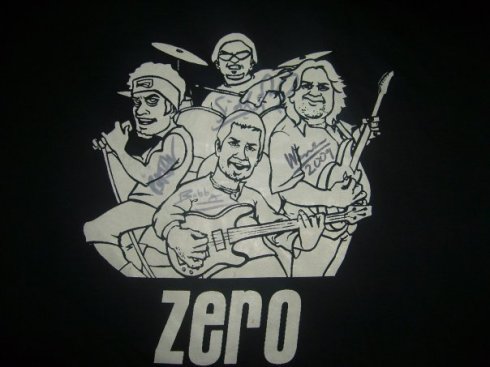
Frontman Rajeev Talwar adopted the persona of a hedonistic but rather likable British opera singer on stage. His overblown antics and Warren Mendonsa’s guitar set the tone for the performance from the outset, leading the audience through quirky lyrics, solid rock riffs and tastefully constructed solos. Finally some REAL rock at the Black Rock Arena!

Zero finished with their cult rock classic “PSP 12”, topped off by another blistering solo by Mendonsa.

Still a little dizzy after Zero, we wandered into the Bindass Fully Fantastic Stage into a performance by Gandu Circus. Now, Gandu Circus is the band that composed the furious Bengali-Rap soundtrack for subversive Bengali movie Gandu. Sadly, however, performing the movie soundtrack was only notable highlight of their show.

Following them was Menwhopause, a witty alternative rock ensemble from Delhi. Menwhopause brought to the table impeccable instrumentality and original melodies that combined both Indian and western elements. Menwhopause played a solid repertoire of soft rock songs, such as “Circles”, “Can’t we be Dreaming?” and “Downtown”. Meanwhile, there was a steady drift of people (from Pentagram which was playing in the Black Rock Arena), saying they wanted to hear a band in which people “could actually play the guitar and sing”.
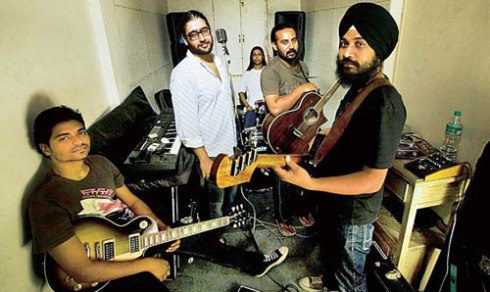
But compared to the other solid act of the day (Zero), Menwhopause seemed rather subdued… until their final song, that is.

This song took the ‘soft rock’ label, smashed it to bits, and then proceeded to jump up and down on it repeatedly.

“Katil Sardar” is zany, irreverent, and possibly the product of fundamental deranged mind, but all in a good way, of course. This hard rock song has a soft rock song built into it: its lyrics jump from describing a hearty Punjabi meal, advising horny old men to move to New Delhi and ascribing the attacks on World Trade Centre to a malfunctioning bong. Besides, they had an entire verse is made up of terrible Punjabi puns.

Katil Sardar’s National Anthem is Bande-Marte-HUM! (“We Kill People!” -for everyone not from the North)

Is it genius? Or merely the the first step of a progression towards dementia? I cannot say. It probably doesn’t matter.

Following Menwhopause on the Fully Fantastic stage was Shaa’ir and Func , an experimental electronic duo consisting of vocalist Monica Dogra and guitarist Randolph Correia.

While S+F had a few interesting moments (“Shine” was one), I honestly lost interest in the electronica quickly, and spent the majority of their performance staring at Monica Dogra gyrating on stage.

So did the rest of the audience.

We decided to leave Shaa’ir and Func early and head over to Anoushka Shankar on the Dewarists stage, but soon decided that we really had not come here to appreciate Hindustani classical music. Thus ended day one, which definitely offered its moments but had several disappointments as well.

The second day had its work cut out.

Day 2:

I was late to arrive on Day 2 and jumped quickly into the fray.

The Black Rock Arena was hosting Indian metal band Scribe, whose frontman urged the audience to “tickle his balls” as the band passed out beach-balls into the crowd.

Scribe performed reasonable metalcore if you weren’t particularly bothered about things like lyrics, melody, rhythm or originality of any sort.

Their songs apparently had names, but I was not able discern any through the growling.

Sadly, I had to make a hasty egress when the lead singer of Scribe announced that his favourite ‘metal’ band was, in fact, Limp Bizkit.

Next up were Them Clones at the Fully Fantastic stage. Barring atrocious work from the sound technicians that kept the volume far too high for a normal human being, the performance was excellent.

Them Clones as a band seemed transformed from the last time I saw them (in 2010). They seemed much more professional and progressive, and much less like a college band. They played one of the best renditions of “Long Live The Dead” that I’ve ever heard, and introduced us to some of their new music, before ending with the perennial hit “My Life” and a version of the hit “Zephyretta” (accompanied by saxophone).

Them Clones were followed by Shillong-based blues-rock band Soulmate. I hadn’t heard this band before and they turned out to be quite a find. Slick, stylish, original, and supremely confident, Soulmate delivered a performance that would shame most of the more established bands.  Besides, vocalist Tipriti Kharbangar gets my vote for being both the sexiest and most talented woman on stage during this fest.

Soulmate’s cornerstone tracks “Set Me Free” and “Voodoo Woman” transpose effortless, free-flowing blues melodies onto Tipriti’s vocals as they shift between silky smoothness and surprising force. The result is a musical tour de force.

The Bindass stage was already starting to dominate the concert, and next up was Blackstratblues, Warren Mendonsa’s instrumental guitar project with Sid Coutto on the drums.

Mendonsa had already delivered brilliant performances as part of Alien Chutney and Zero, and he did not disappoint here.

Most of his songs were from his new albums, the only two exceptions being “Ode to a Sunny Day” and “Ode to a Rainy Day”. For the majority he didn’t even bother naming them, letting the music speak for itself.

Since I can’t simply tell you to listen to song X on Youtube, I must tell you that Mendonsa painted sonic landscapes with his black Stratocaster and guided the crowd through a gamut of emotions that blues music rarely takes one to: sheer bliss, hope, and childish wonder.

However, it cannot be described in words so perhaps it is futile to even try. Blackstratblues was my favourite performance of the event and for me, Mendonsa was the star of NH7 Weekender, not Megadeth.

Mendonsa was joined by Vishal Dadlani of Pentagram and Prithwish of Them Clones as Blackstratblues ended with a reinvention of Zephyretta.

With some reluctance I left the Fully Fantastic Stage to return to the Black Rock Arena.

It was Time.

The crowd that gathered in front of the stage was immense but it was already tired after the fierce moshing that took place during the last concert.

(One source maintains that Bhayanak Maut’s Mosh Pits involved people punching each other with buckets.)

But as Dave Mustaine walked up on stage, all the injuries and tiredness were forgotten. And the crowd went up in a deafening roar.

I honestly have no idea what Megadeth played for the first fifteen minutes. I found myself headbanging even as a mosh pit opened up and I was pushed in. The next few minutes are a haze of bodies slamming into each other until Megadeth paused playing to tell us that they were touring to commemorate the tenth anniversary of their studio album Countdown to Extinction.

Megadeth played the entire tracklist of Countdown to Extinction.

Debris rained from the sky.

Clothes were torn.

People were sent sprawling onto the ground.

Girlfriends were hurriedly evacuated from the front rows by their boyfriends.

At one point I was the only guy with a shirt on in a five-metre radius.

As the Countdown album ended, Megadeth receded from the stage.

It was ten pm. Time for the concert to end.

The crowd roared, demanding Megadeth come out and play “Tornado of Souls”.  Mustaine walked out onto the stage, exhorting the crowd to cheer, playing one half of the audience against the other.
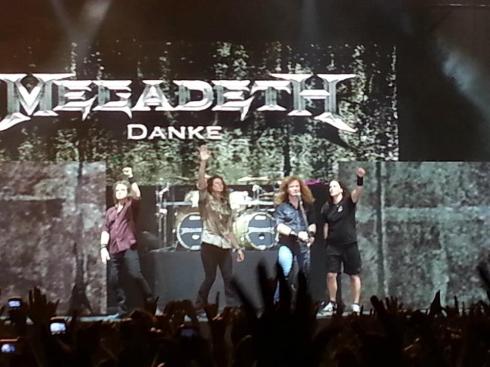
He told the crowd that he considered people in America spoilt, compared to the hardships his fans have to face in a country like India, shedding a lone tear at the end of the monologue.

The irony of that statement was not lost on me. After all, he was addressing possibly the most pretentious, privileged and generally spoilt group of individuals in this nation today.

And suddenly the rest of the band was back and Megadeth’s trademark riffs filled the air. The hitherto sobered crowd went wild, and for one last time, I found myself in the eye of a tornado.

Moonshadow Frequency is on Hiatus

2 Aug

Their mission statement is a question – ‘Who are we?’.  The quest has taken them to the softer side of alternative music, and they seem determined to leave no musical stone unturned and no style untouched. On Tuesday, July 31st, this band unfortunately played their last gig before a self-imposed hiatus. Will the decision cut off the band’s momentum? Or will it shake their very foundation into further musical inspiration?

In a collection of songs that are as eclectic as the words that make up their name, the constant factor for the band is a grooviness which is sprinkled with jazzy blues, soul, funky punk, soft rock and pretty much anything they can mesh it with.


“Throw Yourself” is the band’s most complete and streamlined piece yet. An acapella-esque  intro is ridden into the chorus by Neeraja, a songstress who sings like sultry Duffy meeting soulful Adele, with a blues rock infused melody that reaches almost anthemic peaks at certain points. It is sad that the project has since parted ways with Neeraja.

The band picks at countryside blues in “Little Heartbreak”. And while their single dab at an instrumental, “Sea Jem”, leaves you wanting for a bit more shine, they show much more polish in their  short demo titled “SmoulderBoulder”, where the coupling  of acoustic rhythm (with a hint of palm muting) and the electric lead gives their groove a classy touch usually reserved for jazz pieces. Listen and see for yourself!

Bonus: Here and here are awesome covers by the band, paying tribute to their influences.

However, with a line-up that the band admits to be “excessively young”, and lyrics that need to be tightened, the band is moving too fast across the landscape of musical styles to hold anyone’s attention for long. To be good, you need to give yourself time. And in the band’s own words, their members have changed as often as the clothes on their back until settling on the current one.  Neeraja, particularly, seems to have been a missed gold mine, a result of their roots not digging deep enough.

With studies and alternative incomes to worry about, perhaps the hiatus the band is about to take will freshen them up when they regroup, and hopefully a more sustained package will be delivered. If they’re signed up by a label though, their philosophically clichéd question may well be answered by their decision on a morally clichéd one: should they move a bit to the right for the money, or continue left for the journey?

But until then, Moonshadow Frequency’s pieces can be enjoyed while lying on your back (figuratively), at a pub, or in your office.

Moonshadow Frequency recently wowed audiences at the beautiful Summer Sundowners Festival in Manali. You can read the Hindu’s coverage of them here.

– Rohit Ashok

Skrat: Skrat in the Shed

25 Jul

If Chennai can claim any resemblance to an established alt rock scene in the city, a good chunk of that credit has to go to a band like Skrat. They have held out, survived the blizzards of lineup changes, a dearth of good audience and the hazards of taking a break in a very weak environment. They have taken their time to make music which screams in your ears that it’s Skrat, and nothing else: for example, take ‘Black Hammer Man’ or the ever-popular ‘Stay Wild’. Skrat is a band that has been courageous enough to take the time to find its own ‘sound’.

And that’s exactly what the band did, with Skrat in the Shed.


Skrat in the Shed is essentially a seventeen-minute, five song video showcase (see above) of Skrat playing five new songs, shot and recorded in front man T. T. Sriram’s ‘garage’, the jam room for many Chennai bands. Their first song “Tin Can Man” starts on a promising note with well-matched vocals and a foot tapping chorus. If that wasn’t enough to catch your attention, then the fast paced “Smoke a Cigar” grips it. The song is well-written and accompanied by catchy riffs, and the change of pace in the middle of the song is just brilliant.

It does look like all songs were performed in one go, with only a few tight seconds for demarcation. After “Smoke a Cigar”, we settle down to a nice and leisurely “Big Bad Bombs”. At just about four minutes long, this track has some soulful vocals and restrained drumming to go with it.

The next song “High” already seems like the next crowd favorite. Its low toned, deep and measured riffs sound like Tony Iommi cured of his lymphoma and back from his Sabbath-ical. On Skrat in the Shed, it is this song that reminds us most about just how much Skrat has striven to evolve and mature, tired of everyone telling them how to play their music. This slow paced song, presented with elegant vocals and good bass, is sure to have your heads rocking slowly in harmony with its title.

Bringing things to a fast paced end, leaving you craving for more is “Shake It Off”. Again, good guitar work does the trick here. Although old timers might question Sriram’s vocalizing of the lead tune, it’s still fun: and still Skrat in its own way. And what more, it worked with the audience which sang along when they performed at Alliance Francaise, Chennai recently.

All in all, Skrat in the Shed is a great album (and a neat video) by Skrat. They look all set to hit the mainstream and play regularly to bigger audiences. You have to be very determined and lucky if you get to make a successful comeback and reinvent yourself in the process. And Skrat looks like they’ve given their all.

– Prasannaa

Susmit Sen: Depths Of The Ocean

18 Jul

Susmit Sen has been India’s foremost acoustic guitarist for over two decades now. Founder-member of the great Indian band Indian Ocean, the band’s signature sound is built upon Sen’s unique guitar sound: Indian sensibilities, but a purity of scale that reigns supreme. Heavily influenced by Ustad Ali Akbar Khan (sarod) and Nikhil Banerjee (sitar) as well as the great John MacLaughlin in equal measure, he has developed his own unique sound which, albeit not technically pure, is extremely clean. His compositions are in the classical mold, but not in method, where melodic lines are woven around the whirr of open strings.

Over the years, Indian Ocean’s sound has changed. The first album had only instrumentals, which was almost unheard of then in the Indian music industry. As the years have progressed, the band has incorporated vocals and lyrics, folks and roots playing a huge influence, with the numbers generally being more pacey and more mainstream in its attire. And somewhere along that line, the inherent classicism of its first album has been somewhat lost. And this is where Sen’s album comes in. Susmit Sen released his solo debut album Depths of the Ocean earlier this year – an album which has been in the making for the last ten years.

The album kicks off with the track “Rejuvenation” with his bandmate, the great late Asheem Chakravarthy on vocals and tabla. At a little under ten minutes, the track starts off with Susmit building up the mood with some neat jazzy riffs and then Asheem takes over with his tanas – Kumar Gandharva’s influence is crystal clear. As Asheem and Susmit feed off each other in a jugalbandi of sorts, it’s a distinctively early Indian Ocean. And it’s rather sad that this might be the last time one gets to hear Asheem’s soulful voice on record.

Next up is “City Lights” featuring Shubha Mudgal. Much darker in mood, it is unlike anything Rana’s ever done before. The first distinct feature is Shubha Mudgal’s whispered and restrained vocals, which are as majestic as her usually more vigorous style. Though it’s more than 11 minutes long, it’s all good: the sudden mood changes and fillers, accompanied by some beautiful flute and fluent keyboard playing, makes this track the majestic best of the fusion genre. The track ends with some dark but poignantly beautiful note phrasing, and is an absolute classic.

The title track “Depths of the Ocean”, incidentally one of Susmit & Asheem’s earliest compositions, features Parikrama’s Nitin Malik on lead vocals and other vocalists. It harks back to the era of Indian Ocean’s earliest days and its debut album. With some very agreeable vocals, the guitar parts have been woven in very intricately and you can hear traces of quite a few numbers from the debut album in the various jumps and turns the songs take.

“Tribute” is a solo Susmit Sen guitar track and it is easily the most moving piece of this album. It takes one back to the times where to experience music meant sitting alone in a dark room and letting the music seep into the soul, with inner peace as the foremost objective. The beautiful aalap creates a wonderful mood as it segues into the main composition with a beautiful jhala. Again it is a long composition, and again it never gets repetitive. Sen comes up with some beautiful fillers without ever changing scale.

Next is the folksy “Wild Epiphony” featuring the Assamese folk musician Papon on lead vocals. Though Papon is pretty good on the vocals with some powerful delivery and with Rana in full form, it doesn’t quite have the majesty of the earlier collaborations on the album. Following that is the track “Intimacy” featuring Sen’s cousin Sari Roy. It is another beautiful track with some very melodious riffs and fills, and Sari Roy harmonizes along quite beautifully with the strains of Sen’s strings. And it does create some mood – imagine sitting around a moon-lit terrace, a tad intoxicated and listening to a couple of friends singing and playing the guitar. Except, of course, your guitarist won’t be as good as Rana.

The album ends with “Six String Salute”, Sen’s take on our 100-year-old National Anthem. Stripping the anthem somewhat of its patriotic fervour, it brings out its oft-neglected spiritual and tranquil calmness and enhances its melodic classic-ness even more. Susmit Sen truly does this piece full justice.

Depths of the Ocean is an absolutely stunning album. Susmit Sen comes across as a musician at peace with himself and his guitar. It’s the fruit of his arduous twenty plus years with his band, the sounds and sensibilities definitely contributing to the beauty of it. This album makes an emphatic statement: Susmit Sen is still India’s best acoustic guitarist. There’s an ethereal and spiritual connection with his music, that can take its listeners places, and this album crowns Susmit Sen in all its glory: not only as a great guitarist but as a great musician.

Verdict: Indian Oceans fan you might or might not be, just shut yourself in your room and listen to this album. And drown in the Depths of this Ocean of sounds. And peace out!

– Sayid

Sky Rabbit: “Anti-Coke Ganpati”

11 Jul

The name of the song is ‘Anti-Coke Ganpati’? Are they a rare species of anti-drug musicians? Or are they just being ironic?’  

Searching for good Indian rock music usually involves sifting through piles of amateurish metal drivel and wannabe alternative/indie bands still searching for their own sound to reach those isolated pockets of unique, memorable music.  However, when one comes across a band like Sky Rabbit, the tiresome search sometimes seems worth it.

Formerly known as Medusa, this electronic post-punk band from Mumbai consists of Raxit (Vocals/Samples), Rahul (Guitar/Samples), Siddharth (Bass) and Harsh (Drums). Fusing electronica with conventional instruments, the band claims to have stumbled upon a unique style and sound. What is remarkable, however, is the way they have perfected this style in their very first album (Sky Rabbit, January 2012). We feel that there are only a few bands in India that manage to sound as spontaneous and self-assured right from their debut.

One thing we quite liked about this song was the intriguing title: most ‘rockers’ would never use the word ‘anti’ in the same sentence as a drug name (much less utter it in the same breath). We’ve determined that the title is either pedantic or, of course, ironic.

So we like the song. Should you listen to it? Let’s break it down.

Pros:

The ambience. The song kicks off with a sampled loop of pleasant, airy electronic, but by the time the drums and vocals kick in a couple of bars later, the song has settled into a soothing, rather lazy groove. Raxit’s deadpan baritone perfectly complements the sampled music and the steady rhythm guitar to set a drowsy, rather heady tone. The bass playing is minimalistic yet tasteful, and the drumming is tight. It is perhaps slightly ironic that a song with an anti-drug stance in its title creates a mood akin to what a stoner would feel after a particularly long session.

The loops. The song follows a slightly unusual chorus-verse-chorus pattern, with an interesting interlude. A few other sequenced samples are layered on top from time to time. My personal favourite is the last sampled loop in the song. As the instruments fade out, sequenced sounds which conjure up images of a Nintendo 8-bit game involving spaceships, play out till the end.

Cons:

Words. The lyrics are slightly puzzling, though. Riddance of blasphemy, idealistic presidential candidates, and the power-hunger of the same idealistic candidates all make an appearance. At one point, the band seems to be taking a dig at our current President (maybe). For a lot of the song, it’s unclear whether the band is going for something lyrically profound, or nonsensical filler words. The title, albeit intriguing, is gibberish as well: does it represent a demi-god figure with an anti-drug stance, or is it, along with a few other words in the interlude, a part of the musings of a stoned rambler? We’ll never know.

The musicianship. In that, no outstanding example of it is displayed in this song, and for that matter, on this album. There are no remarkable instrumental solos or mind-blowing vocals, and it will be interesting to see how the band fares when the novelty of their music fades.

Verdict:

For the moment, Sky Rabbit seems to have hit a purple patch with a unique and refreshingly original style and sound. The trippy ‘March’ and the brilliant ‘I Become I’ are other tracks worth checking out on the album. Even though there is no amazing technical ability on display, the band has a distinctive and impressive style and sound, which they’ll hopefully hold on to in the coming years, while continuing to grow and evolve.

Sky Rabbit plays TOMORROW at Delhi’s Hard Rock Cafe. You should check them out if you’re in the vicinity.

– Soumyadipto

Kaav: “Thee”

29 Jun


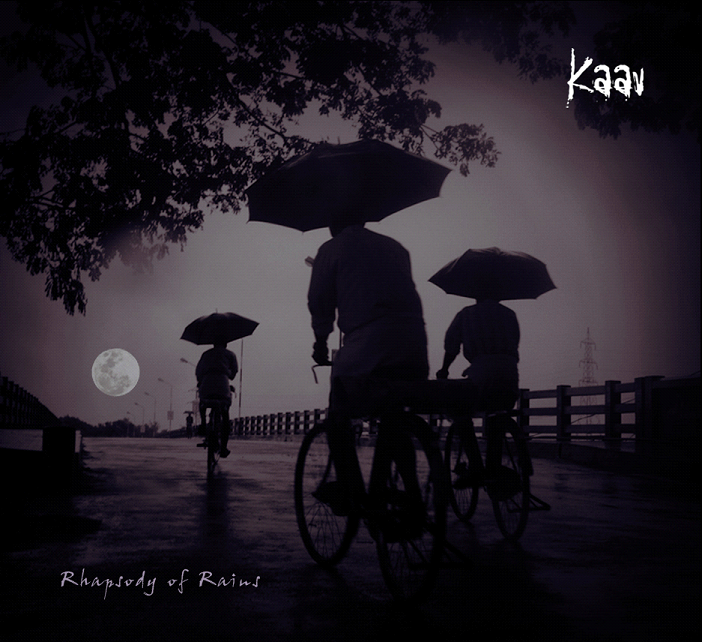
Kaav, Kerala’s own three-piece instrumental band, makes me truly excited to be a music listener in India today. In an industry where Indian-influenced rock has little real identity, Syam Pai (guitars) Shabeer Ali (bass) and Arun Kumar (drums) manage to stand out. It’s not difficult to imagine the group lying around on Vypin island on a stormy Sunday afternoon, making musical magic against the background of Kerala’s heavenly atmosphere. To witness this magic, look no further than “Thee,” a single from Kaav’s latest aptly named album Raphsody of Rains (produced with the help of Indian legend Baiju Dharmajan and Cochym Records).

“Thee,” means fire in Malayalam, and according to Kaav “represents the inner fire or the inner strength of humans that gets unleashed in different ways.” The song captures the essence of this strength perfectly, and constantly has throwbacks to the images brought up by the album’s title itself. It’s impossible to listen to the initial bars of the song without thinking of the first few smatterings of raindrops on a cloudy, thunder-filled day. The track starts up with a mood-setting clean guitar strum, accompanied by a low, warm, ringing bassnote and syncopated six-beat hat rhythm; slowly, the mood shifts as the music develops into a harder sound. Softly distorted guitars show up, with gorgeously melodic guitar and bass riffs. The song gradually builds up, but chooses to delay its breaking point – instead, we segue into a beautiful spoken-word excerpt from legendary film maker John Abraham’s “Amma Ariyan.” The critical point happens only after this, and remains wonderfully understated.  The song is then gradually brought back down to earth by a lone, squealing, wavering electric guitar note.

The song’s music video is a piece of art in its own right. Excerpts of Abraham’s film are interspersed in black-and-white with muted-colour clips of the band performing, in an artsy move that never crosses the line into pretentiousness.

Verdict: Kaav represent everything that the Indian music scene has to be hopeful about. Their music retains every inch of their Malayalli heritage, incorporates enough western influence to be accessible to a wider audience, and has a universality to it that cements it as a work of art.
Sidebar: Go check out Kaav’s website. It is *beautiful.*

Top 5 Artists from Chennai

28 Jun

Due to a certain chain of events in my early twenties, I was made to spend the first half of this year in (what I assumed was) India’s capital of fervent orthodoxy, Chennai. When people heard of my move, they offered their condolences and (more often) their schadenfreude: but not one of them offered me a heads up about the thriving musical scene here. Now, when you see the words “Chennai” and “music” in the same sentence, it’s natural to expect the word “Carnatic” to pop up soon after. The only phrase I knew that went against this intuition was “Junkyard Groove”. But, as I eventually discovered, Chennai is one of India’s premiere hotbeds for young, alternative talent. Here’s a list of the best alternative indie that the city has to offer.

5. Little Babooshka’s Grind 

Rounding out the end of our countdown are the excellently-named veterans Little Babooshka’s Grind (LBG). They really are pioneers of Indian original rock music, making great electro-rock songs (see: “Doll” on the Blue Butterfly Express EP) way back in 1999 when most other bands on the scene were covering songs that had already been covered a million times. Songs like “Codeine” and “Money” brought sufficient funk to their old-school classic rock sound on first album This Animal is Called the Wallet, while “Basics of Life” is our favorite track off of sophomore album Bad Children.

They’ve been around for almost two decades, but the all-originals band isn’t going away anytime soon. Last November, they released new single “Big Words”, from the upcoming album Wake Up… The Break Up, when they got selected as one of the five bands at the Ray Ban Never Hide Sounds band competition. As an added bonus, here is a rare LBG cover of Foster the People’s “Pumped Up Kicks” at The Great Indian Oktober Fest, Bangalore last year!

4. Harsha Iyer

Next up on our list is a young singer-songwriter from Chennai whose debut made quite the splash last year. Harsha Iyer, at all of 19, released an album on which he wrote, sang, performed, and produced all of the twelve original tracks. Not bad for a kid who in an alternate timeline would be getting ragged by college seniors. Dabbling in a plethora of genres with a self-confidence that most 19-year-olds don’t possess, Harsha took the Indian indie scene by storm with Curious Toys. Tracks like “Overcautious” and “I Find You Boring” celebrate his considerable youth, whereas on songs like “Money” and “Not Dead Yet”, Harsha weaves tales of imaginary characters with surprisingly shrewd songwriting skills. The Chennai musician is now releasing a second album, a twenty-track behemoth, in two separate installments a month apart. His first single “Mystery Woman” is out already, and you should definitely give it a listen.

3. Adam & the Fish-eyed Poets

AATFEP is a real gem of the Chennai scene. The band is the solo singer-songwriter project of a certain Kishore Krishna, who also happens to serve as something of a mentor for younger city musicians like the above-mentioned Harsha Iyer. Both his debut Snakeism (a la the shape-shifting slitheriness of the genres on the album) and his sophmore Dead Loops are spectacular examples of what the country’s indie musicians can do if they push themselves to their boundaries. It really needn’t be said how there are far too many ‘indie’ ‘musicians’ in India who do no such thing. Snakeism in particular is dark, seething, stylish and clearly bursting at the seams with exceptional talent. “Black eyed Monster” and “Little Monkeys” are the shiniest in this gem box of a debut, whereas “Purgatory City” (Chennai?) captivates on Dead Loops. Don’t think too much. Go download both albums and just listen. Don’t be shocked if you are genuinely amazed at the influences and styles and genres that are at play in AATFEP’s work. This, my friend, is music for the cynics.

2. Junkyard Groove

At number 2 is the band that originally put Chennai on the indie map: Junkyard Groove, or JYG as it is fondly known. Ever since their debut way back in 2005, JYG has opened for some of the most famous international acts to perform in the country, and for good reason. Exceptionally refined production values, good songwriting, and truly gifted musicians: there is little that this band lacks. The energetic funk on “Feel Like a Knife” (from their 2009 album 11:11) entrances you seconds into the song, and just wait until you get to the fat bass interlude. “Folk You” and “It’s Ok” are pretty snazzy too. Their latest single “4 to 5 Things” sounds like a rocked-out Irish jig. We really suggest you listen to it.

1. The Shakey Rays

It’s hardly over-stretching the truth to state that there’s nothing in India quite like the Shakey Rays. Tight arrangements meet genuinely good songcraft in perhaps one of the most innovative bands ever to call India their homeland. You can literally listen to any five seconds off their debut, and conclude that it is both shockingly original and unnaturally good. Divine pop tunesmithery and a certain inimitable sense of musical intuition run wild and free on Tunes from the Big Belly, bringing up DMB and the Beatles and RHCP and the Kinks and whoever else with the greatest of skill: i.e., influenced by, but not imitations of. It can be safely said that there are about three or four new bands in India who have mastered this art, and possibly none as well as the Shakey Rays. As their name suggests, this band is truly the sunshine filtering through the smog of the Indian indie scene. Perhaps it is only apt that they hail from the city of year-round sunshine.

It’s impossible to pick favorite tracks on the album, but “I’m Gonna Catch That Train” is a good place to start. It takes a lot of talent to beat Junkyard Groove at their own game, but the Shakey Rays show immense promise. Music fans in Mumbai, Pune, Bangalore and Delhi rejoice, for the Rays are coming to a venue near you in July! Please don’t miss it.

Agree with the top 5? Disagree? Let us know in the comments section! 

Spud in the Box: “54”

27 Jun

“54”, a song from fresh new Bombay band Spud in the Box, is the musical version of a double-take. The song starts off ridiculously upbeat: a sparkly, summery ditty of a man with a fondness for pretty legs and juicy kiwi (albeit mysteriously with a shrink in the picture). By the time the chorus kicks in, still California-sunny, the lyrics veer into hypothetical stalking, seemingly in an obsessive, puppy-love vein of things. Alright. Quirky, but not abnormal.
But pretty soon after that, things veer sharply left of centre. Hypothetical stalking turns into imagined, deranged conversations with Dr. Phil. Then the story pans out to include a mental asylum, a car trunk stuffed with his crush’s boyfriend and – you guessed it – a serial killer’s knife in hand. You have to listen to the final lines of the song to understand what the ’54’ here signifies, although you might guess it. Either way, the contrast of the overt morbidity in the song and the outrageously sunny music (How sunny? It could work as the background for a Go Goa TV ad. Seriously.) is really something to look out for.
Mind you, this entire panorama of morbidity happens as a mere backdrop to the caefree, sunshine music. Imagine Cake singing about serial killers. Or Jason Mraz providing the soundtrack to Silence of the Lambs.
Spud in the Box recently signed on to The Random Dream Project, a brand-new record label (launched May 31st, 2012) that hopes to be a one-stop shop for India’s best indie talent. If all artists are as good as Spud in the Box prove to be on this track, we’re very excited indeed to see that this label puts out.
Verdict: As you can see, we’ve got nothing but good things to say about this track. Listen, listen, listen! We love this folk-rock band.

– Neeharika