British psychedelic pop act Glass Animals recently released their third studio album, Dreamland, earlier this month. The band’s previous outputs – debut Zaba (2014) and How to Be a Human Being (2016) – were fairly well-received, resulting in break-out single “Gooey” in addition to a Mercury Prize nod. With Dreamland, the band digs deep into deeply personal stories for a record that’s nostalgic, expertly produced and as dreamy as the name suggests. However, it remains to be seen whether this is the best that Glass Animals are capable of.
According to lead singer Dave Bayley, Dreamland has a grisly and quite recent origin story. In 2018, the band’s drummer Joe Seaward (and Bayley’s childhood friend, as are all the band members) got into a horrendous traffic accident that left his future uncertain. Although Seaward eventually recovered, Bayley’s experiences at his bedside got him thinking about their past, and then even before that: although Bayley is English now, he is actually American by birth and moved to the UK only in his early teens. This mishmash of trans-Atlantic experiences went on to provide the content for much of Dreamland’s lyrics.
Bayley’s date of birth – in June 1989 – forms another key piece of the album’s lyrics. Dreamland is consciously and explicitly centered on the specific lived experiences of Bayley’s cohort of Americans millennials. Peppered throughout the album are touchstones from the childhood of someone born in the 1989-1992 period – watching “The Price is Right” after-school; seeing school shootings; playing Pokemon; and much more.
Unfortunately, the hyper-specific focus on the personal past sometimes works; but more often than not, makes the songs trite and a little childish. If you are listening as someone born in that exact country and time period, great – chances are, you’ll love it purely out of your own emotional connections. If not – well, it does come across a little vapid.
Lyrics aside, though, the album is quite well-produced and diverse in terms of vocals, drums and beats. Dreamland starts off with the eponymous track and third single, which touches upon the key stories and emotions that will be brought up in the rest of the album. The song also sets the album’s dreamy (duh) tone, from the gentle xylophone to Bayley’s whispery falsetto. The last lines on “Dreamland” literally segue us into the rest of the album: “Oh, it’s 2020 so it’s time to change that / So you go make an album and call it Dreamland”.
Say what you will about Glass Animals, but they sure know how to pick their singles. The fantastic Denzel Curry collab “Tokyo Drifting” was released all the way back in November 2019 (remember 2019?); as regular Top Five Records readers know, it was one of the best tracks in 2019period. Second single “Your Love (Déjà Vu)” from this February was and continues to be a Timberlake/Timberland-esque banger. Perhaps the most interesting track on this album is final single “It’s All So Incredibly Loud”, where the band trade in their hip-hop beats for an intense, Radiohead-like slow-burner. In line with the title, the song gets progressively louder as Bayley’s vocals paint a picture of the split-second after you’ve said something you oughtn’t have.
Among the non-singles, “Tangerine” stands out with catchy beats and a calypso beat that’s instantly reminiscent of Drake’s “Hotline Bling”. “Space Ghost Coast to Coast” deals with the quintessentially American topic of school shootings, and is apparently based off of a real-life friend who became a school shooter. Musically, the song features a wide array of blips, beat drops and droning synths that make for a snappy, crisp listen (despite its content).
But beyond these stand-out tracks, the album starts to falter. It’s not that the rest of the songs aren’t good tunes – on the contrary, the beats and production remain top-notch fairly throughout. However, they don’t quite break out of the casual-listen orbit. “Melon and the Coconut” is as forgettable as the name suggests; “Waterfalls Coming Out of Your Mouth” is just “Tangerine” without the Drake rip-off beat. “Heat Waves” is a great summer track, but you won’t probably remember it beyond the summer. In fact, the most memorable part about it is the music video (see below), which was shot entirely in quarantine. “Domestic Bliss” tackles an important subject matter – domestic violence between parents from a child’s perspective – but you could not hum a bar of it afterward if you tried.
Dreamland is a musical version of the 90s-kid meme, filled with the collective memories of 30-ish-year-olds from childhood to the present day – quinoa and online shopping included – through the filter of Dave Bayley’s personal memories. However, the autobiography theme is a little too specific, erring on the side of therapy or diary entries than the side of a meaningful creative output. Also, the chillwave-meets-Beach Boys vibe gets a little taxing and banal after a while, as does Bayley’s constant falsetto. Overall, Dreamland is a fun, crisply-produced listen – but you wouldn’t be amiss to hear the hits and skip the rest.
Best songs: “Tokyo Drifting”, “Your Love (Deja Vu)”, “It’s All So Incredibly Loud”
Ed. Note: This is a guest post from our good friend @Beatcritiques. Be sure to follow their Instagram page and check out their blog for more great content like this! Related: Check out our review of Taylor’s latest album folklore.
Everyone knows Taylor Swift. She’s written number one hits like “Love Story,” “You Belong With Me,” “Shake It Off,” “Blank Space,” and that’s just a few. Swift was also the recipient of the Artist of the Decade award at the 2019 AMAs. Safe to say, Taylor Swift has had an impressive career and shows no sign of stopping anytime soon. If you’re looking to jump on the Swiftie bandwagon but don’t want to sound like you only know her greatest hits look no further. Listed below are five of my personal favorite deep cuts that she’s released.
“Forever and Always (Piano Version)” from Fearless (Platinum Edition)
The piano version of the track “Forever and Always” from the deluxe version of Swift’s second studio album, Fearless, is heartbreaking. Stripping the track down to the essentials turns an upbeat track into a highly personal breakup song wondering where things went wrong. Swift sounds like she’s singing right to you asking “Baby, what happened please tell me?” and can draw tears out during the bridge telling the subject to “back up, hold on, back up.” A gorgeous track overall.
“Come Back…Be Here” from Red (Deluxe Edition)
Another deluxe edition track, “Come Back…Be Here” comes off of Red, Swift’s transition into pop. This track is deceptively sad and relies heavily on a guitar instrumental. What really makes this song stand out to me is the bridge and more specifically, the lines “This is falling in love in the cruelest way/This is falling for you when you are worlds away.” Swift’s vocals are stunning in this track as she describes the separation between her and the object of her affection.
“Sweeter Than Fiction”from One Chance
“Sweeter Than Fiction” was written by Swift herself and Jack Antonoff (a duo that has produced some of Swift’s best songs in my opinion) for the movie “One Chance.” This track describes supporting a partner on their journey through all of their ups and downs, eventually ending up in a success (“Now in this perfect weather, it’s like we don’t remember/ The rain we thought would last forever and ever”). More of a feel-good song than anything else, it never fails to get me up on my feet dancing and singing along as I remember that sometimes, life itself really can be sweeter than fiction.
“Clean”from 1989
Okay, “Clean” is one of my personal favorite Taylor Swift tracks of all time and seeing it performed in the pouring rain during the Reputation tour is one of my favorite memories. Written with Imogen Heap for the pure pop album 1989, this song is the perfect anthem of cleansing yourself and realizing that you’re better off without some people in your life. The beauty of this song is the fact that it can be applied to any relationship, not just romantic ones. This track is a must-listen Swift ballad and a classic among fans.
“Cruel Summer” from Lover
Swift flexes her lyrical ability on the upbeat summer bop, “Cruel Summer.” In my top 3 of seventh-studio album, Lover, Swift describes the “glow of the vending machine,” as she talks about a secret relationship (“sneaking in the garden gate”). As many fans of Taylor Swift must know, she loves a good bridge and the bridge on this song deserves to be listened to at full volume every time. How else are you supposed to scream “he looks up grinning like a devil?” “Cruel Summer” is also a favorite among fans, and was a contender for the next single off of Lover before Swift surprised fans with her album, folklore.
Honorable Mentions (because who can choose just five?!)
“Picture to Burn” from Taylor Swift
“Beautiful Eyes” from Beautiful Eyes EP
“Jump Then Fall” from Fearless (Platinum Edition)
“Better Than Revenge” from Speak Now
“Getaway Car” from reputation
“august” from folklore
“the 1” from folklore
So there you have it! Did you agree with BeatCritiques’ picks? Let us know your thoughts in the comments! And don’t forget to follow us on WordPress to hear about our new posts as soon as we hit that Publish button.
Pop singer-songwriter Jessie Ware is familiar to most English audiences. Her debut album Devotion (2012) straight away bagged a nomination for the Mercury Prize, won that year by fellow Brit pop act alt-J. That album introduced listeners to Ware’s powerful voice, typically set against hefty drums and assertive synths. Subsequent albums Tough Love (2014) and Glasshouse (2017) followed the same theme, resulting in fantastic singles such as “Tough Love” and “Midnight”.
This June, Ware released What’s Your Pleasure, her fourth album – and undoubtedly her best. Over 53 minutes, Jessie Ware takes us on a journey back in time to the peak-disco world of late 70s, as epitomized by dance clubs like Studio 54. What’s Your Pleasure finds Ware at her freest – less bound by the rules of commercial pop music – and the result is a bold, highly enjoyable dance-pop extravaganza for the ages.
When we say dance-pop, we aren’t kidding. What’s Your Pleasure is filled to the brim with 70s-inspired dancefloor gems. Disco is, of course, the theme du jour among pop stars, but Jessie’s interpretation is slinkier than Dua Lipa, more refined than Lady Gaga and more inspired than Doja Cat.
From start to end, the album centers along the same few years – perhaps 1972 to 1978 – but manages to capture all the subtle nuances of that era. The album kicks off with “Spotlight”, which opens with a dreamy, vocal-heavy section in line with Jessie Ware of old – but then jumps right into the unmistakable disco synths that color the rest of the album. “Ooh La La” opens with a fat bassline that could soundtrack the entrance of a glamorous socialite into a plush dancefloor. A couple of songs later, “Save A Kiss” goes into the house music arena with a head-spinning beat, tempered by electronic blips and dramatic violins. “Read My Lips”, with its electric-guitar licks and distant synths, is pure flirty fun all the way through.
Lyrically, much of the album deals with obsession in all its facets – longing, lust, sex and sometimes just romance. Ware introduces the theme right at the start with “Spotlight”: “If only I could let you go, If only I could be alone / I just wanna stay, In the moonlight, this is our time in the spotlight”. “Adore You”, the first single off the album, is sweeter. “Stay ’cause I want you / We can tell everybody, tell everybody,” she suggests, perhaps the starting notes of what will soon become an unhealthy obsession. “Mirage (Don’t Stop)” is her paean for the morning-after: “Last night we danced, and I thought you were saving my life,” she confesses.
Both musically and lyrically, the album really hits its peak on the eponymous “What’s Your Pleasure”: a fast-paced, riveting, instant-classic disco hit that’s honestly one of the best songs of the year.
Recently, fashion godfather and Vogue legend Andre Leon Talley released an auto-biography entitled Chiffon Trenches. In the book, Talley describes his life through the fashion world in the past half-century, especially underlining the carefree, lascivious few years in the 70s between the sexual revolution and the AIDS wildfire. Jessie Ware’s What’s Your Pleasure is the perfect soundtrack to this era: confident yet vulnerable, joyous yet filled with longing, but above all – free.
What’s Your Pleasure is an audacious, glittery antidote to this godforsaken year, and we couldn’t be happier that Jessie has bequeathed us with this gift.
Best songs: “What’s Your Pleasure”, “Read My Mind”, “Spotlight”
No matter what arena of entertainment you subscribe to, chances are that you are familiar with Donald Glover. Beyond being a well-known musical artist, Glover is something of a modern-day renaissance man. He’s the award-winning creator / actor of the FX show Atlanta; a big-name movie star for properties such as TheLion King and the Star Wars universe; a prodigious young writer for 30 Rock; a bonafide TV star on cult show Community; and much more.
However, our viewpoint here at Top Five Records is of course on his musical avatar. Last week, our writer Nikhil Murthy took a critical look at the life and times of the artist known as Childish Gambino. Nikhil had choice words against the earliest part of Gambino’s career, especially around the Camp era.
It wasn’t all negative though: Nikhil next listed out his top five tracks from the Childish Gambino discography. Here’s his list if you missed it.
After Nikhil put up his list, we had a bit of a heated internal discussion within the Top Five Records team. Did we agree that “This Is America” is his best song? Did we think that “Les” is the best song from Camp? Which is more impressive: time-withstanding lyrics, or tongue-in-cheek pop-cultural one-liners? And so on (as you may imagine from a group of music nerds).
Ultimately, the discussion boiled down to this: Did his best tracks come at the earlier part of his career, or the latter part? So, with that, here’s another look at Childish Gambino’s best songs; this time from our writer Neeharika Palaka.
Honorable mentions
“Heartbeat” from Camp: This is a great song from Childish Gambino’s debut album Camp (2011). Although it starts off like it could be a slow-jam R&B track, Gambino quickly dispels the notion with an angry volley of hurt sentiments at a girl who chose someone else over him. It’s immediately apparent that he’s a comedy writer. For example, these lines in which he puts down his rival for being (of all things) a bad blogger, and backhand-compliments his would-be lady’s figure: “He ain’t cool, he ball and all that, but he just a fake nigga who blog in all caps / You coulda’ wait to date, I’m going straight for your thighs like the cake you ate”. “Heartbeat” is not just about the lyrics; Gambino also impresses with his oscillating emotional delivery, the sludgy synths, and a catchy chorus to boot.
“Bonfire” from Camp: This is another track from Camp, and really the first Gambino song I ever heard. One could write a long-form essay on the vast array of jokes, double-entendres, clever brags and other sleights-of-hand that Donald Glover, the professional writer, manages to fit into just over three minutes on this track. “Bonfire” works almost like Glover’s intro-slash-autobiography, of growing up as an artistic Black man in rural Georgia, of not quite fitting in with his heritage while attending the best high school in Georgia, of ultimately making peace with his eclectic scenario. Naturally, being Childish, all of these hefty topics are conveyed through a series of improbable one-liners. “Black and white music? Nigga, that’s a mixtape”; “My dick is like an accent mark, it’s all about the over Es”; “Yeah, they say they want the realness, rap about my real life / Told me I should just quit ‘First of all, you talk white! Second off, you talk like you haven’t given up yet’”; and many more. It’s honestly a fascinating song.
5. “Redbone” from “Awaken, My Love!”
Clocking at number 5 is “Redbone” from the peculiarly-named “Awaken, My Love!” album. I know Nikhil rated it much higher, and I understand where he’s coming from: this is perhaps one of the funkiest, slow-burn songs in Childish Gambino’s line-up. Moreover, the song has deep meaning. The entire album was said to have been inspired by the birth of his child with his non-Black partner; a light-skinned African American child is occasionally known as a redbone, so that’s likely the inspiration for this track. Although this is an undeniably groovy jam – especially the plethora of Gambino’s “Stay woke” wails – it’s perhaps not endlessly listenable.
4. “Sweatpants” from Because the Internet
“Sweatpants” is the first of my picks from Because the Internet (2013). This was the album that moved my image of Donald Glover from his Troy Barnes avatar to his Childish Gambino avatar, although I did take a shine to his debut Camp (2011) when it came out.
The entire track is filled with the kind of slick, clever writing that earlier resulted in 23-year-old Glover being personally picked by Tina Fey to write for the legendary 30 Rock (fun fact: Glover is actually from Stone Mountain, Georgia, which is famously the hometown of immortal 30 Rock pageboy Kenneth).
I’m just a sucker for braggart puns ( “I got more tail than Petco / You faker than some Sweet ‘n Low”), and this song has them by the truckloads. Another favorite line is “And I’m too fly, Jeff Goldblum” which works two ways because Goldblum is indeed super-fly, and also appears in 1986 film The Fly. And so on. The music video is a cracker too, featuring Gambino playing every role at a greasy spoon, from diners to frilly-frocked waitress.
3. “3005” from Because the Internet
Another great track from Because the Internet is that album’s lead single “3005”, which is at its heart a sweet love song about wanting to stay with someone until the year 3005. There are only two verses on this track, but Gambino makes those verses count. His flow modulates impressively between tones, volume, and emotions, while still delivering clever one-liners like “Girl why is you lying, girl why you Mufasa / Yeah, mi casa su casa, got it stripping like Gaza”. Interspersed between these two verses is an extremely catchy (and sweet) chorus: “No matter what you say or what you do / When I’m alone, I’d rather be with you”.
2. “This Is America” (single)
No Childish Gambino list can be complete without a mention of this zeitgeist of modern-day America. Released in 2018 as a stand-alone single, two years into Trump’s presidency, the song summed up so many elements of culture and conversation at that point in time – from Black Lives Matter and police brutality, to a lessening divide between church and state, to America’s gun violence problem. By far, the most chilling part of the song is the ice-cold delivery that Childish Gambino employs at the most deviant lines (“Police be trippin’ now, Yeah, this is America / Guns in my area, I got the strap / I gotta carry ’em”).
The best part of the song, of course, is its iconic, truly memorable music video, in which a crazed-looking Gambino slow-writhes his way through gospel choir, point-blank murder, African dance and too much more to recount. If anything, this song and its visuals have gotten better and more important with time.
1. “Telegraph Ave” from Because the Internet
My personal favorite Childish Gambino song is, for many years now, “Telegraph Ave” from Because the Internet. The song is subtitled “‘Oakland’ by Lloyd”, and there’s a reason for that. Gambino sets up the song as if it were a song called “Oakland” by singer Lloyd, playing on LA’s Power 106 radio as Gambino drives from LA to Oakland. In that way, the song serves two functions: one, of course, as a Childish Gambino song. The other is as a paean to the city of Oakland – and the lover it holds – that Gambino, the character in this song, pens as he drives “up the 5” toward the iconic East Bay city (and its most famous street, Telegraph Ave). Again, I’m a sucker for exactly the kind of multi-layered, multi-media texture that early Gambino excelled in, so perhaps that’s why this song just clicks for me. All in all, this is a lovely song about Gambino meditating on his relationship – settling down, making the distance work, growing up, parenthood – on a long, lonely drive. What’s more relatable than that?
Final thoughts
So there you have it. When it comes to early Gambino vs. later Gambino, I definitely count myself in the former “camp” (get it?). With the latter albums, Gambino has great hits; but I feel that anyone with a gold-plated budget and access to top-notch producers could theoretically produce similar songs. On the earlier albums, Gambino leveraged a distinct point-of-difference, in marketing speak: his undeniable writing talent. And it’s that talent which made for highly enjoyable, layered tracks that I still cherish to this day.
This month in music, we saw everything from surprise albums, to much-awaited sophomore albums, to some unexpectedly good remixes. Read on below for a quick breakdown of our top five songs this month – plus, a bonus track!
5. “SWAG” by YG
With its bouncy, summer-ready beats and the titular use of the 2010s-peak slang word, “SWAG” is almost a blissful blast-from-the-past, before the hellscape that is 2020. Compton-based rapper YG’s lyrics on this track are definitely nothing to write home about – the chorus is largely a repetition of the word “swag” – but damn, is it catchy. The best part about this song, however, is the music video. Aside from the 90s style visuals (think “Drop It Like It’s Hot”), the clip features an homage to Colin Kaepernick and cameos from two very special fellow Compton natives (check out around the 1:17 mark below).
4. “Night Garden” by BENEE feat. Kenny Beats & Bakar)
20-year-old New Zealand singer-songwriter BENEE has been blowing up for a few months now. In 2019, she released not one but two EPs, Fire on Marzz and Stella & Steve, the latter of which featured the TikTok viral mega-hit “Supalonely”. Her laidback vocals and relaxed vibe – like a Kiwi Corinne Bailey Rae – prove especially alluring in today’s times. New track “Night Garden” features producer Kenny Beats’ slick arrangements, as well as a choice verse from young London singer Bakar, whose cool vocals fit quite well with the entire ethos. BENEE is surely one to watch, because “Night Garden” really does evoke a nocturnal, wistful stroll. Check out the animated music video below:
3. “Televised Mind” by Fontaines D.C.
We have yet to fully absorb Irish punk band Fontaines D.C.’s sophomore album A Hero’s Death – released just two days ago – but the single “Televised Mind” has been top-of-mind for us since its release at the start of July. Like many other of this band’s songs, the track features uneven guitar sounds, steady drums, and lead singer Grian Chatten’s magnetic, poetic Dublin-drawl vocals. “All your laughter pissed away / All your sadness pissed away / Now you don’t care what they say,” describes he of the ostensible televised mind, before ending with the kicker: “Nor do I”. We’re looking forward to taking in the rest of the album; let’s hope it lives up to their spectacular 2019 debut Dogrel.
2. “Psychonaut” by Mr. Gnome
The excellently named Mr. Gnome is a husband-wife duo with a floaty, psychedelic vibe to their tunes. Singer-songwriter Nicole Barille and drummer / pianist Sam Meister have released a quartet of albums over the past twelve years or so, followed by July’s single “Psychonaut”. The song’s pulsing, memorable intro section sounds a bit like the famous laser scene in Ocean’s Twelve, and the entire song does have a similar air of nonchalant coolness. Special props to Barille’s spindly, dreamy vocals here, for making the listener want to do nothing less than walk on the moon, as the lyrics suggest. “Psychonaut” will be featured on the band’s upcoming double-LP The Day You Flew Away, out in October.
1. “Pac-Man” by Gorillaz feat. ScHoolboy Q
Since the start of the year, Gorillaz have released a song every month or so as part of the Song Machine series – a deconstructed take on the traditional album format that, to be honest, better fits today’s social media-driven world. In July, the band released the series’ fifth song “Pac-Man” featuring LA rapper ScHoolboy Q.
The song starts off with a tinny, MIDI-esque riff, in line with the theme of being like Pac-Man stuck in his little maze. Damon Albarn’s mantra-like vocals (“I’m stressing out, I’m stressing out..”) mesmerize like a high with malignant undertones – until you’re shaken awake by ScHoolboy Q’s sharp flow. Incongruous as they may seem, the pieces fit; and the result is a track that you can’t help but replay. Also, if you are a fan of the classic “Feel Good Inc.”, you may be happy to know that “Pac-Man” is probably the closest that Gorillaz have sounded like that in a long time.
As with all Gorillaz songs, one is meant to enjoy the music in a complete multi-media sense through the music video – after all, it is at its core a collaboration between Damon Albarn and artist / illustrator Jamie Hewlett. So, without further ado, enjoy:
Bonus:
We typically don’t include remixes on our Monthly Playlist – there’s enough great music every month to not need repeats – but we must make special mention of the Tensnake remix of Dua Lipa’s “Hurricane” from this year’s astounding Future Nostalgia. The ramped up bassline and Giorgio Moroder-esque synth breaks give the song a decidedly Daft Punk edge to the already-flamboyant disco vibes.
Listen to these songs along with all of our other 2020 Monthly Playlists on Spotify:
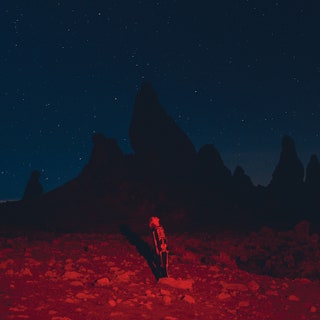
The music that 25-year-old Californian Phoebe Bridgers makes sounds like the antithesis of that sunny west-coast sound you’d expect. With a debut album (the critically acclaimed Stranger in the Alps) and two music groups (indie cult favourites boygenius and Better Oblivion Community Center) under her belt, Bridgers returns to the forefront with emo-folk Punisher.
Phoebe Bridgers has a talent for the unexpected; her lyrics swing between bitingly honest introspection and wry, deadpan humour, often in the same breath. On Punisher, Bridgers explores themes of resentment, fame and troubled relationships, but adds texture to her tracks with a subtle running motif of an apocalypse that’s right around the corner. The end result is an album that is simultaneously emotionally complex, and yet surprisingly funny.
Punisher sets itself up as sinister and cinematic on intro track “DVD Menu”, and immediately shatters that expectation with “Garden Song”, a Sufjan Stevens-esque track that conveys its message of resentment and nostalgia, through mixed metaphors of murdered skinheads and haunted gardens. Bridgers introduces us to the concept of a ‘punisher’, with her title track “Punisher“. According to her, it refers to a fan who doesn’t know when to stop talking. Throughout her album, she explores both sides of the narrative, of being a punisher and of dealing with a punisher. The track itself, though, is musically underwhelming and its lyrics veer on the edge of cheesy (“What if I told you/ I feel like I know you? / But we never met”).
Bridgers truly hits her mark on “Kyoto”, which was released as a single in April. Possibly the only uptempo song on the album, the track contrasts feelings of wanderlust and homesickness, a peculiar mix of emotions that every young adult has experienced at some point. Yet somehow, the track is also simultaneously about Bridgers’ strained relationship with an estranged parent, without sounding like the topic was shoehorned in.
On “I See You” (initially named “ICU” and changed because of the pandemic), Bridgers pulls a classic bait-and-switch. She draws you in with a beautiful, deep metaphor that makes you think about the nature of adult relationships (“If you’re a work of art, I’m standing too close/ I can see the brush strokes”) and immediately hits you with an almost laugh-out-loud petty complaint (“I hate your mom/ I hate it when she opens her mouth”). The closing track, “I Know The End” starts with some classic Americana lyrical imagery and suddenly shifts gear into visuals of apocalyptic billboards, government drones and alien spaceships. The album fades out with a literal cacophony of screaming voices, which is an oddly fitting end to an album that leaves you feeling raw, introspective and just plain sad, to be honest.
That’s the overall direction that Bridgers’ music seems to take. Punisher feels like a dream you wake up from with a sense of impending doom. The metaphors wander, the lyrics weave strange imagery, but you wake up with a general idea of what transpired. Punisher may not be for everyone. This is not, by any means, an easy listen: it’s complex and depressing at times, and Bridgers’ lyrics can be a little heavy-handed with the cynicism and gloom. But what you do get with Punisher, is flawless production value, interesting lyrical work and perhaps most importantly, a strong feeling of catharsis and closure.
Nadine Shah is a 34-year-old English singer-songwriter of Norwegian-Pakistani origin. Her fourth album, Kitchen Sink, is an exploration of every part of that identity: looking ethnically ambiguous, being British in today’s world, and most of all – being an unmarried, childless 30-something woman.
If that sounds hefty, be heartened: it’s not. Shah navigates these weighty topics with ease, wit and humor, all bound together by her enchanting voice.
We’ve already lauded the title track “Kitchen Sink” here on Top Five Records – a sparse, tightly coiled ditty on not giving a damn about your detractors. We had made special note of Shah’s dark, deep voice; that instrument carries many more songs on the record. “Wasps Nest” could be a love child between PJ Harvey and Devendra Banhart: slow-moving mystique made more mysterious by Shah’s tremulous, rich vocals.
Of course, to be a great singer, it’s not enough to just have the voice: it’s also important to have the right milieu for the voice to shine. Kitchen Sink does well to showcase Nadine. For example, “Kite” is a chilling, sparse hymn built primarily on a few plucks and echoing chorals – a black-and-white outline for Shah’s voice to color in. “Walk” mixes South Asian street beats and jazzy quirks to produce a quirky stop-start rhythm – and no surprise, this suits Shah’s brawny pipes.
Beyond her awesome voice and great musical sense, Kitchen Sink is, as we noted at the start, remarkable in the way it encapsulates so many pieces of Nadine’s identity. On the aforementioned “Kitchen Sink”, Shah talks about the suspicious glances that her inscrutably ethnic looks invite from neighbors. Meanwhile, on “Ukrainian Wine”, she paints a striking picture of getting shitfaced on shady wine while others are “playing mummy and daddy” and buying homes (she’s still renting hers). “Trad” could be the morning after a night of hard drinking, where she visits the same themes in a much more sober light. “Shave my legs, freeze my eggs / Will you want me when I am old?” she asks an unseen man, before liltingly requesting: “Make me holy matrimony”.
In fact, it’s the naked balance she delivers on “Trad” – between want and need, vulnerability and boldness – that best defines the album. Kitchen Sink is an auditory banquet that alternates between fast and slow; between deep and tongue-in-cheek; between the slice-of-life and the quite surreal. And Nadine Shah’s powerful, expressive voice is the singular driving force through it all. Recommendation for this one: listen on good headphones. You won’t regret it.
Best songs: “Kitchen Sink”, “Wasps Nest”, “Ukrainian Wine”
L-R: Rushil Mishra, Sachin Iyer, Pushkar Ravindra, Dennis Dey
Garage band Iyer’s Filter Coffee has been making waves in India for a couple of years now. Back in 2018, their first track “Soma” garnered buzz among Indian indie audiences, and the song later featured on their crisp five-song EP coldturkey (2019). In May 2020, the band released their first, full-length album Is This How You Do It.
With references ranging from The Strokes to fellow Indian indie rockers The F16s, Is This How You Do It has quite a few high-energy tracks and some poignant, more mellow ones, too. A particular stand-out is boisterous, Arctic Monkeys-esque first single “Noize”, which caught our eye back in May. We also liked the subtler back-to-back tracks “Deytime” (spelling a reference to bassist Dennis Dey) and “Nitetime”, the latter of which served solid Comedown Machine vibes.
We caught up with the boys from Iyer’s Filter Coffee for a chat about their musical journey, managing a music career alongside day jobs, what’s behind their peculiar band name, and lots more – read on below!
Top Five Records: Welcome, guys, and thanks for doing this! Let’s start at the beginning. How did the four of you meet? How did you end up deciding to make music together?
Iyer’s Filter Coffee: Rushil [Mishra, guitar / vocals], Sachin [Iyer, drums] and Pushkar [Ravindra, guitar / vocals] went to the same college [BITS Pilani] where they were part of the music club and played together quite a bit. After all three of them landed in Bangalore, we started to jam in early middle 2017 with vision to eventually be able to perform in the Bangalore pub circuit. Dennis [Dey, bass / vocals] and Pushkar happened to become flat-mates around the same time. Since Dennis was also a musician, he joined us in these jams and eventually Iyer’s Filter Coffee was born.
TFR: Interesting! And when did your interests in music begin? When did you start honing your musical skills?
Pushkar: I was forced, like a significant number of South Indian kids are, to learn South Indian classical music by my parents. This happened between the ages of six and 13. And then I discovered metal. My parents bought me an acoustic guitar right after my Class 10 exams. I learnt everything I know about the guitar via the Internet (though a background in music helped accelerate the process). Bought my first electric guitar a day before my AIEEE [All-India Engineering Entrance Examination]. It’s been going on since.
Sachin: I started playing the drums soon after my Class 10 exams – my childhood friends wanted to form a band, and they were short of a drummer, so I decided to fill in. I’m largely a self-taught drummer, so the Music Club at BITS was great not only for the opportunity to play live quite often, but also for the chance to learn from some really talented musicians.
Rushil: My father got me classes for the keyboard when I was around five. Since my family moved cities every two to three years, I couldn’t continue with it for long. I did briefly learn some tabla and classical singing (which I absolutely hated). I did keep playing some keyboard until I got to BITS Pilani in 2010. That’s where I started with most of the “technical” skills – playing the keyboard correctly, learning my scales, and working with synths. I also started playing some guitar there, and got a bit better after college because of how accessible it is (and because I thought it was a bit cooler to be honest; I was wrong). I started writing music with some friends in 2015 using GarageBand and a really basic setup. “Lazy Day” [which appears on Is This How You Do It] was one of the first tracks we wrote back then, and has been rewritten multiple times since then. This is the first group that I’ve sung with though, so I’m pretty new to singing right now.
Dennis: Lucky for me my dad is also a guitarist, so I grew up listening to Dire Straits, Scorpions, Eric Clapton and other amazing artists. Initially, I started with keyboard but switched to guitar around Class 10 (after realizing the aforementioned coolness factor). Initially a rhythm guitarist, as Dad was shredding most of the solos, I picked up lead and bass guitar in college (IIT Roorkee 2010). Bass guitar was something that stuck with me even after college and I bought a used bass guitar with my first salary. Also, I was a part of the church choir at Roorkee where I learnt how to harmonize, something that I’ve been using for backing vocals with the band.
Happiness is rarely found in a day job, and hence the music career. Money is rarely found in a music career, and hence the day job.
TFR: You have mentioned the Black Keys and the Strokes as your influences, and we certainly hear those references in the contrasting tight / laidback elements in your tunes. What are some other influences to your music – musicians or otherwise?
IFC: We have always had an ear out for alternative genres of music. The Strokes, Black Keys and the Arctic Monkeys most definitely inspired us to lay the foundations on our sound, which you can see on coldturkey [their 2019 EP]. Apart from that, I think we have a newfound love towards newer indie artists like Rex Orange County, Boy Pablo and the F16s, who have inspired us to find a new direction for our sound. However, all four of us have listened to our share of rock music from the 90s and the 2000s which has definitely contributed to how we play and how we write on an individual and a group level.
Also, the post-punk-revival sound was something we wanted to build around – bands like Muse, Libertines, Two Door Cinema Club and Franz Ferdinand. That fused with a bit of the new wave of indie music is what most of our sound written as a group sounds like. Of course, we all also have our own influences which we keep adding into the process as we finish the songs up.
TFR:How have you navigated the journey from Engineering to indie rock? How has your experience been, balancing your day jobs with a burgeoning music career?
IFC: It has been fun honestly. Happiness is rarely found in a day job, and hence the music career. Money is rarely found in a music career, and hence the day job. Like we mentioned in our TEDx talk, it’s been One for the kitchen, One for the soul for us!
Honestly though, writing and producing music would happen a lot faster if we did not have the day jobs, because there’s more time to channel the creativity, and an ample amount of time because the group isn’t forced to jam on weekends only.
TFR: What’s the story behind the name? Is [drummer] Sachin [Iyer] the inspiration?
IFC: We couldn’t think of a good name for the group at all. There were many below par suggestions. We tried out names like 1023 (when we still did not have gig), Geek Chutney, and many others that were thrown away minutes after inception.
All suggestions from Iyer, who probably was channeling his inner Alex Rose, seemed contain his name. These included “Iyer Learns to Rock” and “Iyer Learns to Groove” and “Iyer and the Boys”. Iyer’s Filter Coffee, one such suggestion, seemed to stick because it does not sound like a band’s name. It sounds like the name of a cafe (which is the backup idea if this music thing doesn’t work). So yeah, it just sorta stuck and we seemed to like it.
As a side note, we have other joke names for ourselves in the same fashion. “Mishraji ka Paan Bhandaar” after Rushil Mishra, and “Robindro Sangeet” after Pushkar Ravindra. Dennis Dey might be a little disappointed that “Deytime” has now become a song!
TFR: Your EP coldturkey [Ed. Note: Our review here] released last year on Apple Music’s New Artist Spotlight program. How did you get that opportunity? And more broadly, what advice would you give to young and upcoming artists such as yourselves that want to break into the Indian indie scene?
IFC: Tejas Menon connected us with Apple Music, and after listening to the EP, they got back to us with their New Artist Spotlight program which enabled us to have a two-week exclusive release on Apple Music. Our distributor OKListen was quick to help and worked with the launch dates accordingly.
For new artists, we would like to say just put your music out there. Soundcloud and YouTube are great free platforms to do so in the beginning. Also, videos matter a lot too. Dennis has this habit of recording our live gigs, which in turn helped us get more gigs and eventually became parts of our music videos. So just shoot videos or ask (bribe) your friends to do that for you.
TFR: Congrats again on the new album! Can you walk us through your process writing and recording Is This How You Do It? How was your experience working with Vivek Thomas?
IFC: We were writing even while we were recording coldturkey. We had almost a third of this album back then itself. The lessons learnt from coldturkey allowed us to revisit these songs, and improve and polish them further before we hit the studio. Also, in that time, we learnt more music, listened to more music and consciously tried to expand on our writing as well, which is reflected in this album.
Working with Vivek [Thomas, producer] was an amazing experience. He is a delightful and cheerful personality that makes working with him feel natural and a lot of fun. He understood our sound from the very beginning, not only with the way he dug through our inspirations but also with how well he knows and understands the scene. His touch really added a whole new dimension and color to our work.
TFR: Our favorite track from your album is first single “Noize” – we’ve already talked up the Josh Homme-era Arctic Monkeys vibes here on Top Five Records. Can you fill us in on your inspiration for this song, both musically and lyrically?
IFC: “Noize” was a unique song in that it was the only song that was written from the drum riff up, which is never the first thing we put on paper while writing. Pushkar brought his Morello-inspired wah guitar on top which was complemented by Dennis’ very melodic bass line.
Lyrics wise, it is loosely based on a prose that Rushil wrote which was condensed into a lyric so as to put something on top of the instruments. We’ve been covering Arctic Monkeys for a while so we’re sure that someone who listens to “Noize” can hear elements of “Crying Lightning” or “Fake Tales of San Francisco” or maybe even hints of “Brianstorm”. The drums and the lyrics are very Monkeys, definitely.
TFR: Another favorite is the instrumental “Nitetime”, probably because it somewhat reminds us of that oft-forgotten Strokes gem, “Call It Fate, Call It Karma”. How did you end up putting such a stylistically different track on the album?
Rushil: Comedown Machine is such an underrated album! [Ed. Note: Agreed.] I really like the synths they use in the whole album – very vintage, analog, 80s, Stranger Things vibes – and this was similar to Julian Casablancas’ solo projects.
“Nitetime” has a bit of an interesting story though. Since we don’t play keys in jams, I had a rough idea what to play for the song – some piano through the song, with some airy sounds towards the end of the song. For the album, he wanted to do a short extension to the song with a similar sound palette. I ended up knitting a few short pieces I’d written over time in the studio, and arranged it in the studio.
I think the chord progressions in the two songs are somewhat similar, and the synths are similar to the Strokes’ / Julian’s work in some of their more ambient songs, too.
TFR: Naturally, you probably did not expect your album to release in the middle of a global pandemic. But now that it’s here – how are you getting the word out about Is This How You Do It in the COVID era?
IFC: We were ready with the album early March and were working towards setting up a country-wide tour. However, those plans took a backseat due to the pandemic. As a launch tour wasn’t an option in the near future, we decided to put the music out for the listeners.
More than us, our friends and fans helped us put the word out for the album. There were a lot of Instagram stories shared with the songs from the album. Also “NewNew” made it to the Spotify playlist Rock in India which also helped in getting new listeners. We are also releasing music videos for the songs slowly and are planning to do a livestream launch gig too.
TFR: With an EP and an album under your belt, what’s next on the radar for Iyer’s Filter Coffee?
IFC: Interestingly, we think the band would have gone into a temporary hiatus if not for COVID, because of personal situations of certain members that would have geographically separated the group. So, COVID was a blessing in disguise in that way, because we are still together and writing more.
We are trying to improve in the craft and bring in a lot more to the table than we did in the past. It would be best to get some writing done now before we eventually start gigging again. As of now, there is no clear picture of what is coming next. But stay tuned to your social media because you never know when we decide to drop a single!
RAPID-FIRE QUESTIONS
TFR:Who’s an Indian artist that you’d love to open for / collaborate with?
IFC: Open for: TAAQ. Collaborate: Peter Cat Recording Co, Skrat, the F16s.
TFR: What would be your Desert Island discs?
Pushkar:Led Zeppelin I by Led Zeppelin; Is This It by the Strokes
Sachin:By the Way by Red Hot Chili Peppers; Chapter V by Staind; Undertow by Tool
Rushil: Random Access Memories by Daft Punk; Whatever People Say I Am, That’s What I’m Not by Arctic Monkeys; Mm.. Food by MF DOOM
Dennis:Avenged Sevenfold by Avenged Sevenfold; Being So Normal by Peach Pit; Absolution by Muse
TFR: What’s been your favorite gig so far?
IFC: It’s between Oasis [BITS Pilani’s cultural festival], Zomaland 2020 or the coldturkey launch gig at the Humming Tree.
TFR:What’s an album or song on heavy rotation right now?
We are now past the halfway mark of this hellish year. One silver lining, though, is the sheer volume of great music that seems to be coming out of artists young and new. Living legends Neil Young and Bob Dylan both released new albums, days of each other, as did rising stars like Phoebe Bridgers and HAIM. Read on for our breakdown of five standout tracks from June 2020.
5. “Kitchen Sink” by Nadine Shah
British-Pakistani singer-songwriter Nadine Shah has what one would call a striking voice: deep, resonant and able to convey as much with her notes as with her pauses. On the eponymous song from her fourth album Kitchen Sink, Shah’s voice precisely fills the gaps between two piano notes, discordant guitars and gospel-like handclaps. In the lyrics, Shah seems to be giving herself a sermon – to let go and stop caring about the mean things that people say. “Don’t worry about what the neighbors think / They’re characters from kitchen sink,” she states mysteriously, before breaking into the song’s chant of a chorus: “And I just let them pass me by.”
4. “I’m Alive” by TTRRUUCES
TTRRUUCES have all the markings of a future breakout act. Like many a musical star, they are unusual with a conviction. Leaving aside their lackadaisical name, they describe their self-titled debut album as an operatic story of Sad Girl Sadie and Lost Boy Syd in the search for, strangely, a drug called TTRRUUCES. Beyond the character names and thematic elements, there’s a sense of seedy psychedelic underbelly (think Charles Manson) on “I’m Alive” that just draws you in. It’s just a catchy tune overall and we aren’t the only ones who’ve noticed – “I’m Alive” is on the FIFA 2020 soundtrack.
3. “JU$T” by Run the Jewels feat. Pharrell Williams and Zack de la Rocha
Just the sheer combined talent of Killer Mike, El-P, Pharrell Williams and Zack de la Rocha would lead one to think that “JU$T” would be a straight-up hit, and thankfully the song doesn’t disappoint. We’ve already spoken about it in our review of this year’s most important record, RTJ4, but it’s worth rehashing. “JU$T” is packed with hard-hitting critiques (as are most RTJ songs) with lines such as “The Thirteenth Amendment says that slavery’s abolished / Look at all these slave masters posin’ on yo’ dollar”. Moreover, with Pharrell in the mix, these lines are hidden in crisp, swaggering beats that could almost make you think this is just a summertime banger.
2. “EXHALE” by Kenzie feat. Sia
Speaking of Pharrell, young pop singer Kenzie channels Skateboard P himself on the highly enjoyable “EXHALE”. On the surface, it’s a pop song, but once the bass and drums-loaded chorus pumps through, you know this is a different kind of deal. To sweeten the pot, the song features Aussie hitmaker Sia on a choice verse or two. And let’s be honest, with the way 2020 is going, everyone needs to hear their advice here: “You need to, you need to exhale so let everything go / Baby, you in control”. Fun fact: Kenzie aka Mackenzie Zeigler is the younger sister of Maddie Zeigler, the famous dancing wunderkind in Sia’s break-out track “Chandelier”; we’re definitely glad the family connections got Sia involved here!
1. “False Prophet” by Bob Dylan
In June, Bob Dylan released his 39th (!) feature album, roughly half a century (!!) after his debut album. There is possibly no other living artist who could pull this off, but this 39th album, Rough and Rowdy Ways, is quickly turning out to be one of his best (yet). “False Prophet” features a fairly sparse instrumentation and Dylan’s truly inimitable voice. He growls, laughs, boasts, flirts – sometimes all within a ten-second stretch. If you heard this track out of nowhere, you would think it’s at least a couple of decades old; it feels that well-worn and classic. For a song that sounds like it could have by itself birthed the blues, it’s almost fathomable that it was released just this year; but that’s Dylan for you. At 79, this guy sure is alive and kicking, the end times be damned.
Be sure to check out all of our 2020 song picks on our handy Spotify playlist!
With their debut album RTJ in 2013, hip-hop super-duo Run the Jewels broke the mold of what intelligent, anti-establishment rap would look like. Naturally, they then proceeded to create even better versions, with the well-received RTJ2 (2014) and RTJ3 (2016). In that time, Killer Mike and El-P have also been hugely successful in a commercial sense, sound-tracking everything from Black Panther to FIFA18.
But despite this commercial utilization of their music, Run the Jewels is, at their crux, an anti-establishment act. Like their pre-COVID planned tour-mates Rage Against the Machine, Run the Jewels excel in just that – raging against the Machine, whether that’s the police, racists, or the wealthy.
In the summer of 2020, the world is battling the triple threat of a global pandemic, racism and wealth inequality. In that environment, Run the Jewels’ latest output RTJ4 is prescient and essential – and to put it bluntly, the record of the moment.
Throughout the album, RTJ make mincemeat of current times with chilling lines that were, astonishingly, recorded sometime in 2019. On album opener “Yankee and the brave”, the zeitgeist fire delivers stinging burns. “Pardon them as they work until every pocket’s been picked and soul been harvested / I’m ready to mob on these fucking charlatans,” announces El-P, while Killer Mike follows up with a could-have-been-recorded-yesterday swipe at police brutality: “A crooked copper got the dropper, I put lead in his eye / ‘Cause we heard he murdered a black child, so none of us cried.” An eye for an eye indeed.
“Walking in the Snow” sees El-P delivering a searing indictment of Trump-era pseudo-Christians (“Kids in prisons ain’t a sin? Shit / If even one scrap a what Jesus taught connected, you’d feel different”). The fantastic “JU$T” drops a deep thought: “The Thirteenth Amendment says that slavery’s abolished / Look at all these slave masters posin’ on yo’ dollar”; and somehow, this aligns perfectly with statues being pulled off their pedestals across the world just in the past few days.
But Killer Mike and El-P aren’t just eerily clairvoyant – they’re also eerily intelligent. We are so used to mainstream low-IQ rap that it’s honestly a thrill to hear clever, laugh-out-loud brags. For example, on “Out of Sight”, Killer Mike belts a stone-cold classic metaphor: “Colder than your baby mama heart when she find out you been fuckin’ with that other broad / And you ain’t got that rent for her”. Elsewhere, El-P casually drops the instant-classic line “Got a Vonnegut punch for your Atlas shrug” – pitting the socialist Kurt Vonnegut against the libertarianism of Ayn Rand (interestingly, of course, she herself clashes the same two archetypes on Atlas Shrugged, with Howard Roark and Ellsworth Toohey).
Yes, they’re intelligent. Yes, they’re anti-establishment. But lest you think this is a spoken-word recitation of the latest Jacobin issue, it must be said that this is, above all, a great music album.
Killer Mike and El-P are blessed with sonic gifts like few others. “Out of Sight” in particular is a prime example of Killer Mike’s masterful flow, with four gerund-filled lines (“motivating, captivating, devastating…”) effortlessly hitting beats that you didn’t realize existed. El-P isn’t far behind; on “Holy Calamafuck”, for example, he plays with the same vowel sound on about 12 different words. The album is also packed with great riffs. We’ve already gushed about the fun single “Ooh La La” but don’t underestimate the hook on the aforementioned Pharrell Williams-Zach de la Rocha double-feature “Ju$t”.
Run the Jewels have been railing against all forms of injustice for their entire lives. But now, in a perfect storm of Black Swan-like events, the world has caught up to them. Like Killer Mike’s political hero Bernie Sanders, they get extra credit not just for saying the right things, but for having always said the right things – even when they weren’t considered right.
RTJ4 is prophetic, thoughtful, complex – and most of all, highly enjoyable. Whether this album is better than its predecessors is really up to the listener, but this one will always be memorable for perfect alignment with the moment in which it was released.