It’s 2008. The indie rock world is on a multi-year high – after the Strokes’ game-changing debut in 2001, there is a virtually non-stop stream of buzzy indie rock bands: Franz Ferdinand, the Libertines, Kaiser Chiefs, the Arctic Monkeys and so on. Many wonder: will there ever be a need for yet another indie rock band?
Through all that noise, Foals managed to prick up the world’s collective ears with their blistering math rock debut album, Antidotes. Math rock – with its frenetic arrangements and asymmetrical time signatures – had of course been around for a couple of decades (see: Slint, Polvo), but Foals served to bring it to the forefront of the ’00s resurgent indie rock scene.
Over the years, Foals released three more albums; but for many fans from the original Antidotes era, the band has strayed from its trademark sound into a slightly different tone. “Spanish Sahara” from 2009’s Total Life Forever featured on that era’s edgy prestige TV shows (Skins, Entourage). “Mountain at My Gates” from 2015’s What Went Down starred on the FIFA 2016 soundtrack. There’s nothing wrong with these things, of course; but the new material didn’t capture your undivided attention in the first two seconds – as did, say, Antidotes’ “Balloons” or “Red Socks Pugie”.
The fifth album, 2019’s Everything Not Saved Will Be Lost Pt. 1, changes that trajectory. Here, the band seems to have finally figured out how to piece together the irrepressible energy of the first album – jagged riffs and sing-shouted lyrics – with the more mainstream, polished feel of the latter albums.
There are several stand-outs on this album. We already wrote about “Exits” – a slithering majesty of a track that moves seamlessly from the dramatic to the psychedelic over the course of a showstopping six minutes. (Do also check out the music video, featuring Game of Thrones’ Isaac Hempstead-Wright.) Another must-listen is “Café D’Athens” – a fascinating juxtaposition of aloof vocals layered over nerve-wracking, tinny beats; think Radiohead meets Hercules & Love Affair.
What we really love about Foals is their ability to conjure up abstract feelings within decidedly non-abstract music. “White Onions” summons a claustrophobic feel with its repetitive riffs and non-stop drums; aptly, the lyrics reference lairs, mazes, cages, and fighting for air. “Syrups” is sexier: a thick bassline leads into heady guitars and steady drums, eliciting perhaps a mysterious road-trip into the clear night sky (“’Cause I’m about to take flight / Please don’t ask me why,” chime in the prescient lyrics).
This is the reason that Foals are featured on so many
soundtracks: they are exceptionally gifted at pinning down moods and feelings within
the confines of their spindly guitars and relentless beats. The band’s first
four outings tended to focus on one part of that two-part puzzle: either the
feelings or the music.
With Everything, the band has finally put it
together. Everything Not Saved Will Be Lost Pt. 1 is one of the best
albums of 2019 – and, as luck would have it, we are still due for Pt. 2.
We can’t wait.
In our honest opinion, twenty-something Dhruv Visvanath is already one of the most iconic musicians in India today. With his unique percussive guitar style, clear design aesthetic, and an irrepressibly nomadic take on life, it’s pretty easy to pick a Dhruv Visvanath song out of a musical lineup.
In 2015, Visvanath released a well-received debut album, Orion; but like all great musicians, he didn’t let the success define his career. In 2016, he embarked upon a massive 17-city tour across India – no doubt driven by his keen (and well-documented) sense of wanderlust. The tour resulted in 2018’s The Lost Cause – a brilliant album with lilting melodies, beautiful imagery and Visvanath’s masterful guitar skills.
Top Five Records caught up with Dhruv for a detailed chat about his influences, love of travel, musical style, and much more. Read on below:
Let’s start with a picture of what makes you into the artist you are today: What got you into music, and when did you first start getting into it?
I’ve been playing and learning since I was seven, and it’s been a long and arduous journey at times; but I’m ever so grateful for music. I started off with the piano, and from there my thirst for musical knowledge just grew further and further, up to a point where I just picked up a guitar and started learning through trial and error. To this day, I still feel like that’s the right way for me! Trial and error above everything else!
We at TFR see glimpses of Sufjan Stevens, the Decembrists, and hints of Mumford & Sons in your tunes. What would you say are the biggest musical influences in your music? Apart from other musicians, what else has influenced you as an artist?
First off, thank you! You guys make me blush! I have always looked to using stories from my life as my biggest source of inspiration for writing songs. My family, my dearest friends, my heartaches and moments of happiness have allowed me to express my thoughts and feelings through music; I just try to do my part by being honest and true to myself.
Musical inspirations are an entirely different story. Would you believe me if I told you I was listening to Dr. Dre a few nights ago? All jokes aside, I do listen to and absorb what I can from as many different artists, because you can learn many things just by listening to different songs. Currently I’m hooked on to Daniel Caesar, Parcels and Jungle, but I’ve always loved bands like Alter Bridge, Foals and Snarky Puppy. I really like the way they arrange their songs, and how they build their music and it’s such a useful lesson when making music!
Your music stands out among Indian singer-songwriters for your unique style of percussive acoustic guitar. How did you get interested in this style of playing? How did you train yourself in it, from a technical standpoint?
I do feel like I am unique for sure, but I’m thrilled to see more and more people just stepping in to their comfort zone when it comes to making music! It’s a pleasure to explore and I want to take the time to learn from everyone doing things differently. I like to think of myself as a songwriter more than just a guitarist but I absolutely love playing. A lot of my songs feel like they start from the guitar, and grow into bigger stories with more layers, and to be honest, I only want to write good songs, and my technique has helped me do that.
I’m a self-taught guitarist, and have maintained that throughout my musical journey. It allows me to continue making mistakes and learning in new ways! Honestly though, I used to play the electric guitar and I could feel myself stagnating, and there was a point where worries arose and I started falling out of love with the guitar. It wasn’t until I found a few videos on YouTube with guys smacking the bodies of their acoustics – and epiphany struck! I would literally sit and learn these percussively flavoured songs and would spend hours imitating these amazing guitarists, from Andy Mckee, to Don Ross, to Antoine Dufour. These folks were genuinely great teachers and it really allowed me to find my own style along the way.
Music video for “Jungle”, from The Lost Cause (2018)
Let’s talk about the songwriting process. The rhythm and melodies in your songs are so intricate, and yet your words always seem to lock right into place. What comes first for you, the music or the lyrics?
I love a sense of rhythm in everything. Having words that complement the rhythm just make the song that much more enjoyable, both to write and to listen to. Oftentimes, the music does come first, but it depends. Most of my ideas stem from an idea that’s ten seconds long. My sense of rhythm comes from how I play, and I use my strengths to work my on weaknesses when it comes to writing layers or working on my voice.
It really helps to write in a manner which brings out the best in you, rather than trying to force a song out. You want to feel like playing and listening to music that makes you want to be a better person, and a more expressive person. It’s a strange way of looking at it, but writing a new song gives me so much happiness, and it feels like constipation if I don’t write!
One of our favorite aspects about Dhruv as a musician (apart from the music itself, of course) is your keen sense of design, from the common font across your output, to the connected color palette, to the incredibly unique choice of, for example, using mops to tell a story. What inspires your design aesthetic?
The mops weren’t my idea! That goes to the director of my video for “Wild,” Tanvi Gandhi. But I have to say I have always looked at myself as someone who’s had to build himself from the ground up. I like to create as much of an identity as I possibly can, but that’s important for anyone who wants to be an artist. I pick vivid colours because I see vivid colours emanating from my music, and I want to show a sense of wonder and wistfulness. I feel like a person who plays the acoustic guitar to it’s absolute limits, so for me, bright colours and extreme contrasts seem like a fitting portrayal of who I am musically.
In any song, the most important thing is the story, and I’m a very story-driven person. The use of abstraction comes naturally to me and I love it when the songs bring things to life. A sense of abstraction is key, and it’s not often that someone feels like a mop until they see a mop act and live just like you!
Let’s talk about that music video for “Wild”, because it really is unlike anything else out there in Indian indie music today. How did you come up with the concept for that music video? How did you plan out the production work that went into actually putting it together? And how long did it take you to film it?
Again, I can take credit for the song! The video, however, was an entirely different task. My director, Tanvi Gandhi, bombarded me with ideas for six months until we hit on this one kooky idea of expressing human angst through mops – and the vision stuck. Production started in January 2018 and the rest of the creative team behind the video spent a month going on reconnaissance trips and making prototypes of the mops. It wasn’t until the first week of April 2018 where I got a finished product. I’m very glad we took the time to make the video, and I couldn’t be happier with how it turned out. It’s travelled to places I haven’t even been and I’m so glad it’s been played at many festivals. (Ed. Note: Dhruv is too humble to mention it, but “Wild” was shown at the prestigious SXSW festival this year.) It was a product of love and for it to be loved and appreciated in the way that it has is very special to me.
Tell us a little bit about your recent album, The Lost Cause, and how you put together all the pieces there. We know you went on an eponymous India-wide tour before the album actually came out – to what extent, and how, did that tour influence the music on the album?
Well, if I’m honest, I recorded most of the music before actually going on tour! The whole purpose of the tour was to go through India and explore the various stories that my family had experienced throughout the country. It definitely did affect the finished product, however, and I’m grateful to have gone on that journey. It really allowed me to attach stories to my songs, and some of the songs I’d written prior to going on the tour didn’t make much sense until I’d experienced these stories. The album felt effortless to work on. I’d sit and work with just writing songs in my bedroom and then recording them late at night. I took the project on as a chance to improve my ability to record my music, and I’m glad I did it.
The backbone of your album, The Lost Cause, centers around exploration – from new cities to aspects of you as a person and as a musician. Has this streak of discovery always been part of who you are?
I’ve been a traveler all my life. I’ve grown up in different places, and it’s always been an absolute blessing to go out an explore. The song itself was more about a need to identify your dreams, and to follow them wholeheartedly. Placing the right amount of faith in yourself will push you further than anything else will. I wrote this song for all the times I’ve been told that what I do is just that, a lost cause. I thought to make it an epic of sorts, as large as I possibly could, so it’d feel like something you’d shout at the top of a mountain!
What’s next on the radar for you – New music? New tours? Something else entirely?
Well, I’m in the middle of recording some newer songs, but also I’ve taken the last year or so to write the best music I can, and just create. I’ve been fortunate to work on a few film scores as well and it’s something I’m extremely keen on continuing. Finally, this last year has taught me what it means to be a good producer as well, and I want to take this chance to really improve and work with more people and make more songs with more people if I can!
Thank you, Dhruv, that was excellent! Before we wrap up, we’d like to ask you some quick-fire questions. Ready?
What are your top three Desert Island Discs? (i.e., three albums that you would be fine listening to, without access to any other music, for the rest of your life?)
One Day Remains by Alter Bridge; Phil Collins’ Greatest Hits; Echoes, Silence, Patience & Grace by Foo Fighters.
What’s been your favorite gig so far?
So far, it has to be a gig I did at NIFT Delhi in October last year. I had my best friends with me on stage, and playing a fun, exciting night to a nice big amphitheater.
Who’s one Indian artist that you’d love to work with?
Warren Mendonsa, Dhruv Ghanekar, Parekh & Singh… the list is very, very long.
Given your love of exploration, we assume you’ve travelled a lot around the world. What’s one city that you find yourself wishing you could visit again?
Two cities, Montreal and Hong Kong. I grew up in Hong Kong and that place will always be special to me; and Montreal because it’s just one of the most musically charged and creative places I’ve ever been to.
What albums or songs are on constant rotation right now?
I love listening to any song made by SG Lewis, an amazing producer. As for albums, I’ve been listening to Let it Die by Feist, When We All Fall Asleep, Where Do We Go? by Billie Eilish and Assume Form by James Blake.
You can visit Dhruv’s website for information on where to listen to his music. All images courtesy the artist.
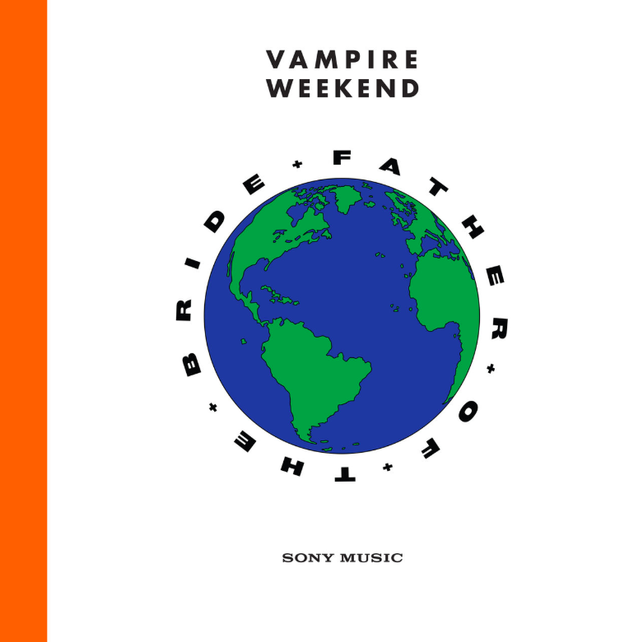
What a month May has been for great music. Stalwarts made a strong mark, with Vampire Weekend releasing a highly-lauded fourth studio album and Tyler the Creator releasing a fifth – and his best-rated – record. Newcomers, too, blew it out of the water: notably, British rapper slowthai and relative newbie Jamila Woods, who has put out one of the best albums of the year. With all this great music, we really had our work cut out this month picking five great songs to share: but here goes.
5. “We Belong Together” by Vampire Weekend feat. Danielle Haim
As longtime readers would know, anything with one of the Haim sisters is almostalwaysalright in our books. “We Belong Together” – the second Danielle Haim collab from Vampire Weekend’s fifth album, Father of the Bride – is a great, old-school duet love song with a quintessentially-Ezra-Koenig melancholy twist. Black and white, day and night, left and right, bowls and plates – Koenig and Haim list off the timeless and kitschy ways pairs the two lovers belong together. But wait, what’s this? “Baby, there’s no use in being clever / Baby, it don’t mean we’ll stay together,” they say, on a sugary-light bop, following it up with a devastating “We go together like lions and lambs / Oh, we go together”. This is another irresistibly great song from what has been a solid album front to back. Look out for a full review of FOTB from us soon – until then, take a listen through this track (and the other we’ve covered in our playlists!).
4. “Doin’ Time” by Lana del Rey
Speaking of melancholy crooners, the absolute queen of mournful murmuring is back. Lana del Rey has announced a new album in 2019 (the brilliantly-named Norman Fucking Rockwell), and “Doin’ Time” gives us a good taste of the excellent things to come. A cover of the ska / punk band Sublime’s 1996 single – and itself sampling the jazz standard “Summertime” – “Doin’ Time” is a head-fake that starts off like a cheery hit and segues into an adult-contemporary drive through Lana’s, well, sublime vocals. The result, as you may expect from a story about feeling trapped by an unfaithful partner, is a mixture between fuzzy contemplation and spiky regret. More to come from Lana this year, and we couldn’t be more pumped.
3. “Record Collection” by Kaiser Chiefs
In another throwback to the mid-aughts, Kaiser Chiefs are back with “Record Collection”, a song that’s basically an updated version of every one of your favorite songs from your high school years (think Killers, Franz Ferdinand, Kaiser Chiefs themselves, and so on). According to lead singer Ricky Wilson, the band recorded their seventh studio album Duck, slated for July 26th (featuring this new track) after going back and reminiscing over their own first few records. You can hear it too: after a forgettable couple of records in the middle, Kaiser Chiefs finally sound rejuvenated. A thick bassline and poppy drums elevate Wilson’s vocoder-style vocals on “Record Collection”, and the song is peppered with the sort of supple hooks that made “Ruby” all the rage more than a decade ago. (Has it really been that long?!) With “Record Collection”, it looks like we have yet another great summer album to await – mark your calendars!
2. “Vacancy” by Havelock
With so many releases from well-known artists this month, it’s easy to miss tracks like “Vacancy”, the second track (ever) by English singer Havelock. But, wow, are we glad we didn’t miss it – and we are so happy to recommend it to our readers, too. “Vacancy” tells a tale well-known by young people around the world – hustling until you make it, with an end in mind but not in sight. Beyond his chill vocals and the warmth of the production, what Havelock really cracks is that clever yet effortless turn of phrase. In fact, there’s a line on here that we loved so much that we’ll transcribe it here in full: “’Cause you got a brand-new vacancy, and I want to join the agency; I hope that it can give me something that I could hold, somewhere that I could go, without working to the bone: can you give me that?,” he asks; achingly poetic in his naivety. “My snooze is on repeat / I know I’d better wake up or I’ll wake up in the streets” goes another splendid couplet. We haven’t been this excited for a new artist in a long time – and we hope you feel the same way, too. (If you liked this tune, you’ll love “Pig Latin”, his debut single.)
1. “Inglorious” by slowthai, feat. Skepta
From an arrangement standpoint, “Inglorious” has a very simple layout: a short intro, followed by a verse by slowthai and the hook, followed by another verse by Skepta and the hook. But what happens in those five parts may well have changed the topography of British rap. Of course, Skepta is already famous; his unapologetic display of British culture – in a genre dominated by American culture – has placed him on a 2017 list of the most influential people in the UK. On “Inglorious”, his talents and persona are put to the best possible collaborative use with newcomer – and inevitable star – slowthai. A dreamlike intro leads into one of the best beat drops we’ve heard all year, along with a volley of British-isms and descriptions of struggle (“Remember when they wouldn’t let me in / Now their wages just a day’s per diem”). “Inglorious” features on slowthai’s debut album, Nothing Great About Britain, which is honestly one of the best albums we’ve heard all year. Listen to “Inglorious” – if you like it, you’re in for a treat for the rest of the album.
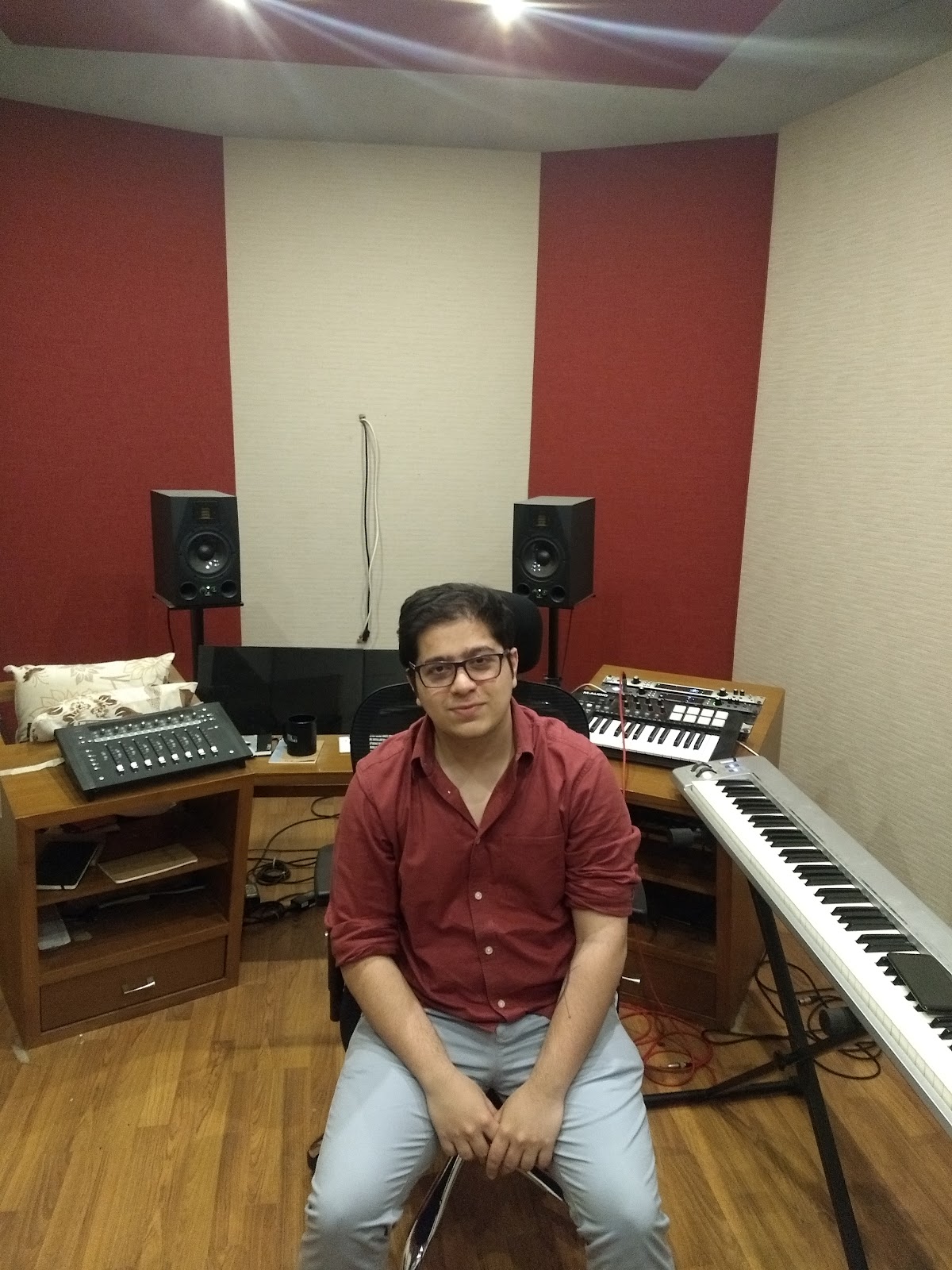
Those who have been paying close attention to Mumbai’s indie scene cannot deny the welcome shift in the quality of production in recent years. The scene has been graced by a wave of savvy producer-slash-engineers who have really helped propel the quality of music and cultivate a songwriting mindset among younger artists. Rishi Bradoo, former frontman of Mumbai electro-punk trio Blek and Chief Tinkerer at Theatre 74 studios, is one such torchbearer, with his stamp on some of the city’s finest recent releases including Awkward Bong’s In the Brightest Corners and a string of tracks by Ramya Pothuri. There’s no denying Rishi’s prowess as a studio engineer but that’s just one of the many spices that comprise his secret sauce. We recently caught up with Rishi at his studio in Mumbai to discuss his journey in the music scene and the methods to his magic.
So let’s get this out of the way… How did you get into music?
Right. So I got into music in school. I’d started playing the guitar for some reason and it stuck. That was the time when Superfuzz and the like had just started putting out music. Plus, it generally seemed fun to put chords together. It felt like LEGO. The minute I learned to put these chords together, I quit my guitar classes.
As a teenager, I was particularly frustrated with the way Indian musicians looked at music, which was with this cover-band mindset. Bands around me didn’t seem to care about putting out something truly original and that sort of irked me. That’s how I got to writing my own music. But it wasn’t until college did I get exposed to working with professional musicians. Xavier’s [St. Xavier’s College, Mumbai] surprisingly turned out to be fertile ground for budding musicians at the time. A lot of guys I met at college are working professionally in music right now. My college scene was basically defined by tons of college fests and a failed band.
What failed band?
Let’s not talk about it.But yeah the first gig I ever played with a “legit” band was at this shitty excuse for a venue called Jazz by the Bay. We were teenagers at the time, and didn’t realize [what we were getting into]. Our first set had 10 “originals” and something like one or two covers. None of the other kid bands were doing that and it seemed pretty radical at the time. After our run of 5 shows at JBTB, we were bitch-slapped into ground reality though. It wasn’t until later that I met Jared and Varoon, our drummer and we would go on to form Blek. For a year we made the rounds of the college circuit and were starting to gain some momentum. We’d get our next gig at the last gig we played. We’d play a gig, talk to somebody after the gig and hustle another gig and eventually it led us to this place called B69.
It was an underground venue and I’m pretty sure it wasn’t legal. Sweat would literally evaporate, condense on the ceilings and then pour out onto the musicians playing on stage. So yeah, it was a pretty gnarly venue but a lot of young bands got to cut their teeth over there… you know… because you could afford to be bad.
We met the Lightyears over there and we would end up sharing a lot of bills together.
2012 was one of the most influential years for me. That was when I was convinced that this is what I wanted to do for the rest of my life. In early 2012, we cut our record, Hexes + Drama & other reasons for evacuation and things blew up. We started getting booked all over the place. Within a year we had toured the entire country, in our third year of college. We were even invited to play in the UK at the Great Escape Festival.
What was that like?
Playing the Great Escape festival changed a lot of things for us. It was pretty eye-opening. The difference between what standards need to be and where they were in the scene at the time really came to the forefront. I realized that why people make music in the independent music scene in India and why people made music there were two completely different things. This thought had been on my nerves much earlier and was only reinforced when I got there. Interacting with musicians from around the globe was a far cry from the experiences I had in India. It was quite bittersweet actually. It felt like we were lagging behind in many ways but it also opened my eyes to what was possible. We had all this talent lying around that could definitely shine through more clearly if we had a certain change in mindset and environment.
What got you into audio? Was it a general sense of disillusionment with the production quality at the time?
It wasn’t about production quality. Production quality was inevitably going to get better and was actually quite amazing even at the time, just not in indie music. All the young bands here over the last seven or eight years haven’t really had any good role models to look up to. I don’t consider Shaiir+ Func and Pentagram to be good role models at all!
The general attitude of bands here is:
I have these chords and I kind of made them go together. I also have some lyrics written over some vocal melody and it sounded fine in the jam room so I guess I have a song.
Just because you jammed it out in a jam-room and it sounded “tight” doesn’t make it a complete song. You really need to sit down and focus on the nuances of songwriting and that only comes with focused effort. What a lot of debut artists need to understand is you’re making music, not releasing YouTube content. The way most indie artists in India treat music is as if they’re releasing content.
You know I’ve noticed, whenever an artist enters the studio with the desire to have fun and make something they care about, the record always sounds good. Whether they’re good musicians or not, the record sounds good. There’s a kind of carelessness or honest expression that’s captured. Whenever an artist comes to the studio with this careerist mindset of wanting to release a record because they have to release a record that year, 7 out of 10 times, the record doesn’t sound as great. You can always hear it in the music, when there’s a sense of insincerity in the studio.
People put too much emphasis on mixing, engineering and the like but the actual emphasis should be on the writing.
So coming back to the question… when you’re not in the record cutting business, you don’t realize the kind of effort that goes in. It all seems like knobs and buttons. There’s a lot of microscopic detail that you’re paying attention to and macroscopic details you’re trying to balance out and that takes years is what I’ve realized over time. You kind of pick it up along the way.
For me, at that time, I felt like I could figure the writing part out. But I wanted to cut my own records. I wanted to have decisive control over it, not having to be reliant on the one person in Bombay I trust with my work.
What was Audio School in Alchemea like? Did you get to work with some big ticket producers?
In London, I studied under the guy who mixed Klaxons and Nick Cave. I also got to spend about a week with Tchad Blake who’s a personal hero of mine. He’s the guy who mixed Arctic Monkeys’ AM. He also worked on the Black Keys’ records. But yeah, that’s about it. I don’t think it really matters as much as you’d think. The thing about learning is, it’s more about who you are as a student and not so much about who is teaching. You can go to the best schools with the best teachers and learn jackshit, which I think is the case with most Indian schools to start with. We’re not curious enough. It kind of struck me. As students in India, we’re very badly raised. We’re raised to be scared of failure. We’re raised to answer questions in the way that is prescribed. That’s such a bad environment to build any sort of creative thought. I’ve been very disillusioned with this “college chaapa” mindset. “Oh, he went to Berklee, he must be good”. That doesn’t fly with me. I need to know what his record sounds like to see if he’s really good.
Was it always the plan to come back home from the UK and set up a studio?
No, actually. Part of me wanted to go learn production so that I could cut my own records, but it was also because I wanted to get the fuck away from Bombay. It had gotten really depressing. Like I said, I was very disillusioned with Bombay and the music scene in general. I was so done with the way musicians were functioning here, the way festival organizers were functioning here and the way artist managers were functioning here. It was a huge fucking mess. I felt that if I had the opportunity to go to the UK and not come back, why would I? But then looking back at India , I couldn’t just ignore the opportunities that were present back home. Had I stayed in the UK, I would have had to start at the very bottom of the ladder. Find a studio I could work in, become an assistant engineer, then maybe get promoted, convince artists to entrust me with their work, and so on. I wasn’t sure if I was happy with having such limited opportunities in the UK. The opportunity in India was to set up your own studio, cut your teeth the hard way by jumping into the deep end, not having someone mentor you and to diversify. I can literally do anything I want with this space.
What were the first few artists you recorded when you came back?
In the Brightest Corners by Awkward Bong was the first record I cut after coming back. I was lucky to have that be my first record, you know, as a rookie. The thing about audio school is you spend one year there, and then come into the real world, and the learning curve only steepens. I was really lucky to have such a project because it was hardcore production. I could dictate a lot. I could dictate the chord movements, I could dictate the rhythm section. I could really say: hey, do this, delete that, cut that verse in half. Like really hands-on production.
For me when a person writes a song, it isn’t the sound of the kick drum or the beat. It’s the chords, the lyrics, the melody and the general rhythmic vibe. Now what makes a SONG for me, in big block letters, which is released to the world and makes people feel things, is a combination of really good songwriting and sensible production that complements the songwriting. With the Awkward Bong record, Ronit had enough trust in me to run riot. Sonically, it’s an amateur record, being my first record out of audio school and everything, but the songs were really great and we worked very hard on fleshing them out.
So one of your songs with BLEK, “Fog + Strobe” got a slight makeover and was rechristened as” Byomkesh in Love”, featured in the movie Detective Byomkesh Bakshy! Were you happy with the way that turned out and the experience in general?
Working with Dibakar was pretty great. He always said: if you don’t want to do something, don’t do it. Initially he wanted me to add on this Hindi thumri to the song and I was extremely hesitant. But after I got to listen to it and know the meaning of what was being sung, I was completely on board. I felt like it fit. He wanted a version of the song for the film that went with the visuals of a particular scene, which I found to be a very challenging project. When this person rolled over the table in the action scene, Dibakar wanted a drum roll or toms to replace your traditional sound effects.
So, we were sitting down with him, looking at the scene and producing accordingly, while keeping in mind that it should sound great even as a standalone song. Once he had his shot for the film, he let me have full control over the version of the song that went out on Apple Music and the like. The version that’s out on YouTube or whatever is the version that we wanted and were happy with. Now that’s a good way to work!
What’s BLEK up to now and more importantly, what’s Rishi the musician upto now?
I’d prefer not to divulge premature details. You’ll know when it’s done I guess.*goes on to divulge juicy secrets off the record*
This started out as chat about your musical journey but you were able to turn it into a lesson in life. It was great talking to you man.
Right so to wrap things up, we have a bunch of rapid fire questions we do with all our guests.
Favourite Indian artist right now?
None. I’m serious. I have much higher standards and expectations of Indian artists and we WILL get there!
Pick one of the two you can’t live without: delay or reverb.
I can’t live without delay. I can make delay sound like reverb but not the other way around.
Drink of choice.
It’s usually vodka but now I’m switching to Stranger & Sons gin.
One gig that’s left a permanent mark on you.
This sounds narcissistic but it’s the gig we played with the Lightyears at one of the earlier Ctrl + Alt + Del festivals, at B69.
Three Desert Island discs for when you’re stranded on an island.
Tranquility Base Hotel & Casino by the Arctic Monkeys and let me tell you why. TBH&C is a beautiful record. It has all these tiny, beautiful things that are so “fuck you”.
Sea Change by Beck, without a doubt. He is a rare, beautiful artist. A hero of mine.
A Moon Shaped Pool by Radiohead. It’s actually quite hard to pick a Radiohead record.
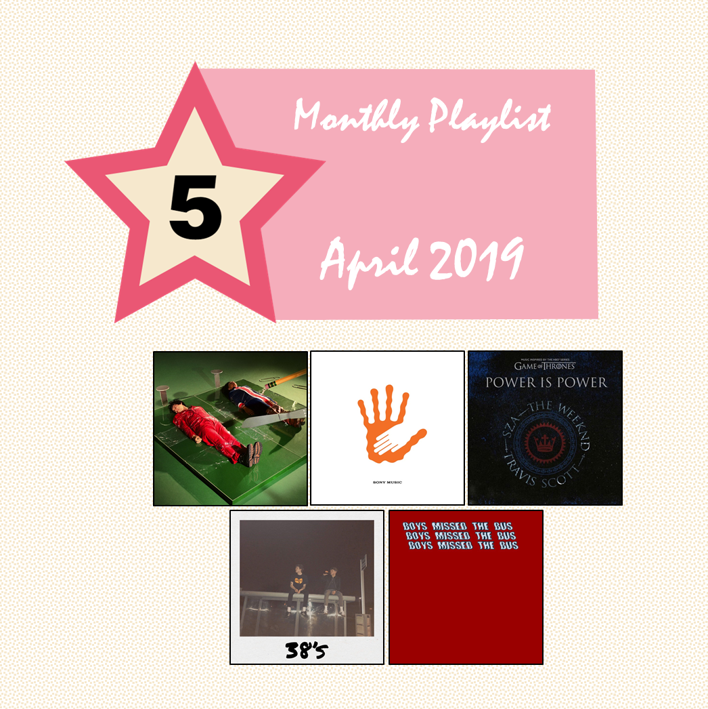
We’re back with another edition of the Monthly Playlist! This month’s songs range from Los Angeles lo-fi to Japanese indie rock and more – read on for all the deets.
5. “38’s” by The Vanities
“38’s”, by Glaswegian garage punk band The Vanities, is a whiskey-soaked vignette about drunken nights that last so late you miss the bus back home (ostensibly, the 38 in Glasgow). Within the first few seconds, Vanities drummer Craig Fellowes bursts in at a frenetic pace that never quite lets off over the song’s entire three-minute mark – but don’t let the percussion overwhelm you. The winning element here is the Vanities’ ability to paint a witty, entertaining picture of an inebriated evening. “Wasteland sights, apart from prozzies and rubble / Thirty quid for the night, far from subtle, she’s trouble / I’m coming down now, I wish I’d made my vodka a double,” goes the tune, perfectly encapsulating that no-man’s-land age between late teens and early adulthood (the band’s four members are all in their early twenties).
If you get the feeling that the Vanities’ experiences are cut from the same cloth as the gin-soaked, unsuccessful-clubbing escapades that shaped Arctic Monkeys’ debut album, you are absolutely right. There is a lot more to anticipate from the Vanities, and we are here for it.
4. “Why’d You Have to Act Like That Though” by Inner Wave
“Why’d You Have to Act Like That Though”, by LA-based five-piece Inner Wave, is a chill, lo-fi psych rock track that brings to mind a mix of Mac de Marco and Lonerism-era Tame Impala. The track starts off with a slightly off-kilter melody, layered under spoken-word musings in the style of Julian Casablancas (it’s no accident – the five bandmates apparently grew up listening to the Strokes in the early aughts). Seamlessly, lead singer Pablo Sotelo melts into a hypnotic, repeated chorus – “I’ve been missing you, I’ve been missing you, I swear”; and before you know it, the song’s over. It’s loopy, lo-fi and catchy as hell, and had us pressing the replay button more than a few times. Be sure to keep an eye out for Inner Wave’s upcoming album, wyd, out on May 17.
3. “This Life” by Vampire Weekend
By this point, Vampire Weekend have an unmistakable sound to them. Whether it’s Ezra Koenig’s earnest voice, the Beach Boys-esque pleasantness of the guitars, or the harmonic choral elements, it is fairly straightforward to pick out a Vampire Weekend song from any random lineup. On “This Life”, from the upcoming album Father of the Bride, Vampire Weekend takes their cornucopia of congeniality to a gloomy tale of broken dreams. “Baby, I know pain is as natural as the rain / I just thought it didn’t rain in California,” sings Koenig, hiding the darkness behind a veneer of jangly Americana. It gets worse: “You’ve been cheating on, cheating on me / I’ve been cheating on, cheating on you,” he confesses a few lines later. With its genial music and its weighty lyrics, “This Life” is a great tune that works across two very different angles. Highly recommend this song and album.
Father of the Bride is
out on May 3.
2. “Pretty Old Man” by No Buses
No Buses are a Japanese indie rock band heavily influenced by the 2000s garage rock revival sound. Of course, they aren’t the first with that set of influences. It’s easy enough to write a simple, easygoing tune, but what really surprises the listener about No Buses is their ability to create an instant earworm. On “Pretty Old Man”, No Buses weave a love story with at least one geriatric participant, in between roving guitar riffs and steady-as-can-be drums. The result is an earnest homage to the likes of early Arctic Monkeys (even down to the band’s name) and Oasis without coming off too saccharine. A tough feat, but one that No Buses manage well. We’re excited to hear more from them soon.
1. “Power is Power” by SZA, The Weeknd and Travis Scott
Ten years from now, in the annals of pop culture history, April 2019 will be heralded as an historic month, for two book-to-Technicolor transformations: the end of Marvel’s Avengers comic book saga with Endgame, and the final season of the record-busting Game of Thrones. For GoT fans who want to augment their visual and cinematic experiences, the TV show released For the Thrones, a soundtrack inspired by the characters and thematic elements onscreen. “Power is Power”, featuring three of the world’s biggest stars, is an ode to the reluctant hero of the entire series – Jon Snow.
What we love about this track are the interlocking yet distinct
contributions from the three featured artists. The Weeknd’s echoing beats bring
to mind his chart-topping “Pray for Me” from the Black Panther soundtrack, but his lyrics are far-removed from the
African savannah of Wakanda. “I was born of the ice and snow / With the winter
wolves and the dark alone,” he sings; a perfect battle hymn for the oft-wallowing
Jon. SZA knocks it out of the park with a fluid, strong verse that further
explores the self-doubt / heroism clash within Jon’s psyche. And Travis Scott,
as usual, switches it up with a verse that contrasts but complements the rest
of the song.
All in all, “Power is Power” is a treat whether you’re a
Game of Thrones fan or not.
Here’s a crazy fact: we’re already a quarter of the way into 2019! It felt like just yesterday that we at TFR were putting together our end-of-year lists, and now here we are. Wild, right? Anyway, without any further ado, take a look at our top five songs for March. And as always, let us know if you agree or disagree.
5. “In Your Head” – Nilufer Yanya
23-year-old Nilufer Yanya grew up in London, in a creative household with mixed Turkish / Irish / Barbados heritage. With a background that fluid, it is little surprise that Yanya’s approach to music is decidedly irreverent.
On her recently-released debut album Miss Universe, Yanya flits between bat-your-eyelashes pop moments and fuzzy rockstar vibes with an ease that simply can’t be taught. Perhaps the best song from the album is the lead single, “In Your Head”. “And I can do what I like / I’ll never know what it means / Some validation is all that I need,” she says, clear-headed about both her materialism and the lack of substance within. (Fittingly for a song that explores the emptiness of individualism, the music video is shot in Las Vegas.) In a way, she kind of reminds us of the best parts of the erstwhile Marina and the Diamonds.
Yanya stands out with her throaty voice, unique personal
style and brazen lucidity. Keep an eye on this one – and take a whirl through Miss Universe while you’re at it!
4. “Patience” – Tame Impala
As die-hard Tame Impala fans, we would of course be remiss if we did not mention “Patience”, the latest song to escape the inimitable workshop of Kevin Parker’s brain.
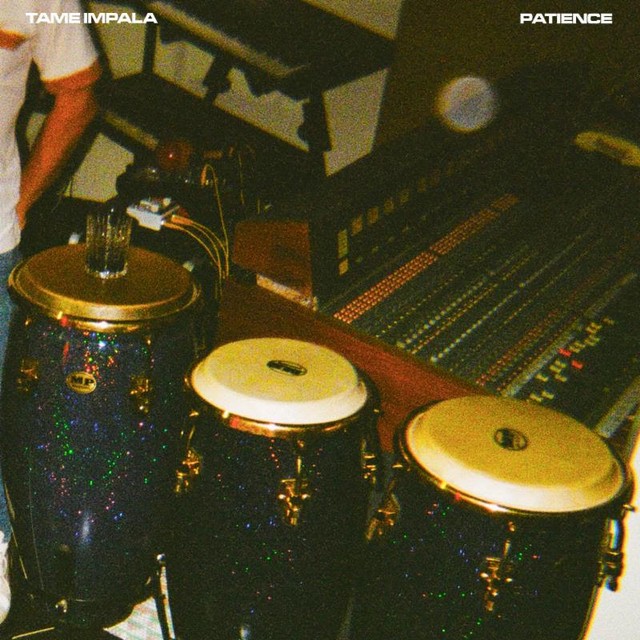
It takes about 20 seconds for Parker to bring out his signature phaser sounds on “Patience”, but this time it’s different. With its dizzying synth garnishes and heavily processed bongos, the song winks at a sort of disco-by-way-of-world-music that no other Tame Impala song has really explored. Parker’s indecisiveness – and the dreamy psychedelia that results – is the real backbone of the famous Tame Impala sound, as we wrote about in our review of Currents (2015). On “Patience”, it’s clear that he’s still working on it. “Sometimes I get so tense but I can’t speed up the time,” he confesses, flipping around seconds later to ask his lover to take things slow.
Tame Impala are headlining a bunch of festivals this year, but haven’t yet announced a release date for a full album. “Patience” until we hear more, then.
3. “Black” – Dave
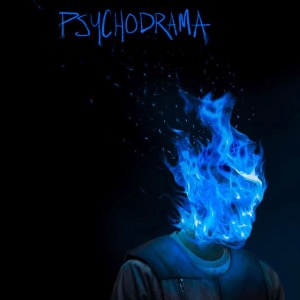
In many ways, Psychodrama – the debut album from British rapper Dave – is a spiritual successor to Kendrick Lamar’s good kid M.A.A.D. city (2012). Like K-Dot, Dave is blessed with an otherworldly talent to channel the realities of the world outside him into hard-hitting poetry – and with killer flow to boot. Our stand-out track from this album is definitely “Black”, Dave’s exploration of what it means to be a black man in the world.
With the oversaturation of American media, news and politics
into global consciousness, it is almost easy to equate blackness – and the
associated struggles – with a negativity-tinged African-American experience. Dave
does better, thankfully. On “Black”, he shines light on truly personal experiences
of what it means to be of African heritage in a Western country. There’s so
many great lines here. On growing out of his surroundings: “Black is growin’ up
around your family and makin’ it / Then being forced to leave the place you
love because there’s hate in it.” On being divided and ruled: “Her hair’s
straight and thick but mine’s got waves in it / Black is not divisive, they
been lyin’ and I hate the shit / Black has never been a competition, we don’t
make this shit.” And so on.
Psychodrama deserves a full listen, but if you’re going to hear just one song, make it “Black”.
2. “Choose Go!” – Chai
On first listen, the thick bassline and staccato drums of “Choose Go!” sounds like a hidden gem from the heyday of the indie rock revolution on both sides of the pond in the early 2000s. However, the reality could not be further from the truth. You may be shocked to learn (as were we) that the creators of “Choose Go!” are Chai, a four-piece all-girl band from Nagoya, Japan.
This isn’t Chai’s first rodeo, surprisingly enough. Their
first album, Pink (2017), was very
well-received, but the band has really found its footing with this months’ well-named
follow-up, Punk. Sung half in Japanese
and half in English, “Choose Go!” combines the relentlessly poppy vibes of,
say, the band OK Go, with the lovable weirdness of Japanese culture.
1. “Exits” – Foals
Foals have been around for a while. Their 2008 debut, Antidotes, arrived during an early-2000s crest of the math rock genre, but stood out nevertheless. Songs like “Balloons” and “Cassius”, filled to the brim with frenetic chords and semi-shouted lyrics, shot Foals to fame very quickly. However, on their more recent two albums (2013’s Holy Fire and 2015’s What Went Down), the band took an unexpected turn. The frantic urgency of Antidotes was replaced by a mellow restraint; it felt like they were reveling in their ability to turn a musical phrase or two whenever they wanted (but not, as with Antidotes, all the time).
On their latest album (2019’s Everything Not Saved Will Be Lost – Part 1), the band has really put two and two together. There’s restraint, yes, but Foals is largely back to their gloriously feverish roots. The star track is “Exits”: a serpent that twists and turns through more moods than you can count on first listen.
The first section, with its deliberate beats and dramatic lyrics (“Now the sea eats the sky / But they say it’s a lie / And there’s no birds left to fly / We’ll hide out”), makes way to a reverberating one-line chorus (“In a world upside down…”). And that isn’t the end of it. At about the four-minute mark, Foals break out into a heady, psychedelic synth solo that truly elevates the song to greater than the sum of its parts.
“Exits” is six minutes long but Foals
entertain you every second of the way.
Given the Mediterranean undercurrents to Beirut’s music, it wouldn’t come as a surprise to anyone that Zach Condon spent his pre-Beirut years backpacking around Europe, soaking in the sights and sounds of Sicily and the Balkans. Five albums, a bunch of EPs and 15 years since, those influences still burn bright in his music. Condon has a penchant for drawing a range of different soundscapes with the same set of ingredients. All of his songs sound somewhat similar on the surface but each one surprisingly tugs at a different chord. On Gallipoli, he and his brass army proudly carry on the tradition with predictable but entertaining results.
The album opens with “When I Die”, a classic track showcasing the familiar trumpet-ukulele-kick drum trifecta that’s been a staple with Beirut’s music. Then comes the title track, “Gallipoli”, the musical embodiment of a cavalry of soldiers bidding their kingdom farewell before heading to the frontlines.
That’s the beauty of Beirut. There’s always a very vivid mental picture that gets tied to each song even when there’s barely any lines sung. “On Mainau Island” is a pretty instrumental track that sees Beirut dabble with electronics, a side of him we would like to see more often. The very hypnotic “Corfu” again offers glimpses of where Beirut’s sound could head next, tastefully combining jazz melodies with an almost-tango beat.
On the whole, the album sounds a bit less rough round the edges than what Beirut fans are used to – but not in a jarring way. Experimentation outside Condon’s forte has been kept to a minimum on Gallipoli. It’s still the organ and the brass instruments that take center stage. While songs like “Corfu”, “On Mainau Island” and “We Never Lived Here” attempt to fuse the past with the future, the extent of experimentation seems frustratingly measured. Gallipoli might have met every old-time fan’s desire, but it is also a sign that Zach Condon is in urgent need of evolution. His sound is at risk of growing stale and we’re hoping we get to see a never-before-seen side of him on future releases.
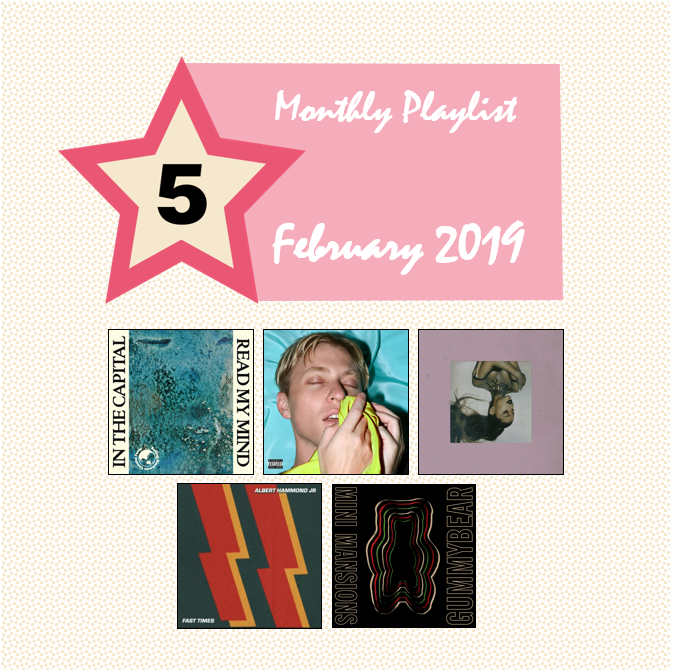
Last month, we started a new feature here at Top Five Records: a run-down of the top five songs from every month. We heard from quite a few of you that you loved it – so without further ado, here’s our list for this month!
5. “Body Chemistry” – The Drums
Don’t let the unrelenting bassline on “Body Chemistry” fool you into thinking it’s a harmless, upbeat bop. On this new track from the NYC-based indie-pop band The Drums, lead singer Jonathan Pierce provides a peak-millennial take on anxiety, romance, and the crippling self-awareness in between. “I know some good luck, and a good fuck, a nice glass of wine and some quality time is gonna make you mine,” he acknowledges, “but it’s not what I’m trying to find.” The song itself reminds us of some of the best tracks on Spoon’s last album, so that’s always a good thing as well. The Drums are set to release their fourth album in June.
4. “In the Capital” – Rolling Blackouts Coastal Fever
Melbourne-based pop-rock quintet Rolling Blackouts Coastal Fever (there’s a mouthful!) had a very well-received debut album (Hope Downs) last year. Their sound is essentially a cross between the woe-is-me melancholy of Deerhunter and the sparkling pop of Real Estate – but it’s not as odd a combination as you would think. “In the Capital”, a new track that was released earlier this week, apparently came about as lead singer Fran Keaney was swimming. “I can’t neatly describe it, but something like connection despite distance. I was thinking about transience and water and death and big cities and fishing towns and moon river,” he says. Have a listen for yourself – we think he’s got it down spot-on, actually.
3. “Fast Times” – Albert Hammond Jr.
Albert Hammond Jr.’s third full-length album, Francis Trouble, won us over last year with its boisterous yet clean-cut vibe. With “Fast Times”, Hammond is back with a track that is equal parts nostalgic and melancholic. “I was over there, completely unaware / It was me, that you saw / How little did I know / All the things would go,” Hammond sings, wistfully reminiscing about carefree days long gone. The music is of course immediately evocative of the early 2000s-heyday of crisp, fast-paced rock, for which Hammond’s past (and present!) band, the Strokes, were a primary driver. After “Fast Times”, we’re certainly keeping an eye out for more music from Hammond.
2. “GummyBear” – Mini Mansions
Mini Mansions are an LA-based three-piece band comprising The Last Shadow Puppets’ bassist Zach Dawes, QOTSA bassist-turned-singer Michael Shuman and Tyler Parkford. If that line-up sounds like the band would make fun, bass-driven tracks that could fit well within Humbug-era Arctic Monkeys, you are exactly right. In fact, Mini Mansions are just coming off of a supporting tour on that band’s North America leg, and something great seems to have rubbed off of on them. “GummyBear” is an instantly accessible dance-rock track about a love-hate relationship (“Boy, I thought you was sweet, girl, but you’re just sugar-free”). Mini Mansions plans to release their third full-length album, Guy Walks into a Bar… in July – look for them!
1. “NASA” – Ariana Grande
This month, Ariana Grande released thank u, next, her much-awaited follow-up to 2018’s blockbuster hit, Sweetener. New converts to Arianaworld, such as yours truly, were skeptical that a brand-new album mere months after the monstrously successful Sweetener could live up to the hype that Ariana has created for herself. However, those thoughts can be laid to rest and buried under six feet of earth, because Ariana is almost definitely the new queen of pop music.
The title track from the new album, of course, has been in constant rotation on radio stations and Spotify playlists since late last year, but there are actually a shockingly high number of other great songs on there, too. The best of these, in our opinion, is “NASA”, a space-themed ode to modern romance. “I’d rather be alone tonight / You can say ‘I love you’ through the phone tonight,” she says, an on-the-head flip of decades of popstars who’ve told us that they need to be around their men 24/7. Of course, being an Ariana track, there is also a maddeningly catchy chorus – this one involving a playful spell-out of the titular government agency. We’d be surprised if this song alone doesn’t play a part in raising the brand value of NASA.
If you’ve been paying attention to the music coming out of Kolkata for the past few years, you’d have heard of Suyasha Sengupta. She was the lead singer for the Ganesh Talkies – a rare frontwoman / guitarist – and went on to form her own electronic solo act called Plastic Parvati.
Last month, the reputed Toto Awards chose Plastic Parvati as the winner of their Music award for 2019, from among a formidable list of upcoming musicians. Recently, we caught up with Suyasha for a long-ranging interview covering the prestigious award, new music, artistic influences, and so much more. Read on below:
Top Five Records: Hi Suyasha!
Suyasha Sengupta: Hey!
TFR: Thank you so much for doing this! Just to give you a little bit of an introduction – we are Top Five Records, an independent review website that’s been online for about six years now. You may not remember, but we actually featured one of your songs a long time ago.
SS: Oh, yeah, was it before the album or something?
TFR: Yeah, it was literally like in 2013.
SS: Oh yeah, had to be one of the first ones.
TFR: Yeah, we’re really big fans of you and Ganesh Talkies, so we’re really glad that we could take the time to speak. So let’s get started, from the beginning. When did you start to get interested in music?
SS: Well, I come from a very Bengali household, so there was always some kind of music on when I was growing up. The stereotype is, you know, that Bengalis always have Rabindra sangeet on somewhere in the background, and that was quite true. There was a lot of folk music, traditional Bengali music, and there was also a lot of Elvis, the Beatles, Nat King Cole and all of that. Even before I started playing music, I would say that since I grew up with music, it helped the process.
I think I was about 10 or 12
years old when I realized I wanted to start singing and writing music. I
started taking guitar lessons when I was about 14. And then of course, I
discovered Nirvana and Alice in Chains and Stone Temple Pilots – the whole
grunge scene. I think I always knew that I would pursue something in the arts,
but music was always my release, my go-to. It was a very natural process.
TFR: Right. And so, do your parents like the fact that you’re a musician?
SS:(Laughs) Well, I’ve been doing this for a while, so they’ve kind of abandoned the hope of me pursuing something else. It wasn’t very smooth in the beginning, but since I’m an only child, I played that to my advantage. For Indian parents, to let their children go into a creative field, it’s a little bit scary, because the future is always uncertain, and it’s an unstable profession. It doesn’t have the comfort of a steady 9-to-5. My parents were obviously apprehensive.
I started singing professionally
at 18; this was when I was still in school, playing a gig on the weekends,
going back to school the next day – for pocket money. They figured out that I
would pursue something in the arts, but they encouraged me to at least get a
bachelor’s degree. After graduation, they were like, “If you can manage both,
then go ahead”. I actually ended up quitting my Master’s program after a
semester and moving back to Kolkata, and that’s when I had a more serious
conversation with them. Initially, they weren’t happy but I think they’ve
gotten around to it.
TFR: Yeah, especially if you’ve always had music in your home, they would be semi-okay with the idea anyway.
SS: Yeah, and they were happy that I was doing my own thing and taking care of myself. And unlike the sex drugs and rock ‘n’ roll stereotype, she hasn’t turned up in a ditch somewhere yet (laughs).
TFR: Haha, right. So at what point did the whole Ganesh Talkies thing start, and when did you decide that you wanted to start the Plastic Parvati project on your own?
SS: Going back to the band when I was 18, we were primarily a covers band, and we used to play at this place in Kolkata called Someplace Else. The bass player, Roheet, and I eventually wanted to play our own music, from our own set of influences. One of the things we bonded over was ‘90s Bollywood. Not the music necessarily, but like a certain Govinda movie or some dance step. That’s how Ganesh Talkies started, and then the guitarist and drummer joined in. We came from different sets of influences, but the common love for – I wouldn’t say trashy – but the over-the-top Bollywood helped us.
TFR: Yeah, that ostentatious element.
SS: Exactly. Unreal, gaudy. So that’s how we started Ganesh Talkies. We focused on making our own music rather than covers. When I was in the band, I started experimented with production. I was the primary songwriter for the band, and sometimes I’d have a keyboard or drum idea in my head, but I couldn’t always explain it to them. So I was like, okay, if I could map it out on a software, then maybe they can understand.
At the same time, I also realized
that some of the stuff that I was writing was a little bit too intimate for the
band. It was just my stuff and my moods. So Plastic Parvati started off as a
passion project – and a learning project. I would use it to learn how to
produce and how to write music personally.
TFR: For sure. Earlier on, you were mentioning that Nirvana and grunge is a very big influence for you. Does that carry on to Plastic Parvati?
SS: Nirvana for sure, that’s going to have an influence on everything I do. I think grunge in general has had a huge impact too. Apart from Nirvana, I was discovering a lot of female artists – musicians, directors, poets. I stumbled upon Hole, Garbage and Bikini Kill. These women have left a deep influence on me – because of their music, I don’t feel inhibited to say how I feel with Plastic Parvati. I’ve always been attracted to the fringes, the left-of-center artists.
TFR: That actually reminds me of this VH1 show called Left-of-Center.
SS: Exactly! I remember watching Nine Inch Nails and Marilyn Manson videos, and I thought it was so cool. I’m a sucker for commercial pop too, but I really related to that. And that was the only good thing on TV around that time, and I feel privileged because they actually used to play music on TV back then. Now it’s just reality shows.
TFR: Yeah, now it’s just trash.
SS: Yeah. I don’t even own a TV anymore.
TFR: Same here. Going back to your album [Songs About Lovers, 2017], what was going on through your mind when you were putting that together?
SS: So with the album, we – by we, I mean me and my mentor Miti Adhikari [noted Kolkata-based producer] – we were putting together these snippets when the Ganesh Talkies was having an off-season period. I played him a bunch of unfinished scratches, about 20 of them, because I had all of these clips but I didn’t know what to do with it. There were some that we rejected outright and some that we picked out to work on more. That’s when the idea for the album came about. Miti is someone that I feel extremely comfortable with, so it was a very collaborative process. While I was songwriting, he gave me all of these ideas in terms of instrumentation or production. We’d worked together on Ganesh Talkies but that was as a producer; this was a more intimate process. I’d share the ideas and record the vocals at his place.
I didn’t initially plan on releasing it – it was originally for my mental health, that I could finish the project, because I was trying to tell these stories through my songs. The theme in my head was essentially a chronicle of my experiences as a woman in India, and an exploration of my sexuality.
TFR: Right. We’ve heard great things about Miti from Nischay Parekh as well, about how he was instrumental in developing his sound, too.
SS: Yeah, he’s really one of the key figures in the music that comes out of Kolkata. It’s a small city, and we’re all friends with each other.
TFR: Yeah. So I wanted to ask you about your experiences as a female Indian musician. What kind of changes would you like to see as a performer, for indie musicians to really get the recognition they deserve?
SS: It’s still a tiny bubble. For Indian musicians to get the recognition they deserve, we have to break out of the bubble. We all play gigs in the major metros or the tier-2 cities, but it’s not enough. How many people actually hear anything indie? Firstly, we need a scene which is not just, like, 10 people from Bombay; more inclusive of other people, other voices. And we need more female, trans, LGBTQ voices – moving away from the straight, upper-caste Hindu, male thing. We just need more involvement.
In fact, I was recently looking
at some of the American festivals – there’s always one or two women headliners,
but we don’t have that here. Like, last year, there was this festival on
Women’s Day, that had an all-women lineup, but it was organized by men! The
point is not to have an all-women line-up. The point is to normalize the role
of women or other communities amongst what exists now.
TFR: Exactly. They essentially didn’t do much except filter by gender.
SS: Yeah, like there’s a “genre” called “girl-band”. For other bands, there’s genres like rock, hip-hop, whatever, but for these girls, there’s a genre called “girl-band”. That doesn’t make sense! The conditioning needs to change, basically.
And another aspect is that I’m
basically in the black-hole of the country [musically]; we in Kolkata don’t
always get the push we deserve. But I love Kolkata, it’s very comfortable.
TFR: Yeah, this is what we hear from the Chennai bands, too: “No one really cares what we do in Chennai, so we just have a lot of fun by ourselves”.
SS: Exactly. If you look at the music that’s coming out of these two cities, it’s extremely different and diverse. We have to work harder, and we don’t get the kind of recognition in other cities, so we have to focus on our craft more. We have no infrastructure, just us musicians. We have to travel to Bombay or Bangalore just to play a gig.
TFR: Speaking of gigs – what’s on the radar for Plastic Parvati?
SS: The next gig I’m playing is Control Alt Delete. It’s actually my first as Plastic Parvati in Bombay. I’ve consciously stayed away from club gigs because I’ve done that extensively with Ganesh Talkies. I also want to put out some music by the end of the year, because there’s been a change in my musicality. I want to see how that works, in the context of an EP.
TFR: Nice! So do you have anything down already?
SS: I’m still writing, so it’ll take some time. I don’t like giving myself a deadline, because I feel pressured, but I have some scratches down.
TFR: Cool! So the last thing we wanted to ask you is about the Toto Award, which you won recently for Music. That’s a great achievement, congratulations! What does the award mean to you?
SS: Honestly I didn’t expect it at all! Although I’ve been playing music for a while, Plastic Parvati has just been a year of me seriously trying to do something. In terms of independent arts in India, this has been one of the groups that has been supporting artists for a long time. And the previous winners are all artists I deeply admire – it’s great to be one of them now! Toto has always been great at selecting the non-mainstream, slightly underdog artists – there’s some pressure on me now to live up to their support. It’s also encouraging to know that there’s an organization like that that appreciates artists like me. I’m hoping that it’s a message to younger girls, too: there’s people out there who do support you.
TFR: Well, that’s all the longer questions we had. We just want to do a quickfire round now, cool?
SS: Sure, yeah!
TFR: Who would be your favorite Indian artist, apart from yourself and Ganesh Talkies?
SS: Fuck. This is hard. I can’t pick one! I’ll go with Parekh & Singh, and Peter Cat (and LIFAFA and Begum).
TFR: Awesome! I guess our tastes match exactly, because the last two interviews we had were with Parekh & Singh and LIFAFA.
SS: Nice! Yeah, I feel like they’re very representative of Indian indie. They’re not trying to do like weird raga type things with Western instruments, but they are writing their amazing songs, and their sound is incredible.
TFR: It’s very desi.
SS:Desi, but perfectly balanced. Oh, I actually really like Disco Puppet as well. But that’s a personal bias! And… can I name one more? I’ll say Pulpy Shilpy [Gowri Jayakumar’s solo project]. Spoken-word, hip-hop, R&B. And she’s doing everything by herself, so I’m a deep admirer of that aspect.
TFR: Right, ties in with who you are as well. So moving on, which musician, dead or alive, would you most love to work with?
SS: Definitely Sandunes. I love everything that she does, her music, who she is as a person. Her music is very calm, thoughtful. I’m the opposite, like a hurricane – would be very interesting to see what a collaboration would be like.
TFR: Third question. What’s your drink of choice?
SS: Royal Stag, with water.
TFR: Nice. Classic. What’s one track or album on constant rotation lately?
SS: An LP that I found recently – Yellow Magic Orchestra. It’s these three Japanese dudes who made weird stuff in the ‘70s. All analog stuff.
TFR: Very left-of-center, as we were talking about. Final question – what’s been your favorite gig so far as Plastic Parvati?
SS: This is also a little difficult, all gigs are so different. I did this one REProduce session in Varanasi. We were on the roof of a hostel overlooking the Ganges, full-moon night. The crowd was an interesting mix of foreigner tourists and some locals, who were listening to non-Bollywood Indian music for probably the first time in their lives. It was super interesting, and the lineup was great, too. Fun gig.
TFR: Absolutely. So, that’s all from our side. Thank you so much for speaking with us! We’ll keep an eye out for the new EP, and it was a blast speaking with you!
SS: You, too. This was so fun.
You can listen to Plastic Parvati on SoundCloud,Spotify, and iTunes. And keep an eye out for her new music!
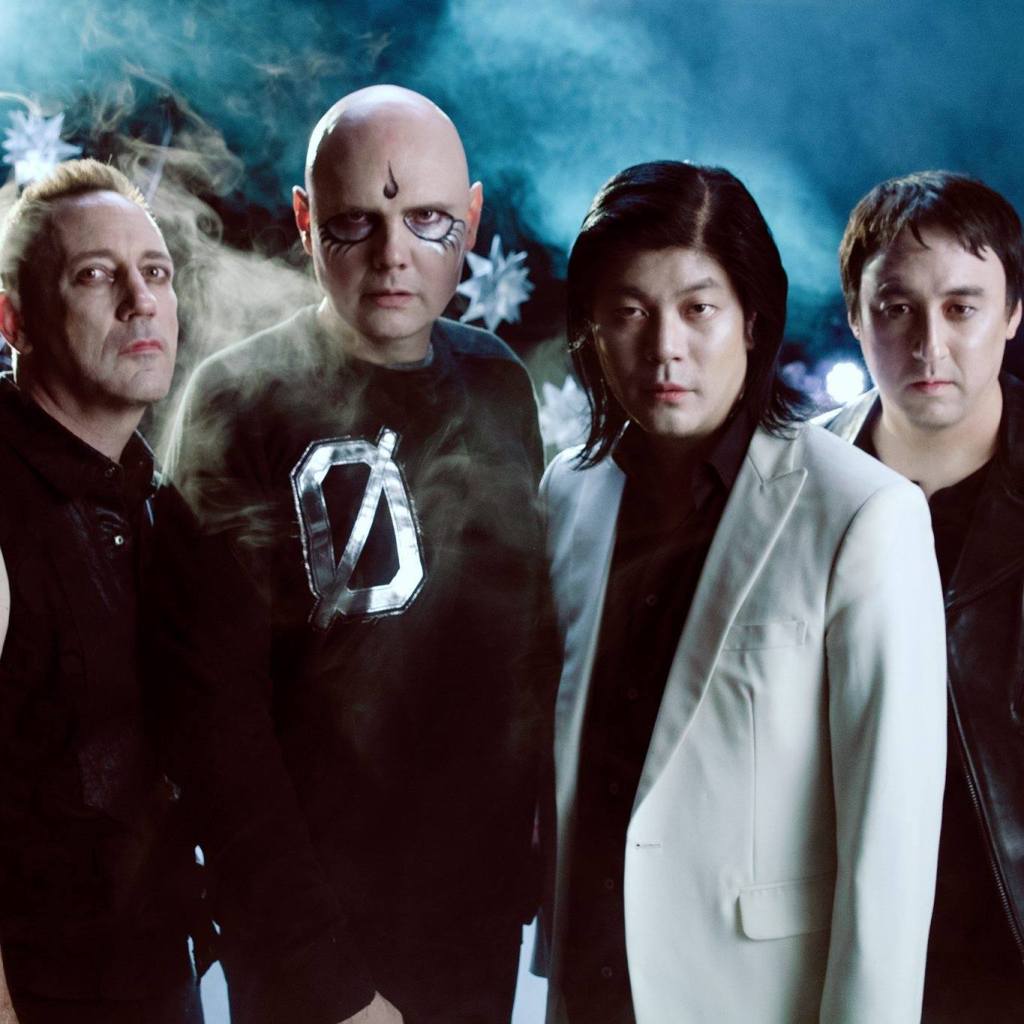
Since 2005, eternal frontman Billy Corgan has rotated through several lineups under the Smashing Pumpkins banner. Each incarnation’s musical output covered wide-ranging territory, but sadly offered mere glimpses of the classic Pumpkins sound of the original foursome. Corgan had always maintained that he wanted his band to be something more than a nostalgia act, but occasional potshots at original members D’arcy Wretzky and James Iha didn’t help reunion prospects.
Then, the unthinkable happened. In March 2016, James Iha joined Corgan on stage to perform “Mayonaise”, sending a legion of Pumpkinheads around the world into a frenzy. The Pumpkins would eventually reunite (albeit without Wretzky) for a glorious arena tour, playing a three-hour long setlist carved out of their ’90s years.
Miraculous reunion aside, the tour setlist made
abundantly clear just how deep the
band’s catalog runs. A boxset of the band’s B-sides and
outtakes (The
Aeroplane Flies High) went platinum; so
did Pisces Iscariot, a less elaborate
compilation of rarities. The Pumpkins belong to an exclusive club of bands
whose deep cuts offer as much depth and quality as their singles.
As the band and its fanbase get ready for another tour this summer, we bring to you our top five Smashing Pumpkins deep cuts. Enjoy!
5.
“Glynis”(1993)
In our opinion, “Glynis” was the stand-out track
of No Alternative, an AIDS-relief project
that boasted the who’s who of 90s alternative rock (Pavement, The Breeders,
Pumpkins). Apart from his angsty nasal whines, the Corgan of those days was a
master of the dreamy semi-whispers that perfectly complemented the blanket of
riffage underneath them. “Glynis” is a prime example of this era, with flanging
guitars and a shimmering strings section.
4.
“Set the Ray to Jerry” (1995)
This track, written during the Gish (1991) era, is widely considered by
the fanbase to be one of the band’s best. Allegedly written about bassist Wretzky’s
dad (who Corgan found to be extremely intimidating), “Set the Ray to Jerry” is
carried by a thumping drum and bass backbone, set to an emotional vocal
delivery by Corgan. Perfectly oscillating between dreamy croons and impassioned
outbursts, it is still considered to be one of Corgan’s finest vocal
performances to date. Although it failed to make the final cut of the band’s
third album Mellon Collie and the
Infinite Sadness, it was included as a bonus track on a 2012 re-issue.
Hurrah!
3.
“Stellar” (2007)
As a reunion album, Zeitgeist was not exactly what fans had been waiting for, but it certainly
had its moments. “Stellar” is a sonic journey that harks back to the Siamese Dream (1993) days when Corgan’s
guitar lines had an ethereal element to them. That vibe, locked in with drummer
Jimmy Chamberlin’s thumping fillers, makes “Stellar” one of the best tracks to
come out of the Zeitgeist era.
2.
“Meladori Magpie”(1995)
The lead up to Mellon Collie and the Infinite Sadness was a particularly
productive period for the band: to realize his vision for an elaborate double
album, Corgan was churning out demos at a brisk pace. Naturally, the period also
saw a lot of experimentation with singing styles and arrangements; a few demos are
especially notable for a bizarre carnival-themed undercurrent that accentuated the
rough concept of the album. In our opinion, the best example is “Meladori
Magpie”, originally released as a B-side to the album’s third single, “Tonight
Tonight”.
1. “Waiting” (1998)
“Waiting” was a product of the Adore sessions that took place at Sunset
Studios in late 1997. It was a trying time for the band: their touring keyboardist
died of a heroin overdose, and longtime drummer Jimmy Chamberlin was fired. Chamberlin’s
void left by Jimmy gave way to a lot of experimentation with drum machines and
other electronic elements. “Waiting” is a gloomy but surging track pulled out
of this very same bag of tricks. Surprisingly, it was left out of the original Adore tracklist, but found its way back
on a 2014 re-issue.



























 Top Five Records