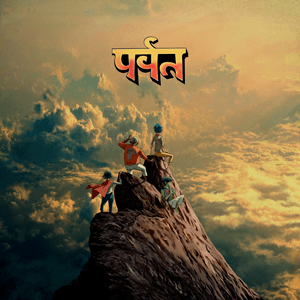
For nearly the past three decades, Gorillaz have been a mainstay of culturally popular music. There were their groundbreaking initial releases such as the debut Gorillaz (2001) and Demon Days (2005); then the well-received Plastic Beach (2010); and finally the COVID-era Song Machine (2020) – an album we particularly liked in that especially singular year. With The Mountain (2026), the multimedia band of Blur’s Damon Albarn and the illustrator Jamie Hewlett have done what few bands accomplish – a late-career masterpiece.
As Albarn and Hewlett have mentioned throughout the press tour leading up the album’s release, The Mountain came about at the intersection of visits to India, and the deaths of both members’ family members in the span of a few short weeks. As a result, The Mountain resonates with a sort of emotional poignancy that spreads to the music, lyrics, and collaborators alike.
“It was all like, ‘This is fucking weird, there’s a reason why we’re here,’” Hewlett explains. “Losing our fathers, and losing my mother-in-law, and then being in India as an artist. Visually, if you’re an artist and you go to India and it doesn’t blow your mind, then you must be blind, you know? Everything is insane and rich and colourful and mad and tragic and beautiful. – Rolling Stone UK, Sep. 2025
India certainly takes center-stage throughout the album. It could have been very tempting to layer in the India influence at a surface level – vaguely Eastern sounds and so on. However, Gorillaz have thankfully gone in a different direction. The album features not only true classical musicians – Anoushka Shankar, of course, but also the flautist Ajay Prasanna, and sarod player brothers Amaan and Ayaan Ali Bangash – but also renown popular singers such as Asha Bhosle and disco star Asha Puthli. Of particular mention is the opening title track where Prasanna’s flue and Shankar’s sitar meld wordlessly to express the hope-through-grief pathos that forms the backbone of the album. And throughout the album, there are diegetic sounds of India all too familiar with anyone who has lived there or spent a lot of real time there – for example, the temple sounds at the start and end of “The Happy Dictator”.
That’s not to say it’s an entirely India-specific album. There are plenty of tracks on The Mountain that would fit well on any Gorillaz album with their rich collaborations and unique sonic mixtures. Take, for example, the standout track “Damascus” – where the sounds of Syrian singer Omar Souleyman and rapper Yaslin Bey merging together better than you would expect. The resulting sound is an intoxicating Arabic-disco banger that immediately brought to mind “QYURRYUS” by the Voidz – another favorite of ours. The single “The Manifesto” has some Hindi music flavors, but the Argentinian rapper Trueno truly carries the song with his rapid, rhythmic rapping style. IDLES make their mark on “The God of Lying”, with Joe Talbot’s monotonal, slightly off-kilter vocals meshing perfectly against the tight percussion. And the aforementioned “The Happy Dictator” is a quintessential Gorillaz song – Albarn’s vocoder-style voice layered on upbeat synthpop beats.
The one downside to this album is that it’s probably about 20 minutes too long. Don’t get us wrong – the first half of the album is a no-skip situation. We go from that poignant opener to Asha Puthli’s disco-influenced symphonic stunner “The Moon Cave”, to the “The Happy Dictator”, to the grief-to-acceptance pathway on “The Hardest Thing”, to the supremely catchy “Orange County” and finally to “The God of Lying”. However, several tracks in the second half – whether it’s the floaty “Empty Dream Machine” or the ephemeral “Casablanca” – felt like they could have been cut, but probably stayed on due to their significance to the artists. The Asha Bhosle track “The Shadowy Light” feels like a rare collaborative miss; her vocals feel artificially added in just for the name-drop.
Ultimately, apart from these few misses, The Mountain is a striking album that meets the brief – an honest exploration of grief, acceptance and much more. Gorillaz’s musical style shines through despite the vast universe of collaborators on here (some of which, by the way, are posthumous recordings, which is very on-brand for this album about death and creativity). Strong recommend to listen, and listen multiple times. You’ll be rewarded for it.
Rating: 8.5/10
P.S. Major shout-out to Hewlett’s beautifully illustrated, Jungle Book-inspired 8-minute animated short film introducing the album and its story. As several of the YouTube comments have mentioned, just the existence of an entirely hand-illustrated video in the era of AI slop is to be commended to the highest order.

 Top Five Records