Janelle Monae: The Electric Lady

26 Sep

Janelle Monae always seems constrained. That feels like a strange word to label someone whose music defies every label applied to it, but it is the only one that seems apt. She has music, she has art and she has videos but none of those mediums seem able to completely hold all that goes on inside her mind. It was inevitable that her seven-part concept series Metropolis would be science fiction based as nothing else would fit the relentless degree of innovation that she pushes. Her latest installment, The Electric Lady, which serves as parts four and five, breaks away from her previous works to give us something personal, something new and something that truly lives up to the name Wondaland.

The first part feels more familiar, with an orchestral overture opening the album as did The Archandroid and the same jazzy pop and solid beats as her masterpiece debut. This time around she has a solid set of supporting artists. The keyword here though is support. Even Prince, who appears on the first song is clearly the guest in what is completely Janelle Monae’s album. Both of her singles, the excellent Q.U.E.E.N. (featuring Erykah Badu) and Dance Apocalyptic come from this half. This is music meant to be danced to, and while I can’t dance anything like her, I can’t sit still with music like this on either.

The world of Metropolis is sketched out by things like the beginning of Q.U.E.E.N. and fragments embedded throughout the album. The picture is still vague and while Cindi Mayweather (the Ziggy Stardust to Janelle Monae’s David Bowie) has definitely progressed along her path of becoming the android messiah, I couldn’t tell you exactly what she has done. This is an album though, not a novel, and the details are unimportant. What is important is the flights of imagination that it inspires and this set provokes creativity as well as anything I have ever experienced. Also, the DJ interludes are incredible.

The second half however is more of a soul album than anything else. This takes me pretty far out of my comfort zone as my foundation is far stronger with Asimov than with Sly, but her music is undeniable. This part showcases her voice, and while it is hard to isolate any single strength of Janelle Monae’s, her voice certainly has a good case for being the strongest of them all. It also gives her a chance to get a little personal than her android alter-ego had previously allowed. Suite V feels not only like Cindi Mayweather singing to her human lover but also a love letter to the classics of soul and funk. She does play with the standard structures and even drops a rap into the stellar Stevie Wonder-esque Ghetto Woman, but this an album from someone who clearly grew up with a love of the R&B greats. This is an intimate, soulful performance and would hold it’s own even if taken alone and not as a part of a larger set of work.

The Electric Lady is not just an album about the future, it is a blueprint for the future of pop, funk, soul and whatever else Janelle Monae decides to touch. While The Archandroid did push harder and better, this is the work of an artist that has moved far enough ahead that she can take a moment to stretch a little and look back on what she has come from. We are lucky that she shares it so well.

The Best EDM Songs: A Guest List by Anish Sood

23 Sep

DJ Anish Sood

Greetings to the EDM enthusiasts among Top Five’s readers! Recently, new writer Ayeesha Khanna went to a gig by Anish Sood. After a little chat, India’s very own EDM poster boy agreed to let her in on a sacred list in the world of EDM: his top five EDM songs. Anish Sood has been in the industry for five years now, and is bigger than ever before. His ear for music and experience in production are showcased in the terrific list he complied for us.

1. “Crave You (Original Mix)” by Flight Facilities feat. Giselle

Also known as Hugo & Jimmy, Australian indie electro duo Flight Facilities began mixing songs by others artists in 2009. The duo consists of Hugo Stuart Gruzman and James “Jimmy” Nathan Lyell. Their first original track, “Crave You”, with vocals by Giselle Rosselli, was reelased in 2010. While the lyrics define a girl’s perspective on the ever-elusive chase, the music gradually increases the pulse of the song. The end result is an intoxicated mind on oscillating shoulders – or what Anish Sood refers to as ‘a serious tune’. With the sax accompaniment towards the end, it’s a one of a kind electronic production.

2. “Fifteen (Oxford Club Mix)” by Goldroom

In this classic version of the song, Goldroom wastes no time in making the listener want to shimmy. Right from the first second, the strong beats and slick tune boast of bold music production. And then the vocals kick in, Australian singer Chela and her divine voice catalysing the rush that comes with Fifteen. Dance Music has never seen sweeter days.

3. “You & Me (Original Mix)” by Disclosure feat. Eliza Doolittle

Eliza Doolittle’s brilliant vocals feature in this song by Disclosure, a British electronic garage-house duo. It released as a digital download in the United Kingdom very recently. Deep meaningful lyrics only add substance to the song, while the beats put you in fly-away mode, enhanced by the young couple in the video, shown back-packing across Europe. The music and Eliza’s voice unite in a mesmerizing union to produce classic house at its refreshing best.

4. “Reverse Skydiving (Shadow Child Remix)” by Hot Natured feat. Anabel Englund

Legendary vibes. That’s the first thing that comes to mind when you listen to Reverse Skydiving. Englund’sdreamy voice penetrates through your brain and sends it soaring as she says ‘You don’t have to jump to fly with me’. Soon you’re jumping anyway; earthy resounding beats replace her voice and you really can’t help yourself. Electronic music in your bones, this one.

5. “Jack (Original Mix)” by Breach

“I want your body, everybody wants your body, so let’s jack.” On repeat. For three booty-shaking minutes. A nasty mix of wild visuals with a swag-defining house tune, the song is full of opportunities to really get raunchy on the dancefloor. Mindless dance music. So let’s jack.

So there you have it. That was Anish Sood with his brilliant list of EDM songs. Let us know how it works out for you!

—

Words by Ayeesha Khanna

An engineer by fluke, an artist by choice and a writer by default, Ayeesha finds herself in her happy place exploring new music and jabbering about how each song makes her feel. It’s not half bad. She’s like a mad scientist by day and hippie by night. Why, what colour is your raindrop?

Girish and the Chronicles at HRC, Hyderabad (5/9/2013)

18 Sep

“Love, peace… and rock n’ roll” reads the tag line on their Facebook page. After attending their recent gig at Hard Rock Cafe in Hyderabad, the writer is as unsure of the first two as he is certain of the third.

All photos from Girish and the Chronicles' Facebook page

All photos taken from Girish and the Chronicles’ Facebook page

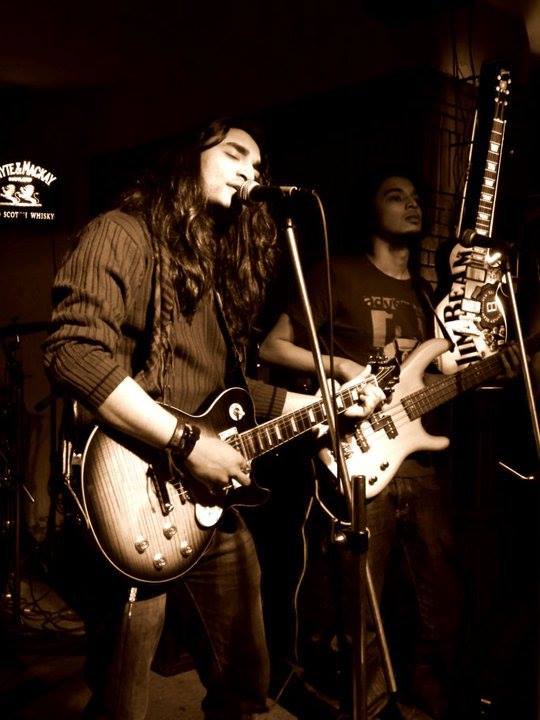
Girish and the Chronicles (GnTC) are absolutely no-nonsense when it comes to making “good” rock music. They are among a fast disappearing group of musicians in India today: musicians who don’t scream profanities in the name of death metal, show fingers to all and sundry, or puke sloppy emo stuff for people whose intellectual bandwidth rarely betters that of the bovine.

In other words, they are pretty much perfect for lovers of true, classic hard rock.

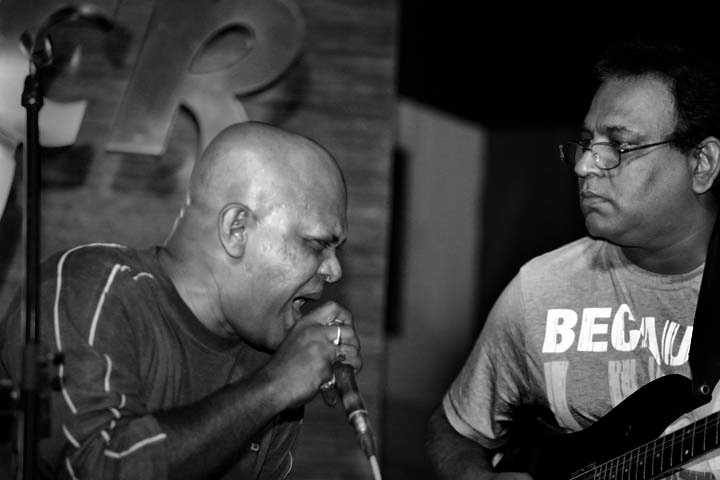
But first, here’s some introduction. GnTC, hailing from Gangtok, Sikkim, are a four-member group fronted by the ebullient Girish Pradhan, son of Nepali singer Bimla Pradhan. Legend has it that, up there in the mountains, good ol’ rock n’ roll runs in the veins, with kids picking up guitars before pencils, and it certainly seems to be the case here. GnTC’s talent isn’t the type to be acquired over the years. It’s innate. Intuitive. Heartfelt.

The first thing I noticed about GnTC was Girish’s powerful vocal range. I had heard some of his cover songs before on YouTube, and yes, I was pretty darn impressed, but this was unlike anything I had heard in my life. It was staggering. His voice reached peaks and troughs that could have rivaled the very best in the world, and there we were, being given a taste of such talent in good old Hyderabad.

They did some OCs in the beginning – songs ranging from hard rock (“The Revolving Barrel”) to softer and more melodic stuff (“A New Beginning”) and then moved on to what they really do best – covers. As the handful of people who had gathered that evening watched on in awe and wonder, GnTC took almost every big name in the history of rock music by the scruff of its neck, and gave the crowd their own version of the classics in the most incredible way possible.

First up was AC/DC. “Highway to Hell” was sent flying over the boundary amid an ecstatic crowd., followed closely by “TNT”. One couldn’t help but admire the sheer power unleashed in Girish’s vocals. Any classic rock fan will vouch that Brian Johnson’s vocals are probably one of the most difficult to mimic in a live event – but here was Girish, pulling it off perfectly.

Next up was a well-executed cover of Pink Floyd‘s evergreen “Another Brick in the Wall”, followed by a dedication to all the happy couples in the crowd that prefaced Bon Jovi‘s “Always”. It was scarcely believable that the same person could shriek like Brian Johnson and Bon Scott and could do as much justice to a starkly-opposite song a half hour later!

Soon, GnTC went even back further back in time, treating us to a couple of behemoths from one of those genre-defining albums in the timeline of rock: Led Zeppelin IV. Their stunning execution of “Black Dog” and “Rock and Roll” was sublime enough to move even the staunchest Led Zep lovers to tears. And the fact that Suraz Karki – the chap on lead guitars – looked a lot like Jimmy Page only helped things.

All photos taken from Girish and the Chronicles' Facebook page

All photos taken from Girish and the Chronicles’ Facebook page

Now, “Rock and Roll” is a considered by many rock aficionados to be a “complete” song, because it lacks absolutely nothing on any front – be it drums, guitars, bass or vocals. The mere attempt to cover it is bold, but it was no surprise that GnTC nailed it, hook, line and sinker.

After an exceptional cover of the Doors’ “Roadhouse Blues”, Girish announced that they would now experiment a bit off their conventional classic rock act, and the band shifted effortlessly into Nirvana’s “Smells Like Teen Spirit”. What blew our minds wasn’t their skilled execution of these classics; it wasn’t their flawless faithfulness to the originals. No, what blew our minds was the consummate ease with which they seemed to shift from AC/DC to Pink Floyd, from Bon Jovi to Skid Row, or from Led Zeppelin to Nirvana.

It had been over ninety minutes of GnTC belting out song after song, classic after classic, and the evening was nearing its tragic end. Girish then put his guitar aside and told a now-frenzied crowd that GnTC would give them two options for the closing song. And as a tribute to the greatest hard rock band of all time – Guns n Roses – it would either be “Welcome to the Jungle” or “Sweet Child O’ Mine”. With this announcement, the crowd went berserk; and with no clear winner by popular vote, GnTC decided to do both.

All photos taken from Girish and the Chronicles' Facebook page

All photos taken from Girish and the Chronicles’ Facebook page

In 2009, VH1 bestowed the honor of “greatest hard rock song of all time” to “Welcome to the Jungle”, and there’s a clear reason why. The song embodies the soul of hard rock, and GnR’s 80s-era swagger itself. It was a truly fitting addition to GnTC’s hard rock night. Girish’s vocals reached new heights of brilliance in the song, as he brought in Axl’s throaty screams in a manner that would have made old Axl ring his lawyers. For the final song of the evening, they embarked on “Sweet Child o’ Mine”, arguably the world’s most loved power-ballad; and Hard Rock Cafe has never lived up to its name as it did during that song. Girish’s vocals reached meteoric heights for one last time that evening, and Suraz did complete justice to the solo that, even after a million listens, never fails to amaze the listener.

Girish cemented a lasting mark in the minds of every person who was present there that evening. This gig wasn’t just a tribute to the names and the bands that had shaped a genre we all love. It was proof that in an age of musical blasphemy – when Justin Beiber and Lady Gaga manage to garner more Twitter followers than all the bands of the yesteryears put together – there is still hope that somewhere out there, someone, with a guitar, still plays good ol’ rock music.

– Subhayan Mukerjee (@wrahool)

Maysa: Blue Velvet Soul

16 Sep

Blue Velvet Soul

The thing about soul is that it’s hard to pin down. It’s not as simple as identifying a sound or working off lyrics, it is actually a question of soul and that’s a hard quality to define. It is a quality that Blue Velvet Soul, the latest album by Baltimore native Maysa, has in spades however.

This album serves mostly as a showcase for Maysa’s voice, which is nothing short of gorgeous. She has a very powerful voice that works wonderfully over some very nice smooth jazz arrangements. Cuts like Quiet Fire are simultaneously soothing and uplifting. This album is the aural equivalent of a warm bath.

She does manage a very diverse set of songs with strains of jazz, disco, funk and even a little rap interlaced in the R&B. However, the album as a whole lacks challenge. This is pleasant, but not particularly stimulating. The lyrics also tend toward cliche when not meaningless. The intention was probably never to send you into innovative thought spirals, but the fact that this music is so easily digested makes it very hard for it to create a lasting impression.

This is a very fine album, just not a classic. For soul fans, this album will see regular rotation and it is worth a listen even if you don’t normally follow R&B, but it lacks the inspiration to take it from quiet to fire.

Major Arcana: Speedy Ortiz

8 Sep

Major Arcana


There’s a word for a band that decides to name itself after Speedy Ortiz, a tragic, minor character from the cult alternative comic Love and Rockets. That alone tells you most of what you should expect from their debut album, Major Arcana. There are songs about disturbing personal relationships, self-loathing and high school loneliness. There is also an exceptional degree of quality. This is one of the finest albums to come out in a year of great albums. So, there is a word for a band that names itself after one of the strongest moments of alternative comics. That word is apt.

To start with, the music is incredibly listenable. Speedy Ortiz have no problem showing you their influences. Pavement, Dinosaur Jr. and Slint spring instantly to mind and there are far worse bands that you could draw from. Every song is meticulously crafted and flows from section to section perfectly. The guitar work is solid throughout, providing a well-defined sketch for lead singer Sadie Dupuis to color in with her dark and personal lyrics. The music itself is intricately layered, with muscular, repetitive riffs throughout over which distortions, solos and voice work cavort. This is a strong, powerful work capable of holding your attention in its own right.

The lyrics however are astounding. Personal, deep and exquisitely written, the only problem I have with them is how easily they slip below the ever-exceptional music. The songs manage to slip below the skin, but no matter what snippet you sing along to, once you vocalize the words and the shock of what you are saying forces you to pay attention to the rest of the lyrics, you find yourself more and more drawn to the stories Ms. Dupuis is telling you. Just listen to No Below, listen to it right now, and tell me that these are not the words of someone who has thought hard and long about how best to express the truths of her life.

Major Arcana is not just an album, it is what the alternative rock albums of the nineties so often promised, and what only the best managed to deliver, a masterpiece that could be your entire life.

AlterEgoz at Hard Rock Cafe, Hyderabad (29/8/2013)

4 Sep

alteregoz

AlterEgoz call themselves a “purely classic rock band”.

They started off in 2001 in Hyderabad – citing an all-encompassing list of influences ranging from the Beatles, through to the Police via Rush – and in their decade long career, they’ve played hither and thither around the country; at times sharing the stage with biggies like Parikrama and Mrigya.

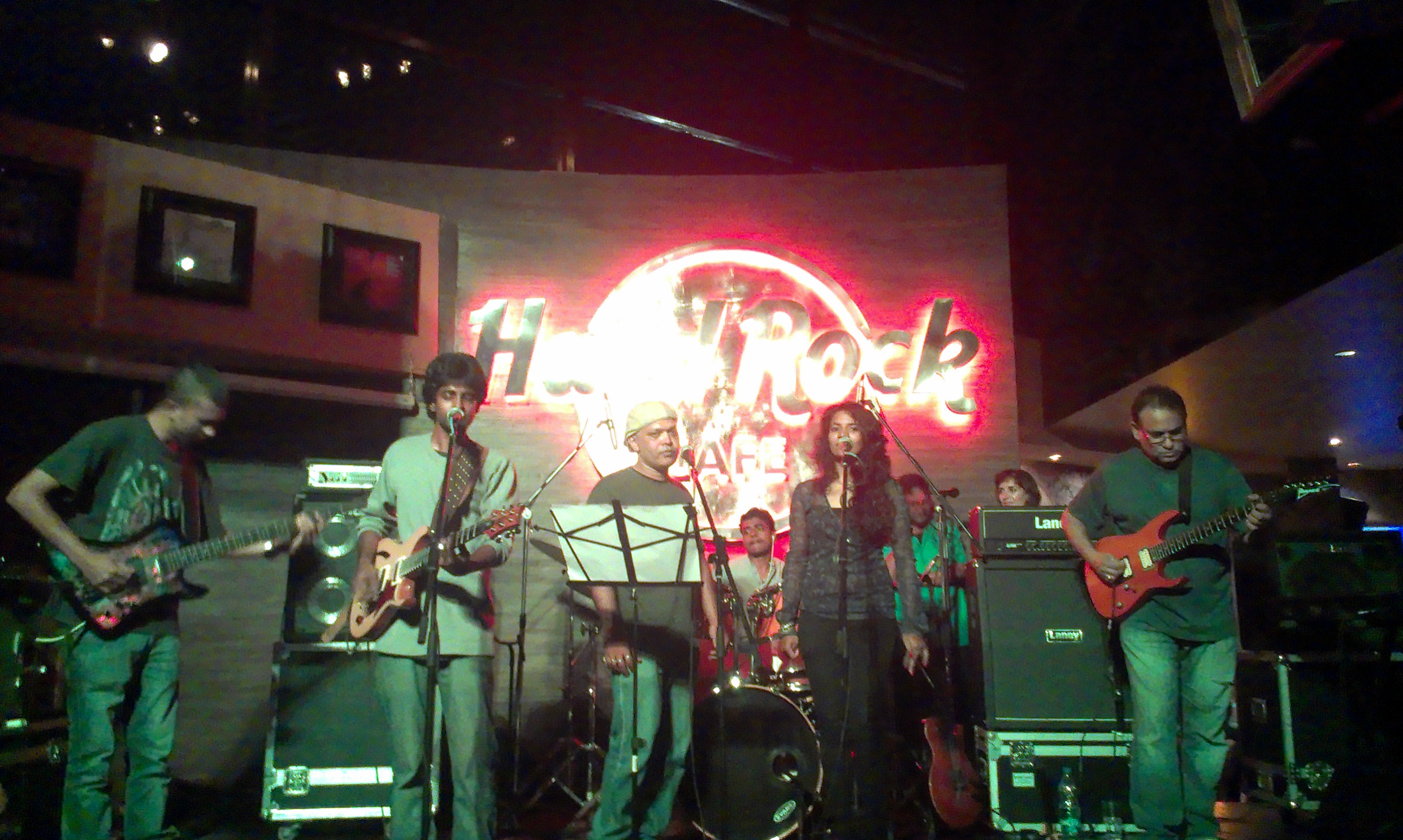
Not surprisingly, they’ve done quite a few gigs at the Hard Rock Cafe in Hyderabad, and August 29th was probably just another one in their list. For the writer however, it was his first taste of the famous HRC, and when he left the place after the gig was over, he was – to put it bluntly – far from satisfied.

The gig was dubbed “a tribute to Pink Floyd”, and there was nothing, absolutely nothing wrong with the band’s performance, or their execution of the songs. They had the energy, the talent and the required eye candy to keep every classic rock lover hooked till the end – but the main reason we remained till the end, as I realised later was that – everyone was waiting to hear and sing along to – some songs that actually come to your mind when you hear the name Pink Floyd.

Thus, what was missing was a proper setlist. I can only wonder how insane the evening would have been, had the band put their talent to cover songs like “Wish you were here”, “Coming back to life”, “High Hopes”, “Time”, “Money”, “A Great Gig in the Sky”, “Brain Damage”, “Shine on you Crazy Diamond” and an infinite other songs which actually made Pink Floyd the milestone in rock music that they were.

Instead, what we were treated to, was Pink Floyd’s most exhausting and … must I say… dull double album in their entire discography – the Wall.

AlterEgoz live at HRC, Hyderabad

AlterEgoz live at HRC, Hyderabad

They started out the evening with their cover of the opening track from The Wall (Disc 1) – In the Flesh – and what struck me at first, was their style of play. It was brilliant: the guitars, the vocals, the drums – oozing with technical proficiency. I’ve heard Dream Theater cover In the Flesh in one of their albums. so my expectations were set high. But AlterEgoz reached that bar, and maybe even bettered it. After all, DT’s Pink Floyd covers lack the inherent “soul” – mostly because they really cannot do justice to the vocals. This was, however, spot on.

After this initial peak however, it was downhill all the way. Yes, The Wall is a brilliant album; In fact, it is one of the most critically acclaimed progressive albums of all time – but it isn’t something you do at an evening gig. Pink Floyd did do several Wall concerts in their career, but those were concerts which involved elaborate theatrics, animations and pyro effects – which is how a true progressive music concert is generally supposed to be. The moment you take the “grandeur” and associated magnificence out of a “prog” music concert, a concept album doesn’t fit the bill at all. With this limitation, and given that the crowd in a cafe at 10 PM aren’t really in a mood to understand the subtleties of such an album, they should have used their talent better to choose more relevant songs. Instead what continued was the rest of the Wall – the Thin Ice, Another Brick in the Wall, The Happiest Days of our Lives, Mother and so on. Technically and execution wise, there was nothing wrong. But it still resulted in the crowd getting more and more jittery for songs that everybody could sing to. Another Brick in the Wall Part 2 was one such rare instance that got the entire cafe singing along, and later, Hey You and Comfortably Numb (from The Wall Disc 2) elicited a lot of cheering. (Comfortably Numb, in fact was done so exquisitely well that it’d probably have made David Gilmour shed a tear of joy, in the extreme case that he had heard this.)

To be honest, it was a good gig. If you are one of those, who worship Pink Floyd and bow down in front of an effigy of Roger Waters before going to bed, you’d have loved it. They even had an old guy who played the harmonica, and a young girl who played the oboe to get as close to Floyd as possible.

But then, when I hear “Pink Floyd”, I’m looking for certain songs. Unfortunately enough, none of those were heard that evening.

– Subhayan Mukerjee

Subhayan is the quintessential Bengali who likes maach-bhaat and porashona. He has a big thing for cars, and an acquired and somewhat esoteric taste in many things – including, but not limited to music.

“ft. Pharrell”: A List of Collaborative Excellence

31 Aug

Pizzle

Rapper. Fashion designer. Songwriter. Producer. Skateboarder. Singer. In the twenty years that the world has known him, Pharrell Williams has worn many a hat – some of them his own design, and all of them at the jauntiest of angles. As part of the Neptunes, Pharrell has produced remarkable music for a remarkable roster of artists: everyone from Daft Punk to Kelis to Britney Spears to Jay-Z owe a part of their success to Skateboard P. The man has gone on to write, sing, produce and collaborate with music’s most talented artists – the list is truly mindboggling.

But never fear. As always, Top Five Records gives you a good place to start. Here’s our list of the top five songs with those moneymaker words in the title: “ft. Pharrell”.

5. “Celebrate”, Mika ft. Pharrell

A stylish duo

A stylish duo

Since his debut with the aptly-titled Life in Cartoon Motion, Brit singer/songwriter Mika has been well-known for his larger-than-life pop songs with delectable happy-go-lucky vibes. Last year’s album The Origin of Love featured one such gem, “Celebrate”, a disco-dance-synthpop anthem that’s just ridiculously upbeat. Pharrell co-wrote the song with Mika and contributed a verse, too. His intuitive sense of arrangement and design, paired with Mika’s joyous, talented voice, makes for a laudable combination. Here’s hoping to more collaborations between the two.

4. “Change Clothes”, Jay Z ft. Pharrell

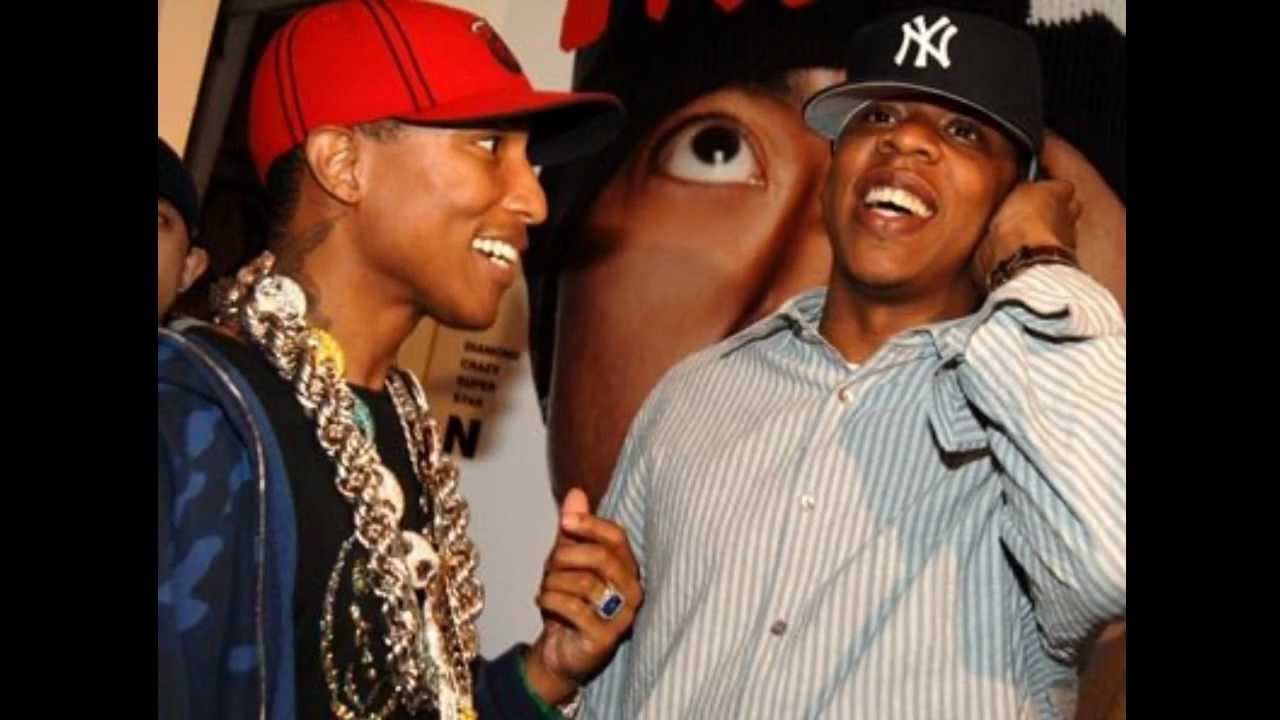
Jay Z and Pharrell

Hova and Pharrell have quite a history. Mr Williams has had a hand in every Jay Z album (with the exception of The Blueprint) since 2000’s The Dynasty: Roc La Familia, including this year’s Magna Carta… Holy Grail. Our favorite collab between the two geniuses (genii?) is 2003’s “Change Clothes”, off of the iconic Black Album. Everything on the track just works: from that indubitable Neptunes bounce to Jay’s unmistakable cool. We find it only fitting that the refrain in the video shows Pharrell flanked by fawning models at a fashion show: it’s just that slick.

3. “Give It Up”, Twista ft. Pharrell

Twista is one of the most underrated rappers in the game today. There haven’t been as many bright spots in his career as there should have been, but one of the brightest and most colourful is definitely his collaboration with Pharrell on 2007’s “Give It Up”. The video is somewhere between 1950s airline commercial and a Tetris game, full of solid colors and candy boxes and pin-up girls: classic Hype Williams. Pharrell and Twista seem to have a lot of fun in the song, listing out all the kinds of girls who “wanna give it up” for them – black, white, Spanish, Middle Eastern, you name it. We have a slinky feeling that the song just wouldn’t have been as great without Pharrell’s presence.

2. “Get Lucky”, Daft Punk ft. Pharrell

All around the world this year, for the entire summer, critics and fans have been fawning over this phenomenal song. Music this groovy has not been made since the disco fever; it’s funny that it took a couple of French robots to bring it all back. Between Nile Rodgers’ shimmery fretting and Pharrell’s infectious chorus, it’s no wonder that “Get Lucky” is THE song of the summer. The song’s rabid success is anything but luck, though – Pharrell and Rodgers collaborating with Daft Punk is just that electric a combination.

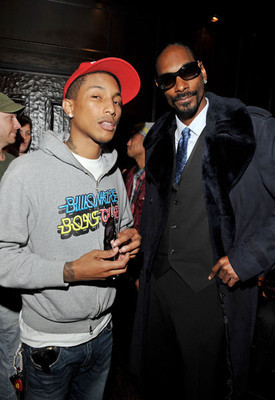
1. “Drop It Like It’s Hot”, Snoop Dogg ft. Pharrell

cool cats

cool cats

“I got the Rolly on my arm and I’m pouring Chandon/ I got the best weed ‘cause I got it going on,” claims Snoop in the opening lines of this track, and you know he isn’t lying. Big boasts populate the track that coasts atop one of the slickest Neptunes beats ever – composed entirely of tongue clicks. The track really showcases why there will never be anyone as stylish in the game as Snoop Dogg. The black and white composition of the track’s brilliant video perfectly suits the Neptunes’ minimalistic style. “Think before you fuck with lil Skateboard P,” warns Pharrell in one verse, and he’s right. There’s really no one quite like him.

Honorable mention:

“Blurred Lines”, Robin Thicke ft. Pharrell and TI

In 2013, Pharrell Williams became only the 12th artist in the history to hold both the #1 and #2 positions on the Billboard Hot 100 chart at the same time, pairing the ubiquitous “Get Lucky” with the equally omnipresent “Blurred Lines”. In the well-received music video, Robin Thicke, Pharrell, TI and three young models flirt in front of a simple peach-coloured wall, soundtracked to a Marvin Gaye-meets-Prince romp that will definitely get you dancing. It’s suave, swaggering, and an absolute riot. What’s not to love?

Agree with our list? Disagree? Let us know in the comments below!

The F16s: Kaleidoscope

28 Aug

Top Five Records is no stranger to the Chennai Music Scene; we’ve done our best to highlight the polished, challenging, unique indie sound that comes out of a city that normally has a less-than-stellar reputation for indie music. Bands like Little Babooshka’s Grind, Junkyard Groove, Adam & the Fish Eyed Poets and the Shakey Rays have challenged that notion time and again over the past year or two, and now it’s the F16s’ turn to challenge India’s perception of what the southern city’s young musicians can come up with.

The F16s
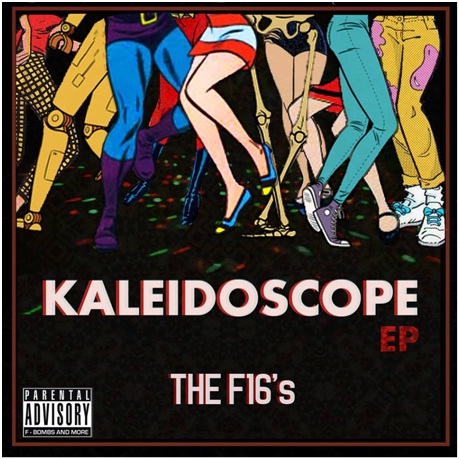
The F16s’ debut album, Kaleidoscope, is a mix-and-match of styles, genres, sounds, stories and inspirations (although somewhat skewed towards a mix of Arctic Monkeys and the Strokes) that comes together in a burst of colour and shapes, and ideally beer. It’s almost overwhelming. Heady, carnival-inspired post-break-up indie? Check. Guitar-fuzzed, anthemic garage rock? Check.  Smokey-back-room-inspired depressing alt rock? Check. Kaleidoscope works as the perfect showcase for one of the few Indian bands who can rightly claim the tag “genre defying.”

It also doesn’t hurt that the EP is accompanied by absolutely gorgeous album and single art.

It also doesn’t hurt that the EP is accompanied by absolutely gorgeous album and single art.

So, on to the album, then. “Prelude” first tiptoes and then charges onto the scene armed with a driving guitar riff, pressing drum beat and tinged with acid techno. A little over a minute later, however, “Light Bulbs” strolls in: a swinging, off-centre electric piano groove, with drawling guitars and drawling vocals. Full of a painful, morose sort of ennui, it’s almost impossible not to imagine a depressed 20-something in a Delhi restrobar with her friends, trying to stay afloat in the gloomy bar-hopping culture of young corporate India. Appropriately enough, the song ends with a vocal harmonization that rivals that heard in Coldplay’s “Viva la Vida”. It does have way more cowbell though, so I suppose in some respects it’s even better.

The depression doesn’t abate as the EP slides into “Avalanche”. We love the original acoustic version, but it’s great to hear it fully realized in electric: subtle organ shifts and a catchy syncopated guitar rhythm (anyone else hearing A Certain Romance?) strengthen a song that’s about trying to run away from your troubles.

It’s not all doom and gloom, however. Martin Luther King Jr.’s I Have a Dream speech allows for a bizarre but  fun segue into “The King’s Dream”, a song that starts off sounding like Jet and ends up sounding like The Fratellis. Fuzzy guitars and a very danceable beat make for  the kind of music that’s perfect for non-IDM-saturated hipster parties; their groove just won’t let you stay still. Don’t worry, though: the Reverend’s spirit lives on in the song through its lyrics full of rebellion (although admittedly from an upper-middle-class youth perspective). 

“Who Robbed the Rogue” moves The F16s’ sound into new territory yet again, flying through the Strokes’galaxy with a minor stopover in MGMT’s world. The song’s outro is a universe apart entirely, and builds up into a crescendo of what we can only describe as Wagnerian rock (think early-2000s Muse).

“My Shallow Lover” is a great follow-up song after “The Rogue”. Ostensibly a song of discovered adultery with none of the tears and all of the middle fingers, “My Shallow Lover” doesn’t beat about the bush:

“I don’t give a fuck about who you love and who you want and who you are, because I’m more important than you.”

High on cheek, sugar, and rotary organ keyboards, what sets this song apart from all the others in the EP is its super-awesome carnival descent at the end of the track: A heady mix of shoe-gaze and dream-pop that sounds exactly how I imagine dropping acid and riding a merry-go-round would feel.

Wrap your head around that for a second.

“Nuke” slows things down a bit, for a second, before turning up the fuzz slowly. First comes another Arctic Monkeys-esque drum groove (revisiting “Whatever People Say I AM” territory), before Josh opens his pipes again to belt: “Can you take control?” The song’s outro returns us back to Kaleidoscope’s initial techno-ish feel, albeit with a heavier, more industrial sound, before we’re left to our own devices surrounded by a fading hiss of static.

Kaleidoscope does have its rough parts: not all songs are for everyone, and it takes a rather unique listener to be able to appreciate each and every song. We’re talking about a release that jumps from genre to genre, from inspiration to inspiration, and from story to story almost every other minute.  Still, each jump brings you to newer territory and more awesome sounds, so the aural exercise is definitely worth it.

Go listen to the F16s on their SoundCloud account and buy their EP over at OK Listen. And check out the band’s Facebook Page for lyrics and absolutely gorgeous album/single art!

Also, a huge shout-out to Harshan Radhakrishnan for making keyboards sound cool!

– Karthik Manickam

My Bloody Valentine at Bill Graham Civic Auditorium (23/8/2013)

25 Aug

My Bloody Valentine

My Bloody Valentine was one of the bands to define shoegaze back in the late 1980s and 1991’s Loveless is still probably the greatest example of that alternative rock subgenre ever to be created. They broke up for quite a while, but 2013 marked their first album in 12 years, m b v and a worldwide tour that took them to the Bill Graham Civic Auditorium in San Francisco.

Their performance was exactly what one would expect from one of the bands that defined shoegaze. It was very loud, rather repetitive and had almost no talking. There was one intelligible piece of crowd interaction in the concert and that was to tell us that the next song was to be the last. When playing to a crowd, you have to deal with both the luxury and tyranny of the crowd’s undivided attention. It is your chance to really engage with your crowd, and during the concert I spent more time thinking about work than the music itself.

These complaints may seem unavoidable when dealing with shoegaze, but even if they artists refuse to interact with the crowd, their music should. It is their job to create a journey for you to travel through over their concert, and it was not only difficult, but also unrewarding to fall into the flow of this performance. There were some great moments over the three and a half hours of the concert and three songs, including my personal favorite Soon, were excellent. Taken as a whole, it was a good concert, but I expected better from alternative rock royalty like My Bloody Valentine.

There are bands who are better in the studio than on the stage and sadly My Bloody Valentine has proven to be one of them. This was a fine concert, just not a great one.

Daft Punk: Random Access Memories

14 Aug

In the late 90s, two Frenchmen released a landmark debut album that forced the world to reconsider its current taste in dance music. This album was followed in 2001 by an even more historic album that, once again, forced the world to reconsider. Ensconced invariably in metallic helmets and a coolness that doesn’t quit, Daft Punk have made it their job to redefine things for a world that is far behind the curve. What happens, then, when they choose to delve in the past rather than look towards the future?

Brilliance.

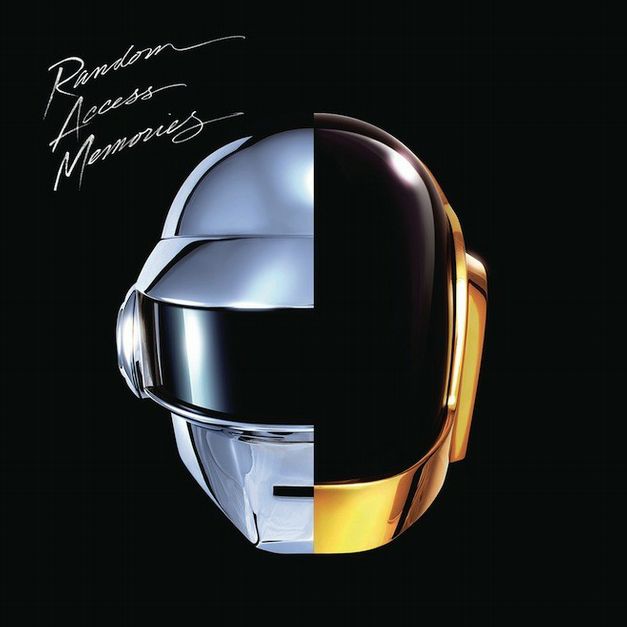
Random Access Memories

In May 2013, Daft Punk built a futuristic discotheque in space called Random Access Memories, and they’re inviting everyone to their party – not just the cool kids. Old-time artists sessions (Paul Jackson Jr., JR Robinson et al) form an intoxicating mesh of disco-jazz, while dreadlocked funk icon Nile Rodgers frets his way through the fabric of their material. Hip-hop/R&B superstar Pharell Williams croons in the foreground and Panda Bear is at the back selling acid tabs. And at the very middle of all this commotion are two robots, trying their very best to make music like they’re humans from the 70s.

Before RAM released, Daft Punk recorded disco king Giorgio Moroder talking them through his rise to fame. Eventually, they chose to include one snippet, heard on “Giorgio by Moroder”, about his involvement in the birth of disco music. “I wanted to make a record with the sounds of the 50s, the 60s, the 70s,” explains Giorgio in his clipped German accent, “And then have a sound of the future.” This is the defining sentence, the centerpiece and the crux of Daft Punk’s effort in this album. What Daft Punk tries to do on this album is what Giorgio tried to do all those years ago.

Giorgio Morodor on the cover of his '77 album From Here to Eternity

Giorgio Morodor on the cover of his ’77 album From Here to Eternity

But an ideological centerpiece is not all that RAM has. EDM (which, by the way, Giorgio Moroder basically invented in ‘77) in its modern form caters to humankind’s strange desire to sound more machine-like. But Daft Punk has, as usual, taken this idea one step forward. Random Access Memories is a story about humans that became robots and are trying to remember what it’s like to be human again. The robots try to access their half-forgotten human side through their random access memories. Get it?

The story starts off, in my opinion, right before Giorgio Moroder gives Daft Punk his clue of combining the past with the future. On “Lose Yourself to Dance” (a directive that really does result in full-body grooving) , we meet Pharell Williams at his absolute soul-funk best, in a jam with Nile Rodgers, who’s belting out the tightest disco riffs this side of the 70s. They create magic again on the spectacular first single “Get Lucky” which would be an honest-to-God hit in disco’s heyday. On both tracks, the Parisian androids are tinkering quietly in the background.

/

After Giorgio’s monologue, a few things change in the story. Album opener “Give Life Back to Music” is their distilled learning from Mr. Moroder: in order to create the future, revive the past. Pharell leaves, the vocoder enters, and Nile Rodgers continues to provide the funkadelic backbone. “Let the music of your life/ Give life back to music,” they implore, and you’re inclined to agree.

Pretty soon, though, the robot takes over the human. “The Game of Love” is about a robot emoting, almost like a human, about heartbreak and eventual acceptance, and on “Within”, the robot is slowly starting to lose touch with its human side completely. “There are so many things that I don’t understand/ There’s a world within me that I cannot explain,” laments a vocoder-edged automaton, amidst slinky piano and theatrical flourishes.

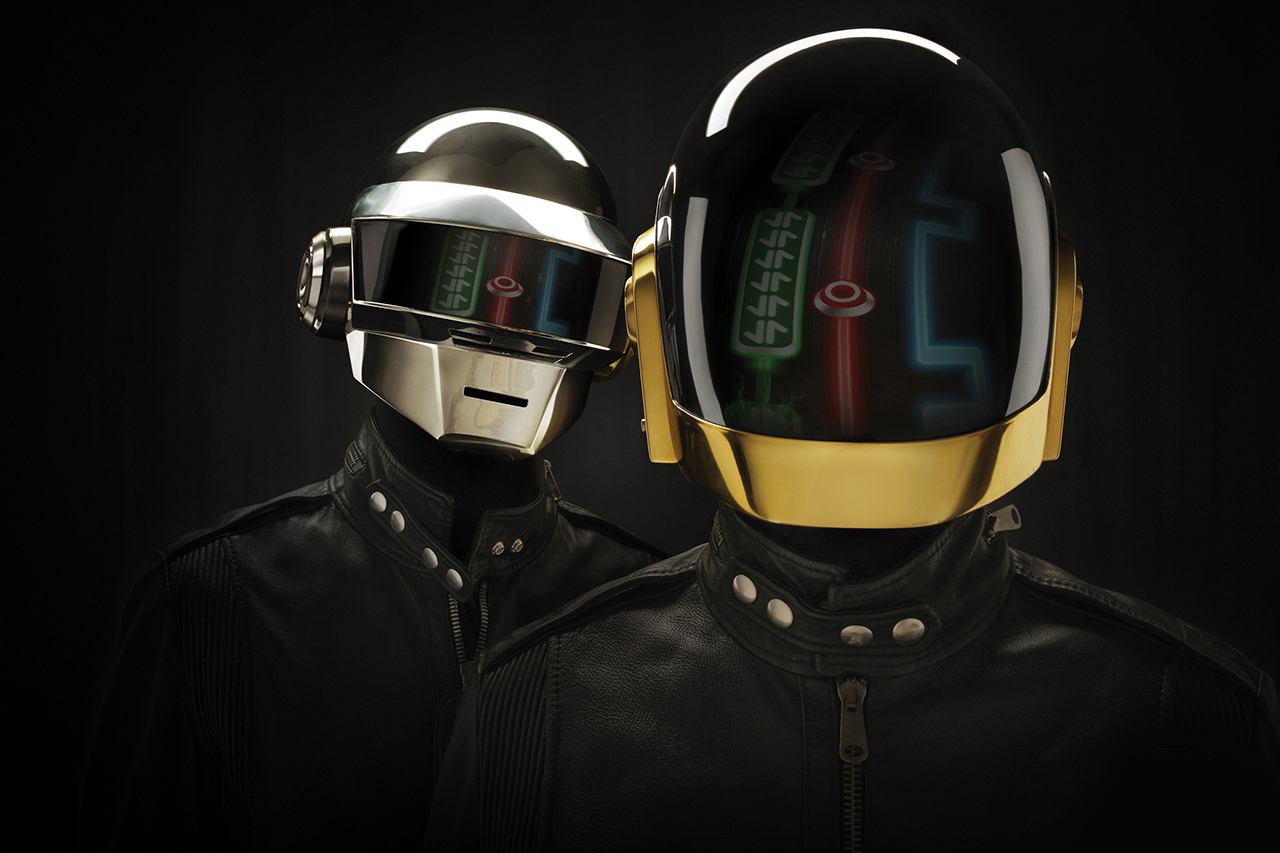
Thomas Bangalter (L), Guy-Manuel de Homem-Christo (R)

Thomas Bangalter (L), Guy-Manuel de Homem-Christo (R)

The storyline (and album) finds dead center on “Touch”, a magnificent magnum opus featuring the old-world folk voice of Paul Williams. The robot, expressing itself through Williams, asks how to relate its computerized memory of touch to the human feeling of touch; and after a full-blown blissful horn and gospel section, the robot realizes the answer is (of course) love. After this life-altering moment (“Sweet touch/ you’ve almost convinced me I’m real”), Daft Punk’s Random Access Memories comes full circle: about humans that slowly became robots, and are slowly turning back into humans. It will send shivers down your spine, I promise you.

Why aren’t the songs in chronological order? Because that’s not how our (human) brains work. Memories are distorted, rearranged and accessed (yes, randomly) by our brain; Daft Punk is trying to mimic that very phenomenon. The album title is really very clever, non?

Daft Punk makes music that foils critical analysis. They want to play 70s disco in their spaceship from the year 4000, because they think it would be a fun thing to do: and that’s their only reason. They are able to distill their playfulness and whimsy into a structured, inspired album – without becoming self-indulgent – and therein exists their greatness. Towards the end of “Giorgio by Moroder”, Giorgio leaves one final observation in the listener’s mind. “Once you free your mind about a concept of harmony and music being correct, you can do whatever you want,” he notes. Daft Punk understand this very well, and on this album, you will, too.

Best Tracks: Get Lucky, Giorgio by Moroder, Lose Yourself to Dance

Bonus: