Snoop Dogg: “No Guns Allowed”

29 Apr

/

There is a lot to talk about when reviewing “No Guns Allowed” from Snoop Lion’s latest album Reincarnated. The transformation from Dogg to Lion, the messages of peace, the imagery of the video and the news clips littering the song. This album is more than a new reggae release, this is a watershed moment.

More important though is whether it is good music. It’s okay. Diplo provides a solid background and Snoop, whose voice was always one of the most mellow in rap, sings quite decently throughout. His daughter Cori B provides a solid chorus and while Drake is nothing special, he does well enough. The song is quite listenable, just not outstanding.

The message though comes through quite strongly. The music video may be a tad overblown, but it says what it intends to. While his singing is not quite Bob Marley’s, it is certainly earnest. It feels good to see quite so positive a message from someone as large as Snoop Dogg and his past makes the statement stronger.

All told, this is a pleasant listen and made much more so due to the message. It may not revitalize reggae but it puts Snoop back on the map and not in a bad way.

Raindrops and Lullabies: A Chat with Tajdar Junaid

28 Apr

Continuing with our love affair with the Kolkata music scene, one of our favorite musicians right now is the very talented Tajdar Junaid. Taj has been around for quite a while; he’s toured with Blackstratblues, provided music for Bengali art films, and was a member of the now-defunct Cal alt rock band Cognac. He’s just finished recording his outstanding debut album What Color is Your Raindrop, and plans to release it very soon. Tajdar’s songs have a certain wide-eyed beauty that reminds us of the smell of rain on grassy grounds, and we promise you’re going to like his music, too. Read on for a short interview with this gifted singer-songwriter.

Tajdar Junaid

Top Five Records: Tell us a little bit about the musical journey that paved the path for your debut album, What Colour is Your Raindrop. When did you know that you wanted to be a musician? 

Tajdar Junaid: It’s all got to do with the Led Zep cassette that my cousin played when I was 13. I distinctly remember the song was “No Quarter” and then followed “Whole Lotta Love”. By then, I was sucked and swirling inside the speakers of my tape recorder. For two years, I kept persisting to get myself a drumkit but unfortunately we didn’t have enough space to accommodate one in the house. Those two years, I played drums on the school table and irritated my classmates by playing with pens on their back. My elder brother used to play guitars and there was a chord book around. When I turned 15, it dawned on me that my dreams of becoming John Bonham will never see the day, so I might as well learn the guitar to express myself. I started off with the chord book and the first song that I learnt was the riff to Nirvana’s version of “The Man Who Sold the World”. I used to save up my “lunch money” and go and buy cassettes. Of course I’d be hungry at school but man, when you hold that Led Zep or Metallica black album in your hands, you are so satisfied!

While in high school, I started looking around for a good guitar teacher and I was glad to meet Amyt Datta. He totally opened up avenues in my head I didn’t know existed. I started practicing more and more, and music slowly became a love affair. So the decision to become a musician was not a conscious one. It has been more about sticking to and holding onto what you love because it’s a peaceful feeling.

TFR: Your album has a rather peculiar and intriguing name.  What’s the story behind it?

TJ: It’s named after a song which was written on a rainy day. It’s me asking you…”so what’s your story?”

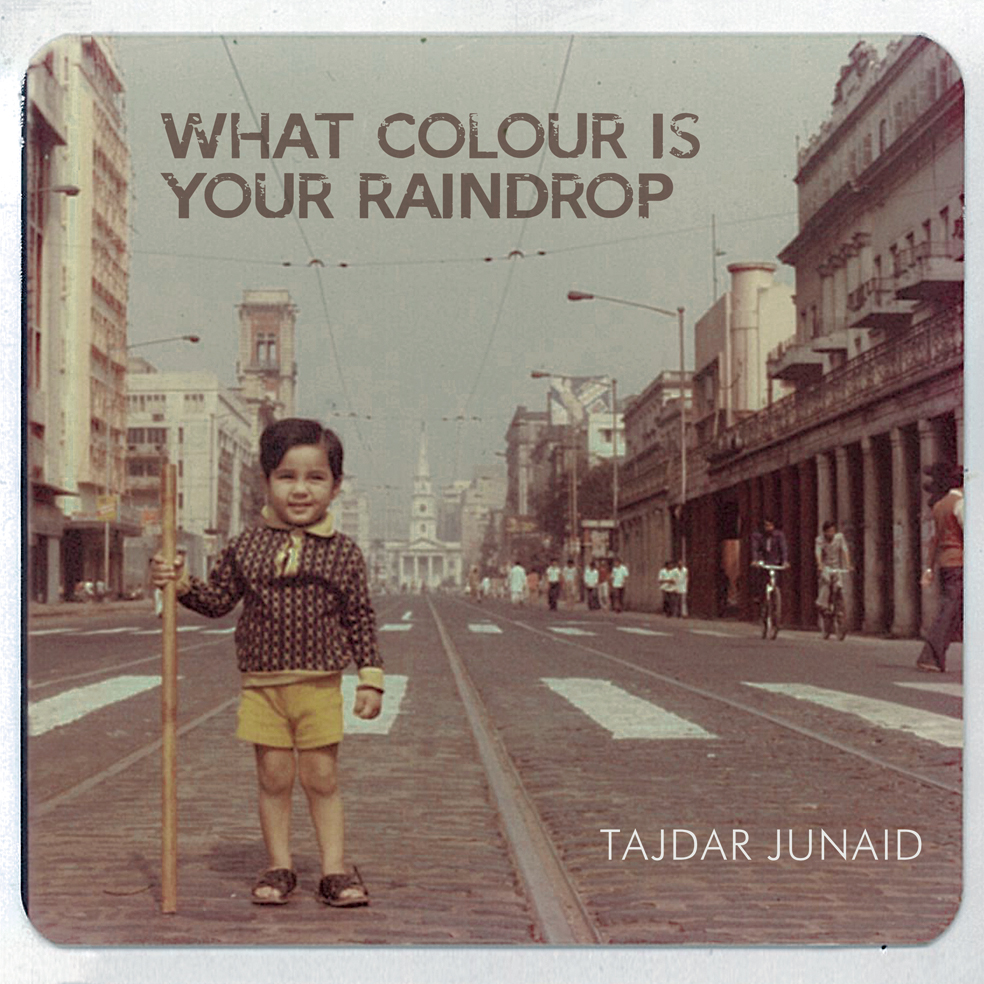
Guess who the cute kid is?

Guess who the cute kid is?

TFR: We understand that there are eighteen different collaborators on your album – from all over the world and of all genres. How did that happen?

TJ: I feel very fortunate to have some very talented musician friends from all across the globe. Thanks to the internet, these songs travelled all across to be recorded. I heard Greg Johnson, who is a fantastic singer songwriter from NZ on a CD when I was in high school and had barely begun to play the guitar then. I wrote an email to him appreciating his music and he wrote back surprised to know he had listeners in India. We lost touch until about two years ago, when we exchanged some music again. He liked what he heard and he asked me to play guitars on one of his song. And when I started recording my album, I knew a song of mine “Mockingbird” suited his voice perfectly. I met Fred White (from the thrice Grammy Nominated UK band Acoustic Alchemy) over Soundcloud.com. We heard each other’s music and got excited about the idea of collaborating and mixing my album. Vishal Nayak , who is an old friend from Calcutta, went to study music at the Berklee College of Music in Boston. He played drums on a song of mine from his home studio in New York. Anusheh Anadil who is a fabulous singer from Bangladesh sang on a song too. Vache, who is from Armenia, played the traditional Armenian flute Duduk. Nitzan Sagie is a brilliant composer from Israel and I met him over Soundcloud.com. He contributed on a song of mine called “The First Year”. It’s a beautiful surprise when the universe opens up its avenues to you and you end up collaborating and making music with people who you have never met in your entire life.

/

TFR: You went from guitarist of an alt rock band [Kolkata’s Cognac] to a solo singer-songwriter with a seemingly endless array of instruments and influences. Did that happen organically?

TJ: At one point of time I just got bored of playing the guitar and chanced upon Ustad Ali Akbar Khan’s music which completely changed my life and made me question my existence and role as a musician. I became curious and started listening to all the music I hadn’t heard before and learning new instruments with the help of the internet, such as the Ukulele, Mandolin and Charango. I realized my way to happiness is to remain curious and keep discovering my love for music in newer ways, similar to a kid in a candy store.

TFR: You have toured as a guitarist for Blackstratblues in the past. How did that situation materialize? Have you played for Blackstratblues after that?

TJ: Warren is a good friend and we have mutual respect for another’s music. Our common ground is our love for blues. He was preparing his first Blackstratblues tour in 2010 and I was visiting Bombay for a recording so it worked out well. I did play with him again recently and it was great fun.

TFR: Some Bengali friends of ours – ardent enthusiasts of the region’s cinema, of course – informed us of your role as music director/composer in noted films such as Iti, Mrinalini (about a suicidal once-famous actress) and Dui Dhuranir Golpo (about two young transgenders from Kolkata). Very impressive! Do you find that there are differences in the composition process between Taj, the music director and Taj, the solo musician?

TJ: If a scene from a film needs a simple melody, I should put aside my intellect and play a simple melody. And if a song on my album needs me to play a blues slide line,I should practice hard and learn to play that line because the song needs it. When I say “needs” I mean to say songs or any work of art has a life of its own and will tell you exactly how to shape it, only if one shuts his ego and intellect and listens quietly to the song or painting unfolding itself. It’s actually quite simple, we just love making things complex. But the bottomline of everything I do is to have fun and like what I do or else don’t get into it.

Tajdar

TFR: Our favorite song from your upcoming album is the mellow “Though I Know” [download from NH7 here], which reminds us a bit of Eddie Vedder (and occasionally Beirut). However, we think that the title-track “What Colour is Your Raindrop” has a strain of melancholic beauty that can often be found in Hindustani classical music. Tell us a bit about your undoubtedly wide spectrum of influences.

TJ: I’m in love with music and with everything it does to me. It makes me happy, brings me calmness, it excites me, makes me travel in my head. Over the years I’ve understood that all forms of music have something good to offer so absorb the good and the bad will filter itself out. I love the serenity and etherealness of Indian classical, I love Chopin and his melodies, I absolutely dig Albert Collins and all the blues greats, simply because it is very moving, And Thank you Lord for the Beatles. It’s silly not to enjoy so much goodness around you.

/
TFR: “Aamna” [another track from his album] is the kind of ethereal, delicate lullaby that parents should play to their young children. Tell us a few special things about this song.

TJ: Aamna is my pride and joy. She is my little niece who is one year , four months right now. When she was born I used to keep her on my lap and play music to her and put her to sleep. I am a musician and the truest part of myself that I can offer is my music. I wanted to gift her something that could put her to sleep even when I wasn’t around.

/

TFR: We’re very intrigued by the instrument that you play on “Dastaan”. What is it? How many instruments do you play on this album?

TJ: It’s a 10 string folk guitar from South America called the Charango. I first heard it in the Ost for Motorcycle diaries and fell in love with the sound. I have played the guitar,charango,mandolin,ukulele,glockenspiel and sang on the album. I would like to learn the piano. It’s a beautiful instrument !

TFR: Finally, on a lighter note. Who is that cute kid on the cover of What Colour is your Raindrop? [see above]

TJ: It’s me when I was 4 years old . Calcutta used to have a lot of strikes then and the roads would go completely empty. I used to be amazed by the traffic police and delighted to see huge cars and trucks stop with simply one wave of their cane. So I was filled with pride holding that cane and posing on the empty road. Perhaps I was grinning and thinking I brought the entire road on a standstill.

You can listen to Tajdar’s amazing work on his SoundCloud or visit his website here.

Saturday Morning Breakfast Songs: A List

13 Apr

Saturday morning, half past ten.

It’s Saturday morning. The curtains in your bedroom are slightly parted, and there’s a pleasant breeze breathing through the window. A beam of sunlight, just warm enough, glances across your face and bathes the room in a tint of impossible comfort. You just want to lay in your bed forever, a frequent flier between ‘awake’ and ‘asleep’.

You’re not unique in this experience: we’ve all been there. The question is, of course, what should you listen to? That’s where we come in. Here are the top five songs to ensure you wake up to a lazy, relaxed and perfect weekend. Since this list could engender a vast number of possible choices, we’ve narrowed it down a tad by including only inputs from within the subcontinent. Enjoy!

1. You Can Wonder, by the F16s

The F16s are a four-piece indie pop act from Chennai with an impeccable sense of rhythm and tone. Their lovely song, “You Can Wonder”, instantly brings to mind drifting clouds, aquamarine waters and, undeniably, contented laziness. It’s like sipping a fresh lime cooler on a Hawaiian vacation. From the laid-back guitar to the mellow phrasings of the singer’s voice, “You Can Wonder” hits every note of the perfect breezy song. We agree with the F16s: this song lies “between a fantasy and what is real”, much like those fleeting moments where you can still kind of remember what you were dreaming about.

2. Summer State of Mind, by Plastic Parvati

At all of 49 seconds, this excellent song by Plastic Parvati (Kolkata-based The Ganesh Talkies’ Suyasha Sengupta) boasts of four lines of lyrics and an addictive tabla-like beat that will make your morning almost improbably happier. Besides, there’s also Suyasha’s voice: jazzy, quirky, and positively drenched in lackadaisy. We promise you that even in your sleepy lethargy, you’re going to press ‘replay’ as soon as this song starts fading out.

3. Sleeping in the Back of Her Car, by the Shakey Rays

Here at Top Five, we’ve already heaped a lot of praise for our favorite Chennai boys, The Shakey Rays. This beautiful track from Tunes from the Big Belly picks up from the “crazy, hazy night” before the lazy weekend morning in question. On this fateful night, the singer walks around with beer on his breath and a smile on his face, meets a girl, gets into her car and (surprise!) falls asleep. Like most material that the Shakey Rays put out, everything on this track just fits: the palpable jangly beauty of the guitars, their immaculately harmonized vocals, and pleasantly nuanced drumming on Niranjan Swaminathan’s part. Oh, and the lyrics. This song could soundtrack your dreams: let it.

4. Monkey in Me, by Nischay Parekh

Nischay Parekh is a young singer-songwriter from the storied city of Kolkata with a voice that was intended by God to sing softly over sleepy mornings. The pretty, happy “Monkey in Me” is, frankly, a bit of a sensory overload: reminding you of sugary doughnuts and morning coffee (with vanilla swirls!) as much as it does of the way that green, sunlit leaves sway in a gentle breeze. Apart from Nischay’s delicate and gifted vocals, we also eagerly doff our hats to Shaumik Biswas’ intuitive drumming and Rohit Kapoor’s talented bass-playing. “Cosmically speaking, I think I’d be dreaming if I fell in love,” sings Nischay, but we beg to differ slightly: you’re going to fall in love with this song (and Nischay’s music) because it is exactly what you should hear when you’re dreaming.

5. Bindya, by Sulk Station

After shuttling between Kolkata and Chennai, we’re going to direct you to Bangalore’s trip-hop phenomenon Sulk Station’s gorgeous track “Bindya”. On this song, Tanvi Rao recites a beautiful hymn-prayer with all the splendor and clarity of sunlight filtering through a pristine rural morning, and Rahul Giri backs it up with a subtle touch of his electronica. “Bindya” is one of those songs that, if heard in the correct moment, can leave you completely spellbound. That magical twilight zone when you’re just waking up is one of those correct moments.

So there you have it. Have a nice weekend!

On the Radar: David Abraham

8 Apr

David Abraham 2

The video for David Abraham’s “This Time Around” (see below) starts off with an intriguing black and white slo-mo drama about a young kid caught in the crossfire of a hostile home situation. Cut to a full-color drama of his parents making up: him with apology writ across his face, her accepting a red flower to match her blouse. Our young protagonist, however, is symbolically behind bars, helpless in his knowledge that the good parts always lead to worse ones. Pushed about and ignored in the dysfunction, he runs away, an act that – in the end – miraculously brings his parents together.

While the video itself is captivating enough to show promise, it’s actually the music that we want to talk about. On “This Time Around” (listen here), David Abraham a.k.a. The Koniac Net possesses an angsty voice that, while not new in alternative rock, is crafted with a precise balance of emotion. We really like his lyrics, too: carefully-refined anguish that focuses smartly on aesthetics as much as artistic intent. (“Last time to get all this right/Last try: please let me save your life/Even if it breaks my world apart/Even it if means we’ll tear apart,” he sings. We’re sold.) Neat little drum flourishes and some emotive guitarwork provide the tapestry for his vocals, and the end result is pretty darn listenable. Think Hoobastank with less self-importance, or the French Kicks with a little more vigor; all with a dash of Alice in Chains or Mudhoney, whatever floats your boat. Abraham’s music is kind of like “a mixtape for the indie music fan”, as he claims on the Bandcamp page.

“This time, I’m going to make it right,” sings Abraham on the opening lines of the song. Well, in our opinion, he’s done it pretty well the first time.

David Abraham

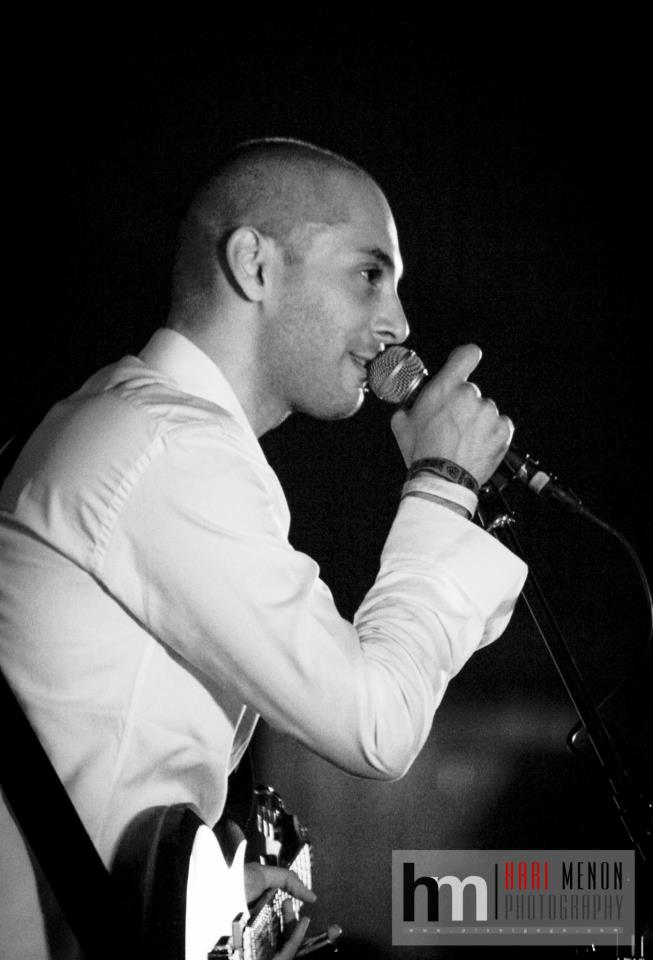
David Abraham performs under the moniker The Koniac Net (for reasons we are not entirely sure of, as it seems to be composed entirely of him). “This Time Around” is the first official video single release from his debut album One Last Monsoon. The music video is the work of UK-based Karakoori Productions. Check out Abraham’s Bandcamp page for more songs.

Special thanks to Hari Menon Photography for the brilliant images.

David Bowie: The Next Day

7 Apr

David Bowie shocked everyone by releasing The Next Day, his first album after a decade of retirement with no advance publicity. What further shocked us was how incredible his return is. A decade has allowed us to forget just how good David Bowie can be and his latest album serves as a stronger reminder than any perusal of his old work ever could.

Every song in the album is strong, often verging on spectacular, and despite the album being filled to the brim with references to his old work each song feels entirely new. Much has been said of how easily Bowie adapts to the times, and the meme-like adaptation of Heroes that serves as this album’s cover is no exception, but what is often lost in the noise is how good his music can be. There doesn’t seem to be a wrong note in this album and songs like The Stars (Are Out Tonight), How Does The Grass Grow and especially Valentine’s Day are exceptional. Bowie has left behind a music legacy that very few others can match and with The Next Day, not only does he evoke the masterpieces that have come before, but adds another work of art to stand alongside them.

Excellent thought the music is, the content of the album is also worth bringing up. Topical in places like Valentine’s Day, How Does the Grass Grow and even the sixties-referencing I’d Rather Be High and more inward-looking on The Stars (Are Out Tonight) and The Next Day, Bowie reminds us why he is respected not only as a musician, but as an intellectual force. Diverse and witty, Bowie walks across us across a fascinating landscape.

Although The Next Day is not quite of the standard of say, Ziggy Stardust, this is nevertheless a triumphant return for David Bowie and hopefully a long-lived one.

Oceans Apart: A Chat with Nischay Parekh

25 Mar
A man and his guitar

A man and his guitar

Nischay Parekh, 19, hails from Calcutta, a functioning chaos of a city famous (or infamous) for its poets and prose; a city that seems to have certainly rubbed off on the young singer-songwriter. We recently had the chance to listen to “I Love You Baby, I Love You Doll”, the spectacular first single from his debut Ocean. It’s a mix of 50s nostalgia and the breeze that causes the leaves to sway on a summer’s day, that hasn’t been heard since this side of an uncharacteristically mature John Mayer. Nischay’s better than Mayer, though, in our honest opinion.

A classic pop voice, burred with just a hint of heartbreak, is not the only thing in Nischay’s arsenal. The man seems to be a pro at the kind of graceful strumming that engender pretty pop ditties, and he has got quite the handy quill, too. If that wasn’t enough of a fix, you can check out more of his stuff on his SoundCloud, which features more than a dozen and a half brilliant, sometimes-glitchy-mostly-pop songs – including a pensive, stripped-down cover of “Crazy” by Gnarls Barkley that would put The Weeknd to shame.

A talent like this does not go unnoticed. Nischay played at the Bangalore edition of the Weekender last year, and shared stage space with none other than Norah Jones at the recent A Summer’s Day festival in Mumbai. India is rather inundated with its share of music festivals at the moment: there’s a new one mushrooming in every cognizant pocket of the country. It’s a world of ‘hear and be heard’ like never before out there, depending on whether you’re the audience or the artist.  The following is our humble attempt to connect these two sides of the spectrum. Top Five readers, meet Nischay Parekh.

Top Five Records: Hello, Nischay! We’re very honored to have you here with us today. Let’s start from the basics. Why music? How did this whole thing begin?

Nischay Parekh: Music started for me when I was 16 years old. I was taking ‘’recreational’ guitar lessons for a few years before that.  It was around that time that I started writing songs, and I really began to enjoy the process of building a song from scratch. It was like Lego, except the blocks were pieces of my own imagination. Once I began writing and playing more seriously I couldn’t imagine doing anything else.

TFR: What did you grow up listening to?

NP: My mother had a very interesting collection of cassettes and CDs. There was a lot of cheesy stuff like Rod Stewart, Geri Halliwell (ex spice girl), but then there was also some great stuff that had a bigger impact on me like Marvin Gaye, Stevie Wonder and Nat King Cole. The sound that came out of our old “deck” (yes that’s what they were called, CD and Cassette player!) has probably left a bigger impression than I care to admit. A lot of it is subconscious, of course.  I was lucky enough to have grown up with a lot of the ‘good stuff’.

TFR: Tell us about your first few bands. We understand your naming patterns for bands have an affinity for Kingdom Animalia.

NP: I have band in Kolkata called “The MonkeyinMe”. There are four of us. It basically consists of very close friends of mine that I started playing music with in school.  All of us are a little spread out geographically at the moment so it’s hard to put out material frequently. However, we are in it for the long run. A future MonkeyinMe album is definitely on the cards.

Then there was this group I was a part of in Boston called “Orange, the Panda”. I do have a fascination of animals and the general element of mysticism. Maybe it’s because I never had a pet?

Cover for Nischay's album

Cover for Nischay’s album

TFR: So we hear your upcoming debut album Ocean is being produced by someone who has done similar honors for the likes of Madonna and Radiohead [London-based Miti Adhikari]. Not bad for a debut! Has having Miti around changed your song-writing or music-making process in any way?

NP: Miti has been great. I am really fortunate that he was interested in working with me. Having him around has brought a lot of clarity and coherence to my music. I had all these songs and Ideas, which were flying around like loose pages. Miti has definitely helped me bind those pages into a book of sorts. He’s been a real collaborator on this album. Added to all this he’s really on top of his game as an engineer. So it’s been a great experience.

TFR: If you had to be sorted into a record collection based on similarity, which two albums would Ocean be slotted between?

NP: The Reminder by Feist and Plans by Death cab for Cutie. I’m probably giving myself more credit than I deserve, those two are great albums and I love them!

TFR: What kind of themes can we expected to be touched upon in your debut? Do you intend it to be a musical culmination of your nineteen years of life, or is the time frame shorter?

NP: Ocean is a collection of dreams I’ve had. I write exclusively about animals and relationships. It is definitely a culmination of my entire life. It’s full of mysticism. I enjoy the paradox between very ‘real’ human emotions and these stories that I tell with animals as central characters.

TFR: It’s always very interesting to know the kind of things that inspire each individual musician. What’s your trade secret(s)?

NP: I’m attracted most to design. The music I love most always has its own specific aesthetic.  I love creating a vibe and designing music that can live well in that world.

TFR: Congratulations on your success at A Summer’s Day! Word is that your performance gained you a legion of fans that day – quite a few of them being female, of course. What was it like to share the bill with Norah Jones? 

NP: It was a great concert. The audience was great. You can always tell when they’re really listening, and they were! The atmosphere was so relaxed yet charged with infectious positive energy.

TFR: What’s it like to be at Berklee? [Nischay is a current student at the prestigious music school.] Is Ocean different from how you imagined it before you got into Berklee?

NP: Berklee is a temple for music. Everyone and everything there inspires you. I’ve really learned the mechanics of music after spending time there. This has helped my music immensely, a lot of songs on Ocean were written in Boston during my first (and only) semester there.

TFR: Who’s one artist (Indian or international) that you’d give your right hand to work with right now?

NP: Leslie Feist and all her wonderful friends from Canada!

TFR: Give our readers one reason why they absolutely must listen to Ocean.

NP: It’s a happy album and it’s about love. Best reason in the world.

So there you have it. We are waiting with bated breath for Nischay’s debut album, and with this article we hope you are, too. 

Wayne Shorter: Without A Net

18 Mar

Iconic jazz saxophonist Wayne Shorter has returned to Blue Note Records this year to release Without A Net. His first album with the label as bandleader in 43 years shows no trace of age and he is as dextrous and intelligent as ever.

The album is mostly from the Wayne Shorter Quartet’s 2011 Europe tour and as a result is a bit minimalistic. Only rarely are more than two instruments noticeable at once, but that merely gives each one space to shine. Wayne Shorter himself burns through the entire album. His lyricism is unparallelled here and his virtuosity is as undeniable as it ever was. The saxophone has had its fair share of masters and at eighty, Wayne Shorter can still stand with pride amongst them.

The album itself is consistently excellent. Plaza Real, for instance, is simply incredible. It goes all over the place and takes you along emotionally. However, although the album is extremely listenable, it is also quite complex. Unless you have some familiarity with jazz, I am afraid that this album may seem to mostly be noise. It is far from being John Coltrane’s Interstellar Space or Sun Ra’s Space Is The Place, but nevertheless is not for beginners (who should however check out our earlier article on albums to start jazz with). This is an extremely rewarding album though, and no matter your level of jazz knowledge, you cannot help but admire the technical proficiency of the quartet.

Wayne Shorter has delivered an album here that in every way lives up to the ones that came before. Hearing this, one can almost forget that it is no longer 1969. This may not be quite up to the true jazz classics, of which Wayne Shorter certainly has his fair share, this is still a great jazz album by the standard of any time.

– Nikhil

Making Us Wonder: Interviewing Lily Holbrook

3 Mar

A couple of months ago, I checked out a show by the alternative rock musician Lily Holbrook. She killed it there, absoulutely blowing away every other act of that day. After the show, she agreed to be interviewed by Top Five Records, and the result is below.

Top 5 Records: Thank you for such a great show. That was a lot of fun. Did you enjoy it?

I did yeah
T5: Do you feel there is a large difference between a concert setting and busking?

Well that was a really cool experience because that was a great venue and I don’t play venues that nice all the time, so that was really fun. Busking has its advantages too. It is really connected to the people, very intimate, there’s a lot of interaction because people, especially when I do it right around here in the Castro there’s a lot of really unique people, and they’ll say funny things and they get very emotional sometimes because there are a lot of music fans in this neighborhood and people who connect with things that happened in their lives, so there’s some really interesting experiences that happened around here, just people get very involved with it and they’re walking right by you and they can stop and talk to you, and so it is really interactive. So that part is really cool. It is sometimes overwhelming, but it is really cool and a really unique experience.

Concerts are fun because of almost the opposite reason. Sometimes you want to just not have to interact as much. Even though actually I love interacting, sometimes there are times when I want to just perform and they be able to go backstage and just decompress. So it is kind of interesting because they are very different and I like both for their differences.

T5: You still busk, don’t you?

I do, I do. I probably will tonight, right around there.
T5: So, how does it feel performing with a band. That’s a newer thing for you.

It is. I have had bands in the past, usually for various reasons, it didn’t last very long. In this one, we seem to have a great connection so I’m hoping we last a long time and I love playing with them. There’s a lot of awesome things that come with playing with a band, but we are still working through technical stuff, because it’s harder for me to hear myself and so it’s a little harder for me to sing, because we get pretty loud and it’s different having to keep in time with them because I’m playing alone I really vary my timing which sometimes work really well because my vocals can then get really slow at times and speed up at times and I can do whatever I want. So with them, I can’t do that as much so there’s just some compromises that have to be made.

T5: Do you feel it’s less improvisational?

It is less improvisational, Yeah that’s true. I think that the more we practice, because we are a pretty new band, I think over time that we will be able to capture that improvisational feel, but right now we are still getting to know each other musically and figuring it all out but ultimately I enjoy it more, playing with a band.

T5: What about the name though? The Shivering Lilies, do you want to talk about that?

*Laughs a little* Sure, we had trouble coming up with a name no one could really agree on anything. I’m not sure why, but they really wanted to keep Lily in the name and I really didn’t care about it. It was really them, that wanted to and we kept just coming up with name and somebody said The Shivers, but there was a band already called that, and then I forget who, but one of the other band members said The Shivering Lilies, and we all really liked it, we thought it had a good ring, so we said Hey, we’ll go with that.

T5: Speaking of that, how does it feel to lead a band rather than just being yourself? Is there a difference?

There’s a big difference. It’s really cool to have a group of people to share things with. It takes a little bit of the pressure off, because it’s not just you. If you make a mistake, it’s all of you and not just me, but at the same time, it does take effort and working through differences and I really wanted to be like a band, and more than a backing band I like to think of us as equals, so at the same time, I have a strong personality when it comes to my music, I have strong opinions, so it takes a little letting go on my part and on their’s too. It’s just a lot of compromise. I think for any band, there’s a lot of compromise, so getting used to that is challenging, but it’s good.

T5: Do you view this as an evolution of your musical style. When I compare your first album to your later two, there’s a large difference over there. Is this part of that evolution, or is this it’s own separate offshoot?

This is. I always wanted to play with a band, but for various reasons I could never keep one together. I moved around a lot and I had record deals that fell through and all these crazy things were happening that made all of the bands that I was with dissolve quickly, but when I write music, most of the time I’m envisioning it with other instrumentation like on those later two albums. I never really wanted to be an acoustic artist although I still love acoustic music and I still want to do that to a degree, but I think that this was always a part of wanted to do.

T5: Coming back to your first album, I’ve read that you created that album after your brother died. Would you like to talk about that a little bit?

I can, yeah sure. It was a few years after my brother died. Some of the songs were written not long after he died, but it wasn’t recorded until four or five years later, but that was a very impactful event in my life, so five years wasn’t much time at all, even now it is the most critical event in my life really. Those songs really came from an interesting place, I don’t think I could ever recapture that. There was a lot of pain, but also a lot of beauty and kind of fairy-tale imagery that is somewhat connected to him because he had a big influence on me in that I have loved mythology and fantasy and he did as well, he was seven years older than me, so I got a lot of my appreciation for that from him. So, I connected those into the songs and used those as metaphors for how I was feeling and most of the album is about his passing and also the pains of letting go of childhood.

T5: Was it cathartic?

Yeah, definitely it was.

T5: You must have heard of Eric Clapton’s Tears in Heaven, did you know that he doesn’t perform that song anymore? He sang that about his son dying and feels that he has come to terms with his son’s passing and so he can’t summon the emotions needed to sing that anymore. Do you see a parallel?

Wow, that’s interesting. Well, some of those songs I don’t do anymore but actually, that’s more because they don’t translate as well without the strings and some of the other stuff that goes on. I still do some of the stuff though, but honestly I don’t know that I will ever fully come to terms. I have improved over time, but I don’t know if I ever see a time in my life when I couldn’t summon the emotion because it’s always going to be just something very painful. A lot of learning came out of it, I can live with it, but I think the emotion will always be there. But I understand that, and I think that’s good. I mean, closure is good.

T5: And to be fair, he’s had a lot more time to come to terms. But this brings us to an interesting point, you said that both your brother and you really enjoy mythology, and of course much of your music has a dark fantasy element running through it. Would you like to that about that?

It started when I was very young and I don’t really know why. It’s very common in little girls to like fairies and mermaids, so that’s pretty standard, I think I just took it to a higher level. I had a really vivid imagination, I was a really shy child and I wasn’t good at sports and things like that and that was very important in my school and sports were a big thing, so I kind of became very introverted and turned to art and music and my imagination. So, in my imagination, I was always creating these fantasies with dragons and princesses and castles and then I would also read literature and also my brother would play D&D, and so I would read the manuals and I was really fascinated by all the creatures. So, it just stuck with me, I never lost it and as I got older, I just continued my interest. I always loved the lighter side, but I also got interested in the darker side, like vampires and pretty much everything in fantasy I have an appreciation for. I think a lot of it just has to do with having that strong imagination and just being shy, so turning to that for some sort of comfort.

T5: So which is your favorite? Creature, setting or whatever.

I have a lot. I definitely really love the legends of King Arthur and the Round Table, and I love kind of that British huge castles and Celtic kind of feel, so that is one of my favorites.

T5: On that topic, did you like The Holy Grail?

Yeah, it’s really funny.

T5: It’s a very light-hearted take though and when I hear your music, it all seems much darker than you do in person. Do you feel that there is a separate part of you that is the creator?

Well, I do kind of have dual personalities going on and it’s a little bit sad. Before my brother died, I was always a dramatic person, who felt things very deeply but I also did have a very light-hearted, very silly side, which I still have, but it became somewhat diminished after that. Before he died, I used to listen to a lot of music that was dark, but I also listened to a lot of music that was more silly and playful, but it changed after that. For some reason my connection to music became a more serious, darker thing. So, I guess that event just changed a lot, but I still have that lighter side to me and I guess that I just project that to people. And also I don’t want to be all dark and brooding and bringing people down. I try not to. *laughs*
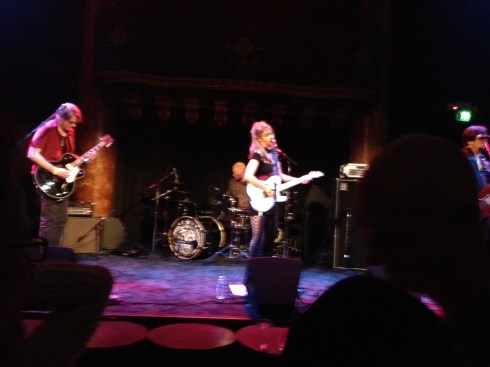
T5: So, what are you listening to these days?

Well, I listen to a whole bunch of different stuff and I listen to a lot of the stuff I’ve always loved like classic rock. Some of my favorites are the cure and Tori Amos, but some of the stuff that I’ve been listening to more recently . Over the past few years, I’ve started really liking this band called the Birthday Massacre. They’re kind of like a dark fairy tale kind of band. They’re a lot heavier than my music, but they still have some quite pretty, beautiful parts and the words are really kind of like a dark fairy tale. I love that and I really like a singer that a lot of people hate, Lana Del Ray.

T5: I think people love to hate her. I think the reason a lot of people hate her,is that they feel she is manufactured. I think people don’t complain as much about the music as about the fear that they’re being taken in.

I think if you listen to her body of music, it becomes really obvious that it couldn’t be manufactured. But you really have to listen to a lot of it. I think that if you just listen to one song here or there, some of the songs are not as good as others. I think that it’s just something you need to invest a little more time in to get what she’s trying to say Once you listen to a lot of her songs, you hear these similar things happening over and over that you can tell could only come from her, they couldn’t come from some guy in a suit somewhere in a record label. I think she really is an artist, but people don’t want to believe that for some reason. I know she can’t sing live very well, but I do think she is a great writer and writes great lyrics and melodies, Some people are just really great at one or two facets, and just don’t have the whole thing and I think that’s okay.

T5: I enjoy her music very much, but I can understand why people feel that she is manufactured because she is one image, and a very stereotypical image, one which has been done before and which has been known to sell. Do you feel that there is any image you embody? Because your music always seems to be very personal, but when you create is there someone you visualize saying these things.

I do just try to be very real and authentic and just say whatever is trying to come out. I think some people would say that is a strength and other people would say that it’s a weakness, because I really don’t have that instinct to brand myself and think “Oh, I’m going to dress like this and be this” because I really like a whole bunch of different fashions and imagery and different types of music and I’ve had problems with people on the business side of music because they do want you to kind of narrow yourself to one thing and that really leaves a bad taste in my mouth because that’s not me. So, I don’t really, I just kind of let it come out whoever it comes out, or I try to.

T5: So, as an extension of all of this, what are the next steps for you as an artist. We all love seeing you in these small halls, but everyone expects more from you because you have the talent to be on the same stage as say Tori Amos or Fiona Apple. Especially considering how weak Fiona Apple’s last album felt. So, this is still a small area, and we would like to see more and more people grow, so what are your plans over the next five or ten years.

So, I’m really hoping that the band’s going to get stronger and I’m hoping that we’re going to stay together for a long time and start creating new music together. We’re starting with that a little bit, but I’m hoping we’re going to start doing that a lot. I’m really hoping to put out a new album this year. My plan is that we’re going to do a Kickstarter because I wouldn’t be able to finance it on my own and also I never really actively pursued record deals, I kind of fell into then, but at this point, I think that I’d like to keep a record company out of it because I don’t really feel they help all that much. Especially my experience, because both my record deals ended because the companies went out of business and they didn’t treat me that decently.

So, to do the Kickstarter and could do well independently, I think that could be really awesome. That would be my first album since my first album that would be completely without any interference from record label people. So, it would be interesting to see what would happen with that.

T5: Do you have a name for that album?

I don’t have a name yet, but I do want to get it done before the year is over. We’ll see what the name ends up being.

T5: Can’t blame a guy for trying

And I’d love playing bigger venues like Great American and developing a bigger audience. My problem has always been that I’m kind of shy and I’m not a very aggressive person when it comes to the business side of things. I like to think I’m a friendly, nice person and I like to connect with the fans but I’m not really someone who aggressively pursues things maybe the way I should, but it doesn’t quite come natural to me and I think it’s kind of something about me that’s actually a good thing, but it’s kind of also a bad thing at the same time. Maybe with my band I can balance that out somehow.

T5: That’s where Kickstarter works very well for you, right? Because it gives you direct contact with your fans.

Definitely, yeah. So hopefully, maybe by Spring we’d like to start going through Kickstarter.

T5: Musically, are you aiming anywhere new with this album?

The band, all the members are going to bring their own feel to it. That will definitely color some of it. I want to bring some more electronic elements, but I still want it to be rooted in rock and roll and keep the organicness about it, but I would definitely like to add some more electronic influence on some of the tracks. Probably not all of it, but I’m not sure of a specific direction or theme. I think it would be leaning towards the same direction as Wicked Ways but maybe just a little bit more dynamic with some really big rocking parts and some really quiet pretty parts and maybe some more electronic mixed into it.

T5: Do you have any covers planned? You’ve had some really fun covers in the past, like It’s A Sin and interestingly Mama I’m Coming Home. How does it feel performing a cover as compared to your own song?

I love doing covers, I always have really loved doing covers. I think I’m a lot more relaxed with covers because I guess I have some deep-rooted insecurities, so with a cover I have all the faith that it’s a great song because someone else wrote it. So that frees me up a little maybe in the performance when it’s someone else’s song and I’m 100% sure it’s awesome.

T5: Over the past couple of days I’ve been addicted to a Freelance Whales cover of the Devo song Girl U Love. So, when Devo does it, it’s got a very inhuman feel, sort of as if it were robots laughing at human emotions and when The Freelance Whales do it, it’s very soppy and emotional. Do you feel when you take a song and cover it, do you feel that you add a lot of your own flavor to it?

A lot of times, yeah. I try to do that with most of my covers. Some of them are not that different from the original, but some of them, yeah. It’s A Sin, which is on Wicked Ways is an 80s dance song and its very uptempo and my version is very slow and dark. So, yeah I do like to do that, especially if I’m actually going to record it. I like to make it as different as possible and maybe bring out different qualities which are there, but not as obvious to the listener.

T5: Is there anything you would like to tell your audience here?

Well, my audience has kept me going. I’ve had a rough road and there have been times when I was really discouraged and felt really beaten up and didn’t think I could keep doing music, at least not as a full-time profession, because it is so hard. Even though I don’t have the biggest audience, they are very loyal and have given me constant positive feedback and kind, kind comments and really personal things that are amazing, things that I still can’t believe, “This song changed my life” or “This song helped me through my mother’s death”. Things like that. Those kinds of comments keep me going.

T5: Do you have a story like that that you would like to share?

Well, just the other day someone told me that the song Mermaids, their mom passed away and they said that song helped me get through her death and every time I hear it I think of her flying with the fairies and dancing with the mermaids. So, that really touched me, especially since that album is about my own brother’s death.

T5: I’m sure that felt very satisfying. That’s awesome.

Eminem: The Marshall Mathers LP

24 Feb

Only once in a while do we come across greatness, whether it is in the form of movies, art, literature or music. Greatness which doesn’t present itself to us in the form of a fluke, but sheer talent. Greatness which can be spoken about, even a hundred years after the particular event/form of art has been created. I’m going to talk about one such masterpiece that I was lucky enough to observe at its inception.

This particular art is none other than Eminem’s 2nd major label album- The Marshall Mathers LP. The album is one of the most aggressive and important music albums to release during a time when the frustrated, directionless and angry youth was trying desperately to find someone they could relate themselves to. A time when hypocrites and fakes were rampant in the music industry. This time was during the late 90’s & the year 2000.

Just when people got used to calling Britney Spears and The Backstreet Boys as the greatest artists of all time, Marshall Mathers aka Eminem aka Slim Shady stepped onto the scene.

Eminem changed the face of hip-hop & rap, particularly with his album, The Marshall Mathers LP, which came out on May 23, 2000. This album, apart from being extremely controversial, it eventually sold 10,598,000 copies, becoming one of the most commercially successful rap albums of all time. It has been ranked as one of the greatest hip hop albums of all time by Rolling Stone, Time, and XXL. It is also one of the only albums to be acclaimed by critics, as well as the mainstream-pop loving- audience. It influenced us all.

Every song on the album was a classic; even the skits were worth listening to. The album starts off with the satirical “Public Service Announcement 2000” where Eminem reminds us in under a minute that he doesn’t mind being sued over what he raps about. It smoothly merges into one of the most shocking diss songs – “Kill You”. Eminem aggressively takes shots at his ex-wife, Kim, the mainstream radio shows and yes, his own mother.

The next song on the album is the famous “Stan”, where Em talks about obsession from a deranged fan’s point of view. It is a brilliant song- right from Eminem’s solid storyline verses, to Dido’s haunting hook. After this song, we have a skit called “Paul”, where Eminem’s attorney, Paul Rosenberg seems dejected after listening to this album.

The next song is “Who Knew”. This is an extremely raw song, which reminds me of the songs on the Slim Shady LP, Eminem’s first mainstream album. Eminem is at his most honest and straightforward self in this song, where he questions parent’s upbringing of their children. For instance, pay close attention to the lines- “Told them that my tape taught them, to swear/ What about the makeup you allow your 12 year old daughter to wear?”

The end of this song marks the beginning of a skit called “Steve Berman”, where Steve gives Eminem a piece of his mind because he hates the album’s themes and he compares his album to Dr. Dre’s Chronic 2001 explaining why the latter was so successful. Next on the list is “The Way I Am” where Eminem reminds the world why he doesn’t give a f*** and warns us to leave him alone in peace. This is followed by “The Real Slim Shady” where Em tells us how despite millions of people imitating him, there will be only one Eminem.

The next song is “Remember Me” featuring RBX and Sticky Fingaz. All 3 rappers produce solid verses which soothe as much as they sting. This song has one of the best Dr. Dre beats in it. After this, “I’m Back” commences, which is one of the most aggressive songs Eminem has done, even without his trademark screaming. He reminds us that he is back with a vengeance and is here to stay. This sparks the next song which is “Marshall Mathers” where Em tells us that he’s just a normal human being like the rest of us, and how his fame & fortune paved way for even the most hostile people to embrace him.

Now, the next song is a skit called “Ken Kaniff”. I’d rather not give a description of what exactly happens in the skit, but it’s basically where Em makes fun of Shaggy 2 Dope & Violent Jay, two other artists who Em had a beef going on with for many years even after the album was out. The next song is “Drug Ballad”, where Em talks about the ill effects of drugs, in his own twisted, satirical way.

This is followed by “Amityville” which features ex-D-12 member, Bizarre. Eminem raps about how he’ll kill you if he’s pushed too far, especially in Detroit. Bizarre gives us one of the craziest verses in rap history. You better hear it to believe it. The next song is “Bitch Please” which has a star studded guest feature- Dr. Dre, Snoop Dogg, Nate Dogg, and Xzibit. All the artists show off their rapping skills, where as usual, Eminem outshines the rest.

The next song is the brutal “Kim” where Eminem kills his wife after catching her cheating with him. After this, Eminem gives us another hard hitting, vulgar song “Under The Influence” which features his group D-12, of which he’s a part.

The final song is “Criminal”, which, personally is one of my all time favourite Eminem songs. He is crazy, funny, brutal and serious at the same time. The song also includes a funny skit where he and Dr. Dre pull off a bank heist without getting caught.

So there you have it. I actually reviewed the entire album tracklist in the correct order without even looking at the album back-cover. Yes, such fans do exist, and there is a REASON why such fans exist. I hope whoever reads this gives this album a listen. Especially those who think rap & hip-hop is comprised of only people like Nicki Minaj, Soulja Boy etc.

– Faisal

The Strokes: “All the Time”

22 Feb

All the Time

In 2011, an impeccable ensemble of talented musicians contributed to a Strokes tribute album, entitled Stroked, to commemorate the ten year anniversary of Is This It?. Also in 2011, the Strokes released their fourth studio album. Wrap your head around that for a second: the Strokes elicited this voluntary, collective homage despite being a band that is young enough to add fresh material to its own discography. There are very few bands as iconic, as beloved, and as representative of a time and place in music history – while being fully functional – as the Strokes are. So how do you react when a vintage-yet-active band releases new music? Well, it depends on what kind of Strokes fan you are.

Type 1: The Uber Fan

Cooler than you'll ever be.

Cooler than you’ll ever be.

In 2001, the Strokes released an album that changed the face of music. Is This It? was and continues to be a flawless record, pushing thousands of kids into their garages to create bands that would never be as cool as Julian and the boys. But in a way, the very kids that played the Strokes’ debut all day every day made it rather difficult for the Strokes to move on as a band. Any deviation from ‘the quintessential Strokes sound’ was denounced; any song with more effort than ‘effortless’ was deplored.  Synths? Forget about it. (I’m looking at you, Angles.) “All the Time” is definitely no “Hard to Explain”, “Reptilia” or even “You Only Live Once”, but it has that undeniable, wholly inimitable Strokes vibe that’s sure to satisfy the most ardent of fans. In fact, it almost sounds like it could be wedged right into Is This It?, and that’s always a good thing.

Type 2: The Casual Fan

The Strokes perform on Ellen

If you didn’t spend the better part of your musically formative years analyzing every trough and peak of the Strokes’ debut, then you are going to like this song. Why? Because even if you’ve only heard a few of their songs, even on a bad day, even on a weak track, the Strokes are effortlessly cooler than anything you’re going to hear all day. On “All the Time” , the uber fan might think that the outro is too long, or that Julian’s voice isn’t crisp enough, or that the guitar solo lacks the sheen of the old days. All you’re going to notice, though, is how great this song is. Enjoy!

Type 3: The Non-Fan

Watch the following videos, and please let us know if you don’t convert to Type 2 or even Type 1.

/

/

/

… we could go on.

Five long years passed between their third and fourth albums; just over two years will transpire between the fourth and the fifth. “All the time that I need is never quite enough/ All the time that I have is all that’s necessary,” sings Julian on “All the Time”, and we couldn’t be happier about that. Long story short, drop whatever you’re doing and listen, because the Strokes have released a new track. “All the Time” is the first single from the Strokes’ fifth studio album Comedown Machine, releasing on March 26th, 2013. You can listen to the song (with lyrics!) here.