Steven Wilson – Live in New York City, 5th March 2016

9 Mar

Steven-Wilson-concerti-2016

The disappointment was palpable. The thousands that had filled up Manhattan’s historic Beacon Theater on a cold March evening were probably beginning to regret their decision. A crew member had just announced that Steven Wilson, the main attraction of the night was unwell. For the first time in his 20 years of touring, Wilson had lost his voice on the night of a concert.

When he did come out on the stage however, the applause was deafening. Perched up on the first row of the balcony, I could hardly contain my excitement. Needless to say, Wilson was a person whom I practically worshipped. Being a huge lover of progressive rock music myself, I have often felt my musical taste to be somewhat of an anachronism – displaced in time by a few decades. Consequently, it is difficult to find musicians these days who create progressive rock in the manner it was meant to be created. Amongst the few who do create such music however, Wilson stands out as a towering, trailblazing figure – his greatness in the genre comparable only to the thematic depth of his compositions; his multifaceted brilliance, matched only by the melancholic beauty of his lyrics.
steven-wilson-11

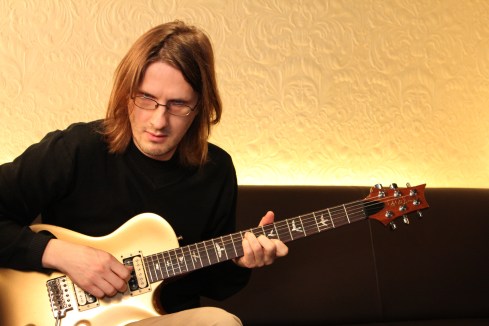
Despite his illness that night, Wilson made a statement of intent that the concert would be unique, but that his vocal contributions would be limited. He went on to confess that his music was depressing, and that the crowd would definitely have to be miserable to have paid to come and watch him that night. With that bit of wry humour he began the first of his two part set. The first part was essentially a complete live rendition of his album Hand. Cannot. Erase. He called upon his harmonic partner, the very talented Israeli singer Ninet Tayeb to fill in his parts as he himself fulfilled his guitar and synth duties. All the disappointment that had burdened the atmosphere in the theater vanished the moment Ninet delivered a flawless, breathtakingly powerful rendition of the title track. Screaming through the chorus at an octave above the usual, she dispelled all notions of mediocrity and quickly established herself in the adulation of the audience. She continued her class act – tackling pieces ranging in vocal difficulty – from the relatively easy Perfect Life to the rather complicated Ancestral. Steven himself took over the vocals for the less demanding songs (Home Invasion and Happy Returns) – choosing to alternate with Ninet on several occasions. The other members on the set were absolutely top notch- particularly the drummer, Craig Blundell, who, Steven revealed was only “slightly less sick than he was”. The brilliance of the instrumentalists stole the show particularly, during the drum and keyboard heavy pieces – Home Invasion and Routine #9.

The second part of the set comprised Wilson’s earlier work with Porcupine Tree, and some of his own. The lead guitarist, Dave Kilminster who had sung 3 Years Older in the previous set returned to the vocals for My Book of Regrets. Ninet delivered yet another mesmerizing piece – this time a Porcupine Tree classic – Don’t Hate Me, but her crowning achievement of the night came in the form of Sleep Together – which saw her unleash a stunning vocal duet with Wilson. Her voice reached heights of epic brilliance while the audience looked on in awe and wonder. It wouldn’t be too far from the truth if one were to contend that she effectively stole the limelight from Steven that evening. The other pieces in the set included Index and Vermillioncore – two of Wilson’s earlier works, both of which, much like the rest of the concert, had the Steven Wilson brand of eerie melancholia and pensive depression plastered all over.


The David Bowie tribute

The David Bowie tribute.

While the set officially closed with Sleep Together, the encore saw Wilson arrange a tribute to the late David Bowie – something that has become a running feature in his current North American tour. Ninet took to the vocals for one last time, while Wilson strummed along to the iconic space / psychedelic classic, Space Oddity. Needless to say, it was received with huge applause from the audience. For the last act of the night he requested the crowd to accompany him along for one of Porcupine Tree’s most loved numbers – The Sound of Muzak from the 2002 album In Absentia. The crowd acquiesced. The result was an absolutely thunderous recreation that left many a mark on many a mind that night. Wilson may not have sung a word in that song, but he had made his intent clear enough. Progressive rock is much more than singing the songs out loud. It has more to do with the state of mind, and the musical epiphany that results therefrom. And in that, Steven had absolutely nailed it, and driven home his point with a poise that belied his present indisposition.

29005e45-63a5-4e83-9fc4-2ef0c589336a


When one follows the meandering history of rock music in the 20th century, some names stand out more than others. This is not just owing to the oeuvre of work they created (though that certainly goes a long way) but also owing to the legacy they leave behind. Then there are the other names who didn’t quite make their effect felt in their time. Their music remained underground, only to be resuscitated much, much later by adoring audiences around the world. In spite of being largely eclipsed during their lifetimes, the influence they had in paving the path forward for rock music simply cannot be denied. Velvet Underground, and the enigmatic Lou Reed, for example, never achieved commercial success. But the legacy they left behind was monumental.

Broadly speaking, Steven Wilson has all the makings to be in the latter category. His music will never be considered “hip”. It will never hit the mainstream, nor will it ever feature high up on the Billboards. His voice will seldom be heard on popular radio. But even after years have passed –

after we’ve lost the skyline

we stepped right off the map

drifted into blank space

and let the clocks relapse,

… Steven Wilson will shine on like a star in the night sky. For his will be legacy that is timeless. A legacy that Nothing. Can. Erase.

words by Subhayan Mukerjee (@wrahool). Pictures by Karuna Ahuja.

Kanye West – The Life of Pablo

26 Feb

The_Life_of_Pablo_(Tidal_Front_Cover)

That The Life of Pablo is a masterpiece is immediately evident. There’s none of the difficulty of To Pimp A Butterfly or the earlier Yeezus here. This is approachable from the beautiful, gospel-like opening of “Ultralight Beam” to the end. There’s an attention to detail in all of Kanye’s albums that leads to quality that you just cannot find elsewhere.

This album sprawls pretty far though. Musically, it jumps from point to point incessantly and like MBDTF before it, the album features a wide supporting cast. Those artists are at their best here though. The Weeknd’s piece on the brutally emotional “FML” is the best hook of his career, the clarity of his voice plays beautifully against the breathless nature of Kanye’s rap and the menacing, sparse beat. Similarly, Frank Ocean’s closing verse in “Wolves” was exactly what that song needed to cap it. Even Ty Dollar $ign on “Real Friends” is excellent. His collaborators seem to have subsumed themselves for their songs. Even people as individual as Rihanna or Young Thug just appear as a part of the music and not the whole package that they normally provide.

This is why for an album as rambling as this one, there is a surprising consistency. Where Yeezus or 808s and Heartbreak were about single emotions, this is about the full spread of Kanye, and so this album can be difficult if you’re not so into him. You have him referencing the Kanye Fresh meme and talking about the old Kanye to being impossible to relate to when he takes needless shots at Amber Rose or chants the word “couches”. Both To Pimp A Butterfly and Beyonce were similar in how they forced a (possibly alien) viewpoint on their listeners and so can cause discomfort, but Kendrick and Beyonce are much better people than Kanye and that makes them easier to listen to. Neither of them really care if you agree with them, but they use that callousness for social progress, Kanye just uses it to be Kanye. This is how he can go from “I didn’t mean to instigate” on the heartfelt “Father Stretch My Hands Pt. 1” to the intentionally instigating Taylor Swift line of “Famous”, it’s just who he is.

He is also a musical genius though. The music is deep enough to always find something new and things work together in ways that I have never seen before. The Life of Pablo is a magnificent album and I highly recommend it.

@murthynikhil

John Coltrane and Johnny Hartman – John Coltrane and Johnny Hartman

11 Feb

41gYXgBUjxL

John Coltrane and Johnny Hartman is that rare jazz album that is not only a classic, but is very approachable as well. Johnny Hartman has a rich, warm voice that draws you close to the album and John Coltrane focuses completely on the sound, getting a perfect, luxurious tone throughout. Their interplay and that of their rhythm section is fantastic. Solos flow into each other effortlessly and the backing music sets a loose, fluid structure for the solos to work in. The music takes no effort to get into, but is nevertheless one of the great jazz vocal albums. This is essential for all fans of the genre and a great starting point for those who are not.

@murthynikhil

Hinds: Leave Me Alone

6 Feb

It’s ironic that Hinds released their debut album, Leave Me Alone, in the peak of winter: there couldn’t be a more carefree summer sound. The title is also ironic, because their songs are a tribute to the genuine joy of being young and free in the Spanish sun.

Hinds - Leave Me Alone

Hinds is an up-and-coming indie rock girl band from Madrid, consisting of dual singers Carlotta Cosials and Ana Perrote, bassist Ade Martin and drummer Amber Grimbergen. Their sound is characterized by a youthful vocal interplay between Cosials and Perrote, layered over delightfully unrefined guitars and bass. (It’s really more fun than it sounds.) Besides, the band has perfected the art of making videos that are essentially extended Vines: candid portraits that capture how fun it must be to hang out with these girls-next-door.

Perhaps the most noticeable element of the album is the fluidity of their DIY garage sound. It’s clear that they aren’t focusing on musical dexterity – their melodies are often picked one note at a time – but that’s what defines their rough-around-the-edges sound. Hinds makes it sound so easy that you’re left wondering if good indie rock is really that easy to make. (It’s not: you need to be that young). For example, “Chili Town” layers simple sounds of the summer over heavily-accented sing-song vocals about flirting with a hot guy. The video fits perfectly – the girls are seen hanging around their neighborhood, doing everyday activities like drinking orange juice, chugging vodka, smoking cigarettes and catching Cheetos in their mouths.

It’s also clear that the foursome – especially Cosials and Perrote – are very good friends. Their dual-vocal style works especially well on “Bamboo”, which features Cosials’ deeper, more emotive voice volleying against Perrote’s chirpy pop sound. The two girls’ strong friendship, which forms the core of the band, is evident on the video for their excellent cover of British garage band Thee Headcoatee’s 1992 hit, “Davey Crockett”. In it, Perrote sprays whipped cream into her mouth and joins Cosials to dance on a table, on a bright summer’s day. In a sense, that one scene defines the band.

In 12 short pop gems, the band has captured the cheery, lighthearted essence of youth without any typical millennial trappings. They are happy, but not self-consciously so. They are the girls next door, but they aren’t trying to be. And it is that sincere likability that powers Leave Me Alone and leaves us extremely excited about the band’s future.

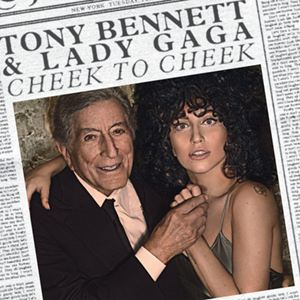
Tony Bennett & Lady Gaga: Cheek To Cheek

25 Jan

Tony_Bennett_and_Lady_Gaga_-_Cheek_to_Cheek

There’s a lot of promise in an album like this. The old American standards are often fantastic and the combination of an old stalwart like Tony Bennett and a pop star like Lady Gaga getting together to record an album of just these tunes seems like an excellent idea. It probably even is an excellent idea, but this is not the manifestation it deserves.

Cheek To Cheek manages to neither revitalize the standards with a modern outlook nor to recapture any of their past glory. Show tunes require confidence, personality and chemistry and while the first is present in spades, the other two are only ever briefly seen. The two trip over each other constantly and both alternate between hammy and formulaic. Listen to Ella Fitzgerald and Louis Armstrong’s version of the title track and you can hear a warmth and humanity entirely lacking in this album.

It’s not all lows though, the backing band does a very solid job. They lay down an upbeat, joyful jazz that is a pleasure to listen to. Also, both Lady Gaga and, surprisingly given his age, Tony Bennett are technically proficient throughout. Both of them still have great voices and are willing to draw upon them. Lady Gaga in particular has a wonderful solo in “Lush Life” that most singers, even renowned ones from the song’s own era, would struggle with.

All told, this is an acceptable album, but the standards are such for a reason and have all been played enough times to have versions that are undeniably classic. With this material, merely acceptable is just not enough.

@murthynikhil

David Bowie: Blackstar

18 Jan

Blackstar_album_cover

There’s a famous essay by Roland Barthes about separating an author from his work and on the futility of using the author’s identity to try to derive a single definitive meaning for a text. With Bowie, the persona was always a facet of the work, and an important one, but one that only furthered its enigma. Where some artists seem slaves to such direct analysis of their work, Bowie transcended it.

Bowie’s influence is everywhere, from the obvious trends in music and fashion to the art styles of movies, comics and video games, to even his direct influence in contemporary culture and mainstream acceptance of once-othered groups. Time and time again, Bowie pushed at the boundaries of what human culture had achieved. The world today is a far better place due to his work. His loss is tragic and heartbreaking, but his work and is influence are immortal.

Blackstar, his twenty-fifth and final album, is new territory even for him. This is a jazz album, not rock, and an excellent one at that. The music is challenging and more than deep enough to reward you for it. The variations laid down by his band are deep and interesting. The lyrics are cryptic, but highly evocative. The experience as a whole is direct and unsettling, but distinctly beautiful. His use of the form is deft and innovative, bringing in rock and spacey-electronica into a rich jazz foundation to create a work as claustrophobic as a dungeon and as difficult to escape.

His inversions of the form are fascinating. The sax solo of “Lazarus” centers the album. The slow, mournful chant of “I Can’t Give Everything Away” is cleverly undercut by the whimsical jazz strains underneath it and the guitar solo that provides much of the real variation in the song. The clear horn opening of “Dollar Days” shifts smoothly into a traditional rock ballad. This is an intelligent album and courageous enough to revel in it.

Excellent, challenging and novel, Blackstar is the swan song Bowie’s career deserves. I highly recommend it.

@murthynikhil

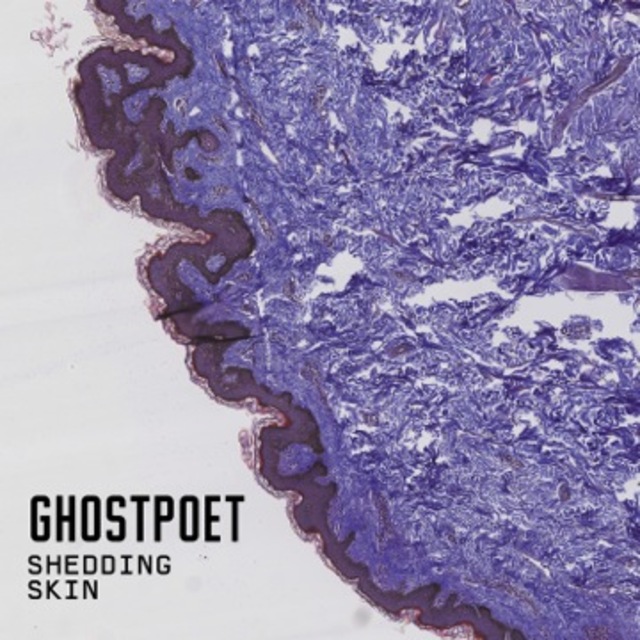
Ghostpoet: Shedding Skin

5 Jan

ghostpoet-shedding-skin

British underground rapper Ghostpoet has a sound that is distinctly his own. His rap has always been hazy and mumbled and very, very atmospheric. I loved Some Say I So I Say Light for that. His new album, Shedding Skin, is probably the only rap album to be closer to The National than to Jay-Z. Sadly, that’s not really a compliment.

While this is probably the most approachable of Ghostpoet’s albums, and his literate, urban middle-class rap is something very worth approaching, it is also the least varied of his albums. like the aforementioned National, the album is pleasant to listen to, but the alt-rock beats tend to bleed into themselves quickly. All of the songs feel the same. There are bright spots, notably the title track which could be out of one of the quieter parts of Hotline Miami and Ghostpoet’s trademark ennui is delightful in points. Only he would run a chorus of “It’s just you’re forgettable / I think that’s the issue, babe.”

If you’re new to Ghostpoet and new to alternate rap, I would recommend this as a stepping stone to the rest of this interesting little corner, but for everyone else this album might just be too forgettable.

@murthynikhil

The Top Five Albums of 2015: Nikhil’s List

1 Jan

2015 has been a good year. A lot of very good music has made it on to this list and lot more didn’t make it. One particular album killed everything else, as was expected, but we’ve had a lot of pleasant surprises as well. For instance:

5. Carrie and Lowell

Sufjan_Stevens_-_Carrie_&_Lowell

Given that this album is named after Sufjan Stevens’ mother and stepfather, it is no surprise that it is a deeply personal record. However, it handles its confessions with a deftness and tenderness that most could not manage. It frames its tales of depression, self-abuse, dissatisfaction and, for a brief moment in “Should Have Known Better”, happiness in gossamer threads of music to give the album a gentle, exploratory feel. This album slips ever so softly through the skin and straight to the heart. Carrie & Lowell distills a personal loss and acceptance and makes it a part of you.

4. Surf

Surf_(Donnie_Trumpet_cover)

Hip-hop can actually be this fun. Chance the Rapper is nothing short of jubilant throughout. Chanting “I Don’t Wanna Be Cool” is freeing in the way that Kanye’s “Can’t Tell Me Nothing” is, but so much bouncier. The jazz solos are not the most engrossing and the album lacks a little punch, but all is forgiven when things are this upbeat. Surf puts a smile on your face and keeps it there as long as the album is playing.

3. No Cities To Love

No_Cities_to_Love_cover

No Cities To Love is rock and roll. Anthemic, full of fight and always ready to go, this is music that burns away the mediocrity you didn’t realize you were tolerating. Primal but intelligent, raw but proficient, No Cities To Love is punk rock at its best.

2. The Epic

Kamasi Mike

This is 2015, we should not get a new Coltrane-era jazz album. That we did and that it is this good is unreal. At three hours, the album justifies the name handily. It draws from all across the jazz spectrum, picking up pieces of Miles, the fusion of Weather Report and even touches of Latin Jazz and gives each pieces its due before melding the whole into something entirely its own. This would be nothing without the passion and virtuosity of the band. Not a note falls out of place or lacks in energy. There have been enough jazz greats to make the term “classic” a high bar, but for an album of this caliber, nothing else will suffice.

1. To Pimp A Butterfly

Kendrick_Lamar_-_To_Pimp_a_Butterfly

It took me something like a week when To Pimp A Butterfly came out to actually figure out if I liked it or not. As it turns out, I really did. good kid, m.A.A.d city was much more straightforward, you can see the brilliance in it immediately. To Pimp A Butterfly has singles, “King Kunta” will make you move, with or without your consent, and both “i” and “The Blacker The Berry” are the work of a craftsman at his peak, but “For Free” is almost spoken word poetry. I’ll accept that from Gil-Scott Heron, but it mystified me from Kendrick Lamar. Similarly, the funkiness of the album came out of nowhere and the lyrical content has no precedent.

Listening to it now, it’s hard to believe that there was ever a moment where I didn’t like it. It’s a struggle now to find what I once found questionable. The album justfits together so well. Ideas, both musical and lyrical, are layered deeply into this album and yet it flows seamlessly between them. The album manages to encompass contradictions like the self-castigating ‘u’ and the upbeat ‘i’ without blinking an eye. Similarly, the album holds the full musical spread of the near-funk of “Hood Politics” to the hip-hop clinic of “King Kunta”. At this point, there really is nothing that Kendrick Lamar cannot do.

I thought three years ago that good kid, m.A.A.d city was Kendrick at the top of the game and I thought the same when he dropped “Control”. I’m not going to make that claim after To Pimp A Butterfly, it’s clear that Kendrick is going to take us further still and I can’t wait to see where he goes. This is the greatest rapper of his generation and he has just gotten started.

@murthynikhil

The Top Five Albums of 2015: Neeharika’s List

31 Dec

2015 has been a great year for music, particularly for solo artists. Adele released 25, a follow-up album to her groundbreaking age-denoted 19 and 21 that immediately rose to the top of charts and minds. Attention-grabbing British superstars aside, the underground scene saw the meteoric rise of gender-fluid pop stars, solo ventures of established bands, and a general proliferation of great individual-driven acts. So without further ado, here are the Top Five albums that caught our attention this year.

  1. Multi-Love, Unknown Mortal Orchestra

5

The Auckland-Portland collective, driven by singer-songwriter Ruben Nielson, has been a critic favorite since the release of their self-titled debut album in 2011. In early 2015, the band released Multi-Love, an album that defies the psychedelia genre by incorporating minimalist versions of vintage pop elements. For example, the eponymous track is a shimmery mix of Lonerism-era Tame Impala and your favorite Scandinavian pop from the 80s. On “Can’t Keep Checking My Phone”, a slinky horns section segues into a syncopated interpretation of a disco-heyday track.

In fact, both tracks highlight the stylistic theme that pervades the entire album: the fact that Nielson has a damned good ear for understanding how to turn a musical trope inside out. Take “The World is Crowded”: it’s counter-intuitive that the song could be that sonically pleasing when it has so much potential to be sped-up and jazzed-up into, say, a Maroon 5 hit. But Nielson makes it work, and with great confidence. The same with “Puzzles”: there’s enough snaking bass on there to pique Josh Homme’s interest, but Nielson tames the beast with his chosen pace.

Overall, Multi-Love starts off as a fresh take on psych-pop and ends as a stand-alone great album. Guaranteed to stay with you a few years.

Best track: “Can’t Keep Checking My Phone”

  1. Art Angels, Grimes

4

Grimes shot to the top of the charts in 2011 with her absurd, literate brand of synth pop. The music video of her viral hit, “Genesis”, was inspired by a Judgment Day painting drawn by a 15th-century Dutch religious painter, and she considers Hustler Magazine CFO’s daughter Brooke Candy as her personal muse. Her idiosyncrasies may paint her as purely an art-pop phenomena, but with Art Angels, Grimes successfully crosses over into pop that can be enjoyed by all, no matter personal dispositions towards abstract art.

What surprised us on first listen is the fact that almost every track on the album could be a bonafide pop hit, if only exaggerated with a few mainstream flourishes. However, Grimes’ eccentric touches – whether it’s the vocal trills on “Flesh without Blood” or the K-pop-inspired AutoTune on “Kill V. Maim” – elevate the album much beyond its mainstream confines.

Art Angels really rises above the bar set by Visions because of the sheer number of new landscapes that Grimes has explored. “Venus Fly”, featuring the inimitable Janelle Monae, has a bomb-ass beat that could be the soundtrack to an advert by an impossibly-cool fast-fashion brand. If “California” came on the radio, you would be sure that it was a remixed version of a Taylor Swift-outtake from her country-darling days. Essentially, Grimes has managed to surprise us by being, well, normal.

Art Angels sees Grimes evolve from a wildfire underground act to a unique pop star that is okay with taking a wider audience into her fold. And that’s definitely a good thing.

Best track: “Venus Fly”

  1. Ratchet, Shamir

11183_JKT

Shamir and his home-town, Las Vegas, have one key aspect in common: they defy normality. Vegas is the world’s playground, a campy, adult-sized amusement park with rides that revolve around desperation and addiction. On Ratchet, Shamir defies age, gender, orientation and our expectations by creating ten tracks that succinctly sum up his generation.

“Vegas”, the album opener, is an ode to this very connection. With an androgynous voice as fluid as his gender, Shamir gives us an insider’s view into life in Sin City (“You can come to the city of sin and get away without bail/But if you’re living in the city oh you already in hell”) over a sparse beat that bubbles and pops. Vegas is the spiritual backbone of many of his sparkly dancefloor tracks, as well. For example, “Hot Mess”, with surreal Hot Chip-esque beats slathered against an acid house bass, hides anguish behind hypnotic Technicolor, much like Las Vegas does.

Shamir also stands out as the best representation of his post-millennial generation, a group that has never known life without the endless possibilities facilitated by the Internet. On “Make a Scene”, a dizzying ode to poor teenage decisions, Shamir exhorts you to kiss strangers in lust-fuelled nights while simultaneously thumbing his nose at superficial Tinder culture. He expands on this theme on “On the Regular” – “Don’t try me, I’m not a free sample”, he chides, atop a dazzling mash-up of boasts reminiscent of Le1f and Azalea Banks. It’s only fitting that the song has been used for Android Wear commercials!

With Ratchet, Shamir has proven that he has a future as bright as his hometown’s glittering Strip. Expect more from this guy, for sure.

Best track: “On the Regular”

  1. In Colour, Jamie xx

2

Jamie xx, one-half of Britain’s foremost minimalist act the xx, is a master of repition. He knows how to balance a layer, carefully and precisely, until the track becomes a chaotic, living beast – like a Jenga tower in reverse.

While the xx is mainly known for breathy vocals over sparse beats, In Colours shows off the range of Jamie xx’s textural arsenal. Jungle beats form the perfect, if unlikely, minimalist element on “Gosh”, which reels you in with chant-like thumps that belie a melody forming right in front of your ears. On “SeeSaw”, a trip-hop pulse creates the perfect anti-thesis to xx bandmate Romy Croft’s signature dreampop vocals. “Obvs” is a four-minute electronic paean to the steelpan; it’s even more magical than it sounds.

The album-standout “I Know There’s Gonna Be (Good Times)” just serves to prove Jamie’s hypnotic dexterity. Although the song features Young Thug spitting lyrics that would make Lil Wayne blush, and wonky dancehall beats from Popcaan, the genius lies in Jamie’s skill in synthesizing these elements into a summer-time radio hit.

On In Colour, Jamie xx displays layering wizardry that hasn’t been seen since this side of Merriweather Post Pavilion. A musical roller coaster, if there ever was one.

Best track: “I Know There’s Gonna Be (Good Times)”

  1. Currents, Tame Impala

1

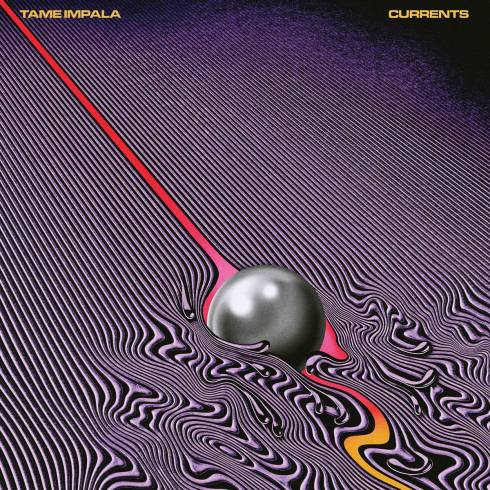
If you’ve been reading our articles for a while, you know that we’re great fans of Tame Impala. The Perth pysch phenomenon’s Lonerism earned numerous mentions on our articles throughout 2012 and eventually topped our year-end list. It’s déjà vu, then: Currents is, in our honest opinion, the best album of the year.

Over the three years since Lonerism, Kevin Parker – the one-man army behind Tame Impala – has grown considerably. His words have sharpened, his beats are more full-bodied and his anguish is far more complex. While previous records allowed us not-so-fleeting glimpses into his brooding mania, Currents shows him alternatively trying to let go more and hold on tighter – a fascinating combination that leaves you hooked from start to end.

Nowhere is this more apparent than on the haunting album-opener “Let It Happen”. Parker speaks of a voice telling him to let his paranoia go, but undercuts his would-be catharsis with gloom that chills you to your bones: “If my takeoff fails, make up some other story/And if I never come back, tell my mother I’m sorry.” It’s a train-wreck, slowed down to a speed that underscores the stark beauty in destruction.

He shows progress, though. On “Cause I’m A Man”, he accepts his faults as the man in the relationship, slicing away at self-hate by handing over the reins to his woman (“You see, I have a conscience and it’s never fooled/ But it’s prone to be overruled”). “Eventually” sparkles with liberation, after a break-up that would have left erstwhile-Parker in a death spiral (“But I know that I’ll be happier/And I know you will too”). It’s an interesting turn of events.

Currents lies at the exact sweet spot of lyrical genius and musical innovation, alongside its two predecessors. It’s also perfectly-named: Kevin Parker is changing as a person, and his music circles him like an eddy in a flowing stream. Aptly, Currents will change your life – if you just let it happen.

Best track: “Let It Happen”

Kamasi Washington: The Epic

27 Dec

Kamasi Mike

I’m just so happy that this album exists. A jazz album in 2015 that is so deeply in love with the post-bebop era of jazz is an unexpected treat. Getting one of this quality just seems unfair.

Above everything else, Kamasi Washington plays a mean sax. Listen to just how impassioned “Final Thought” is and you could be forgiven for thinking that you were back in one of the peak eras of jazz. Similarly, “Change of the Guard” evokes Coltrane with his classic quartet. This is no throwback album though. Ideas enter it from all over the place, both within the history of jazz and without. This is an epic of an album at just under 3 hours and it makes good use of all of it.

It is at its best when it relaxes into hard bop though. The rhythm section lays down backing that manages to be intricate without overpowering the rest of the sound and their solos are fantastic. The bass solo on “The Magnificent 7” and the piano on “Leroy and Lanisha” are both excellent, skillfully setting a refrain and moving everywhere in the space they contain. Similarly, the dueling horns of the energetic “Re Run Home” dance around a central conceit in the greatest of jazz traditions.

From its first moment to its final one some three hours later, The Epic is very simply a jazz classic. I highly recommend it.

@murthynikhil