Archive | International RSS feed for this section

Kendrick Lamar – DAMN

26 May

At this point, it almost feels like a foregone conclusion that a new Kendrick album will be Album of the Year. The only real question is whether it is another classic. Personally, I don’t think DAMN is quite that strong. Kendrick Lamar has set an impossibly high bar for himself, and I think this is the album that finally fails to hurdle it. I’d be shocked if it there’s another album this year to touch it though.

There are so many strong parts to this album. I love the flow and the submerged beat of “FEEL.” “LOYALTY.” features an excellent Rihanna. The more rap that we get from her, the happier I will be. “FEAR.” is genuine in a way most confessionals aren’t. It’s eye-opening to hear Kendrick’s mother on the verse and to hear him speak about still being worried about money. His storytelling is still the best in the game. Also, these videos are the best of his career. TDE is doing really amazing work right now.

However, there are just more weak points to this album than to its predecessors. “YAH” is honestly weak, despite giving us the excellent nickname of Kung Fu Kenny and while the harmonizing of “LOVE” is interesting, it’s just not that good a song. Every Kendrick album has weak points, but this is the first one that seems to lack a purpose and so these faults feel exaggerrated. GKMC was his breakout and TPAB was breathlessly innovative but DAMN just doesn’t seem to have as strong a raison d’etre and so can’t help but feel a lesser album.

This is still a great album. This will almost certainly be Album of the Year. This is something you should listen to right now. Even if you’ve already had it on repeat all year, you should listen to it again. This is not quite a masterpiece, but is still close enough to deserve reverence. It’s a bold and innovating album that showcases a top-tier rapper at the top of his game. I highly recommend it.

@murthynikhil

Vagabon – Infinite Worlds

8 Apr

41pj30A5nnL._SS500.jpeg

Infinite Worlds is the beauty of minimalism. Almost every sound and word has purpose. It makes a wonderfully succinct argument for the value of brevity.

“Cleaning House”, for instance, uses a simple background to allow Laetitia Tamko’s voice to really shine. She draws out notes perfectly and the quiet periods of the song do a lot to emphasize this skill. Similarly, her vocalizing in “Cold Apartment” just sucks you in. Unfortunately, I feel that this focus on sound was taken too far on “Mal a Laise”. It’s just a little too long and a little too repetitive, but that’s really the only fault I could find with the album.

Albums like this are the reason to listen to indie rock. I highly recommend you try it.

@murthynikhil

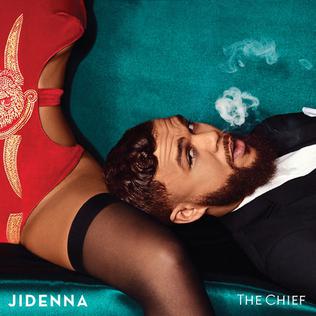
Jidenna – The Chief

22 Mar

Thecheifjidenna.jpeg

Jidenna’s chief gimmick of dressing up makes it tempting to write him off as a one-hit wonder, but that would be unfair. He’s had at least two. Unfortunately, that’s not enough to carry a full album.

He gets points for variety, but not many for imagination. There are some interesting snippets, like learning that he refused Harvard, some decent stunting, and some clever lines, but nothing really compelling anywhere.

As a whole, The Chief is just not really worth a listen. I look forward to hearing Jidenna drop a verse on the occasional Kendrick or Janelle Monae track, but that is probably the most we should hope for from him.

@murthynikhil

The Top Five Albums of 2016

1 Jan

2016 has not been a kind year for musicians. We lost many greats this year, starting with David Bowie in January, to Prince in April, to the double-whammy of Leonard Cohen in November and George Michael on Christmas Day. However, a year that has seen the death of so many singer-songwriters has also been a year that has let loose some of the greatest solo music in recent years: a silver lining, if any. Without further ado, we present below our top five albums of the year.

5. Sept. 5th: dvsn

dvsn.jpg

dvsn have been shrouded in mystery from the start. When the band first signed on to Drake’s OVO Sound record label, it wasn’t even revealed who the singer was. Since then, they’ve lifted the shroud a little – the voice belongs to Daniel Daley and the beats and words belong to Nineteen85 (real name Anthony Paul Jefferies). The mysterious nature suits them, creating an allure that perfectly compliments their sparse, lusty R&B.

And lusty it is. Sept. 5th is essentially about doing the deed with your significant other. Popular music is rife with this topic, but dvsn takes a very respectful approach to the subject matter. “In + Out” (yep, it’s exactly about what you’re thinking it’s about) refers to the partner’s body in royal terms: thrones, highnesses and crowns. On “With Me”, Daley respectfully asks his partner to come over to quench his lust.And on the titular track, Daley knows he messed up and pleads to make it up through – yep, you guessed it – sex.

Beyond the tone of their lyrics, dvsn really excel at creating music that’s sparse and dense at the same time. On “Too Deep”, Nineteen85 layers subtle handclaps, funk sounds, downtempo beats and Daley’s lusty croon, with enough space to co-exist and build off of each other. “Hallucinations” also features just a handful of sounds, but there’s also immense gravity in the negative space – in what isn’t said or heard. It’s almost like dvsn have taken a leaf out of the xx’s book.

Sept. 5th is a highly enjoyable R&B album from a mysterious and highly talented duo. We’re definitely looking forward to hearing more from them.

Best tracks: “With Me”, “Too Deep”

4. Blonde: Frank Ocean

blonde

Frank Ocean’s efforts to release Blonde are nothing short of a drama. The story begins in 2009, when the soft-natured, velvet-voiced Ocean – then inexplicably part of the violent rap crew Odd Future – signed with Def Jam Records. In 2011, Ocean released his critically-acclaimed mix-tape, Nostalgia, Ultra. Although its follow-up album Channel Orange was well-received, it was not comparable to the quality and cult following of Nostalgia.

Ocean seemed to have lost his mojo for a couple of years after Channel Orange, although rumors of a follow-up have been surfacing since 2014. Finally, on August 18th and 19th of this year, Ocean streamed a visual album called Endless, effectively completing his recording contract with Def Jam. The very next day – August 20th, 2016 – free of a record label’s controlling hand, he released his real offering: Blonde.

“Smoking good, rolling solo / Solo, solo” incites Ocean on “Solo”, yet another example of the endless battle between creative artists and corporate labels. The freedom suits him, though.

Blonde on the whole is more mellow and meditative than his previous two offerings. Moreover, although Channel Orange and Nostalgia had gospel tinges, Blonde is drenched in them. Nowhere is it more apparent than on “White Ferrari”, a dreamy R&B classic with psychedelic nods to the Beatles. The serenity of the white car offers a nice contrast to the orange Lamb on his mixtape, providing a clue into the singer’s growth since those days. “Sweet 16, how was I supposed to know anything?” he incites, perhaps speaking of the fame that was to follow Nostalgia.

On Blonde, Ocean uses minimalist, introspective music to frame his chocolate-smooth voice and troubled thoughts. Great for rainy, moody evenings.

Best tracks: “Nikes”, “White Ferrari”, “Close to You”

3. “Awaken, My Love!”: Childish Gambino

awaken_my_love

Donald Glover challenges the very idea of a triple-threat, a term usually reserved for singer-dancer-actors like Justin Timberlake and Jennifer Lopez. Glover, however, spreads his creative talents far further. He got his first break as a writer for Tina Fey on the legendary “30 Rock”. After whittling his comedic talents behind the scenes, Glover moved to the other side as Troy on the equally-legendary show “Community”. As if that weren’t enough, Glover released a critically-acclaimed album, Camp, in 2011. Whatever the Donald does, he does it to perfection (well, this Donald at least).

It seemed for a while that Glover would continue in a mildly-hipster route in music, as he did with writing and television. After Camp (and in between his myriad other creative commitments), Glover released Because the Internet, a Grammy-nominated ode to the World Wide Web – fitting of the world that Troy and his friends resides in. And thus it comes as a true surprise that “Awaken, My Love!” is, at its core, a thoroughly accessible album.

The creative impetus behind the album seems to be the recent birth of Glover’s first child, with a woman that the world knows next to nothing about. The baby seems to have mellowed out Glover, replacing the smug references with feelings and emotions. The deliberate and intense “Me and Your Mama” is a weed-infused love song for his baby mama, sung with the same passion that created his baby boy (“Girl you really got a hold on me / so this isn’t just puppy love”). At the same time, he seems to understand that his days with the baby mama are limited. On “Baby Boy”, Glover speaks alternately to his baby and to his baby mama.  (“I’ve never lied about us / we were never supposed to be together”), but expresses permanent, unconditional love for his child.

Apart from songs written for his baby, the other key notable theme on this album is Glover’s formidable tribute to old-school funk. On album stand-out “Redbone”, plucked staccato notes support Glover’s surprisingly adept falsetto. His lyrics, too, are top-notch. Redbone is slang for someone with mixed African, Creole and Native American ancestry, characterized by the reddish undertones in their skin. Glover calls his redbone woman a “peanut butter chocolate cake with Kool-Aid”: metaphorical, funnily accessible and sweet at the same time. “Boogieman” is a perfectly-named double-entendre: a musical homage to the Boogie but a lyrical homage to the Bogeyman.

Overall, “Awaken, My Love!” is a great new direction for Donald Glover the Musician. Glover’s other personas are doing incredibly well – he’s slated to star in a new Star Wars movie and play a part in the new Spiderman movie – so let’s hope he can still spend some time on his music. Because we love what we’re hearing.

Best tracks: “Redbone”, “Me and Your Mama”

2. Lemonade: Beyoncé

lemonade

Unless you’ve been living under a rock for the past couple of years, you’ve heard of the elevator incident. In May 2014 at the Met Ball, Beyonce’s sister Solange physically assaulted Jay-Z with almost inexplicable rage. Few things seemed to explain the intensity of her rage, but the most plausible explanation was that Jay had cheated on her sister.

Beyonce and Jay-Z largely kept mum about the elevator incident. All seemed well in the household of the second-most powerful black couple on the planet (at least by omission). On April 23, 2016 – days shy of the two-year anniversary of the elevator incident – Beyonce broke her silence with a record heard around the world. Lemonade was born.

Accompanied by an HBO film of the same name, the visual album is an exploration of Beyonce and Jay-Z’s extremely high-profile and lucrative relationship. It’s unclear whether the album is a state-of-the-nation report or an “inspired-by-real-life” relationship drama. Whichever it is, Lemonade has got us hooked from start to finish.

The album starts off with a two-level prayer: Beyonce prays she can peep into Jay’s cheating world, and also prays that Jay understands that she knows he’s cheating. The first half of the album fleshes out these ideas. On “Hold Up”, she warns Jay that she’s the best he’s going to get – braggodocio and a plea at the same time. On “Don’t Hurt Yourself” and “Sorry”, the braggodocio takes over. In the former song (which features Jack White), Beyonce sneers at Jay as a weak man who had to cheat and in the latter, she goes full Queen Bey (“Middle fingers up, put them hands high / Wave it in his face, tell him, boy, bye”).

After the rage and fury of finding out about a cheating husband, Beyonce comes back to her family-centered values on the second half of Lemonade. On “Sandcastles”, she is willing to break her promise to leave him. “All Night” is a cease-fire: Beyonce has come to terms with Jay-Z and is willing to take him back, because she knows their love is deeper than that.

Lemonade is an exceptionally well-produced concept album that articulates complex feelings like few pop albums have. Its hooks are irresistible, and its lyrics are well-crafted. Clearly, Lemonade is what Beyonce made after life gave her lemons.

Best tracks: “Hold Up”, “Sorry”, “Formation”

1. The Life of Pablo: Kanye West
the_life_of_pablo_alternate

In popular culture today, Kanye West is many things. First, he is a famed rapper, producing beats and albums that are way ahead of the rap game at the time. Second, he is the husband of the woman who is by far the most famous in the entire glittering category of women who are famous for being famous. Third, he is a budding designer, whose shoes and clothes capture the fine line between madness and genius: a line that is basically his home address.

In short, Kanye West is famous. Really famous.

Where does all that fame land him?

It lands him in bed (literally) with a host of other really famous people: Kim Kardashian, Taylor Swift, and Donald Trump to name a few. These are the world’s foremost leaders at running the hype and fame game. (See: 2016 presidential elections.)

It gives him a fascination with several incarnations of Paul. Pablo Escobar, famed druglord with an alter-ego as a Robin Hood for Colombia’s poor. Paul the Apostle, carrying forth Jesus’ words and, in essence, his fame.

It provides him a deep, undying love for the thing that matters most: family. Even if that family includes a woman whose claim to fame is a sex tape with another black man. Kanye loves Kim and Nori and baby Saint very, very much – no matter what the naysayers may say.

It also shows him the underbelly of fame: cousins stealing laptops as ransom, acquaintances fronting as friends, friends fronting as real friends.

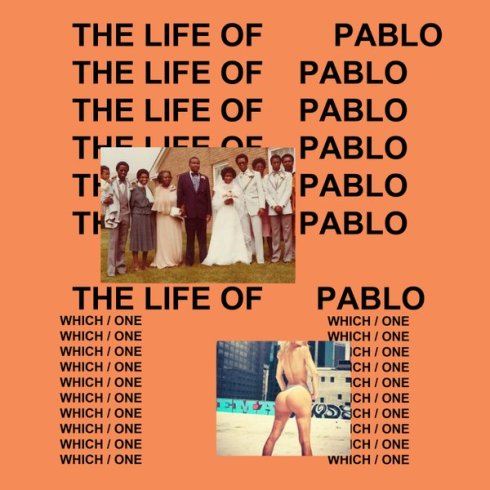
Life of Pablo is about all of these things. It is a greatly stripped-down album compared to the flamboyance of his previous albums. Much like Childish Gambino, Yeezy has been changed by the birth of his children. But in essence, Life of Pablo is a highly accurate painting of Kanye West as he is right now. It’s a masterpiece, as always.

Best tracks: “Famous”, “Real Friends”, “No More Parties in LA”

Joey Alexander – Countdown

1 Dec

Joey Alexander’s second album continues the clean, proficient jazz that defined his previous one. The piano sparkles in tracks like “Smile” or “Sunday Waltz” with a sound that feels simple, but perfect. This holds true for “Soul Dreamer” where every note is individual and the music takes on a wonderful clarity. Even in the up-tempo “City Lights” and “Countdown”, the pace increases and the music constantly moves, but the sharpness of the notes keep you moving with it. This version of Herbie Hancock’s “Maiden Voyage” is also fantastic with superb work on the saxophone by Chris Potter.

This album lacks a little of the fire of the true jazz classics, but that’s really the only criticism that can be made of it. This is a fantastic album and worth a listen from anyone keeping up with present-day jazz. Joey Alexander is an incredibly promising young talent, and I can’t wait to see what he does next.

@murthynikhil

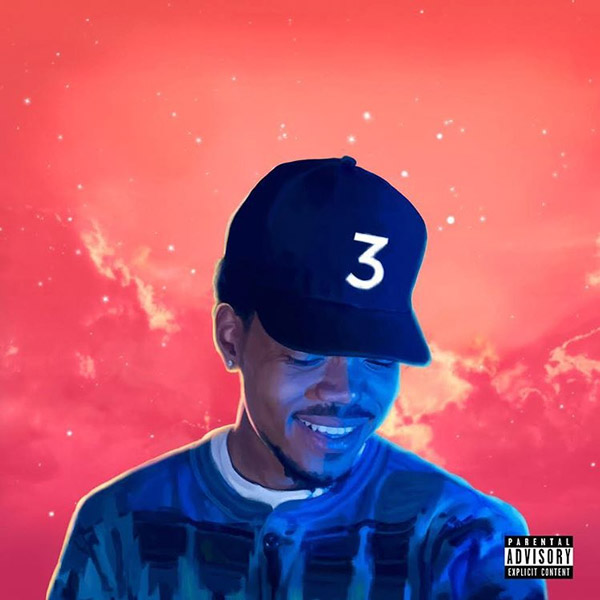
Chance The Rapper – Coloring Book

10 Sep

chance_3

This is the album that moves Chance from outsider to establishment for me. He’s been doing well for himself, from opening Kanye’s The Life Of Pablo to being the centerpiece of 2015’s Surf and that’s great to see. His raps are so sincere and so joyful that he’s impossible to hate. He’s just a lot of fun to listen to.

Coloring Book takes all of him, adds a number of star collaborators and a ton of gospel and blends it together into an undeniably excellent album. He goes from running his verses with a laid-back Weezy verse over an upbeat vocal backing in “No Problem” to posturing with Thugger and Lil Yachty on “Mixtape” to heartfelt in the slower “Juke Jam” and highly personal tale of growing apart “Same Drugs.” Despite some more forgettable cuts to fill the album out, this is one of the best rap albums of the year and definitely worth a listen.

@murthynikhil

Guns N’ Roses – “Not in this lifetime” – live at East Rutherford, 23rd August, 2016

27 Aug

Fewer band-break-ups had broken more hearts around the world than Guns N’ Roses’ infamous split back in 1996. It wasn’t surprising when it happened. There was no denying that back in the day, they were the most combustible band in the world – a boiling concoction of rag-tag junkies, contraband substances, and one massive ego, barely held together by a brand of music that was almost as lethal and explosive as they were themselves.

The split was therefore completely understandable. The fact that Axl Rose and Slash, arguably the most iconic on-stage pairing of the time would never be seen on the same stage again, caused many a tear to be shed. The story of Gn’R became this almost poetic narrative of the life of a rock n roll band that had risen from anonymity, exploded on to the global stage as an almost overnight success, and then imploded as spectacularly within a very short span of time. Of course, the name Gn’R would continue to live on, and Axl would continue to perform with his new band members till as late as 2011 – but for all practical purposes, the real Guns N’ Roses – would be history. Given the bitterness of the split, and the rancor that existed between Axl and the rest, a reunion seemed impossible.

Fast forward 2015. Rumours of an improbable reunion of the classic Guns N’ Roses had begun doing the rounds on social media. Towards the end of 2015, the official Guns N’ Roses website verified the rumours, and teased a historic “Not in a lifetime tour”. The entire classic line-up wouldn’t be involved: but Axl and Slash would be. What more, they’d be joined by the original bassist, Duff McKagan, and keyboardist Dizzy Reed (who had stuck by Axl for the entire duration of the split). If everything went according to plan, this would possibly be the greatest, most historic reunion in music history ever. An LA based marketing expert even predicted, “… the band only need to do a year on the road and would never have to worry about money again in their lives.”

573C9D1D-guns-n-roses-invite-lenny-kravitz-to-join-not-in-this-lifetime-tour-will-support-on-select-dates-image

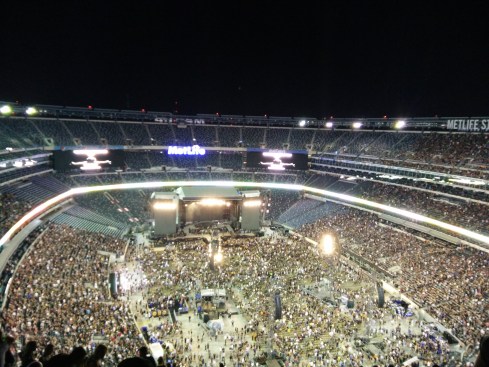
Thus when the tour did get underway, it was fitting that Top Five Records would be there to attend one of the concerts. Thus, on a warmish summer evening in New Jersey, I found myself perched atop a seat in the massive MetLife Stadium – a stadium of a size that truly reflected the immensity of the act that was about to unfold.

The opening artist of the night, Lenny Kravitz got the music underway with his brand of R&B and soul, and played out an entertaining one hour set. But it wasn’t going to be until late in the night that the crowd would get a glimpse of those who they had really come to see. It started out with a recorded version of the Looney Tunes theme (that has become a staple in this tour), and then yet another recorded track – Harry Gregson-Williams’ The Equalizer, which eventually transitioned into the first song on their set-list – It’s So Easy – as the crew exploded on the stage in a dramatic manner. The collective cheer that erupted around the stadium was quite unlike any audience I had heard in my life. These were people – almost rabid fans – who had waited for two decades to see one of the most iconic groups perform live, and here they were being treated to just that.

The set list that followed would have left no fan unsatisfied. In all fairness, their discography isn’t really massive – just the four “classic” albums – that had catapulted them up billboards around the world, and then a fifth in 2007. And the concert was thus, nothing short of a tour-de-force, that explored their entire oeuvre right from their legendary debut Appetite For Destruction, through the epic double Use Your Illusion, a smattering of covers, and some select numbers from Chinese Democracy.

The 80000 capacity MetLife stadium

The 80000 capacity MetLife stadium

It’s So Easy was followed by one of their more groovier songs – Mr Brownstone. The title track from Chinese Democracy came next, and then they embarked on one of their biggest hits Welcome To The Jungle, the same song that had announced their arrival to the world back in 1987. The moment when Axl screamed “Do you know where the f*** you are? You’re in a jungle baby. Time to die!” will perhaps live on in my memory for the rest of my life. That, followed by Slash’s instantly recognizable riffs set the stage for what would be one of the greatest performances that evening. Axl dispelled all doubts about his vocal prowess that some fans might have harboured, given his age. His voice reached the same raspy zeniths as it did plummet the lowest of depths with great aplomb. Coupled with his electrifying on-stage presence it not just a memorable act, but one that also felt visceral. Slash, with his iconic Les Paul and his even more iconic swagger kept the riffs flowing effortlessly. Hit after hit followed – from the outrightly dirty Double Talkin’ Jive to the more mellow Live and Let Die and everything in between. They did all of their classics including Estranged, Civil War, Sweet Child O’ Mine (of course), and the author’s personal favourite, November Rain. November Rain saw Axl take his seat at the piano, and the recreation of what is arguably one of the greatest rock-ballads ever written left nothing to be desired. The emotion in Slash’s solos was palpable – one could almost taste it in the air. Of the various covers they did that evening, the guitar-only cover of Wish You Were Here stood out. For that, Slash was joined by Richard Fortus, and the pair constructed an absolutely ethereal guitar duet of the Pink Floyd classic. Other covers in the main setlist included the Love theme from the Godfather, and Knockin’ On Heaven’s Door, which Axl urged the entire stadium to sing along with him to. Finally when they concluded with one of their all-time classics – Nighttrain – the 55000 strong audience wouldn’t be silent – just yet. Thus, when the band returned on the stage for the encore, the applause that greeted them back, was absolutely deafening.


Slash and his Les Paul

Axl Rose


Slash and his Les Paul

Slash and his Les Paul


Duff McKagan

Duff McKagan

The encore consisted of one of their most soulful, acoustic, and soft numbers – Patience, which got the whole crowd singing along. This was followed by a very entertaining cover of The Seeker, and for the final act of the day the band put together a rendition of one of their most loved hits – and an absolute classic of the “stadium rock” genre – Paradise City. The anthemic chorus got the crowd worked up in a frenzy, and Slash’s dizzyingly fast riffs enraptured the fans. Coupled with a spectacular show of fireworks, Paradise City left many indelible marks on thousands of minds that night. It was well past midnight when we made our way out of the stadium, but the memories that we had gathered that night weren’t ones that would fade away any time soon.

guns-n-roses-photo-katarina-benzova

The whole crew. From left: Richard Fortus (guitar), Dizz Reed, Duff McKagan, Axl Rose, Slash, Melissa Reese (keyboards), Frank Ferrer (drums). Courtesy: http://radio.com/2016/06/17/guns-n-roses-add-opening-acts-to-not-in-this-lifetime-tour/

In the history of music in general, and rock in particular, there appear these flashes – flashes that hold great promise, but then fade away. Guns N’ Roses is one such flash. One can only imagine the contribution they could have made to music had they not had broken up, had they not gone on a 20 year hiatus from making great music together.

But then again, it is the very nature of being a flash, that makes flashes, so very special. Their fleeting nature is much like that of a shooting star in the sky, that you enjoy only while it lasts, and then feel lucky to have caught a glimpse of while it lasted.

In the case of Guns N’ Roses, the shooting star decided to make a comeback, and what a phenomenal comeback it was.

Photos and text by Subhayan Mukerjee. Follow him on Twitter @wrahool.

Drake – Views

2 Jul

Drakeviewsfromthe6

This album needed to be great. To Pimp A Butterfly is a landmark album and while The Life of Pablo is not Kanye’s best, it remains a very strong album. Things were looking good for Drake too, he comprehensively demolished Meek Mill in their beef and “Hotline Bling” was not only the best song, but also the best meme of the past year. Views however is the kind of album that collapses an empire.

The biggest issue is how repetitive it is. A cut like “9” could have survived on a different album, but here it just reinforces the faults of the album, namely that it is repetitive and just slightly boring. We’ve heard the petty Drake for far too long and by this point his mix of hurtful and hurting is no longer interesting. He raps “Why you gotta fight with me at Cheesecake/ You know I love to go there” in “Child’s Play”, but really who cares? This act has gotten tiring and his monotonous beats and flow in Views does not help. I can still listen to the incredibly petty “Marvins Room” indefinitely, but half of the music of this album is tedious from the first listen.

There are some strong pieces to this album though. “Too Good” with Rihanna is quite good and has enough self-awareness to become meaningful and “Hotline Bling” is still fantastic. I just cannot recommend that people track this album down however. Overall, it just lacks in ideas and in quality.

@murthynikhil

The Strokes: Future Present Past

10 Jun

The Strokes

Success came too early for the Strokes. The band’s first studio album, Is This It, is widely considered to be one of the most quintessential indie rock records of all time. Musical kingmakers like NME heralded the leather-clad quintet as the saviors of the entire rock genre. In an era marred by Linkin Park and Nickelback, the Strokes provided the soundtrack for the drunken heydey of an entire generation of now-nostalgic twentysomethings. What more could they achieve?

The threat of great expectations colored their next few albums. Sophomore record Room on Fire certainly had a handful of gems in the Strokes’ signature style; First Impressions of Earth had fewer. Disagreements often cropped up between the members, particularly against lead singer Julian Casablancas. In 2009, Casablancas noted to British daily The Sun that “a band is a great way to break up a friendship”. Demise seemed certain.

However, the band still owed two records to RCA, the label that won them in a bidding war during their prodigal days. The Strokes halfheartedly released Angles in 2011 and Comedown Machine in 2013, both to lukewarm reviews (at best). Their early days – immortalized in the carefree exuberance of Is This It – seemed to be gone forever.

Future Present Past

It is into this complex atmosphere that the band released the Future Present Past EP. Over a media-heavy two days in late May – uncharacteristic for the infamously aloof band – the Strokes released the four songs that make up the band’s first EP since January 2001. Finally unburdened from RCA’s stifling contract, the Strokes have breathed fresh air into their stagnant career.

“Drag Queen” is a dense piece driven by Nikolai Fraiture’s sludge-like bass line, almost reminiscent of mid-career Killers. The lyrics, oblique as with most Strokes songs, seem to hint at an anti-capitalist stance (“I don’t understand your fucked-up system, messing up the city/Try to sell the water, try to sell the air”). Could it be a message to RCA and the music industry?

“OBLIVIUS” hits closer to the band itself. “Untame me, it’s not my midnight yet” sings Casablancas on the opening line, speaking to the band’s fresh start after the five-record albatross. Musically, the song would fit right in on Room on Fire: not as crisp as their first songs, but certainly as driven by a clean click track. The song also features two enmeshed guitar pieces – one soaring, one pulsating – bedded under Casablancas’ condenser croon: all vintage Strokes. The EP also includes drummer Fabrizio Moretti’s remix of “OBLIVIUS”, wherein an electronic version of the bass line and guitar riffs are brought to the fore, atop a flattened version of Casablancas’ vocals.

However, “Threat of Joy” is the song that completely revives the Strokes. Nick Valensi and Albert Hammond Jr trade simple, crunchy guitar riffs over Moretti’s clean drums – straight out of Is This It. Casablancas opens the song with a Lou Reed-esque drawl but moves into an early 2001-version of himself, his voice filled with more joy than we’ve heard in years. “Place your bets this time/Just has to let it ride,” he ventures, perhaps talking of their newfound freedom. If you loved Is This It, you will love this song: it’s right up there with “Someday” or “Hard to Explain”.

In a way, Future Present Past is perfectly named. The three songs present a condensed version of the Strokes’ repertoire: from the unadulterated, old-school perfection of “Threat of Joy” to the soaring complexity of “OBLIVIUS” and finally to the more arcane “Drag Queen”. Unencumbered by record companies and with absolutely nothing to prove, the Strokes have all the choice in the world. We’re excited no matter what they do from here.

Dream Theater – The Astonishing – live in New York City, 23rd April, 2016

1 Jun
Picture courtesy: The Metalist.

Picture courtesy: The Metalist.

If you follow the concert reviews that I write for this blog (for example, this, or this, or this, or well, even this), you would notice my incurable – almost clinical obsession – with a rather particular genre of rock music – viz. progressive rock.

The one band that opened the floodgates of my obsession for this genre was Dream Theater. Of course, I had been listening to Pink Floyd before, not quite knowing that A Dark Side of the Moon was “prog”. Or that the Beatles’ Sergeant Pepper’s Heart Club Band had actually laid the foundation of the concept album – which has become central to prog music today. And of course, once the floodgates had opened, the usual prog suspects followed – from the 70s British scene right up to the progressive metal of today. But Dream Theater was that one band that really introduced me to the genre, made me aware of what the genre really entailed, and taught me how to appreciate music that’s instrumentally elaborate and technically sound.

Thus, when Dream Theater announced their 2016 tour to support their new album, “The Astonishing”, it wasn’t long before I had a ticket for myself for their NYC show at Radio City Music Hall, on the 23rd of April.

dreamtheaterpromo2013_638

Picture courtesy: Blabbermouth

Now, I am well versed with most of Dream Theater’s discography, but The Astonishing is a new album. It was certainly brand new when I booked my tickets – it had released only a week or so back. So getting to “know” the album would be central to the concert experience. Thus, during the next few months – right till the hour before the concert – I was on a mission to familiarize myself with the album, to the very best of my abilities. I’ve written before, how prog songs don’t hit you immediately. They aren’t like “Hey Jude”, or “Stairway to Heaven”, that you fall in love with, the moment you hear them. They require multiple listens; they grow on you slowly, steadily; and after you’re well aware of the various twists and turns that the song takes during its generally expansive lifespan, do you really begin to appreciate them in their entirety. The Astonishing is no different. However, from a Dream Theater perspective, it does see a marked departure from their usual albums. There are no longer gratuitous instrumental solos in each and every song. There’s no 20+ minute opus towards the end. Lastly, and most interestingly, there’s a lot more focus on vocals – arguably more so than on any other Dream Theater album so far.

All in all, by the time the concert began, I had assimilated The Astonishing thoroughly. I had poked and prodded every section in it with my my scalpel of musical critique. I had examined virtually virtually second of the album under my magnifying glass. In the end, I felt fairly prepared to enjoy the concert. It was after all, going to be my first Dream Theater concert – and I was determined to make it a memorable one.

The Astonishing is a concept album. In other words, it’s not a set of unrelated songs like a general music album. The songs make up a narrative, and they follow in logical sequence, one after the other. The narrative generally has characters, a plot, and a denouement. The storyline in The Astonishing is a fairly typical one that one finds in progressive music. It explores themes such as dystopias, futurism, and creates a storyline set in a post-apocalyptic United States, where freedom of musical expression does not exist. Instead, all the music in this world is regulated by the Great Northern Empire of the Americas and produced by noise-machines or NOMACs. The plot follows the Ravenskill Rebel Militia in their efforts to defy this Empire using the power of their own music. Yes, the story does seem heavily inspired by Rush’s classic 2112, and also seems to draw from modern/popular fantasy franchises like Game of Thrones, and even Star Wars – but let’s get this straight – you really don’t get such albums these days. Sure, the world moved on from progressive rock in the 80s, but there’s still something about an album of this type – be it in the amount of thought that goes into it, or the incredibly high level of musical talent it showcases – that simply sets it apart.

Now, on to the concert.

A prog concert is a lot more than just a musical concert. There’s a lot of supporting paraphernalia – from sound effects, to props (remember Pink Floyd’s The Wall tour? Or Genesis during their Peter Gabriel days?) – that are used to create an experience that is more theatrical than simply musical. So was it the case with this. A number of tracks in this massive 34-track double album are purely synthetic tracks of pre-recorded sounds (Don’t roll your eyes, Pink Floyd used plenty of synthetic tracks too – like this or this). These pre-recorded tracks serve more of a narrative role than a musical role. Accompanied with videos and other props, these tracks serve the function of advancing the story. The first track for example, “The Descent of the NOMACS” – with its cacophony of electronic sounds – was used, to introduce the Noise Machines to the audience. As those sounds subsided, the instrumentals kicked in, and the music bridged into the second song, “Dystopian Overture” – a magnificent instrumental. And from there on, it was full-blown Dream Theater. The stage lit up in spectacular fashion, as John Petrucci, Jordan Rudess, John Myung appeared – seemingly out of nowhere – to massive cheers from the audience. Behind them, was Mike Mangini’s absolutely sensational double-decker drum kit. One could only discern the presence of a person sitting behind that contraption owing to glimpses of his flying hair that showed through the gazillion cymbals and drums that kept him engaged. The other highlight on the stage was Rudess’ keyboard, which looked more like a spaceship than a musical instrument. It swiveled around in all directions, about every axis, while his fingers performed the wizardry that has made him one of the greatest keyboard players on the planet.

IMG_20160423_201118

It wasn’t till the third song, The Gift of Music, that James LaBrie appeared on stage, swinging his arms wildly, and beating his palms with the mic. The vocalist, who has been splitting fan opinions for more than two decades now, looked quite the character . However, to be fair to him, what he lacks in panache that the other band members possess, he does make up for with the effort that he puts in to every song that DT record. Sure, his voice isn’t to everyone’s taste, but one cannot deny the absolutely incredible vocal range (Learning to Live, anyone?) and technical ability that he brings to the band. In fact, I’d even go so far as to say, that The Astonishing showcases his very best efforts till date. Apart for a rather high-pitched and frankly non-melodic portion in Lord Nayfaryus, his contribution to every song in this album is fantastic. If you were to turn a blind eye to his “I’m trying to be rockstar, but I’m not” histrionics, and focus only on his voice, he really is phenomenal. Because, let’s get this straight – these songs are complicated. It’s not easy to deal with unconventional time signatures that change over time, when you are singing live. But LaBrie absolutely nailed them all. He reached every high note with the most consummate ease (Brother, Can you Hear Me?), he was well aware of every twist and turn the songs had throughout the concert – A New Beginning was particularly memorable. And in the end, one couldn’t but help feel bad for the amount of criticism this top-class vocalist draws from fans.


IMG_20160423_224357

Nothing much needs to be said of the other band members. Being among the most decorated and critically acclaimed masters of their crafts, Petrucci, Rudess, Mangini, and Myung displayed a level of poise and technical proficiency that I’ve honestly not seen in a live concert before. Petrucci, the six-time G3 legend seemed to transcend all barriers of human ability with his guitar. Ruddess was in a league of his own, blitzkreiging his way through his keyboard, and the arsenal of other fancy gadgets that he is well known to use. Myung, unarguably the most unassuming of the lot, kept the supremely difficult bass riffs ticking like clockwork. Regarding Mangini however, I had a few reservations – not because he was any less good at the drums, but because the drummer has traditionally been the virtual “front man” for Dream Theater. When the legendary Mike Portnoy left the band, the band didn’t just lose one of the greatest drummers in the world. The band lost someone who imparted an identity to the band when they performed live. If you watch videos of past Dream Theater concerts, you’ll see Portnoy, not just as a drummer, but as the real “face” of the band. He awed audiences with his techniques on one hand, and commanded their attention on the other. He masterminded the sound, and orchestrated the people’s emotions, . With him gone, and with his replacement, Mangini, being more of a drumming machine than a human being, the band sorely lacks a person who takes on that onus. Brilliant with the guitar as he might be, John Petrucci isn’t really the flamboyant performer who rivets the audience’s attention upon himself. Rudess is too cerebral, Myung, too modest, and while LaBrie gets an A for effort, he fails horribly when it comes to being a galvanizing front man.

And therein was my greatest disappointment with the concert. You couldn’t put a finger on any single thing that was “wrong” with it. The music was beyond phenomenal. Each of the band members was at his very best. The atmosphere was surreal. But what was lacking was a personal connection. It didn’t feel like a truly live concert. I could well have been watching a recording of the concert, and I doubt I’d have felt anything too different than what I felt that night. Added to that was the fact that notwithstanding how well I had assimilated this new album “within” me, I still wasn’t as familiar with it, as I am with their earlier work. Therefore, while Dream Theater still remains one of my top bands, (and I will probably not give up an opportunity to see them live again in the future), this particular concert, unfortunately, did leave a few things to be desired.

words and photos by Subhayan Mukerjee (@wrahool)