Archive | International RSS feed for this section

tUnE-yArDs – i can feel you creep into my private life

2 Feb

I can feel you creep into my private life.jpg

This is definitely a pop album with enough going on to make for an interesting couple of listens. It draws from a staggering variety of sounds and keeps them reasonably coherent. Unfortunately however, once the early novelty wears out, there’s just too much that doesn’t work and the album as a whole is dragged down.

“Hammer”, for instance, starts slow but becomes quite good disco-pop in a style very reminiscent of Broken Bells and something like “Coast to Coast” is similarly just good pop. The eccentricities of “Private Life” and “Home” just don’t work that well however. The experimentation of “Colonizer” likewise fails despite the high initial promise and ends up just sounding banal.

While the weaker songs do detract substantially from the album, there is enough here of interest to reward a few listens and if you’re looking for a new pop album that puts some work into being new, this is a good place to start.

@murthynikhil

Charli XCX – Pop 2

18 Jan

Pop 2 is a pleasantly experimental mixtape from the now huge Charli XCX. This willingness to experiment is what got me interested in her debut album True Romance and what was missing in both SUCKER and Number 1 Angel.

It could use a real banger however. None of the songs are up to the standard of her best such as her also recent and absolutely fantastic “Boys”. “Femmebot” is close, but doesn’t quite have the energy it needs. It, like a couple of other songs in the album, is unfortunately let down by the feature. Tommy Cash does very well in “Delicious” though, and Charli herself is more than able to carry the album anyway. Songs like “Out Of My Head” are just really good pop and I love the bubblegum in “Unlock It”. The album’s production is relentlessly innovative and Charli effortlessly pushes it further still to the extent of there being literal screeching in the background of “Tears”, a move as unexpected as it is excellent, an epithet as apt for the album as for the song.

@murthynikhil

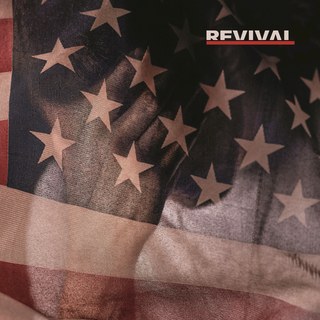
Eminem – Revival

11 Jan

Like most people of my age, much of the first music that I really listened to was Eminem’s. Unlike much of the other stuff I heard, Em’s early stuff still holds up amazingly today. It is astounding how good he was at his peak. Revival however is unfortunately nowhere near that peak.

This album continues a now decades long trend of mediocre Eminem albums and two facts are to blame. The first is that Eminem seems to be the only true practitioner of stadium rap. Interpolating “I Love Rock n Roll” for “Remind Me” would be fun to chant in a full stadium, but doesn’t work when listening to it by yourself. Similarly, aren’t we all tired of the “Zombies” sample he uses in “In Your Head” by now?

This problem has roots deep in his history. He always liked stadium rock more than the average rapper and it used to work. The “Dream On” hook does so much for “Sing For The Moment”, but here the sound just feels banal. It makes sense given the circumstances. Eminem is one of the few rappers able to pack a stadium and his audience is probably a little less conversant with rap than that of, say, Kendrick Lamar. This music feels built for a specific circumstance. It’s just not very good anywhere else.

This is quite a shame given that Eminem is probably the greatest student of the game there ever was. There is some irony in how the success he built through his skill has now kept him from fully exercising that same skill. Even so, the skill does show. His ability to pick up other people’s flows here is impressive, even if the resulting song is mediocre and his ability to chop words into whatever he wants remains unparalleled. However, all of this technique just feels empty, which leads us to the second problem.

Em just really has nothing left to say. I had really hoped that his new political stance would result in some depth from him. After all, his early stuff was always ready to take shots at Bush. Yet in Revival, for all that I wish “Untouchable” was solid commentary, it is actually just unlistenable. He gets moments in “Bad Husband” as he mines his familiar emotional seams of fatherhood and his ex-wife and the more mature angle is a little fresh, but the old magic is gone and it’s probably time to accept that it’s not coming back. He’s just too successful.

Additionally, people are just harder to shock now than they were in his prime. Talking about throwing Ivanka Trump into the back of a trunk just doesn’t have the punch it would have had 20 years ago. The world has turned.

Eminem’s legacy will undoubtedly be that of one of the greatest rappers of all time and his success is commensurate. It’s becoming impossible though to deny that same success is going to keep him from ever adding anything new to his legacy. This album certainly isn’t worth remembering.

@murthynikhil

Ivan Ave – Helping Hands

3 Jan

Jazz rap, or even music close to it, is rare enough that any solid release is worth taking note of and Helping Hands is a reasonable addition to an under-served genre. The rap unfortunately lacks the punch to break through the jazzier beats in the way that something like Bop Alloy manages and so the album, while good, is rarely outstanding. It does make for a very relaxing sound however. The album comes together in a way that is almost ambient to the extent that the titular song lacks any rap at all, but doesn’t feel in the least out of place.

This is an album worth looking into for any fans of the sadly far too small subgenre and “Circles” is actually a standout track. It is honestly skippable for most music fans, but while the highs aren’t too high, the lows are never that low and it’s an album that I’m happy to have spent the time listening to.

@murthynikhil

The Top Five Albums of 2017

1 Jan

2017 has been a good year for returning legends and young upstarts alike. On the former front, Jay-Z released his side of the story behind the infamous elevator fight in 2014, following albums by his wife and sister-in-law in 2016. Spoon released yet another great album, and indie darlings LCD Soundsystem came back from self-imposed retirement with a surprise album.

As for the upstarts: we got some amazing debut albums from buzzy artists like Moses Sumney and Sampha, but we were also graced with surprisingly strong follow-up records from Lorde and Vince Staples. And of course, there was Kendrick Lamar, who simultaneously fits both categories (and, really, all categories) with his third major-label full-length album.

Read on for our take on the top five albums of the year past.

5. The OOZ – King Krule
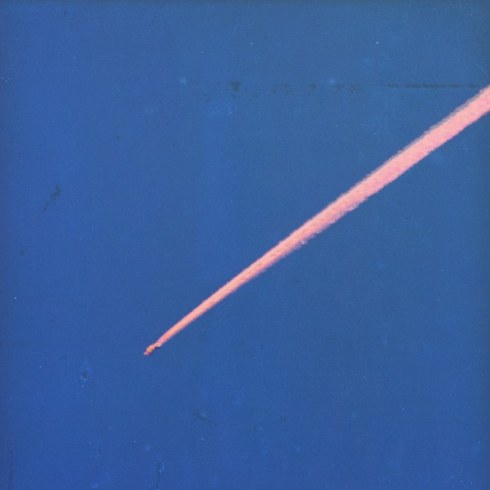
the ooz_king krule

According to King Krule (the stage name of 23-year-old Archy Marshall), the “ooz” mentioned in the album’s title is an homage to the various solids and liquids that ooze out of the human body – the primordial “creations” that we make and refine to fit into society. The vowel is lopped off at the end as a tip of the hat to the backwards-form of Marshall’s previous avatar, Zoo Kid.

If all of this seems strange and circuitous, then we’ve given you an apt welcome to the world of King Krule. The OOZ lies somewhere along the spectrum between jazz, punk and grunge, and Marshall’s brilliance lies in elevating this sonic kaleidoscope into a seamless new genre.

“Dum Surfer” opens like a menacing surf-rock song, crisp guitar bouying Marshall’s half-remembered boozy stories. About a third of the way through, the song segues into a skillful jazz guitar solo, complete with backing brass, but the beat never changes – it’s the same song. “Czech One” is a heart-breaking jazz-R&B song, complete with melancholic saxophone. Two songs later, “Vidual” is the hypothetical output of the Libertines penning a ska song.

Aside from his obvious musical aptitude, King Krule also happens to be a pretty good writer. Specifically, his allure lies in his ability to shuttle between precise anecdotes and profound reflection without losing the overall plot. For example, on album opener “Biscuit Town”, Marshall transitions from plaintive young-adult angst (“I seem to sink lower, gazing in the rays of the solar / In fact, we made a pact, but now I think it’s over”) to name-dropping Coca-Cola and Chelsea player Zola in the same verse. Somehow, this mishmash of story structures deepens your investment in Marshall’s emotions – with the effect that you are left feeling sorrier for him than deserved for what is essentially a yearning post-break-up tune.

The OOZ is a unique, woozy picture of Archy Marshall’s wide-eyed sadness. If there is a flaw, it’s that 19 tracks is a bit too long, but that’s just our opinion. File this one next to Mac DeMarco, early Nirvana, jazz classics, or pretty much anywhere else on your shelf – it’ll work.

Best tracks: “Dum Surfer”, “Biscuit Town”, “The Locomotive”

4. Big Fish Theory – Vince Staples

Vince-Staples-Big-Fish-Theory-Album-cover-art

In direct contrast to current radio-reigning rap stars, Vince Staples is not boujee at all. He does have a lot of new money, but he certainly isn’t wasting it on stupid shit. In fact (just like a great man once warned), more money brought Vince more problems, in the way of an inability to be happy despite achieving everything he’s ever wanted. Vince battles the ennui by making more music, which in turn brings more money and – you guessed it – more problems. It’s a vicious cycle, but happily for us, it results in great music from Vince Staples.

Don’t get us wrong – Big Fish Theory is no sob-fest. Vince Staples’ lyrics may speak of an inner tedium (“Human issues too strong for tissues”) but damn, can he lay a strong boast over a sick beat when he needs to. On “Big Fish”, Vince describes his bad-ass self-control over a club-ready trap beat – not only is he good at getting rich, but he is damn good at staying rich. On “Yeah Right”, Vince sneers at the priorities of today’s rap stars – money, women and then musical fame – all over a sludgy, sexy beat that could replace any one of these stars on the charts.

Full review here.

(If you’re wondering where you’ve heard his music before, it’s probably “BagBak” on the soundtrack for the Black Panther trailers.)

Best tracks: “Big Fish”, “Yeah Right”, “BagBak”

3. Hot Thoughts – Spoon

Hot thoughts

There’s a certain consistency to Spoon. The beats are always crisp; the guitars alternate expertly between nervy energy and rock-star confidence; the lyrics are slightly peculiar, matched by Britt Daniels’ idiosyncrasies. That may sound like formulaic, but Spoon is anything but. The essence of the band remains constant – the Austin-y quirkiness especially – but Spoon is actually very adept at updating the rest of their sound with each subsequent album.

Hot Thoughts, the band’s ninth (!) album since their formation in the mid-90s, is no exception. Keeping with the times, the album gets an almost hip-hop treatment, most audible on the sly overconfidence of “Can I Sit Next to You”. Hot Thoughts also benefits from the guiding hand of Flaming Lips producer David Fridmann, resulting in the sonic dreamscapes on “Pink Up” and the free-jazz masterpiece of album closer “Us”.

The best tracks, though, are still the Spooniest ones. “Do I Have to Talk You Into It” is all big drums and Daniels confidence, and “Shotgun” could soundtrack a bar fight in your early 20s. It’s the kind of music that makes the Strokes seem frumpy.

Full review here.

Best tracks: “Do I Have to Talk You Into It”, “Can I Sit Next to You”, “Shotgun”

2. Melodrama – Lorde

Melodrama

Lorde started working on her debut album, Pure Heroine, when she was a 13-year-old in small-town New Zealand. The album, which released a few months before her 17th birthday, was set in suburbia, with a close set of friends and nothing really to do, and it was so good because the songs reflected those circumstances so well.

Melodrama is very different, because Lorde herself is very different. In between the two albums, Lorde became extremely famous, originally through her break-out track “Royals” but later supported by a slew of well-received singles. She moved from New Zealand; she made new friends. Fortunately, Lorde’s skill at transcribing the moods and phases of her life into song have grown with her. Melodrama is the result of spending an already melodramatic period of life – late teens – under the auspice of immense fame.

Every song on the album is a standalone story; a slice of Lorde’s life, shuttling between New York and New Zealand and everywhere else in the middle. On the whole, Melodrama is a break-up album – in a very real sense, from her New Zealand boyfriend James Lowe, and in a deeper sense, from the starry-eyed naivety of her late-teens.

Melodrama is a near-perfect, infinitely enjoyable pop album, and you’re losing out on a real musical treat if you haven’t given it a full listen.

Full review here.

Best songs: “Homemade Dynamite”, “Sober”, “Perfect Places”

1. DAMN. – Kendrick Lamar
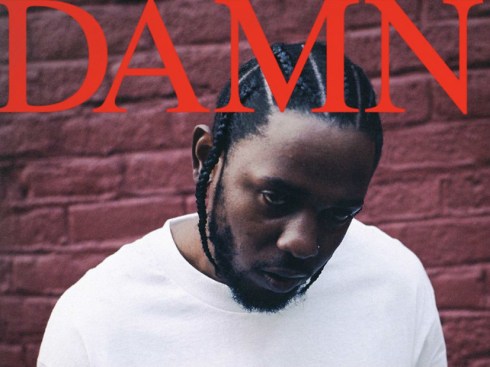
Kendrick-Lamar-DAMN-album-cover-featured-827x620

As we speculated in May, it has basically become an assumption that a new Kendrick Lamar album will be the best album of the year. For the remaining seven months, we looked far and wide – from post-rock to punk-jazz, from hip-hop to pure pop – but nothing comes close.

Like its predecessors, DAMN. is a masterpiece because Kendrick Lamar is bigger than life. He is a born-again Christian, and genuinely believes that he has been put on this Earth with a greater purpose. His literally godlike self-confidence lets him do things that others simply cannot do. On “DNA.”, he explores black heritage from a blinding barrage of angles (“I got power, poison, pain and joy inside my DNA / I got hustle though, ambition flow inside my DNA”). Like many rap songs, “HUMBLE.” is boastful (“I blow cool from AC / Obama just paged me”); but by masterfully balancing the brags with too-real pictures of the very recent past, Kendrick keeps himself humble. “FEEL.” is a free-fall through Kendrick’s complex feelings on his newfound fame, delivered in a flow so fluid that the words almost become beats.

The hundreds of words in Kendrick’s verses are so full of wordplay, imagery and thematic elements that each song basically needs its own Cliffnotes. Kendrick Lamar is a masterful poet and storyteller who just happens to have the lucrative gift of making chart-topping hits. DAMN. is not even the best album of his career, but it’s still the best album of 2017.

Best songs: “HUMBLE.”, “ELEMENT.”, “DNA.”


L.A. Witch – L.A. Witch

21 Dec

L.A. Witch

The entirety of L.A. Witch, the eponymous debut album from this Los Angeles all-women trio, sounds like it should soundtrack the impossibly steep cliffhanger of an addictive drama series. The fuzzed-out guitars clash alluringly against the reckless vocals: a carefully-pruned discord that hints at mysterious backstories and exciting future plots. (Excuse us as we write an email to Better Call Saul.)

According to L.A. Witch, the “witch” part of their moniker stems from their ability to conjure up the sounds and vibes of yesteryear Los Angeles – a promised land with impossibly good weather that attracted eager future residents from all over the country. And certainly, the weather plays an element in L.A. Witch’s sound. Sade Sanchez’s woozy drawl elicits the nearby desert – dusty and sultry – while her jangly guitar and Irita Pai’s surfer-rock bass paint the other side of the picture. The music sounds like Jefferson Airplane featuring a very drugged-out Jim Morrison, so L.A. Witch definitely deliver on their sound as well. (Perhaps the best showcase of their aesthetic is the music video for “Drive Your Car”, which features the three women driving vintage cars through the desert while dressed head-to-toe in black clothing.)

L.A. Witch exudes a dreamy yet chaotic vibe, like a bokeh photograph of a highway crash, and the lyrics paint half-pictures that intrigue more than explain. Album opener “Kill My Baby Tonight” is an atmospheric meditation to kill one’s lover if he’s late again. What’s the full story? Is he cheating on her? We never find out. “Baby in Blue Jeans”, a sultry dream of a love song, has a slow-burning intensity that suggests there’s more than meets eye to this relationship. On “You Love Nothing”, the reverb-heavy guitars and distant tambourine trick you into thinking it’s sunny times at the beach, but Sanchez dampens the mood by singing about doomed love (“You love nothing, you want nothing / Why do I want you? Why do I need you?”).

Earlier this year, the band played at Joshua Tree as part of the Desert Daze music festival. In our opinion, the festival should just ask the band to curate the entire event, because no other artist better exemplifies the term “desert daze” than these three women. L.A. Witch’s debut album is a moody, jealous album that enthralls with its half-completed stories and 60s psychedelia vibes.

Best songs: “Kill My Baby Tonight”, “Baby in Blue Jeans”, “Drive Your Car”


Kamasi Washington – Harmony of Difference

20 Dec

Harmony of Difference is that strangest of creatures, a jazz album of intermediate difficulty. As a genre, it tends to high difficulty naturally. There are also plenty of approachable works, from the more friendly Louis Armstrong stuff to even the smooth jazz of Kenny G. Finding an album in the middle is very unusual and this album is quite the valuable find if you’re looking for something of its nature.

The centerpiece of the album is actually the closing piece. At thirteen and a half minutes, “Truth” is close to half of the length of the album and is good enough to justify the length. It’s challenging and shifting and takes full advantage of the space that it’s given to explore. It is also surprisingly gentle. The vibraphone playing around a couple of minutes in is the aural equivalent of a warm bath. It is somewhat undercut by the honestly overwrought vocals though, but not enough to severely mar a great jazz piece.

The other half of the album is similarly variable, but mostly good. “Desire” starts things off in a gentle manner and sets the stage perfectly for the opening descent and fiery solos of “Humility”, and then both are mirrored by “Knowledge” and “Perspective”. These are all acceptable songs and they each have their moments, but they also lean a little too hard on sounds established both by the work of other people and by the songs themselves. While they are well done, they would have greatly benefited from a few more ideas each. Even “Integrity” suffers from the same flaw, despite the initial promise of a South American tinge.

This is not an album for raw beginners however. Some knowledge of jazz is requisite to experience Harmony of Difference. However, I can’t fully recommend it for the experienced listener either due to a very slight paucity of ideas. If you’re somewhere in the middle though, this is the perfect album for you, and even if you tend to either extreme, the sheer ability of the musicians may be enough to justify the listen anyway.

@murthynikhil

Royal Blood – How Did We Get So Dark?

15 Dec

Royal Blood

In 2014, Royal Blood was the subject of a massive amount of hype. On the back of a truly electric debut, the band rapidly built a fanbase comprising drunk teenagers, rockstars and living legends alike, and Royal Blood truly deserved all the hype. Their music is elemental testosterone with enough energy to consume stadiums, but it shocks the senses to realize that the sound comes from two people. Mike Kerr shreds a distorted bass to fill the dual role of a guitar and a bass, while being canny enough to sing great tunes as well. Ben Thatcher launches an array of weapons into your eardrums through, well, his drums. And that’s it. No other instruments, no other people.

Royal Blood sounded like the perfect mix of a grittier White Stripes, a leaner Queens of the Stone Age and a more masculine Franz Ferdinand. How Did We Get So Dark?, their sophomore album, doesn’t stray too far from the formula, but don’t get us wrong – that’s a good thing. While most bands tour to promote their new album, Royal Blood literally releases new music to get more people to come to their live shows. So yes, this album feels similar to the first, but that’s entirely by design. And given the fact that the moshpits have gotten bigger and crazier, we’d say Royal Blood is doing very well.

While the sound is similar, their talent has really progressed. The eponymous track starts off with the three Royal Blood tenets – sneering voice, magnetic riff, crazy drumming – but picks up texture through polished vocal layers. “She’s Creeping” slows down the pace, with Pixies-style languid vocals melting into an almost bluesy chorus. If you soften the bass, “Hole in Your Heart” almost becomes radio-friendly indie rock, a la Kaiser Chiefs or the Killers.

The lyrics have changed, too. Royal Blood seethed with the violence of an abusive relationship (“I’ve got a gun for my mouth and a bullet with your name on it,” went one memorable line), but they seemed to have moved on to a richer story. The title track paints a picture of a fitful relationship, and we learn on “Sleep” and “I Only Lie When I Love You” that both parties are cheating on one another. Kerr realizes that she’s not much beyond her looks (“Lights Out”) but he can’t just stay away (“Hook, Line & Sinker”).

Of course, being a Royal Blood album, the lyrics matter only to a certain extent. At the heart of it, the band makes absolutely kicker songs that can rev up large masses of humanity into a rock-induced frenzy. “Lights Out”, for lesser bands, would be a career-defining array of riffs and raw sex appeal; for Royal Blood, it’s just their first single. The opening riff on “Hook, Line & Sinker” might elicit a tear of pride from Ozzy’s eye. The galloping drums on “Where Are You Now?” give way to a riff so classic-rock that the Stones are probably head-banging to it somewhere. Need we go on?

On their sophomore album, Kerr and Thatcher espouse a very similar sound to their lean debut album, but that’s not necessarily a bad thing. Queens of the Stone Age continue to be a key touchpoint for Royal Blood’s sound, but there’s a happy evolution in the vocals, writing and arrangement to portend a thrilling future.

Best songs: “Lights Out”, “I Only Lie When I Love You”, “How Did We Get So Dark?”

Spoon – Hot Thoughts

12 Dec

Hot thoughts

No band embodies the idea of independent rock better than Spoon. Since 1996, the Austin band has churned out a great album every two to three years (see: Gimme Fiction, Ga Ga Ga Ga Ga).

Every other band with similar discography and enduring success (U2, RHCP) inevitably seems to fall prey to arena rock and millions-strong fan followings. Not Spoon though. They don’t wear leather pants. They don’t talk about their fame in songs. They never moved en masse to LA or NYC; one of them still lives in Austin, where he’s been a key element of the city’s music scene for decades. After all these years, Spoon’s self-worth seems to stem not from the limelight, but from an innate source of cool. And that’s what makes them truly indie rock.

Lead man Britt Daniel doesn’t like the “indie rock” label, though, and it kind of makes sense. In in our present understanding of the term, indie rock often refers to great-sounding upstarts that shot to fame through a combination of luck, marketing and the Internet – but whether their fame endures beyond the debut is a different matter. Spoon grew up in a different world, painstakingly building their sound (and fan base) without sacrificing their passion.

Hot Thoughts, their ninth full-length album, is the latest fruit of this passion. It’s full of the typical Spoon sound – punchy drums, wailing guitars, feverish bass lines and Daniel’s megaphone-via-voicemail singing style – peppered with a certain Spoon-y quirkiness that makes it a unique new album in their discography.

It’s the quirky details that make the songs stick: the first listen may entertain, but the fourth will truly intoxicate. On “Do I Have to Talk You into It”, the swaggering drums over a nervy piano are enough to make a great song, but Daniel’s idiosyncratic renditions of the song title is what stays with you. He shimmies up and down the scale one time; shout-asks in another; fades into the overpowering drums in a third; a magnetic presence on a magnetic track.

One of the verses on “First Caress” talks about a girl who likes to tell Daniel that coconut milk and coconut water are the same thing; it’s such a weird detail, but you somehow end up replaying the song just to hear him say that line. “Pink Up” has a dreamy, atmospheric sound, full of light xylophone touches and folksy maracas, as Daniel exhorts the listener to live life in the moment by taking the train to Marrakesh.

Of course, Spoon isn’t all about the quirk – some of their songs are just pure rock classics. The eponymous song is a good old-fashioned paean to a girl who gives Daniel some sexy ideas, set over fretty licks and Jim Eno’s confident drums. The frenetic energy of the drums and bass on “Shotgun” could and probably will incite a riot at some point, which is fitting because it’s about getting into fisticuffs. “Can I Sit Next to You” thumps along to a funk guitar and dance beats, a strutting theme song to Daniel’s unabashed pick-up line (“Can I sit next to you? Can you sit next to me?”).

Hot Thoughts is a very enjoyable album through and through by the guys who basically invented the genre. You’d be doing yourself a disservice if you don’t give it a listen.

Best songs: “Do I Have to Talk You Into It”, “Can I Sit Next to You”, “Shotgun”

Moses Sumney – Aromanticism

10 Dec

Moses Sumney is a 27-year-old from Los Angeles, but he doesn’t belong at that intersection of space and time in so many ways. While his fellow millennials are eager to jump in – and out – of relationships at literally the touch of a button, Sumney is hesitant to move forward even with someone who loves him. He’s introspective, melancholic and shy to the point of physical discomfort – clashing garishly with the showy extraversion of LA. Sumney doesn’t fit in, and he can’t bring himself to be vulnerable enough to love someone, despite his human need for affection. And worst of all, he’s aware of all of this. The culmination of these themes is his debut full-length album, Aromanticism.

Although the premise may sound too depressing to warrant a listen, Aromanticism is actually a gorgeous and immensely repeatable album. Sumney has an ethereal voice that is amplified in beauty by a moody guitar and a masterful falsetto. His gossamer-silky vocals twist, snake and turn, in line with the churning thoughts in Sumney’s deeply introverted mind. He’s also a great writer; Aromanticism is full of evocative metaphors, references, and a penchant for the dramatic.

Take, for example, the first single “Plastic”. Within the first minute, Sumney’s voice effortlessly flutters across half a hundred notes as he sympathizes with a fellow lonely soul (“I know what it’s like to behold and not be held”) over a barebones guitar strum. He reveals his secret at the end of the sole verse (“My wings are made of plastic”), sung a dozen times but each so nuanced that the message sinks in twelve times deeper. Orchestral drama then segues his other big reveal: “My wings are made up, and so am I”. Sumney is a present-day Icarus, complete with plastic wings to replace the wax of yore. His fragile attempts to connect to another human often end with the melting of his metaphorical wings – and himself, too.

“Quarrel” takes place during one of these wing-melting moments. It’s an achingly beautiful song – a choir of layered voices (all Sumney) blend quite luxuriously with the harp. “He who asks for much has much to give / I don’t ask for much, just enough to live” goes the opening doublet – Sumney tries to keep a low profile in relationships, because he can’t be vulnerable enough to give someone else a lot of love. Unfortunately for him, his lover seems to have put his fragile soul at edge. “If I don’t have tools to fight, calling this a quarrel isn’t right,” he laments, before sinking into the almost-indignant chorus (“Don’t call it a lovers’ quarrel”).

Experiences like these have made Sumney sort of anti-love over the years. In his own words, Aromanticism is a rejection of “the idea that romance is normative and necessary”. But it’s clear that he does wonder about what it means for him, long-term, as a human being that cannot love. “Am I vital if my heart is idle?” he wonders on “Doomed”, so plaintively that it’s impossible to not share his fear.

However, as we’ve stated before, don’t be disheartened by his melancholy, because this man literally has the voice of an angel. His languishing wails on songs like “Lonely World” are almost enough to make one weep, and his falsetto alone has more range than most artists’ singing range. Aromanticism is a flawless debut by a deeply tortured genius.

* In case you were wondering about the album cover, it seems to be a reference to Plato’s Symposium, in which Aristophanes posits that humans were once four-legged, four-armed, and double-sexed, but Zeus cut them in half. Since then, humans have been trying to find their “other halves”, but Moses is pictured on the album cover as a human that’s missing his complementary half. More info here.

Best songs: “Quarrel”, “Plastic”