Kid Cudi is his own person. You can’t judge his third album Indicud the way you would judge other rap albums because it doesn’t feel the need to play by the same rules. Seriousness and wordplay are no part of this picture. Freshness is always a good thing though, especially when the result is something like “Red Eye”, which is essentially Haim being Haim. However, it still needs substance. His earlier songs, like the exceptional “Day ‘N’ Nite” managed to feel novel in subject matter as well, but this album doesn’t quite hold up to the same standard.
This is a very listenable album, but the sort that neither expects nor rewards deep and sustained listening. It is filled with bright spots, especially when the guests show up. The aforementioned Haim song is excellent, the RZA shows up for a monstrous anthem with “Beez” and Kendrick Lamar is, as always, remarkable on Solo Dolo Pt. 2. Kid Cudi’s production is strong throughout, bringing out the best of both his guests and himself, as shown on “Unfuckwittable.”
This is, all told, an enjoyable album. It is an album with an expiry date though. Give it a spin though. As long as you don’t expect to go anywhere, it is an enjoyable ride.
Childish Gambino’s second album because the internet is in parts brilliant. It is also in parts terrible. In that respect, it does bring to mind its namesake. It also comes with a 75 page script for a screenplay. That however, does not bring to mind its namesake. At least it wouldn’t were it not filled with emojis, internet-speak and embedded videos. You can read it here if you choose to. I did not.
Briefly, the screenplay is about “The Boy”, really Donald Glover, who lives off his wealthy father, really Rick Ross, and lives in the internet. The theme of the internet is sprinkled in impressively throughout the album. Interestingly, the sheer density of references to the immediate present give the album a slightly futuristic feel. These lyrics would not look out of place on reddit. On one hand, he sneaks ain’t nobody got time for that into a line, but on the other he makes a chant of GPOY into a chorus which, while not as bad as it seems on paper, is still pretty bad. This sort of inconsistency flows into the rest of the lyrics as well. Clever C-3PO lines and an excellent play on KKK sit next to Bangkok puns. Throwaway references to subjects like the Gaza strip don’t do much either. Still, he is the only person in rap who would make a line out of onomatopoeia.
He has all the technical skill he needs as a rapper and his production is excellent. The album comes in harder than Camp, he practically opens with the line “And I still put it down like the family dog.” He is actually quite a good singer as well, showing up well on “telegraph ave.” and the Weeknd-like “flight of the navigator.” I really like “3005” and the music video that goes with it and the entire final run from “flight of the navigator” to “life: the biggest troll.” I just don’t like having to skip past the other half of the album.
This is certainly an interesting album and it contains enough quality to deserve quite a few listens but is ultimately too unreliable to unreservedly recommend.
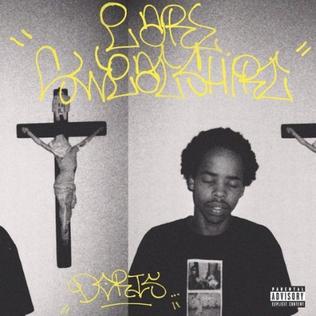
It’s been a while since Earl Sweatshirt has been on a mic. His wordsmithing and flow is much of what made Odd Future into the sensation that they have become. Now, after a long stint at a Samoan retreat for at-risk teens, he is back, has moved from gut-provoking to insightful and in doing so released an excellent exception to this year of mediocrerap.
This is an album that unabashedly requires and rewards work from the listener. The first few times I heard it, it felt more monotonous than mellifluous to me. On repeated listens though, that monotony reveals itself to be deeper and more oppressive than at first blush. Rap has changed from this style of production, now it struts in suits instead of shuffling around, hands in pockets, in the underground. This album comes at you hard and strong the way rap should.
The deep and dark productions fit the deep and dark lyrics well. There are so many standout moments in the murkiness of the album. Earl absolutely destroys in Burgundy as he goes over how he’s struggling with being a commodity. Hoarse runs off a sick, shifting beat and absolutely dazzling wordplay to submerge and almost suffocate the listener. Chum drops you straight into a litany of family issues and leaves you to learn how to swim in it (It’s probably been twelve years since my father left, left me fatherless/And I just used to say I hate him in dishonest jest/When honestly I miss this nigga, like when I was six/And every time I got the chance to say it I would swallow it).
Additionally, the guest spots do incredible work. Vince Staples steals Hive from Earl and Frank Ocean does great work in the trippy Sunday. Big brother Tyler is unmistakeable in Sasquatch (Man, I suck now, I ain’t still dope (nope)/But Chris and Rihanna’s fuckin’ again so there’s still hope/Oh fuck, I went there, balling bitch, I’m Ben’s hair). My favorite though is the RZA dropping the hook in Molasses, which would fit in a Wu-Tang album even without him.
Doris is real rap. The kind of rap parents worry about and that gives kids who shouldn’t be listening anyway nightmares. Rap for people who want to think and talk. Rap so good that it’s broken. Rap you should listen to.
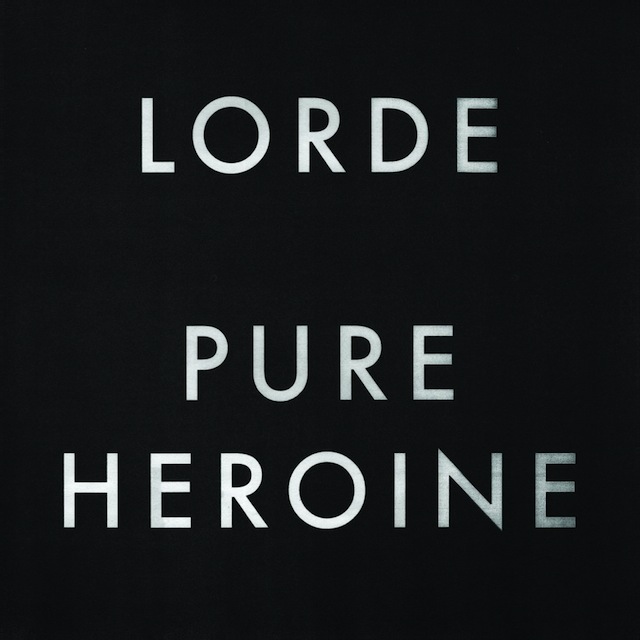
“Don’t you think it’s boring how people talk?” begins the opening line of the debut by 16-year-old New Zealand wunderkind Lorde, a.k.a. Ella Yelich-O’Connor. An introspective teenager too frank and frugal for the feigned opulence of today’s youth, Lorde awes through all 37 minutes of Pure Heroine through poignant lyrics that often overshadow her beautiful voice. Throughout the album, almost-poetess Lorde uses many motifs – the cusp of fame often coinciding with the cusp of adulthood, pulsing veins and white teeth, and the overarching theme of aristocracy – but it never gets repetitive. In fact, the repeated themes only highlight the fact that the young singer wrote all the lyrics on the album, giving it an artistic integrity that most artists, let alone teen-aged female pop musicians, fail to achieve. In a world where Miley Cyrus’ twerking makes it to the front page of the Huffington Post, it’s a relief to know that true talent still exists.
Picture courtesy Billboard.com
Lorde may be best known for her sparse, chart-topping “Royals”, but album opener “Tennis Court”, the follow-up single, is menacingly good in its own way. In a voice that echoes Adele’s honesty, vulnerable-Lorde talks of impending fame at a young age (“How can I fuck with the fun again when I’m known?”) even as confident-Lorde sneers at her supposed contemporaries (“I’m doing this for the thrill of it, killin’ it”), setting the tone for the main thematic elements of Pure Heroine.
Her cynicism of modern pop culture resurfaces on “Royals”, an almost-gospel gem where she embraces her low-key lifestyle that, sadly, may soon disappear. “We count our dollars on the train to the party,” she says of herself and her suburban friends, before going on to explain, “We didn’t come from money.” Sure, she may never be pop royalty, but that isn’t the kind of royalty she wants anyway. “We don’t care/ We’re driving Cadillacs in our dreams,” says Lorde, in a showcase of the maturity that lets her separate reality from fantasy. In a way, she’s the anti-thesis of Lady Gaga, and that alone puts her on the throne in my book.
“Team”, her third single, is a brilliant critique of club-oriented pop music that cleverly meta-references the same by using a club-ready beat. “I’m kind of over getting told to throw my hands up in the air,” she confesses, conspicuously putting herself in the everyman ‘us’ as opposed to the larger-than-life ‘‘them’.
Of course, being a teenager, famous pop musicians aren’t the only group of people that Lorde fails to fall in with. “White Teeth Teens”, a cleverer cousin of Lana del Rey’s brand of youthful angst, talks about Lorde’s incongruity with the (seemingly) picture-perfect teens around her. “I tried to join but never did/ The way they are, the way they seem is something else, it’s in the blood,” she explains, pulling to attention her own “royal” blood.
“400 Lux” is essentially a carefully-crafted love song about teenage romance in suburbia. “Got a lot to not do/ Let me kill it with you,” asks Lorde, elegant in her lyrical prowess. The almost-spoken-word second verse, reminiscent of Natasha Khan, is a jumble of thoughts and emotions that reveal her worries all too clearly: much like on “Ribs”. There, a non-sequitur lyrical phrase (“The drink you spilled all over me/ ‘Lover’s Spit’ left on repeat”) paints a picture of a kid whose adult-like nonchalance belies her true nature.
In a lot of ways, Lorde is just a teenager – albeit gifted – from a sleepy town at the edge of nowhere, and her charm lies in the way her background consciously or subconsciously permeates through her music. It’s refreshing, to say the least. To me, it also brings to mind to a riotous album in 2006 that made stars out of four young Sheffield lads talking about chatting up girls in clubs and getting turned down. Whoever she does or – more importantly – doesn’t sound like , it’s clear that Lorde is indeed royalty in her own, unadulterated way.
Xiu Xiu’s Fabulous Muscles is very accessible for noise pop and very powerful for all that. Painfully intense and brutally personal, this album gets under your skin and worms around within you.
I can’t discuss Fabulous Muscles without talking about “I Luv The Valley OH!”, Jamie Stewart’s tale of family and suicide. The song holds its pretense of straight pop almost throughout, and yet cuts you with its lyrics and delivery. The one break is in the titular scream, which shocks in the truth of its release.
That song is the essence of the entire album, where the excellent synth-pop of Crank Heart or Brian the Vampire appear to cover disturbing tales of broken childhoods and broken people, but instead form a structure that reinforces the destructiveness of his lyrics. This is a hard album to listen to, and intentionally so. Support Our Troops OH! has Stewart graphically describe the killing of a young girl by a US soldier while throwing pure noise at the listener. Nieces Pieces holds the feeling of inevitability that a failing family creates.
That is a large part of what makes this album so strong. The characters of each of the songs are clearly defined, but never with standard words. The striking part of Bunny Gamer is not the desire for someone you can never have, but how easily the rejection is given and taken. Little Panda McElroy is hesitantly, delicately beautiful noise that helps the story of maybe being able to break the ugliness of yourself this time. Clowne Towne hits you hard with its lyrics, but is affectionate in how it tears you down.
This is an album that actually explores what goes into depression rather than dismissing it as sadness. It is about actual pain rather than the ideas around it. It is deeply uncomfortable to listen to and undoubtedly a masterpiece for all that.
This is a distinctly urban sound. It is the music of the road after you leave the club at 3 AM. It’s the music of people and dreams and the moment and life not being all that it could be and the promise that one day it will be. It’s about talking to people and laughing in groups and having fun and being late and feeling cold and wishes. It is the moments of silence where you’re all walking and your arm is around someone and your mind is a million miles away. It’s the feeling of exhaling just so you can see your breath in the yellow streetlight. It’s the feeling of drifting in a strange, only half-there world.
Ghostpoet’s work is a unique gem and should be treasured as such. You should listen to him.
It’s been 13 years since Deltron 3030 first took us to their vision of the future with their eponymous album and with Event 2 it is finally time to reenter the world that felt so entrancing then. The rap world has changed in all that time though and what was mind-blowing then is not quite as impressive now. Are the most futuristic rappers of them all now obsolete? Event 2 says not at all.
This is a good album with good music. Del’s flow is as smooth as ever, Dan’s soundscapes are as epic and Kid Koala still has hip-hop down to a science. I greatly enjoyed their concert a while ago and the songs are quite as tight now as they were then. Cuts like Pay The Price, Talent Supercedes and The Return are standout tracks, with Del proving himself a monster time and again. What Is This Loneliness, City Rising From The Ashes and Do You Remember are also very strong and greatly aided by the collaborators. Damon Albarn in particular is excellent. The rest of the music is also great, Melding of the Minds for instance is just very good rock-rap.
The glimpses of the world that you get are very interesting. Del makes throwaway mentions to zombies on crack and ethical debates about eating people in standard blink-and-you-miss-it fashion interspersed with deep pop-culture references. The skits are also imaginative, with Joseph Gordon-Levitt, Amber Tamblyn and David Cross narrations. The Lonely Island also has a rap in there, which while funny seems amateur next to Del’s flow. The story is wildly inconsistent, but that’s fine. It is meant to inspire and not create canon.
Even if not quite as groundbreaking as the first Deltron 3030 album, this is good, imaginative and above all fun rap. I highly recommend it.
A while ago a friend had asked me for a recommendation and I sold him this album saying that it reminded me very much of Fleetwood Mac. He naturally asked if they have a Stevie Nicks. “They’re three sisters”, I told him, “and they’re all Stevie Nicks.” Convincing though that argument is, it undersells the band quite shamefully. Days Are Gone, their debut album is the most likeable thing that I’ve heard in a long time.
Indie rock and pop have a tendency toward snobbishness. There comes a point where in the quest for cool, they substitute irony for intellectualism. That is not Haim. This album revels in the hits of the past three decades, unashamedly drawing from such Top 40 mainstays as Phil Collins, En Vogue and Shania Twain and they do so excellently. The album is much glossier pop than their live shows, but the gloss of a fine polish and not cheap plastic. This album has had years of work put into it and shows every bit.
Despite the influences and despite the sheen, the album and the band simply overflow with personality. Falling is as much fun to watch as to listen to and the music video for The Wire is most amusing. From soft rock to R&B to synthpop, this band does it all and makes it look effortless.
As long as you like listening to music more than posturing over it, this is an album that you cannot help but enjoy.
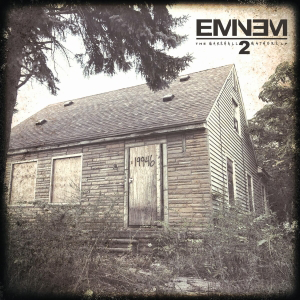
Let’s start by playing the good guy, writing the review that even Buzzfeed would accept. As ever, Eminem is a lyrical titan. I would cannot think of a single rapper whom I put above Eminem in terms of wordplay. Sometimes scary (So I sneak vengefully and treat your bedroom window/Like I reach my full potential, I peaked), sometimes scatological (In a public stall droppin’ a football/So every time someone walks in the john I get maddened), but always scintillating. Dense, unexpected and humorous, his lines hold up his own standard and there is no bar quite as high.
Some of the music on this album is indisputably incredible. Bad Guy is an excellent self-aware commentary on Em that switches sharply in the middle. So Far… is not only brilliant in all the standard Slim Shady ways, but novel sounding as well. Headlights, Marshall’s version of Dear Mama had me feeling more sympathetic for Slim than I have in a long time. The Monster shows Rihanna to great advantage and while Love Game is far below what you would expect from a K.Dot collaboration, it is still a solid song.
On the other hand though, I skip past half of the songs in the album every time I listen. Rap God, despite being an astounding displaying of Em’s lyrical abilities just gets repetitive very quickly. The words may have changed, but it’s hard not to feel like I’ve heard that song before. I now dislike stadium rap much more than before thanks to Survival, which is actually not too bad, and Berzerk, which is. So Much Better is a very strange take on the history of rap, and let alone a candle, can’t even hold a spill, to I Used To Love H.E.R.. Worst of all, Stronger Than I Was is an atonal, unlistenable mess. Rap has changed from the times when Eminem was relevant, but he really shouldn’t try to change with them.
Also, as always, Slim does not stint on the homophobia (although there is a shout out to Frank Ocean’s excellent Swim Good) and misogyny. If that affects you, then I would advise avoiding this album, but I think it unlikely that you would be a Shady fan in the first place. However, the hate and violence lack the shock value they held over a decade ago. His attacks also feel less incisive. The Gwen Stefani shot for instance (Good luck trying to convince a blonde/That’s like telling Gwen Stefan’ that she sold out/Cause I was tryna leave, No Doubt/In anyone’s mind…) is clever, but is also the first time in years that I thought about Gwen Stefani.
This is in places a great album, and Eminem cements his place as the most technically accomplished rapper in the game and possibly all time with it, but is far from his first three albums and far from enough to return him to relevance.
Elvis Costello and The Roots have both always been more smart than successful and teaming up does nothing to change that. It does result in a very good album though, although an unabashedly smart one and unapologetically demanding one.
The first thing to note of this album is the grooves. The Roots have done a fine job laying down a soundscape and Costello’s production can be felt everywhere. His voice also, rather surprisingly, blends excellently into the music. As expected of a Costello album, the lyrics are layered and intelligent, much more so than the R&B and funk that this album draws from. The result is an album that greatly rewards multiple close listens, but never makes doing so a chore. I highly recommend it.