Archive by Author

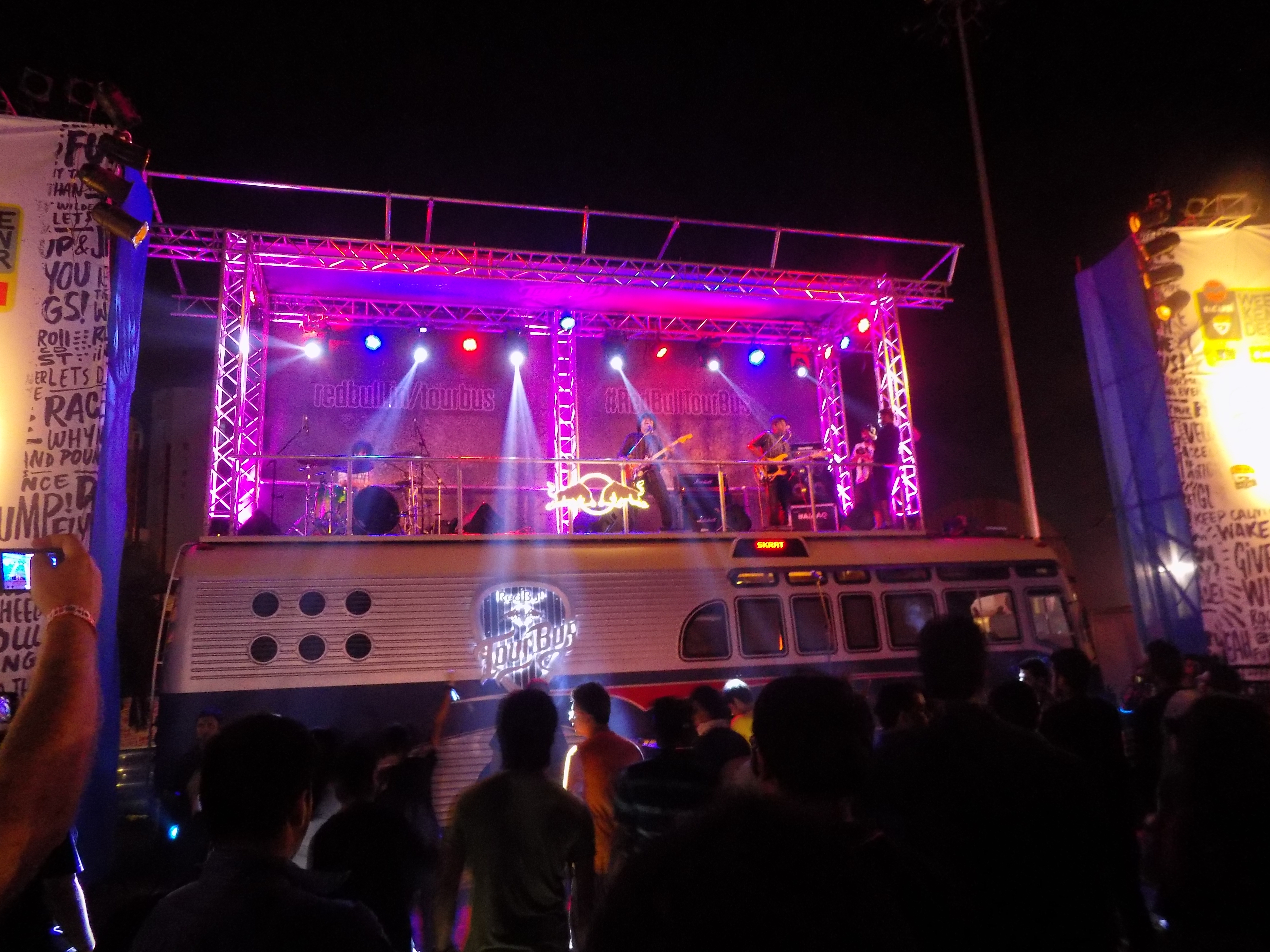
Bringing Out the Big Guns: A Conversation with Sriram TT of Skrat

13 Feb

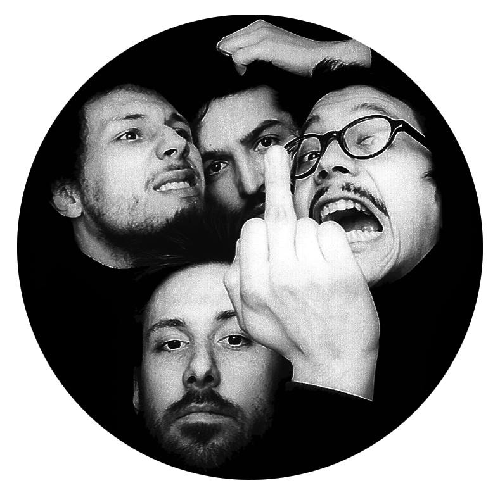
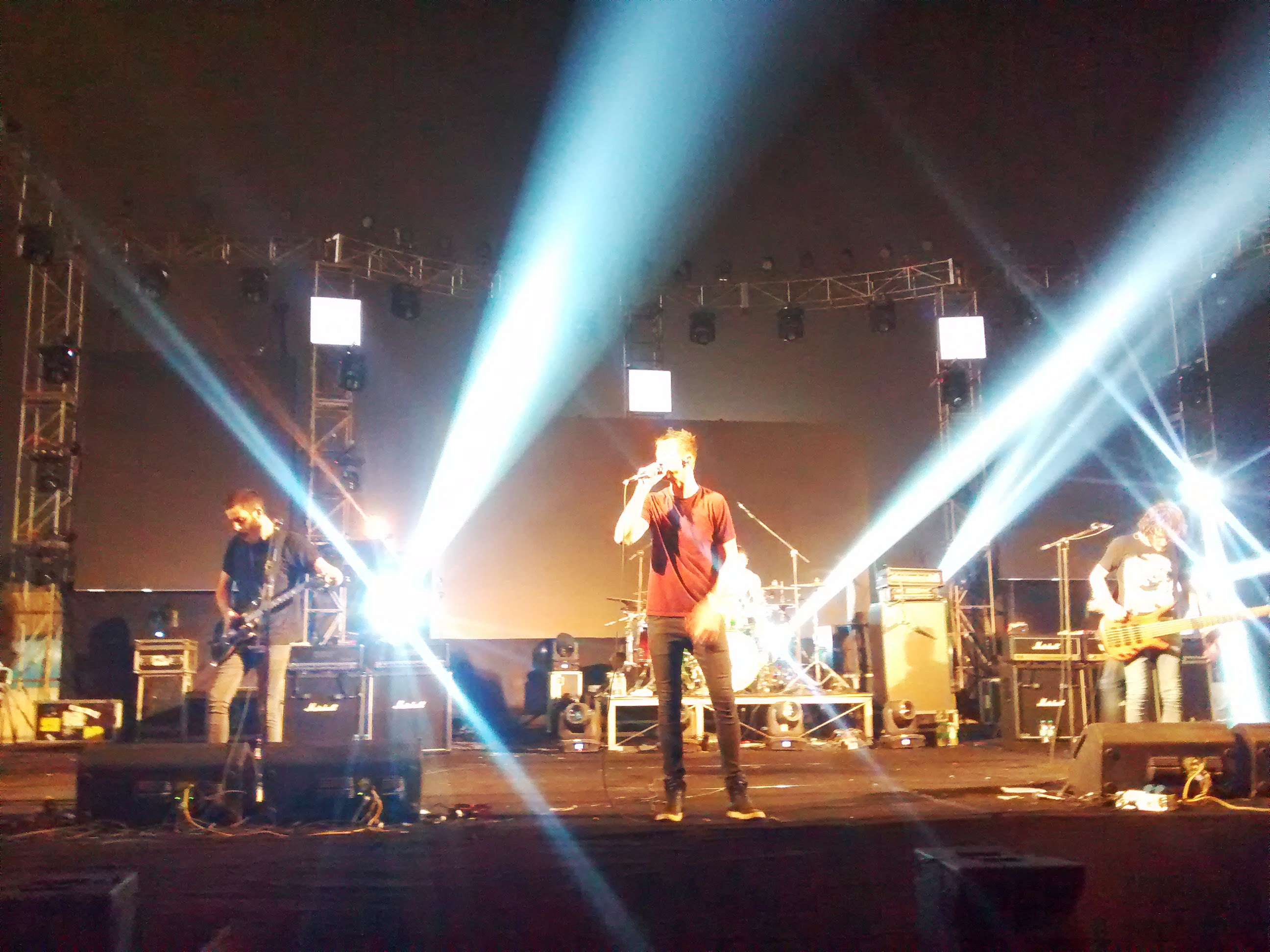
Chennai-based three-piece Skrat is one of the most original bands in India. Their brand of lager-laden rock ‘n roll riffs have captured the imaginations of thousands of fans across the country. Recently, they debuted their third full-length independent album, The Queen. Singer/guitarist Sriram TT sat down with Top Five Records to talk about formative musical influences, the Skrat crew, a comic book-style universe of Skrat characters, and much more. Read on for an excerpt of the conversation.

Picture courtesy Skrat's Facebook page.

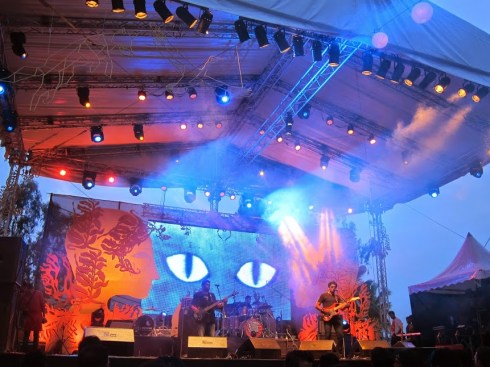
Picture courtesy Skrat’s Facebook page.

Top Five Records: Let’s start from the basics. I’ve seen some interviews and things you’ve done, and I understand that your band name is from Ice Age. But beyond the name, how did you guys meet?

Sriram: The band formed around the time we were all getting into college. Tapass and I have been friends since kindergarten. I’d met Satish through school cultural fests and common friends, so I’d already known him for a few years. It all came together.

TFR: There’s a lot of varied influences I can see in your music. What did you grow up listening to?

S: Actually, my house was always filled with country music and old swing jazz, the Rat Pack and Davis and stuff like that. My dad’s a big audiophile, so all the music I’d listened to at that time was predominantly from my dad. So it was a lot of country, a little bit of blues, and a lot of the Rat Pack kind of music. There was some older R&B as well. My dad really likes to explore and find new music.

TFR: So your parents are cool with you guys having the band and everything?

S: Of course! They love it. My father’s a big fan of music, and my mum likes music as well. In fact, my dad always wanted to be in something like this but never got around to doing it. I wouldn’t say they are the incredibly forward-thinking kind of support that you may expect, but not forbidding [the music] is a big support for me.

TFR: I was at Weekender for the past few years, and your stage presence is just amazing! This time at the NH7 Weekender in Bangalore, Skrat played back-to-back with TAAQ, which I found really interesting because both of you were debuting new albums. Everyone loves your popular songs like “Tin Can Man” and “Samurai Badass”, but how do you get people to move away from that and listen to your newer material?

S: The biggest challenge for most musicians is, once you’ve created something that people like, how can you create something new that people are going to gravitate towards. A while ago, we had a band meeting to decide whether we should make music more like “Tin Can Man”, because people like that sort of thing. At one point, we realized that we’re not trying to make music, we’re trying to engineer it. So we dropped everything and decided to whatever we wanted to do. If people like it, they like it.

And it’s actually been a positive response. All of the reviews say that this album was a lot better. And I do feel that The Queen has caught on a lot faster than the older albums caught on at that time. In fact, we actually get people singing along to and shouting out for newer songs like “Machete” and “Stomp”.

TFR: Yeah, we really loved your album. It’s funny that you mentioned “Machete” and “Stomp”. I wanted to ask you about these two songs (since they don’t even have words in the chorus), and how they relate to your song-writing process in general. Does the riff come first, or do the words come first?

S: “Machete” is based on a big problem we have in Tamil Nadu, and everywhere really: about politicians and goons being the same thing, basically. We’ve always been subjected to torture by these guys, with their white cars and plastic flags – whether it’s something small like creating ruckus on the road, or something big like not letting a business deal go through because they didn’t get their cut. So on “Machete”, the two verses are kind of like a rant against all that, and the chorus is about how there’s nothing to lose when they have nothing to black-mail you with. And that’s why the chorus has no words. (Laughs)

Stomp” is a similar thing, but more about a person being subjected to this kind of stuff. On this song, the words and riff kind of came to me simultaneously. I had originally made the song on an acoustic guitar. In fact, the reason we called it “Stomp” was because the whole song was supposed to be me on an acoustic guitar and a board; very Delta blues kind of thing. And then we tried it on electric and the whole thing became heavy and fun, so we decided to go with that.

TFR: A song that we mentioned before was “Samurai Badass”, which is probably your most well-known song. I think you guys are into manga and anime, so is it related to that?

S: (Laughs) Yeah, we’re big comic fans. More into cartoons and comic books than anime, but yeah. “Samurai Badass” is basically an alter ego of what we were feeling at the time. It boils down to the same thing that Skrat’s been talking about: the only way one person can be not pushed around is if he has nothing to lose.

I find my writing to be a lot more authentic if I am able to create a character having the qualities I want to sing about, rather than singing about the qualities themselves. Suppose I wanted to say, “A person who has nothing to lose can’t be pushed around”. I could have said these lines in a song, but I thought, why not create a character who has nothing to lose and can’t be pushed around? That was my original intent, when I wrote the song on acoustic guitar. But then Tapass came in and said, “Dude, let’s try this on electric!” and that’s how that happened.

TFR: You seem to have so many acoustic versions of Skrat songs. You should actually do an acoustic show!

S: Actually, all of the Skrat songs, whether you believe it or not, are made on an acoustic guitar! (Laughs) And “Samurai” was supposed to be like an Irish pub song, where you get together with friends and drink beer. It kind of became this heavy punk rock song with the electric.

The cool thing now is these characters that we have been developing. Our first album Design had a character called Gunslinger who we brought back in The Queen. I’ve now started working on an entire character universe, and all the characters on all Skrat songs belong to this universe: Tin Can Man, Samurai Badass, Gunslinger, The Queen, Loverider. It’s basically how I grew up. Wild imagination, imaginary friends, single child, all of that stuff.

TFR: Tell us about the Skrat crew. Who are these people, and how do you get them to follow you around?

S: Anyone who helps Skrat, like photographers and sound engineers, are basically part of the Skrat crew. The concept has really caught on ever since we introduced it in 2013. The crew has taken complete ownership. Now we’re coming out with a short movie, revolving around how the entire Skrat crew rode on bikes for our 20-day tour last year.

TFR: Oh, is this the Loverider Experience?

S: Yes, it is. On tour, sometimes I’d wake up in the morning, and these guys would already be in a Skrat meeting. They told me that my job is to write songs, play and do interviews. So they really take ownership. And the Skrat crew has slowly been expanding. It’s 40 to 50 people now! It gives me a little fear because I’m not even paying them, and they are just coming along because they like the music or they’re my friends. On our fourth album, which we’ve already started writing, we’ve put in a song dedicated to the Skrat crew.

TFR: Something we’ve all wondered at Top Five Records is about how Chennai is able to produce so many unique, well-formed bands: Skrat, the Shakey Rays, the F16s, Adam and the Fish-Eyed Poets. Is there something in the water there?

S: I think it’s because we’re slightly remote from any scene. Bombay has its scene, Bangalore has its scene, and you’ve got the scene people. We’ve had no “right way” to do it. We could do whatever we wanted because it was music in the end. It’s not like that in a lot of scenes. You know all those arguments saying, if you don’t like Pink Floyd, then how can you like RATM? So I’m one of those guys who says, I’m a big fan of Limp Bizkit but I don’t really like David Bowie, and people just lose their shit! “How can you say that? You have no taste in art!” and all that.

Another reason is that we’ve all kind of grown up together in Chennai, musically and otherwise. And of course, the fact that it’s Chennai adds a little bit of mystery. So we don’t really have a scene, and we just go off to Bangalore or Bombay to do shows.

TFR: There’s not many venues in Chennai, either.

S: Nothing, absolutely nothing, which is why there’s no scene. But, there’s always a flip-side to it. Chennai has no scene but it has a lot of good bands coming up.

TFR: You mentioned that things in the industry are geared towards more established cities like Bombay and Bangalore. Was it tough to break into the music scene as a Chennai band?

S: Very. Everyone knows Skrat as a band from 2012, but we’ve been a band from 2006. The first six years were just hell. During 2009 to 2010, we had about 20 shows that were cancelled on us in a matter of about 8 months. They’d book us, and then they’d cancel. It was very demotivating, and we’d never get gigs, let alone paid gigs. Even free gigs would get cancelled. Because of all this, a lot of bands contemporary with us broke up.

But Tapass and I had this one thing we’d always say to each other: we’ll play. We’ll play for two people, three people, doesn’t matter. There was no crew or anything at that time, absolutely barebones. We did these things called “sell-outs” where we did RATM covers. Even then, it sucked. Our original guitarist and original vocalist had quit. We ended up as a three-piece, and it really sucked. It was like one of those dreams where you’re running and you can’t run fast enough. It was depressing.

Around that time, we were in a jam session and we were really frustrated. Tapass threw his toms and said, “Fuck it, I don’t want to do it.” I plugged out of my pedal board and went directly into the amp, and we said, “Fuck it, let’s just play something, just for fun.” And in about an hour, we made all of the songs on “In the Shed”. We just jammed, and it suddenly gave us the answer we were looking for.

TFR: Nice. Like true punk in a way.

S: Yeah, or whatever punk means in India, at least. Listen, everybody in India has decent parents and grandmothers. There’s no way you’re punk rock, please. If someone comes up to me and says they’re punk, I’d say, “Fuck you, go home and eat thaiyir sadam.” Punk rock was invented to fight people like Lady Gaga, but in India we don’t have a Lady Gaga, we have Bollywood. Abroad, people may listen to both Lady Gaga as well as punk rock, but here, the people who listen to Bollywood don’t even care about us! That’s why I never go out and diss Bollywood. I think what they’re doing is genius, and we should figure out a way to cash in on what they’re doing.

TFR: Very true. So for this last part, I have a few rapid fire questions to ask you. First one. Who’s one artist in India that you really click with?

S: I would have to say the F16s.

TFR: Favorite venue, and why?

S: High Spirits, Pune. Everyone’s there to have a good time. They’re going have a good time whether you’re good or not, and if they think you’re good, they have an even better time. It’s a great vibe, and I love the management there.

TFR: Favorite album of all time?

S: Chocolate Starfish and the Hot Dog Flavored Water by Limp Bizkit.

TFR: Very left-of-centre. I’m glad you didn’t say Revolver by The Beatles or something.

S: No chance. I’m a Beatles fan, but no, man.

TFR: Last one. What’s on your playlist right now?

S: Dinosaur Pile-up. Got introduced to them in NH7 Weekender. A country artist called Shovels & Rope. And Ty Segal.

Karnivool, Live and Loud at The Festival, Nicco Park, Calcutta (11/1/2015)

17 Jan

Dissidence is the mother of cohesion.

True words. We here at Top Five Records, for instance, may appear, on the surface, to be a bunch of music loving blokes, who are forever in unanimous agreement with everything that appears on the site; the sort who live in blissful harmony in the interwebs and who listen to good music that they all love. But the truth is far, very far from that.

Consider the Aussie progressive rock band, Karnivool.

karnivoolpress

Yeah, them.

In my opinion, and I’m sure, most of T5R would disagree, Karnivool is one of the greatest, yet one of the most under-rated bands, that exist in the world today. If you’re willing to look beyond the droning monotones of indie rock, and the tedium of modern day metal, Karnivool brings to the table, an oeuvre of music, so staggering in design and complexity that it leaves the attentive listener absolutely astounded. In the three albums that they have released since their formation in 1997, they’ve explored and experimented with styles of metal and alternative rock that very few bands have even dared to try.

So when Karnivool decided to drop by my hometown I was just short of doing this:

OMG I'm so excited I can't hide it OMG

OMG I’m so excited I can’t hide it OMG

I would hazard a guess that for the uninitiated, the concert, like most progressive rock concerts, was a deadly bore. But for people familiar with Karnivool, as for those who are familiar with progressive rock music, it was a rewarding experience. Prog rock works in a funny manner. There’s this learning curve associated with most prog rock songs, and the more you hear them, the better you understand the subtle complexities involved in them; and the better you understand these subtle complexities, the more you appreciate the music. Like a movie that you’ve seen a hundred times over – which you now know so well, that the hair on the back of your neck tingles when that epic scene is about to arrive, and you relish it in its entirety when it finally does.

Ian Kenny, the vocalist, wasn’t exactly the verbose type, so he let their music do most of the talking – which was pretty much what we wanted, because it was brilliant. He did seem to be enjoying the crowd support though, and looked relatively relaxed while singing – that is saying something, because it is honestly difficult to sing live, along to music that is so multi-layered and variable in terms of time signatures and rhythm. Steve Judd, the brilliant sticksman did some masterclass work on the drums (again, extremely commendable, because, you know, prog.)

 IMG_20150111_213556211

They performed songs from their three albums, including some of my favourites – Simple Boy, Cote, Themata, Rocquefort, Mauseum. It was a fine display of musicianship and technical prowess and they kept the fans’ attention at a steady high throughout the evening, and when they finally ended their set list with a heavily requested “New Day”, it provided the perfect denouement to their act.

I’ll stop here, and let you check out some Karnivool songs for yourself. I’m sure these songs will evoke mixed feelings – some will love them, while others will find them to be a drag.

But then, as a wise man once said, dissidence is the mother of cohesion. So it’s all cool in the end.

Subhayan Mukerjee

The Top Five Albums of 2014

1 Jan

It’s that time of the year again. As 2014 winds to a close, we take a look back at some of the music that awed and enthralled us throughout the year. The year was filled with remarkable debut albums by musicians that came into the world as fully-formed artists – here, we must remark that four of our top five albums are debut albums. So, without further ado, here’s our Top Five Albums of 2014.

5. LP1 by FKA twigs

FKA Twigs - LP1

As we’ve previously said, LP1 is a complex, intelligent and greatly satisfying record. At 26 years of age, FKA twigs has created a mirrorfor the lust, love and fractures in the relationships of her generation.

Refreshingly, FKA twigs does not tell us about soppy, overly-poetic relationships, as described by many an indie band, or about hollow, unrealistic hook-ups, as described by most EDM artists. Instead, she describes genuine stories that strike far closer to home. On the hauntingly sparse “Hours”, she’s in awe of her new man: “I could kiss you for hours/And not miss a thing”. On “Lights On”, she hints at setting aside her vulnerability to let her lover see her uglier shades (“When I trust you, we can do it with the lights on”). And on album-highlight “Two Weeks”, she seethes with lust over a lost lover(“I know it hurts/You know I’d put you first/I can fuck you better than her”), helplessly displaying the self-degrading vulnerability that she cautiously revealed to him earlier.

LP1 is an emotive essay on the most intense moments of an exceptionally passionate relationship. It manages to rework the most common themes in pop and R&B – passion, heartbreak, blinding love – into truly original, soulful music.

Best track: “Two Weeks”

4. Sunbathing Animals by Parquet Courts

Parquet Courts - Sunbathing Animals

Earlier this year, we praised Brooklyn-based Parquet Courts’ album Sunbathing Animals, complete with a laudatory comparison to the Strokes’ Is This It?.

Parquet Courts’ forte is their ability to transcribe the intensity of a live show straight into your headphones. On “Black and White”, lead singer Andrew Savage articulates the very intensity of their music (“Nothing makes my heart so wild as being in possession of a potent night/Racing down the stairs in a nude descension shedding and discarding my hide”) with a gunfire-like flow worthy of his surname. Quieter moments, too, are transliterated as fluidly: the laid-back “Dear Ramona” and “Into the Garden” act as much-needed breathers between frenetic pieces like the eponymous “Ducking and Dodging”.

Overall, Parquet Courts strike us as a promising band with a few things to iron out, foremost of which is Andrew Savage’s penchant to sing-shout furious, unintelligible lyrics (see: “Sunbathing Animals”). On the whole, we are certainly looking forward to more from this young, talented band!

Best track: “Black and White”

3. Jungle by Jungle

Jungle - Jungle

The opening riff of “Busy Earnin’”, the third track from Jungle’s eponymous album, elicits an image of an American cop show from the 1970s, perhaps set in Brooklyn or Queens, maybe starring an African-American actor as one of the cops. In reality, Jungle couldn’t be farther from the truth. Originally started by two childhood friends from London, the band has now become a soul-infused collective of seven musicians that strives for something rare in this time and age: honesty.

Founding members Tom McFarland and Josh Lloyd-Watson have stated that Jungle is “a collective and collective energy”, a tribute to the collaborative, borderless nature of music. It’s entirely fitting that their music videos usually feature dancing, exuberant people of all ages and races, perfectly exemplifying the essence of their music. From start to finish, Jungle is a seamless album of great integrity and true earnestness.

Take “Julia”, an ode to falling heads-over-heels with the eponymous woman (“Julia I don’t know a thing about you/Soon enough you’ll be all I ever need”). The lyrics are not complex, and the theme of falling in love at first sight is not uncommon. Yet, somehow, Jungle’s sincerity shines through ‘70s-influenced syncopated beats. Jungle is all about this kind of beauty, enshrouded in simplicity and plainness.

Much like 2013’s matchless Random Access Memories, Jungle is the must-listen album of 2014: it fills the listener with awe and joy of music’s great, unifying power.

Best track: “Busy Earnin’”

2. No Mythologies to Follow by MØ

MO - No Mythologies to Follow

At Top Five Records, we’re huge MØ fans. Her early single, “Pilgrim”, featured on a must-listen list way back in October 2012, and her full-length debut album topped our mid-year round up of 2014 albums. Almost a year after we first heard it, Karen Marie Ørsted’s debut album continues to enthrall us with her particular brand of Danish-English hypnotic pop.

Using sparse background beats and layered vocals, MØ uses the album to showcase her soaring, impressive voice in a stunningly aesthetic manner. On “Dust is Gone”, she sings about heartbreak with tear-jerking melancholia. On “Maiden”, she croons with about unveiling her vulnerability, utilizing the outstanding fluidity in her voice to create the effect of a naïve young girl. On our old favorite “Pilgrim”, mesmerizing handclaps and a lean brass section give MØ all the space she needs to fill the song with her soulful voice.

MØ is a true artist: she’s not afraid of singing stripped-bare, acoustic versions of her songs on an equestrian field, nor does she seem to be concerned with her appearance as a selling point for her musical talents. If No Mythologies to Follow is what she could show us in just her debut, we are extremely eager to hear more from her.

Best track: “Fire Rides”

1. Royal Blood by Royal Blood

Royal Blood - Royal Blood

Here’s an experiment to try at home. Play Royal Blood’s “Little Monster” to someone who has not heard the band previously. The song opens with a ridiculously hard-hitting riff that jolts the listener directly into a moshpit-like craze. Wailing guitars fight for space with intimidating drums, and the bassline purrs and growls like a caged beast. Ask your listener who the artist is: many would hazard a guess at a White Stripes B-side or a Muse take-out, and some would perhaps guess at a heady Queens of the Stone Age track. Now, watch the amazement dawn on your friend’s face when you explain that the arena-sized sound on “Little Monster” is, in fact, created by two people – on their debut album, no less.

Such is the immense power of Royal Blood, who have rightly been hailed as the Arctic Monkeys’ successor in the arena of massively popular British rock bands. Consisting of childhood friends Ben Thatcher and Mike Kerr, the band has been known to wreak destructive chaos in British clubs, moving fans into almost a drugged frenzy.

“Little Monster” is not an exception on Royal Blood, which clocks in at just over half an hour. Every song on the album is a seething, lean monster of hard rock riffs and Mike Kerr’s Reznor-esque, angsty voice. Arrogance is distilled into song on album opener “Out of the Black”, featuring lyrics that hint at a manipulative, abusive relationship (“So don’t breathe when I talk/’Cause you haven’t been spoken to/I got a gun for a mouth and a bullet with your name on it”). That a song of this intensity can have such darkly poetic lyrics is just another intriguing, intoxicating element of Royal Blood’s vortex.

It’s impossible to just stop at “Little Monster” and “Out of the Black”. The sixteen-note opening riff on “Come On Over” coils and uncoils with a reckless abandon that matches the song’s lyrics (“Let’s run away, get out of here/ I got no money and I don’t care”). “Figure It Out” is a sick ode from one partner of a love-hate relationship to the other; Kerr’s vocals drip with derision and self-disgust until he breaks into a toxic-sludge riff that will send chills through your spine.

Clearly, we could go on. Here’s the bottom line: listen to Royal Blood. We guarantee that it will be, without question, the best 32 minutes and 38 seconds of your day.

Best track: “Little Monster”

Bacardi Nh7 Weekender, Bangalore 2014 – Day 2

15 Nov

The Bacardi NH7 Weekender is one of our favorite events of the year. It lets us catch up with tens of acts from across the country – some new, some legendary – all within a beautiful, aesthetically arranged venue. On the weekend of November 8th and 9th, we went to the Bangalore edition of the Bacardi NH7 Weekender, and were blown away by breadth of artists on stage. Here’s our take!

Beautiful aesthetics

Day 2

As with Day 1, our journey on Day 2 began with the Red Bull Tour Bus. The originally slated act, Delhi Sultanate and Begum X, was cancelled, giving way to an amazing performance by Your Chin, the peculiarly-named solo act of Sky Rabbit’s lead singer Raxit Tewari. Your Chin’s metered electronic music, buoyed by Raxit’s genuinely pleasant voice, seemed to pull the expansive lawns in front of the Tour Bus into a much closer venue. “Run Along Little One” was a stand-out track in Your Chin’s brilliant 45-minute set.

Your Chin

In perfect contrast to Raxit’s calm, subtle music was The Inspector Cluzo, performing immediately after at the Bacardi Arena. The self-touted farmers from Gascony, France, enthralled the audience with their music as well as what can only be described as stereotypically French stand-up comedy – the biggest butt of which was, of course, those Englishmen and their pissy English music. The Top Five Records team couldn’t help but remember the French knights scene from Monty Python and the Holy Grail. (Those silly English knnigghts!) All said and done, The Inspector Cluzo were a massively entertaining act, and rightly gained hundreds of new fans that day.

Inspector Cluzo

Up to this point, we had covered every stage except the Micromax Mega Mix stage. Thus, we made our way there to catch Klypp, a Bangalore-based duo specializing in making soundtracks to your inner visual-weaver (their words). Next, we caught Blent, a Bangalore-based game designer turned musician who currently serves as the resident DJ at the massively popular Humming Tree in Indiranagar.

However, this was all filler compared to the act that was setting up at the Dewarists: Thermal and a Quarter. Since 1996, TAAQ has been Bangalore’s most beloved alt-rock product, with several legendary albums under their belt. At the Weekender this year, we were incredibly lucky to hear the band’s latest album, The Scene, in almost its entirety. The album featured a tongue-in-cheek look at India’s music scene today, from the good (so many women festival-goers!) to the bad (all those ‘musicians’ on their Mac Books).

Thermal and a Quarter

Throughout their humbling one-hour show, Mr. Mani inadvertently schooled every lead singer in the country on how to captivate an audience’s attention: not by yelling at them to jump (ahem, Mink) or mumbling at them to dance if they want to (ahem, Your Chin) or by ignoring them to a large extent (ahem, Money for Rope). No, Mr. Mani captivated the audience by genuinely connecting with them, by giving a likeable intro to each new song, by playing skilled, appropriately-sized solos, and by creating a generally friendly and relaxed vibe. So much so that the audience had quite a smattering of little kids dancing with their moms!

Mr. Bruce Lee Mani

Mr. Bruce Lee Mani

After the show, we walked 20 metres to the MTS Discover stage, where Skrat began their ever-electrifying set. Like TAAQ, Skrat also took the Weekender opportunity to showcase songs from their new album, The Queen. The Top Five Records team has been in love with the album ever since its launch last month, and we naturally loved the chance to hear some of Skrat’s best new songs live. In particular, the wordless choruses on “Machete” and “Stomp” were the stand-out moments of the band’s raucous gig. The frenetic atmosphere was ably helped along by Skrat’s charismatic lead singer, Sriram TT, who was (or seemed to be) drunk out of his mind. He even ended up doing a tribute dance to Rajni Saar, in a not-so-subtle tip-of-the-hat to Kollywood in light of Amit Trivedi’s Bollywood extravaganza the previous night.

Skrat

Here, we must put in an extremely important word to the the festival organizers: NEVER pit Skrat against the F16s. It’s just not fair to make us choose between the two Chennai exports. Unfortunately, by the time Skrat’s monumental one-hour frenzy ended, we were left with just 15 minutes of the F16s, over at the Bacardi Arena. Luckily, we got to catch our favorite song, “Light Bulbs”, along with one or two new pieces that the band debuted.

The F16s

After the double bill of Skrat and the F16s, we were too tired to catch but a few minutes of the wonderful Soulmate, comprising two of Shillong’s bluesiest, most talented individuals. After refuelling with food and drink, we made our way to the Bacardi Arena, where almost everyone had gathered to witness the spectacle that is Mutemath.

On a personal note, though, some of our team felt that perhaps calling a sparsely known (although talented) band was kind of an elitist take on what constitutes a headliner act. We’re pretty sure that 80% of the crowd knew less than 20% of the songs that the band played. But, on the whole, the crowd didn’t seem to care. Overall, Mutemath had the energy and raw talent to close out the Bacardi NH7 Weekender in a fitting manner, and that’s what mattered in the end.

MUTEMATH

MUTEMATH

Words by Neeharika Palaka. Images by Rajat Tibrewal.

Bacardi NH7 Weekender, Bangalore 2014 – Day 1

14 Nov

The Bacardi NH7 Weekender is one of our favorite events of the year. It lets us catch up with tens of acts from across the country – some new, some legendary – all within a beautiful, aesthetically arranged venue. On the weekend of November 8th and 9th, we went to the Bangalore edition of the Bacardi NH7 Weekender, and were blown away by breadth of artists on stage. Here’s our take!

Beautiful aesthetics

Day 1

We kicked off our day with a gig by funk duo Madboy/Mink atop the Red Bull Tour Bus. Comprising Imaad Shah on guitar and Saba Azad on vocals, Madboy/Mink’s energetic performance was the perfect way to pump up festival goers for the several hours to follow. The duo’s show featured some well-known numbers (“Alley Cats”) as well as some new songs (“Powders”) that literally got the crowd jumping along to Saba’s lively stage presence. Imaad even showed off a brilliant T-shirt that said “Funk Junky”, which we saw many people pick up at the band merchandise stall throughout the two days.

R-L: Madboy, Mink

Immediately after the last staccato beats of Madboy/Mink dissipated into the air, a British act called Houdini Dax was ready to go over at the Bacardi Arena. From 3:30 pm, the band had passed around little chits to people around the venue with a polite invitation to come to their 5 pm show. Perhaps because of this early publicity, the band drew quite a large crowd for a late afternoon show. And if that didn’t work, their music sure did: for Houdini Dax was easily Top Five Records’ find of the day. The Cardiff three-piece, dressed to the T in sharp collared shirts and skinny jeans, enthralled the audiences with their delectably British sound. Besides, as a bonus, their bassist pretty much looked like a young Paul McCartney.

The McCartney look-alike

The McCartney look-alike

Soon after Houdini Dax, we trudged over to the MTS Discover stage to check out the peculiarly-named Sean Roldan, a.k.a Tamilian percussion wizard Raghavendra. After Sean Roldan, Australian musician Appleonia started her set with a psychedelic, almost Vedic-inspired stage set-up that went over quite well with the slightly inebriated crowd.

On that note, we headed to the Bacardi Arena for Australian band Money for Rope. The band took the inebriated crowd to a whole new level: shitfaced drunk. Featuring two in-sync drum kits, a keyboard that’s been kicked over quite a few times and a corded telephone for special vocal effects, Money for Rope blew the collective mind of the 6:30 PM Weekender crowd. By the end of the performance, 2/5ths of the band was shirtless and 5/5ths were in a music-induced, almost Doors-like haze. It was a good way to spend the afternoon, although it must be noted that in the midst of all the theatrics, none of the songs particularly stood out.

In a few minutes, this image went on to have a second shirtless person.

In a few minutes, this image went on to have a second shirtless person.

The next few hours featured, in our opinion, the least impressive part of the Bacardi NH7 Weekender at Bangalore this year. Thankfully, there were many new food and merchandise stalls this time, and the weak early evening line-up gave us ample time to check them out. At 8:30 pm, we headed to the Redbull Tour Bus for a lovely set by Kolkata’s post-punk act The Supersonics. Channeling a little bit of Springsteen and a touch of the National, frontman Ananda Sen’s vocals were the perfect transition into the evening’s final act, Amit Trivedi. The famed composer of Bollywood flicks such as Dev.D, Wake Up Sid and Ishaqzaade attracted nearly the entirety of the Weekender population into one  happy crowd.

Amit Trivedi

And thus, Day 1 drew to close. Overall, the good array of international and domestic acts – Houdini Dax, Madboy/Mink, Money for Rope – contrasted with a weak late afternoon lineup. We left Embassy Riding School hoping for a much better Day 2.

Words by Neeharika Palaka. Images by Rajat Tibrewal.

Bacardi Nh7 Weekender, Kolkata 2014 – Day 2

12 Nov

Read our day 1 coverage here.

November is a wonderful time to have open air festivals in Calcutta. The weather, after having remained consistently lethal for the past six odd months, begins to enter a rather pleasant phase. The sky is the perfect blue. The heat doesn’t kill you any longer. The sweat dries faster. A zephyr actually exists. And best of all, unlike other places (cough cough, Bengaluru) where the rain often plays spoilsport, it remains wonderfully high and dry all day round.

So when Day 2 of the Calcutta edition of the Bacardi Nh7 Weekender kicked off on a fine Sunday afternoon, it was all smiles, laughter and cheer that rang around the beautifully set up Nicco Park grounds.

I was slightly late to the show that day, and when I reached, the first act had already begun at the MTS Discover arena – the French duo, As Animals. Their music was a rather interesting conflation of electronic and alternative, and seemed like the sort that you’d enjoy even more when intoxicated – which the lead singer Zara, going by her completely phased out appearance, probably was. But let that not deter me from transcribing the acts that were to follow.

After a brief stint with these French trippers, we crossed the English channel, and went off to the Red Bull Tour Bus to see Houdini Dax, an extremely … (no points for guessing) British three piece brit-rock suit. Houdini Dax hail from Cardiff, Wales, and they look and sound absolutely, and quintessentially British. They played a rather energetic gig upon the Tour Bus (which included a surprise Beatles cover), and the frontman even ventured down in an attempt to woo the women with his rather “fragile” paper heart. And oh! Did I mention that their bassist looked like a complete Paul McCartney knock off?

While the Houdini Dax was galvanizing a small crowd around the Tour Bus, an eclectic Indian folk outfit was slowly turning out to be the center of attraction of the evening. Maati Baani at the Dewarists’ Stage packed an incredible amount of Indian punch. They had it all – Hindustani classical, Bengali baul, rustic folk, Sufism – peppered with a dash of new age funk and world music. Fronted by the beautiful Nirali Kartik, and a host of other supporting musicians, they carved out a beautiful one hour of varied and soulful compositions in an environment that was predominantly Western-heavy.

Maati Bani

Maati Bani

Meanwhile, the ebullient (and yet another French) duo, The Inspector Cluzo had started creating a ruckus at the Bacardi arena. We went over to find a bearded frontman hurling profanities at everything that was American and British. He proudly touted the fact that their music was absolutely natural – with nothing that was pre-recorded and sampled – and all that they used to perform live, were not laptops and tracks, but their bare hands. On that note, he sent a few heavy riffs flying into the crowd while the drummer entertained us in some rather unique ways. Of the number of songs they performed, one was particularly memorable. This one, titled “F*ck the bass player”, was basically a song about the uselessness of a bassist in a band. Needless to say, they didn’t have one, but it did raise several eyebrows and ruffle many puritan feathers in the crowd.

The Inspector Cluzo

The Inspector Cluzo

The Inspector Cluzo then gave way to the Sky Rabbit on the Red Bull Tour Bus. This four piece electro-rock group from Mumbai played out a rather lackluster gig, following which we headed back to the Dewarists’ stage to see Appleonia – which wasn’t all that great either. The next big thing that we were particularly stoked about was Indian Ocean, which was still a good one hour away. So to while away this gap, we decided to remain near the MTS Discover stage, and munch on pizza slices, to see who filled in for Pentagram (who had cancelled earlier that day). And boy, were we in for a pleasant surprise.

The Ganesh Talkies, fronted by Suyasha SenGupta turned out to be The Undisputed Find of the Day. Suyasha’s captivating stage presence kept the whole crowd hooked while the extremely groovy rhythms and guitars kept a number of heads bobbing up and down. The Talkies’ set included songs from their Technicolor and Three Tier Non AC albums – the result being a heady mix of alt-rock, reggae and dance.

The Ganesh Talkies

The Ganesh Talkies

Next up, were two stalwart acts – both of which have been around for more than two decades and enjoy a cult following in the country: Mumbai based alt-rockers Indus Creed on the Bacardi Stage and Delhi based fusion masters Indian Ocean on the Dewarists’. For me, the decision was a no-brainer, and after having spent not more than ten minutes being bemused by the former, I headed off to have my mind blown to smithereens by the latter.

Indian Ocean is one of those bands that aren’t just heard or listened to. They are experienced. One’s perception of their music transcends far beyond the realms of the sensual, and borders on what could be called the spiritual. Be it Himanshu Joshi’s alaaps, or Rahul Ram’s bass riffs, or Tuheen Chakravorti’s Tabla – they manage to create those picture perfect moments when tranquility and ecstasy co-exist in harmony. Their gig that evening, was essentially part of their tour for promoting their new album Tandanu, and therefore most of the songs were new to me. The fact that they still managed to reach deep down and evoke a plethora of feelings just proved beyond doubt that they continue to be a class above the rest – even after all these years.

Indian Ocean

Indian Ocean

Towards the end of Indian Ocean’s masterclass performance, I had to take my leave to go pay a visit to the Red Bull Tour Bus where Sriram TT and his gang of garage rockers – Skrat, were setting out for a hard hitting, angst-ridden gig. This would be my third Skrat gig in a little less than a year, but it turned out to be as fun as it always had been. Belting out their heavy, riff driven melodies, and their tongue-in-cheek lyrics (“love is like pool / all colour but only balls”) they brought in a completely new dimension to the prevailing mood at the venue, which had just been charged up, rather emotionally by Indian Ocean’s poignant tunes.

Skrat!

Skrat!

Forty five minutes of Skrat later, the entire crowd around the Nicco Park grounds gravitated near the Bacardi Arena where the headliners were about to take off. Mutemath, the American alt-rock group, who even boasted a Grammy nomination to their name, were known to some, and unknown to others. But from the moment they kicked off amid a flurry of confetti and electro-rock tunes, there was not one soul who didn’t have a huge smile plastered on his or her face. I’ll confess that I hadn’t thought so highly of Mutemath before (my primary exposure to their music being a soundtrack on the Asphalt 8 Android game) but boy. Were they bloody good! Paul Meany’s eclectic vocals, his dexterity with keyboards and keytars, Darren King’s thumping beats and not to mention Todd Gummerman’s wonderful guitar work – all fell in perfectly to deliver one of the best live experiences that I’ve ever seen in my life. They performed most of their popular hits, including “Chaos”, “Blood Pressure” and their Grammy nominated single, “Typical”. In the end, they added a wonderful twist when Paul got on top of a rather bling-bling mattress (or was it a magic carpet?) and went sailing over the crowd, while simultaneously performing with consummate ease.

Mutemath

Mutemath

It was close to 10 PM when the burning embers of the fantastic evening began to fade. The lights on the stages had been turned off. One of Quidich’s supercool quadcopter-cameras whirred above my head. I looked around at the venue that was quickly emptying and  couldn’t for the life of me reconcile the pity sight with the extravaganza it had just hosted.

So there you are. That was the end of the epic Calcutta Weekender. It had been a grand success, but if I had to choose I would probably choose Day 1 over Day 2 as my favourite.

As they say after Durga Pujo here in Calcutta – “asche bochor abar hobe”,  you can rest assured that T5R will be back for it next year as well.


Words and pictures by Subhayan Mukerjee (@wrahool)


Bacardi Nh7 Weekender, Kolkata 2014 – Day 1

11 Nov

The independent music culture in Calcutta has seen a long and meandering history. A history that begins back in the 1960s – a time when The Statesman still held the respect and the readership of the Bengalis, when the Communists were yet to form their first government in the state, and yes, when Park Street was still hip.

It has since then, gone into a period of decline, remained underground for a little over three decades, before resurfacing again, just before the turn of the new millenium. Cynics have always been ready to point out that this resurgence of alternative music in Calcutta has sorely lacked the class and exclusivity that had been the essence of the audacious, non-conformist acts from the sixties and seventies. But, the fact remains that Calcutta is, and will continue to be, a stronghold of India’s vibrant indie music scene. Therefore, it isn’t a surprise that the biggest celebration of indie-music in the country, has Calcutta on its map, every year.

Enter the Bacardi Nh7 Weekender.

We’re huge fans of this festival – you’d probably know that, if you have read this blog before – and we weren’t going to miss out on this year’s edition either. And when tickets for Calcutta went on sale earlier this year, we were probably one of the earliest to get our hands on them. The months that passed till the event kicked off on the 1st of November was pretty arduous, and it was made worse by the teasers that the Nh7 Facebook page kept exciting us with.

And then suddenly, it was there.

The first thing that struck me when I reached the venue, like it had, the last time in Bangalore as well, were the absolutely stunning aesthetics. The venue had been set up beautifully – the colours, the graphics, the stages – top notch stuff. There were colourful banners, cheerful graffiti and other brilliant pieces of art strewn all over the grounds. There were weird and whacky constructions, which piqued my interest for a while, but then remained largely forgotten when the main agenda of the evening, finally took off.

DSCN0078

DSCN0087

The music. Oh my God, the music.

If you’re aware how the Nh7 Weekender works, you’d know that it has multiple arenas, where bands and solo artists perform simultaneously. Thus, it is impossible to attend every single act and watch it through till the end, unless you’re a ninja who can bend spacetime of his own volition. The idea is therefore to optimise your time at each of the arenas and chalk out a roadmap, well in advance, in order to fully enjoy the experience.

Saturday thus began with the electronic/funk duo, Madboy/Mink, atop the uber-cool Red Bull Tour Bus. As a starter, their nu disco music, which came with some pretty groovy synthesizer samples and neat guitar-work, provided the right ambience to get into the mood for the “happiest music festival”. Brownie points for Imaad Shah’s hairdo, and Saba Azad’s cuteness factor.

Madboy/Mink had scarcely been performing for half an hour, when my Weekender antennae reminded me that Blackstratblues were about to kick off on the Dewarists’ stage, and this was one act that I had no intention of missing.

I had never seen them live before, but I had had the fortune of seeing their frontman/lead guitarist, Warren Mendonsa at my previous Weekender. I was therefore, well aware of the galactic levels of skill that this one man packed behind his six strings. And I wasn’t disappointed. They began their set with their hugely popular instrumental from their 2007 album, Knights in Shining Armour – Anuva’s Sky, and then proceeded to blow a few hundred minds around the arena with their eclectic collection of blues melodies.


Warren Mendonsa of the Blackstratblues.

Warren Mendonsa of the Blackstratblues.

Forty five soul-stirring minutes later, we turned towards the MTS Discover stage where Ankur & The Ghalat Family were setting up for a Hindi gig, and without a second thought, I rushed off to the Tour Bus to meet my old friends, The F16s. The F16s is one band that I am quite familiar with, and while they did lack on the crowd-connection front, they made up for it, by setting a large number of heads shaking, and approximately twice the number of feet tapping with much rapidity. Amongst the songs that they played, was the wonderful “My Shallow Lover”, and the trippy “Avalanche”.

After seeing them play out atop the bus, we headed back to the Dewarists’ stage, where Soulmate, the three piece blues rock act from Shillong were going through their routine sound test. Fronted by the beautiful Tipriti Kharbangar and the clinical Rudy Walland, they played a mesmerizing blues set, topping it off, with what was unarguably the sexiest song of the evening – “If you were my guitar” – after which we rushed back to the Tour Bus and sprawled down upon the ground to give our feet a much needed respite, while Calcutta Local performed in the distance.

It was roughly 7:30 PM when we hoisted ourselves once more to plod over to The Dewarists’ stage yet again. The sun had set by then, and the stage was lit up in a shimmering shade of blue. The characteristic strumming of an acoustic guitar floated out of a dense cloud of dry ice, as the ever recognisable voice of Rupam Islam broke out in all of its grungy, acidic, melody. What followed was probably the best one hour of the whole evening.

Yes, as a Bengali who has grown up in Calcutta through the 90s and the 2000s, this wasn’t my first Fossils concert. But boy, oh boy, this is one band that I don’t think I can ever grow out of. As their cult classics rolled past, I think I lost track of time, space and everything in between. (What comes between time and space, I wonder?) An emotionally charged Rupam then hailed this as a definitive moment in the timeline of Bangla Rock, a moment when Bangla, as a language has broken through its limiting shackles and onto a cosmopolitan stage, and Bangla artists were seen as equals, alongside national and international artists of repute.

Rupam Islam of Fossils.

Rupam Islam of Fossils.

After a terrific one hour of intense Bangla Rock, we took a short break to refill ourselves and then went over to the Tour Bus to see a crooning Monica Dogra, solo. Strangely enough, her iconic mid-riff was nowhere to be seen, and even more strange, she wasn’t gyrating at all. Her gyration and mid-riff were all that I remembered from my last sighting of her at Bangalore, but this time around there was none of that. Truth be told, I wasn’t really paying much attention to what she was crooning, because it wasn’t something that excited me terribly, and because I was pretty certain that I had already seen the best of what the evening had to offer. I just sat there, because my poor feet seemed like they would revolt otherwise, and because I really needed this rest before the final two acts of the evening – which as we had guessed, and as we verified, were as far apart in styles as two dissimilar things could ever be.

On one hand, there was Bhayanak Maut, on the Bacardi arena, who are often touted as the heaviest, and the baddest musicians, in this part of the world. On the other hand, there was Amit Trivedi, the far more mellow and mainstream composer of Bollywood filmy songs. We, as gentlefolk often do, decided to focus on the latter, not because we were particularly fond of Amit Trivedi’s music, but because we had run out of steam and had no inclination to headbang and die brutal and anonymous deaths at the “happiest music festival in the country”. Therefore, after spending a short while amid the frantic growling and mosh pitting at the Bacardi arena, we decided to anchor ourselves at the Dewarists’ where we lived out the evening, till the end.

Amit Trivedi with his entourage.

Amit Trivedi with his entourage.

Bhayanak Maut

Bhayanak Maut

To cap it all off, it was a pretty awesome evening. The high points had been the Blackstratblues, The F16s, Soulmate and Fossils. The not so high points had been the entire  Micromax Mega Mix stage (which I had ventured towards, a couple of times, but had found it distasteful), and the unnecessarily crooning Monica Dogra with a non-existent mid-riff. But there had been more highs than lows, and some great highs at that. We hoped it would continue the next day, and we weren’t disappointed.

Read our Day 2 coverage here.

Words and photos by Subhayan Mukerjee (@wrahool)

Ex Hex: Rips

25 Oct
Photo courtesy Ex Hex's Facebook page.

Photo courtesy Ex Hex’s Facebook page.

Rips, the debut album of Washington, DC-based pop-punk trio Ex Hex, is definitely not about breaking new ground. The song structures are familiar: on mid-album number “How You Got That Girl”, an upbeat first verse leads into an equally energetic chorus, complete with Wo-oh-ohs thrown into the background. The lyrics are rather dated, mostly riffing on men who are disappointing (“Beast”), desperate (“You Fell Apart”) or foolish (“Hot and Cold”). Overall, Ex Hex is perfectly content with using the wheel just as it is.

That being said, Rips is one of THE best debuts we’ve heard all year.

Ex Hex is a perfect testament to an age-old saying: if it ain’t broke, don’t fix it. Sure, the band makes songs with classic, almost predicable elements of pop and punk: but man, does it work. The ballsy opening lines on “New Kid” drip with the derision of Timony’s sneers and instantly draw you in. The sparkly, 70s-glam gem “Waterfall” subtly underline the exhilarating effect of a well-placed, well-timed guitar solo. On “Hot and Cold”, the broad beats, easy guitars and uncomplicated lyrics make you wonder: it can’t be that easy to sound so good, is it?

Photo courtesy Ex Hex's Facebook page.

Photo courtesy Ex Hex’s Facebook page.

One of the most striking things about the band is the comfort shared between its talented members. Ex Hex comprises three of punk rock’s women royalty. Mary Timony, singer and lead guitarist, is a punk veteran, starting her career with girl-punk band Autoclave and going on to form the all-women super-group Wild Flag with Sleater-Kinney’s Carrie Brownstein and Janet Weiss. Bassist Betsy Wright and drummer Laura Harris have equally impressive resumes, working with bands such as Fire Tapes and The Aquarium, respectively. On Ex Hex’s crisp, concise 12-song run, the three members sync together in a way that belies their one-year common history – and speaks more of the diverse years of experience behind them.

As we wrote about last year’s trio of darling women rockers Haim, Ex Hex is blessed with a sense of what works. Unlike Haim, however, Ex Hex’s members have gained this sense over decades of successful work. In a way, that’s what sets Rips apart: although it is a debut, its comfort and confidence give it the aura of a record that is years and years in the making.

Wednesday’s Wolves: The Queen EP

4 Aug

a4160056234_10


It’s a buyer’s market for fans of the indie-folk genre. The likes of Of Monster’s and Men, The Tallest Man on Earth, and Mumford and Sons have popularized melodic guitars and absurdly long band names once again, making it a sizeable challenge for newcomers to leave their mark.

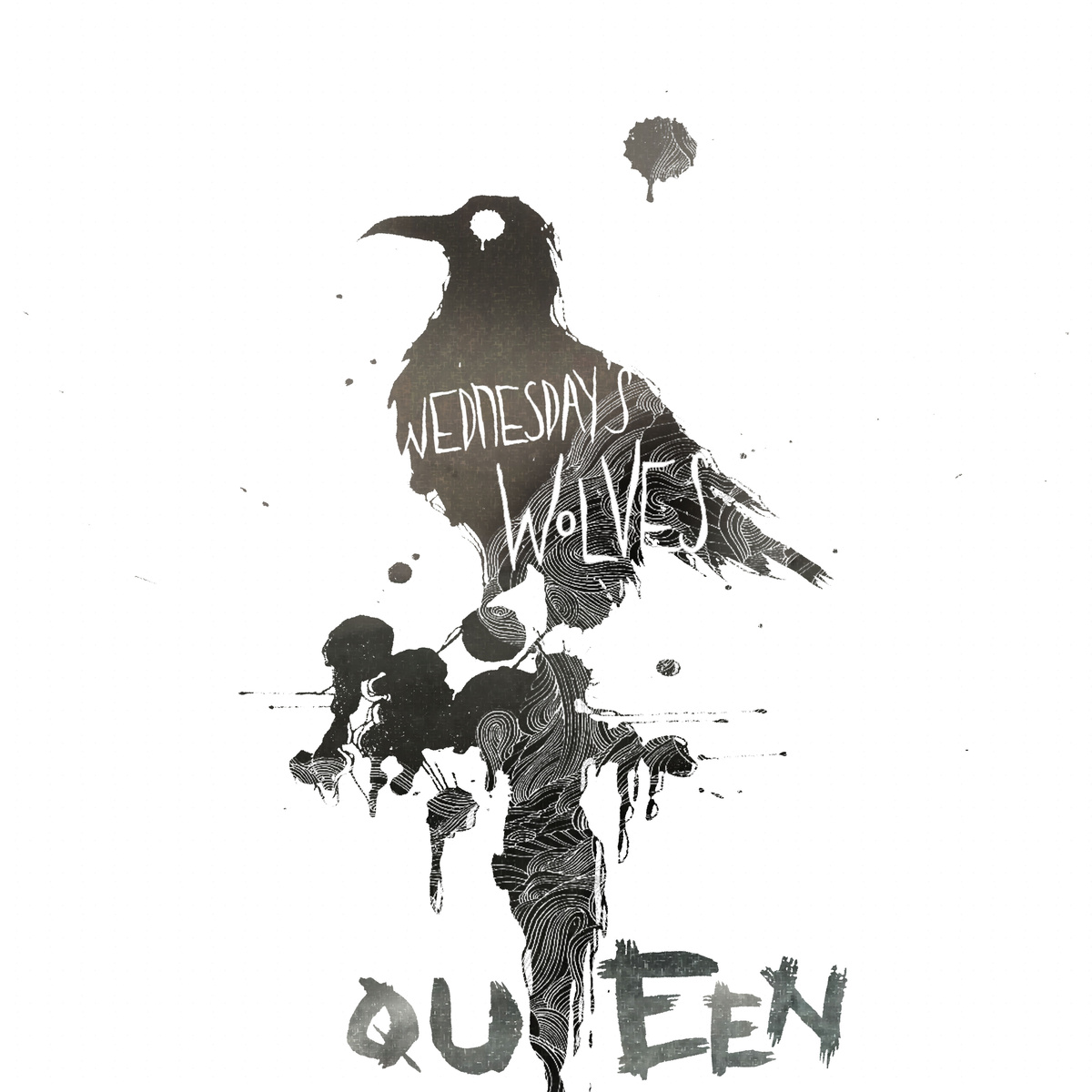
Wednesday’s Wolves’ debut EP The Queen EP makes an ambitious and largely successful attempt at such an impact, with a record that ends up being much, much greater than the sum of its sparse musical parts. The ridiculously gorgeous album art doesn’t hurt either!

The brain child of Ysabelle Durant and Chrissy Renker, The Queen EP avoids some of the familiar trappings of the indie folk genre and embraces others wholeheartedly, providing 12 minutes of hauntingly beautiful music that runs through a whole gamut of emotions.

10366149_312729945549842_2356352014833936504_n

 Chrissy and Ysabelle staring wistfully at the ground/horizon

 The EP starts off with “The Stranger’s Waltz” – an understated, harmonized musical delight that showcases the duo’s talent for making magic out of almost nothing. Chrissy’s rhythm-guitar-waltz and Ysabelle’s chilling glockenspeil do a great job of enrapturing right from the start, but it’s when their blended voices kick in that they truly seize your soul. Chrissy and Ysabelle each have vocal textures reminiscent of a mix of Joan Baez and Natalie Merchant, and together are able to create some incredible harmonies, particularly in the final verse’s round.

The song is backed by some vivid (albeit somewhat obscurantist) lyrics:

“All the golden coins the callers gave to me
They vanished as the daytime caused the dark to flee
And all the silver starlight that lit up my way
It faded as the sun came up, turned silver into grey”

Reading a lot like an early Neil Gaiman draft (which would make sense, given the American Gods reference hidden in the band’s name), the lyrics paint a romanticized, gloomy picture of a symbolic “morning after.”
Up next is “War Paint.” Despite the aggressive title, the song continues the musical theme of minimalist texturing, albeit this time in a major key. Chrissy’s finger-picked guitar provides a soft but sturdy framework on which to hang her lovely reverb-laden voice. Again, Ysabelle’s glock provides a punctuated descant at all the right places.

The cheerier tones of the song are somewhat betrayed by the darker lyrics: an abstract imagery-laden take on what seems to be broken love.

“War Paint” seems to capture the electric atmosphere of the world after a Thunderstorm, making it a great song to listen to during this monsoon season!

Rounding out this too-short EP is the titular “Queen.”

“Tamer of the savage beasts
And so much braver than I ever could be
You’re queen of all that you survey
And ruler of the youth that stayed in me”

“Queen” continues the upbeat trend of “War Paint” by sticking to finger-picked major key guitar. Not dissimilar to Goldspot’s “Miss Johnson” in its musical approach, “Queen” relies equally on all of Wednesday’s Wolves’ best elements. Ysabelle’s cajon makes its presence felt properly for the first time, providing a scattered barely-there rhythm that fortifies Chrissy’s finger pickin g and allows for a marvelously mellifluous vocal line to drive the song forward. “Queen’s” bridge features Ysabelle finally going to town on her glockenspiel, creating a rhythmically intricate melody that leaves traces of itself in one’s memory long after the song (and EP) is over.

The Queen EP is a wonderful debut effort, and is evidence of a band with a bright future ahead and the ability to stick out in an overcrowded genre. Future efforts could stand to see some more musically complex work to accompany their wonderful vocal textures and moods, but it’s clear that this level of musical craftsmanship is definitely not out of their grasp.


The Queen EP is available on Bandcamp for livestreaming and download on a “name-your-price” basis. Physical CDs are also available at the band’s live shows, for those of you lucky enough to live in England.  Check out Wednesday’s Wolves on Facebook for more updates!

Experimental Perverteres: A Conversation with Begum

22 Jul

Photo courtesy Anika Mehta.

New Delhi-based Begum are the most exciting band we’ve heard this year. Two members of the band, Karthik Pillai and Karan Singh, are from the gypsy/cabaret/indie act Peter Cat Recording Company. With Begum, their unmistakable Peter Cat madness is flavored with bassist Kshitij Dhyani’s masterful touch of elegance. It’s a perfect combination.

It’s no wonder, then, that their lead single “Waiting” is such a stunning debut. Karthik syncs his trance-like guitar groove perfectly with his melancholy singing. Karan’s drumming breathes inside delicate spaces as well as it drives segues between different phrases. Kshitij’s basswork is understated and moody, and all the more indispensable for it. The lyrics are poetic enough to feel the song’s melancholy and mysterious enough to add your own imagination to it.


Top Five Records had the chance to have a little chat with this promising young band from the country’s capital. What transpired next was a mad, strangely thought-provoking affair, much like the band itself. Read for yourself:

Top Five Records: Let’s start with the basics. Why Begum? What’s behind the name?

Begum: The name Begum is a tribute to the Queen Preeto, who reigned during the 5th century of Salil Ankola in Noida Sector 18. During her reign, hipsters, indie musicians and other things you can find at dollar stores were given a special place in her court. Her patronage towards Chinese artifacts and other things without a future beyond six months inspired us to come together and produce music with the shelf life of a Durian.

TFR: What pulled you together to form Begum?

Begum: Two smugglers Kshitij and Kartik were caught illegally transporting guitar riffs across the border. During interrogation, they conceded their guilt and were summoned to deliver a bribe in the court of the Begum. While presenting their bounty to the all-knowing Begum, they accidentally hit a set of sacred occult notes. One of the Begum’s guards, Karan, ran to stop them and, before anyone could notice, they were transported to an alternate universe. Now the three men have joined forces to jam until they find the correct set of notes to go back home.

TFR: When did you guys first get into music? What did you grow up listening to?

Begum: We grew up listening to Government propaganda, still our favorite when we need to kick off them blues about our future or where this country is headed. We got into music to prolong this dreamy, blissful, ignorance-fuelled state of oblivion and share the perils with our concerned friends, relatives and parents. Our music comes recommended as the best background score for an intervention by one in four psychologists in Nangloi area of Delhi.

TFR: Tell us a little bit about your single “Waiting”. What’s the story behind it?

Begum: The brain has been flooded by the discharge of the pineal gland cutting off all connections to the body and leaving the brain in complete awareness of its descent into numbness. In the song, the individual is having flashbacks and is viewing himself/herself in second person and third person as he/she slides into death and emerges as free energy, alive and malleable with a certain amount of consciousness. In one word: transcendence.

TFR: Most of your online presence features the image of a lady wading into the ocean. Does the image have any particular symbolism?

Begum: That image was artwork for our single “Waiting” and made sense somehow in context with the song. It has now been changed to the artwork for our new single “Chinbien”, which is being exclusively launched by Wild City. These are Top Secret archival images of rejected ideas for a personality makeover media campaign for one of the top Indian politico-crats, rejected on the grounds of being too nauseatingly humane.

Photo courtesy Begum.

Photo courtesy Begum.

TFR: There’s a certain dreamy melodrama in your music that few other artists in India can attempt, let alone pull off so perfectly. What inspires you to create this very unique style of music?

Begum: It’s a natural state of being, we suppose, the slow motion (as slight as it may be) effect is something we appreciate. But we think this question is best answered by the following quote by former British Prime Minister Benjamin Disraeli, delivered in 1878 while delivering a speech in reference to his liberal rival and famous orator William Ewart Gladstone in the Parliament of the United Kingdom

“You see the whole country of the system is juxtapositioned by the hemoglobin in the atmosphere because you are a sophisticated rhetorician intoxicated by the exuberance of your own verbosity.”

TFR: On a similar note: we think that the music you guys make would be best suited for a particular sort of pensive, elegant atmosphere. What would be your ideal gig venue?

Begum: Parliament of the sovereign, socialist, secular, democratic, republic of Akagarma. A Golden Pillared Opera house along with an orchestra and an immersive and subjectively responsive lighting and visual setup. Globes radiating sound and the warmth of sound pressure levels, tinted audio generators pulsing and rushing through the crowd.

TFR: The video for your new track “Chinbien” features a surreal series of imagery and video clips. How important are visuals to the end product of your music?

Begum: While browsing the Internet to solve the mystery of feline dominance, our video director Samridhi Thapliyal was stuck by a sudden and deeply saddening inquisition. What if aliens are trying to establish communication with us but their mode of communication lies outside of the aural and visual abilities of a common Honey Singh fan? So, to extend a hand of friendship and a proposal for a symbiotic relationship with the dimensions outside of human experience, the music video has been a humble attempt. It is a short catalogue of what aliens should expect to see on a vacation trip to Earth, which Samridhi expects to be picked up by the tourism department of our planet someday.


TFR: If your music had to be slotted between two albums of any language and any genre, which two would it be?

Begum: We would be forced to slot our upcoming album “Begum Bagh” between the available recordings of broadcast from “Phoney Wars” and a spoken word album of all of Alfred Jarry’s work, synchronized to free jazz and Altaf Rajas Alaaps.

TFR: Tell us one artist (Indian or international) that you’d most love to work with.

Begum: Tony Clifton

TFR: When can we expect the Begum album?

Begum: The Begum album will be out by August followed by a tour and one more music video coming up as well somewhere after that. Also we are in the process of composing an Indian Opera, hopefully debuting it sometime next year.