Archive by Author

Guns N’ Roses – “Not in this lifetime” – live at East Rutherford, 23rd August, 2016

27 Aug

Fewer band-break-ups had broken more hearts around the world than Guns N’ Roses’ infamous split back in 1996. It wasn’t surprising when it happened. There was no denying that back in the day, they were the most combustible band in the world – a boiling concoction of rag-tag junkies, contraband substances, and one massive ego, barely held together by a brand of music that was almost as lethal and explosive as they were themselves.

The split was therefore completely understandable. The fact that Axl Rose and Slash, arguably the most iconic on-stage pairing of the time would never be seen on the same stage again, caused many a tear to be shed. The story of Gn’R became this almost poetic narrative of the life of a rock n roll band that had risen from anonymity, exploded on to the global stage as an almost overnight success, and then imploded as spectacularly within a very short span of time. Of course, the name Gn’R would continue to live on, and Axl would continue to perform with his new band members till as late as 2011 – but for all practical purposes, the real Guns N’ Roses – would be history. Given the bitterness of the split, and the rancor that existed between Axl and the rest, a reunion seemed impossible.

Fast forward 2015. Rumours of an improbable reunion of the classic Guns N’ Roses had begun doing the rounds on social media. Towards the end of 2015, the official Guns N’ Roses website verified the rumours, and teased a historic “Not in a lifetime tour”. The entire classic line-up wouldn’t be involved: but Axl and Slash would be. What more, they’d be joined by the original bassist, Duff McKagan, and keyboardist Dizzy Reed (who had stuck by Axl for the entire duration of the split). If everything went according to plan, this would possibly be the greatest, most historic reunion in music history ever. An LA based marketing expert even predicted, “… the band only need to do a year on the road and would never have to worry about money again in their lives.”

573C9D1D-guns-n-roses-invite-lenny-kravitz-to-join-not-in-this-lifetime-tour-will-support-on-select-dates-image

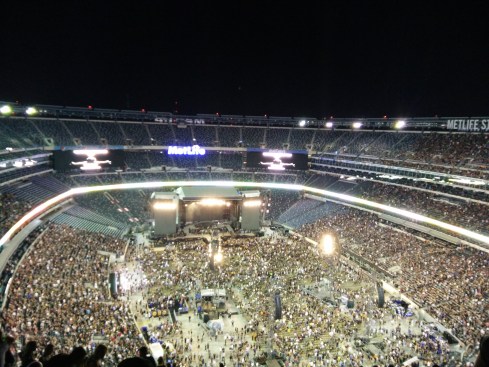
Thus when the tour did get underway, it was fitting that Top Five Records would be there to attend one of the concerts. Thus, on a warmish summer evening in New Jersey, I found myself perched atop a seat in the massive MetLife Stadium – a stadium of a size that truly reflected the immensity of the act that was about to unfold.

The opening artist of the night, Lenny Kravitz got the music underway with his brand of R&B and soul, and played out an entertaining one hour set. But it wasn’t going to be until late in the night that the crowd would get a glimpse of those who they had really come to see. It started out with a recorded version of the Looney Tunes theme (that has become a staple in this tour), and then yet another recorded track – Harry Gregson-Williams’ The Equalizer, which eventually transitioned into the first song on their set-list – It’s So Easy – as the crew exploded on the stage in a dramatic manner. The collective cheer that erupted around the stadium was quite unlike any audience I had heard in my life. These were people – almost rabid fans – who had waited for two decades to see one of the most iconic groups perform live, and here they were being treated to just that.

The set list that followed would have left no fan unsatisfied. In all fairness, their discography isn’t really massive – just the four “classic” albums – that had catapulted them up billboards around the world, and then a fifth in 2007. And the concert was thus, nothing short of a tour-de-force, that explored their entire oeuvre right from their legendary debut Appetite For Destruction, through the epic double Use Your Illusion, a smattering of covers, and some select numbers from Chinese Democracy.

The 80000 capacity MetLife stadium

The 80000 capacity MetLife stadium

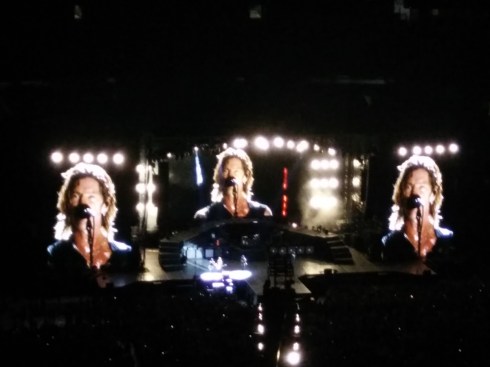
It’s So Easy was followed by one of their more groovier songs – Mr Brownstone. The title track from Chinese Democracy came next, and then they embarked on one of their biggest hits Welcome To The Jungle, the same song that had announced their arrival to the world back in 1987. The moment when Axl screamed “Do you know where the f*** you are? You’re in a jungle baby. Time to die!” will perhaps live on in my memory for the rest of my life. That, followed by Slash’s instantly recognizable riffs set the stage for what would be one of the greatest performances that evening. Axl dispelled all doubts about his vocal prowess that some fans might have harboured, given his age. His voice reached the same raspy zeniths as it did plummet the lowest of depths with great aplomb. Coupled with his electrifying on-stage presence it not just a memorable act, but one that also felt visceral. Slash, with his iconic Les Paul and his even more iconic swagger kept the riffs flowing effortlessly. Hit after hit followed – from the outrightly dirty Double Talkin’ Jive to the more mellow Live and Let Die and everything in between. They did all of their classics including Estranged, Civil War, Sweet Child O’ Mine (of course), and the author’s personal favourite, November Rain. November Rain saw Axl take his seat at the piano, and the recreation of what is arguably one of the greatest rock-ballads ever written left nothing to be desired. The emotion in Slash’s solos was palpable – one could almost taste it in the air. Of the various covers they did that evening, the guitar-only cover of Wish You Were Here stood out. For that, Slash was joined by Richard Fortus, and the pair constructed an absolutely ethereal guitar duet of the Pink Floyd classic. Other covers in the main setlist included the Love theme from the Godfather, and Knockin’ On Heaven’s Door, which Axl urged the entire stadium to sing along with him to. Finally when they concluded with one of their all-time classics – Nighttrain – the 55000 strong audience wouldn’t be silent – just yet. Thus, when the band returned on the stage for the encore, the applause that greeted them back, was absolutely deafening.


Slash and his Les Paul

Axl Rose


Slash and his Les Paul

Slash and his Les Paul


Duff McKagan

Duff McKagan

The encore consisted of one of their most soulful, acoustic, and soft numbers – Patience, which got the whole crowd singing along. This was followed by a very entertaining cover of The Seeker, and for the final act of the day the band put together a rendition of one of their most loved hits – and an absolute classic of the “stadium rock” genre – Paradise City. The anthemic chorus got the crowd worked up in a frenzy, and Slash’s dizzyingly fast riffs enraptured the fans. Coupled with a spectacular show of fireworks, Paradise City left many indelible marks on thousands of minds that night. It was well past midnight when we made our way out of the stadium, but the memories that we had gathered that night weren’t ones that would fade away any time soon.

guns-n-roses-photo-katarina-benzova

The whole crew. From left: Richard Fortus (guitar), Dizz Reed, Duff McKagan, Axl Rose, Slash, Melissa Reese (keyboards), Frank Ferrer (drums). Courtesy: http://radio.com/2016/06/17/guns-n-roses-add-opening-acts-to-not-in-this-lifetime-tour/

In the history of music in general, and rock in particular, there appear these flashes – flashes that hold great promise, but then fade away. Guns N’ Roses is one such flash. One can only imagine the contribution they could have made to music had they not had broken up, had they not gone on a 20 year hiatus from making great music together.

But then again, it is the very nature of being a flash, that makes flashes, so very special. Their fleeting nature is much like that of a shooting star in the sky, that you enjoy only while it lasts, and then feel lucky to have caught a glimpse of while it lasted.

In the case of Guns N’ Roses, the shooting star decided to make a comeback, and what a phenomenal comeback it was.

Photos and text by Subhayan Mukerjee. Follow him on Twitter @wrahool.

The Strokes: Future Present Past

10 Jun

The Strokes

Success came too early for the Strokes. The band’s first studio album, Is This It, is widely considered to be one of the most quintessential indie rock records of all time. Musical kingmakers like NME heralded the leather-clad quintet as the saviors of the entire rock genre. In an era marred by Linkin Park and Nickelback, the Strokes provided the soundtrack for the drunken heydey of an entire generation of now-nostalgic twentysomethings. What more could they achieve?

The threat of great expectations colored their next few albums. Sophomore record Room on Fire certainly had a handful of gems in the Strokes’ signature style; First Impressions of Earth had fewer. Disagreements often cropped up between the members, particularly against lead singer Julian Casablancas. In 2009, Casablancas noted to British daily The Sun that “a band is a great way to break up a friendship”. Demise seemed certain.

However, the band still owed two records to RCA, the label that won them in a bidding war during their prodigal days. The Strokes halfheartedly released Angles in 2011 and Comedown Machine in 2013, both to lukewarm reviews (at best). Their early days – immortalized in the carefree exuberance of Is This It – seemed to be gone forever.

Future Present Past

It is into this complex atmosphere that the band released the Future Present Past EP. Over a media-heavy two days in late May – uncharacteristic for the infamously aloof band – the Strokes released the four songs that make up the band’s first EP since January 2001. Finally unburdened from RCA’s stifling contract, the Strokes have breathed fresh air into their stagnant career.

“Drag Queen” is a dense piece driven by Nikolai Fraiture’s sludge-like bass line, almost reminiscent of mid-career Killers. The lyrics, oblique as with most Strokes songs, seem to hint at an anti-capitalist stance (“I don’t understand your fucked-up system, messing up the city/Try to sell the water, try to sell the air”). Could it be a message to RCA and the music industry?

“OBLIVIUS” hits closer to the band itself. “Untame me, it’s not my midnight yet” sings Casablancas on the opening line, speaking to the band’s fresh start after the five-record albatross. Musically, the song would fit right in on Room on Fire: not as crisp as their first songs, but certainly as driven by a clean click track. The song also features two enmeshed guitar pieces – one soaring, one pulsating – bedded under Casablancas’ condenser croon: all vintage Strokes. The EP also includes drummer Fabrizio Moretti’s remix of “OBLIVIUS”, wherein an electronic version of the bass line and guitar riffs are brought to the fore, atop a flattened version of Casablancas’ vocals.

However, “Threat of Joy” is the song that completely revives the Strokes. Nick Valensi and Albert Hammond Jr trade simple, crunchy guitar riffs over Moretti’s clean drums – straight out of Is This It. Casablancas opens the song with a Lou Reed-esque drawl but moves into an early 2001-version of himself, his voice filled with more joy than we’ve heard in years. “Place your bets this time/Just has to let it ride,” he ventures, perhaps talking of their newfound freedom. If you loved Is This It, you will love this song: it’s right up there with “Someday” or “Hard to Explain”.

In a way, Future Present Past is perfectly named. The three songs present a condensed version of the Strokes’ repertoire: from the unadulterated, old-school perfection of “Threat of Joy” to the soaring complexity of “OBLIVIUS” and finally to the more arcane “Drag Queen”. Unencumbered by record companies and with absolutely nothing to prove, the Strokes have all the choice in the world. We’re excited no matter what they do from here.

Dream Theater – The Astonishing – live in New York City, 23rd April, 2016

1 Jun
Picture courtesy: The Metalist.

Picture courtesy: The Metalist.

If you follow the concert reviews that I write for this blog (for example, this, or this, or this, or well, even this), you would notice my incurable – almost clinical obsession – with a rather particular genre of rock music – viz. progressive rock.

The one band that opened the floodgates of my obsession for this genre was Dream Theater. Of course, I had been listening to Pink Floyd before, not quite knowing that A Dark Side of the Moon was “prog”. Or that the Beatles’ Sergeant Pepper’s Heart Club Band had actually laid the foundation of the concept album – which has become central to prog music today. And of course, once the floodgates had opened, the usual prog suspects followed – from the 70s British scene right up to the progressive metal of today. But Dream Theater was that one band that really introduced me to the genre, made me aware of what the genre really entailed, and taught me how to appreciate music that’s instrumentally elaborate and technically sound.

Thus, when Dream Theater announced their 2016 tour to support their new album, “The Astonishing”, it wasn’t long before I had a ticket for myself for their NYC show at Radio City Music Hall, on the 23rd of April.

dreamtheaterpromo2013_638

Picture courtesy: Blabbermouth

Now, I am well versed with most of Dream Theater’s discography, but The Astonishing is a new album. It was certainly brand new when I booked my tickets – it had released only a week or so back. So getting to “know” the album would be central to the concert experience. Thus, during the next few months – right till the hour before the concert – I was on a mission to familiarize myself with the album, to the very best of my abilities. I’ve written before, how prog songs don’t hit you immediately. They aren’t like “Hey Jude”, or “Stairway to Heaven”, that you fall in love with, the moment you hear them. They require multiple listens; they grow on you slowly, steadily; and after you’re well aware of the various twists and turns that the song takes during its generally expansive lifespan, do you really begin to appreciate them in their entirety. The Astonishing is no different. However, from a Dream Theater perspective, it does see a marked departure from their usual albums. There are no longer gratuitous instrumental solos in each and every song. There’s no 20+ minute opus towards the end. Lastly, and most interestingly, there’s a lot more focus on vocals – arguably more so than on any other Dream Theater album so far.

All in all, by the time the concert began, I had assimilated The Astonishing thoroughly. I had poked and prodded every section in it with my my scalpel of musical critique. I had examined virtually virtually second of the album under my magnifying glass. In the end, I felt fairly prepared to enjoy the concert. It was after all, going to be my first Dream Theater concert – and I was determined to make it a memorable one.

The Astonishing is a concept album. In other words, it’s not a set of unrelated songs like a general music album. The songs make up a narrative, and they follow in logical sequence, one after the other. The narrative generally has characters, a plot, and a denouement. The storyline in The Astonishing is a fairly typical one that one finds in progressive music. It explores themes such as dystopias, futurism, and creates a storyline set in a post-apocalyptic United States, where freedom of musical expression does not exist. Instead, all the music in this world is regulated by the Great Northern Empire of the Americas and produced by noise-machines or NOMACs. The plot follows the Ravenskill Rebel Militia in their efforts to defy this Empire using the power of their own music. Yes, the story does seem heavily inspired by Rush’s classic 2112, and also seems to draw from modern/popular fantasy franchises like Game of Thrones, and even Star Wars – but let’s get this straight – you really don’t get such albums these days. Sure, the world moved on from progressive rock in the 80s, but there’s still something about an album of this type – be it in the amount of thought that goes into it, or the incredibly high level of musical talent it showcases – that simply sets it apart.

Now, on to the concert.

A prog concert is a lot more than just a musical concert. There’s a lot of supporting paraphernalia – from sound effects, to props (remember Pink Floyd’s The Wall tour? Or Genesis during their Peter Gabriel days?) – that are used to create an experience that is more theatrical than simply musical. So was it the case with this. A number of tracks in this massive 34-track double album are purely synthetic tracks of pre-recorded sounds (Don’t roll your eyes, Pink Floyd used plenty of synthetic tracks too – like this or this). These pre-recorded tracks serve more of a narrative role than a musical role. Accompanied with videos and other props, these tracks serve the function of advancing the story. The first track for example, “The Descent of the NOMACS” – with its cacophony of electronic sounds – was used, to introduce the Noise Machines to the audience. As those sounds subsided, the instrumentals kicked in, and the music bridged into the second song, “Dystopian Overture” – a magnificent instrumental. And from there on, it was full-blown Dream Theater. The stage lit up in spectacular fashion, as John Petrucci, Jordan Rudess, John Myung appeared – seemingly out of nowhere – to massive cheers from the audience. Behind them, was Mike Mangini’s absolutely sensational double-decker drum kit. One could only discern the presence of a person sitting behind that contraption owing to glimpses of his flying hair that showed through the gazillion cymbals and drums that kept him engaged. The other highlight on the stage was Rudess’ keyboard, which looked more like a spaceship than a musical instrument. It swiveled around in all directions, about every axis, while his fingers performed the wizardry that has made him one of the greatest keyboard players on the planet.

IMG_20160423_201118

It wasn’t till the third song, The Gift of Music, that James LaBrie appeared on stage, swinging his arms wildly, and beating his palms with the mic. The vocalist, who has been splitting fan opinions for more than two decades now, looked quite the character . However, to be fair to him, what he lacks in panache that the other band members possess, he does make up for with the effort that he puts in to every song that DT record. Sure, his voice isn’t to everyone’s taste, but one cannot deny the absolutely incredible vocal range (Learning to Live, anyone?) and technical ability that he brings to the band. In fact, I’d even go so far as to say, that The Astonishing showcases his very best efforts till date. Apart for a rather high-pitched and frankly non-melodic portion in Lord Nayfaryus, his contribution to every song in this album is fantastic. If you were to turn a blind eye to his “I’m trying to be rockstar, but I’m not” histrionics, and focus only on his voice, he really is phenomenal. Because, let’s get this straight – these songs are complicated. It’s not easy to deal with unconventional time signatures that change over time, when you are singing live. But LaBrie absolutely nailed them all. He reached every high note with the most consummate ease (Brother, Can you Hear Me?), he was well aware of every twist and turn the songs had throughout the concert – A New Beginning was particularly memorable. And in the end, one couldn’t but help feel bad for the amount of criticism this top-class vocalist draws from fans.


IMG_20160423_224357

Nothing much needs to be said of the other band members. Being among the most decorated and critically acclaimed masters of their crafts, Petrucci, Rudess, Mangini, and Myung displayed a level of poise and technical proficiency that I’ve honestly not seen in a live concert before. Petrucci, the six-time G3 legend seemed to transcend all barriers of human ability with his guitar. Ruddess was in a league of his own, blitzkreiging his way through his keyboard, and the arsenal of other fancy gadgets that he is well known to use. Myung, unarguably the most unassuming of the lot, kept the supremely difficult bass riffs ticking like clockwork. Regarding Mangini however, I had a few reservations – not because he was any less good at the drums, but because the drummer has traditionally been the virtual “front man” for Dream Theater. When the legendary Mike Portnoy left the band, the band didn’t just lose one of the greatest drummers in the world. The band lost someone who imparted an identity to the band when they performed live. If you watch videos of past Dream Theater concerts, you’ll see Portnoy, not just as a drummer, but as the real “face” of the band. He awed audiences with his techniques on one hand, and commanded their attention on the other. He masterminded the sound, and orchestrated the people’s emotions, . With him gone, and with his replacement, Mangini, being more of a drumming machine than a human being, the band sorely lacks a person who takes on that onus. Brilliant with the guitar as he might be, John Petrucci isn’t really the flamboyant performer who rivets the audience’s attention upon himself. Rudess is too cerebral, Myung, too modest, and while LaBrie gets an A for effort, he fails horribly when it comes to being a galvanizing front man.

And therein was my greatest disappointment with the concert. You couldn’t put a finger on any single thing that was “wrong” with it. The music was beyond phenomenal. Each of the band members was at his very best. The atmosphere was surreal. But what was lacking was a personal connection. It didn’t feel like a truly live concert. I could well have been watching a recording of the concert, and I doubt I’d have felt anything too different than what I felt that night. Added to that was the fact that notwithstanding how well I had assimilated this new album “within” me, I still wasn’t as familiar with it, as I am with their earlier work. Therefore, while Dream Theater still remains one of my top bands, (and I will probably not give up an opportunity to see them live again in the future), this particular concert, unfortunately, did leave a few things to be desired.

words and photos by Subhayan Mukerjee (@wrahool)

The Last Shadow Puppets: Everything You’ve Come to Expect

28 May

everything-youve-come-to-expectIn 2008, the world was a different place for Alex Turner and Miles Kane. Turner was a shy lad, still getting used to the stardom accosted onto him after two hugely successful Arctic Monkeys albums. Kane was exiting from the Little Flames, a venture that failed to produce even a debut album, and touring with his new band, the Rascals, alongside the Monkeys. Perhaps as an escape from their main storylines, Turner and Kane began playing together backstage: a pair of gentle, romantic boys almost clinging to each other in a turbulent and uncertain time of their lives. This side project, dubbed The Last Shadow Puppets, culminated in a baroque-pop testament of drama and nostalgia entitled The Age of the Understatement.

A lot has changed in eight years. As Turner said in an interview with British late night host James Corden, TLSP seems to serve as an octennial documentation of the duo’s personal and professional lives. After five successful Monkeys albums, Turner has taken on a stereotypical rock-star persona (whether affected or real is still a matter of contention among fans). Kane has transformed into a modish cad, dating an array of models on both sides of the pond and attiring himself solely in razor-sharp silhouettes. Even in a very literal sense, both men have moved away from their roots in northern England to hedonistic mansions in LA. In a sense, Everything You’ve Come to Expect feels like a reconciliation between the 2008 versions of the two men and their 2016 versions.

This sense of reconciliation can be seen (as is often the case with pop stars) in their songs about girls. In 2008, Turner and Kane mainly wrote songs about wooing girls, in a tone that can best be described as early-Beatles-esque naivete. In 2016, the duo mainly writes songs about girls that have done them wrong, girls that are ill-advised pursuits, girls that are no more than that night’s entertainment, and so on.

In first single “Aviation” (about getting high, get it?), the narrator tries to convince a druggie girl with colorful eyes to start a casual relationship with him. In the eponymous title song, the narrator speaks of getting cheated on by a girl who liked him only because he was part of TLSP. “The Element of Surprise” takes a slightly different route; Turner talks about his rustiness at the wooing game, after meeting a girl who has caused him to fall in love after a long string of seemingly casual relationships. “Sweet Dreams, TN” is the thematic next step: an ode to his current girlfriend Taylor Bagley, who’s a Tennessee native with a septum piercing just like the girl in the song. Even though Turner’s friends and fans think of Bagley as a Yoko Ono of sorts in the Arctic Monkeys universe, Turner feels that he’s truly in love with her. It’s only on the album closer, “The Dream Synopsis”, that we see a glimpse of the old Turner. On that song, he reminisces to his new girl (probably Bagley) about his simple, pre-fame life in Sheffield – and immediately takes a self-conscious step back into nonchalance (“Isn’t it boring when I talk about my dreams?”).

Even though they have changed dramatically, one cannot underplay Turner’s signature lyrics. The Transylvanian descriptions on “Dracula Teeth” (“The full moon’s glowing yellow and the floorboards creak/C’est horrifique!”) paint a horror-movie setting for a girl that haunts the narrator like a ghost. On “She Does the Woods”, Turner speaks of a “spirograph of branches” behind the girl he’s shagging in the woods. On “Pattern”, he describes his complicated relationship with an ex as a spider slipping and sliding on an icicle. It’s the kind of intuitive imagery that we’ve come to expect from Turner’s words.

On a practical note, Everything You’ve Come to Expect does have everything you’d expect from a Puppets album: lyrics that smoothly roll off the tongue, the genius of Owen Pallett’s arrangement, the famed Turner-Kane chemistry. On a philosophical level, however, The Last Shadow Puppets no longer exists. What exists in its place is another side-project by an eight-years-later version of the same two men: a real-world example of the Ship of Theseus. The Age of the Understatement was a collection of lushly orchestrated novellas, created by two boys who wrote tender love letters in the age of Tinder and text message hookups. Turner and Kane are no longer those boys. In fact, they are now the very playboys that represent the “understatement” of modern-day romance. Understatement felt like a natural outlet; this album feels like more of a forced output. Still, it’s worth a listen, if only for Turner’s lyrics.

Best song: “Dracula Teeth”


Steven Wilson – Live in New York City, 5th March 2016

9 Mar

Steven-Wilson-concerti-2016

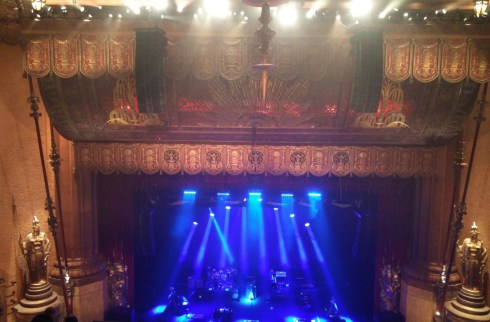
The disappointment was palpable. The thousands that had filled up Manhattan’s historic Beacon Theater on a cold March evening were probably beginning to regret their decision. A crew member had just announced that Steven Wilson, the main attraction of the night was unwell. For the first time in his 20 years of touring, Wilson had lost his voice on the night of a concert.

When he did come out on the stage however, the applause was deafening. Perched up on the first row of the balcony, I could hardly contain my excitement. Needless to say, Wilson was a person whom I practically worshipped. Being a huge lover of progressive rock music myself, I have often felt my musical taste to be somewhat of an anachronism – displaced in time by a few decades. Consequently, it is difficult to find musicians these days who create progressive rock in the manner it was meant to be created. Amongst the few who do create such music however, Wilson stands out as a towering, trailblazing figure – his greatness in the genre comparable only to the thematic depth of his compositions; his multifaceted brilliance, matched only by the melancholic beauty of his lyrics.

steven-wilson-11

Despite his illness that night, Wilson made a statement of intent that the concert would be unique, but that his vocal contributions would be limited. He went on to confess that his music was depressing, and that the crowd would definitely have to be miserable to have paid to come and watch him that night. With that bit of wry humour he began the first of his two part set. The first part was essentially a complete live rendition of his album Hand. Cannot. Erase. He called upon his harmonic partner, the very talented Israeli singer Ninet Tayeb to fill in his parts as he himself fulfilled his guitar and synth duties. All the disappointment that had burdened the atmosphere in the theater vanished the moment Ninet delivered a flawless, breathtakingly powerful rendition of the title track. Screaming through the chorus at an octave above the usual, she dispelled all notions of mediocrity and quickly established herself in the adulation of the audience. She continued her class act – tackling pieces ranging in vocal difficulty – from the relatively easy Perfect Life to the rather complicated Ancestral. Steven himself took over the vocals for the less demanding songs (Home Invasion and Happy Returns) – choosing to alternate with Ninet on several occasions. The other members on the set were absolutely top notch- particularly the drummer, Craig Blundell, who, Steven revealed was only “slightly less sick than he was”. The brilliance of the instrumentalists stole the show particularly, during the drum and keyboard heavy pieces – Home Invasion and Routine #9.

The second part of the set comprised Wilson’s earlier work with Porcupine Tree, and some of his own. The lead guitarist, Dave Kilminster who had sung 3 Years Older in the previous set returned to the vocals for My Book of Regrets. Ninet delivered yet another mesmerizing piece – this time a Porcupine Tree classic – Don’t Hate Me, but her crowning achievement of the night came in the form of Sleep Together – which saw her unleash a stunning vocal duet with Wilson. Her voice reached heights of epic brilliance while the audience looked on in awe and wonder. It wouldn’t be too far from the truth if one were to contend that she effectively stole the limelight from Steven that evening. The other pieces in the set included Index and Vermillioncore – two of Wilson’s earlier works, both of which, much like the rest of the concert, had the Steven Wilson brand of eerie melancholia and pensive depression plastered all over.


The David Bowie tribute

The David Bowie tribute.

While the set officially closed with Sleep Together, the encore saw Wilson arrange a tribute to the late David Bowie – something that has become a running feature in his current North American tour. Ninet took to the vocals for one last time, while Wilson strummed along to the iconic space / psychedelic classic, Space Oddity. Needless to say, it was received with huge applause from the audience. For the last act of the night he requested the crowd to accompany him along for one of Porcupine Tree’s most loved numbers – The Sound of Muzak from the 2002 album In Absentia. The crowd acquiesced. The result was an absolutely thunderous recreation that left many a mark on many a mind that night. Wilson may not have sung a word in that song, but he had made his intent clear enough. Progressive rock is much more than singing the songs out loud. It has more to do with the state of mind, and the musical epiphany that results therefrom. And in that, Steven had absolutely nailed it, and driven home his point with a poise that belied his present indisposition.

29005e45-63a5-4e83-9fc4-2ef0c589336a


When one follows the meandering history of rock music in the 20th century, some names stand out more than others. This is not just owing to the oeuvre of work they created (though that certainly goes a long way) but also owing to the legacy they leave behind. Then there are the other names who didn’t quite make their effect felt in their time. Their music remained underground, only to be resuscitated much, much later by adoring audiences around the world. In spite of being largely eclipsed during their lifetimes, the influence they had in paving the path forward for rock music simply cannot be denied. Velvet Underground, and the enigmatic Lou Reed, for example, never achieved commercial success. But the legacy they left behind was monumental.

Broadly speaking, Steven Wilson has all the makings to be in the latter category. His music will never be considered “hip”. It will never hit the mainstream, nor will it ever feature high up on the Billboards. His voice will seldom be heard on popular radio. But even after years have passed –

after we’ve lost the skyline

we stepped right off the map

drifted into blank space

and let the clocks relapse,

… Steven Wilson will shine on like a star in the night sky. For his will be legacy that is timeless. A legacy that Nothing. Can. Erase.

words by Subhayan Mukerjee (@wrahool). Pictures by Karuna Ahuja.

Hinds: Leave Me Alone

6 Feb

It’s ironic that Hinds released their debut album, Leave Me Alone, in the peak of winter: there couldn’t be a more carefree summer sound. The title is also ironic, because their songs are a tribute to the genuine joy of being young and free in the Spanish sun.

Hinds - Leave Me Alone

Hinds is an up-and-coming indie rock girl band from Madrid, consisting of dual singers Carlotta Cosials and Ana Perrote, bassist Ade Martin and drummer Amber Grimbergen. Their sound is characterized by a youthful vocal interplay between Cosials and Perrote, layered over delightfully unrefined guitars and bass. (It’s really more fun than it sounds.) Besides, the band has perfected the art of making videos that are essentially extended Vines: candid portraits that capture how fun it must be to hang out with these girls-next-door.

Perhaps the most noticeable element of the album is the fluidity of their DIY garage sound. It’s clear that they aren’t focusing on musical dexterity – their melodies are often picked one note at a time – but that’s what defines their rough-around-the-edges sound. Hinds makes it sound so easy that you’re left wondering if good indie rock is really that easy to make. (It’s not: you need to be that young). For example, “Chili Town” layers simple sounds of the summer over heavily-accented sing-song vocals about flirting with a hot guy. The video fits perfectly – the girls are seen hanging around their neighborhood, doing everyday activities like drinking orange juice, chugging vodka, smoking cigarettes and catching Cheetos in their mouths.

It’s also clear that the foursome – especially Cosials and Perrote – are very good friends. Their dual-vocal style works especially well on “Bamboo”, which features Cosials’ deeper, more emotive voice volleying against Perrote’s chirpy pop sound. The two girls’ strong friendship, which forms the core of the band, is evident on the video for their excellent cover of British garage band Thee Headcoatee’s 1992 hit, “Davey Crockett”. In it, Perrote sprays whipped cream into her mouth and joins Cosials to dance on a table, on a bright summer’s day. In a sense, that one scene defines the band.

In 12 short pop gems, the band has captured the cheery, lighthearted essence of youth without any typical millennial trappings. They are happy, but not self-consciously so. They are the girls next door, but they aren’t trying to be. And it is that sincere likability that powers Leave Me Alone and leaves us extremely excited about the band’s future.

The Top Five Albums of 2015: Neeharika’s List

31 Dec

2015 has been a great year for music, particularly for solo artists. Adele released 25, a follow-up album to her groundbreaking age-denoted 19 and 21 that immediately rose to the top of charts and minds. Attention-grabbing British superstars aside, the underground scene saw the meteoric rise of gender-fluid pop stars, solo ventures of established bands, and a general proliferation of great individual-driven acts. So without further ado, here are the Top Five albums that caught our attention this year.

  1. Multi-Love, Unknown Mortal Orchestra

5

The Auckland-Portland collective, driven by singer-songwriter Ruben Nielson, has been a critic favorite since the release of their self-titled debut album in 2011. In early 2015, the band released Multi-Love, an album that defies the psychedelia genre by incorporating minimalist versions of vintage pop elements. For example, the eponymous track is a shimmery mix of Lonerism-era Tame Impala and your favorite Scandinavian pop from the 80s. On “Can’t Keep Checking My Phone”, a slinky horns section segues into a syncopated interpretation of a disco-heyday track.

In fact, both tracks highlight the stylistic theme that pervades the entire album: the fact that Nielson has a damned good ear for understanding how to turn a musical trope inside out. Take “The World is Crowded”: it’s counter-intuitive that the song could be that sonically pleasing when it has so much potential to be sped-up and jazzed-up into, say, a Maroon 5 hit. But Nielson makes it work, and with great confidence. The same with “Puzzles”: there’s enough snaking bass on there to pique Josh Homme’s interest, but Nielson tames the beast with his chosen pace.

Overall, Multi-Love starts off as a fresh take on psych-pop and ends as a stand-alone great album. Guaranteed to stay with you a few years.

Best track: “Can’t Keep Checking My Phone”

  1. Art Angels, Grimes

4

Grimes shot to the top of the charts in 2011 with her absurd, literate brand of synth pop. The music video of her viral hit, “Genesis”, was inspired by a Judgment Day painting drawn by a 15th-century Dutch religious painter, and she considers Hustler Magazine CFO’s daughter Brooke Candy as her personal muse. Her idiosyncrasies may paint her as purely an art-pop phenomena, but with Art Angels, Grimes successfully crosses over into pop that can be enjoyed by all, no matter personal dispositions towards abstract art.

What surprised us on first listen is the fact that almost every track on the album could be a bonafide pop hit, if only exaggerated with a few mainstream flourishes. However, Grimes’ eccentric touches – whether it’s the vocal trills on “Flesh without Blood” or the K-pop-inspired AutoTune on “Kill V. Maim” – elevate the album much beyond its mainstream confines.

Art Angels really rises above the bar set by Visions because of the sheer number of new landscapes that Grimes has explored. “Venus Fly”, featuring the inimitable Janelle Monae, has a bomb-ass beat that could be the soundtrack to an advert by an impossibly-cool fast-fashion brand. If “California” came on the radio, you would be sure that it was a remixed version of a Taylor Swift-outtake from her country-darling days. Essentially, Grimes has managed to surprise us by being, well, normal.

Art Angels sees Grimes evolve from a wildfire underground act to a unique pop star that is okay with taking a wider audience into her fold. And that’s definitely a good thing.

Best track: “Venus Fly”

  1. Ratchet, Shamir

11183_JKT

Shamir and his home-town, Las Vegas, have one key aspect in common: they defy normality. Vegas is the world’s playground, a campy, adult-sized amusement park with rides that revolve around desperation and addiction. On Ratchet, Shamir defies age, gender, orientation and our expectations by creating ten tracks that succinctly sum up his generation.

“Vegas”, the album opener, is an ode to this very connection. With an androgynous voice as fluid as his gender, Shamir gives us an insider’s view into life in Sin City (“You can come to the city of sin and get away without bail/But if you’re living in the city oh you already in hell”) over a sparse beat that bubbles and pops. Vegas is the spiritual backbone of many of his sparkly dancefloor tracks, as well. For example, “Hot Mess”, with surreal Hot Chip-esque beats slathered against an acid house bass, hides anguish behind hypnotic Technicolor, much like Las Vegas does.

Shamir also stands out as the best representation of his post-millennial generation, a group that has never known life without the endless possibilities facilitated by the Internet. On “Make a Scene”, a dizzying ode to poor teenage decisions, Shamir exhorts you to kiss strangers in lust-fuelled nights while simultaneously thumbing his nose at superficial Tinder culture. He expands on this theme on “On the Regular” – “Don’t try me, I’m not a free sample”, he chides, atop a dazzling mash-up of boasts reminiscent of Le1f and Azalea Banks. It’s only fitting that the song has been used for Android Wear commercials!

With Ratchet, Shamir has proven that he has a future as bright as his hometown’s glittering Strip. Expect more from this guy, for sure.

Best track: “On the Regular”

  1. In Colour, Jamie xx

2

Jamie xx, one-half of Britain’s foremost minimalist act the xx, is a master of repition. He knows how to balance a layer, carefully and precisely, until the track becomes a chaotic, living beast – like a Jenga tower in reverse.

While the xx is mainly known for breathy vocals over sparse beats, In Colours shows off the range of Jamie xx’s textural arsenal. Jungle beats form the perfect, if unlikely, minimalist element on “Gosh”, which reels you in with chant-like thumps that belie a melody forming right in front of your ears. On “SeeSaw”, a trip-hop pulse creates the perfect anti-thesis to xx bandmate Romy Croft’s signature dreampop vocals. “Obvs” is a four-minute electronic paean to the steelpan; it’s even more magical than it sounds.

The album-standout “I Know There’s Gonna Be (Good Times)” just serves to prove Jamie’s hypnotic dexterity. Although the song features Young Thug spitting lyrics that would make Lil Wayne blush, and wonky dancehall beats from Popcaan, the genius lies in Jamie’s skill in synthesizing these elements into a summer-time radio hit.

On In Colour, Jamie xx displays layering wizardry that hasn’t been seen since this side of Merriweather Post Pavilion. A musical roller coaster, if there ever was one.

Best track: “I Know There’s Gonna Be (Good Times)”

  1. Currents, Tame Impala

1

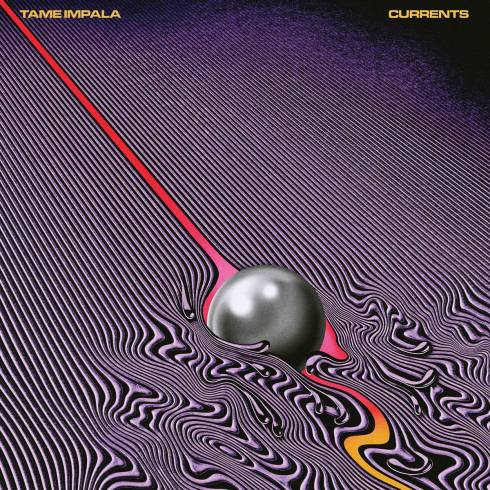
If you’ve been reading our articles for a while, you know that we’re great fans of Tame Impala. The Perth pysch phenomenon’s Lonerism earned numerous mentions on our articles throughout 2012 and eventually topped our year-end list. It’s déjà vu, then: Currents is, in our honest opinion, the best album of the year.

Over the three years since Lonerism, Kevin Parker – the one-man army behind Tame Impala – has grown considerably. His words have sharpened, his beats are more full-bodied and his anguish is far more complex. While previous records allowed us not-so-fleeting glimpses into his brooding mania, Currents shows him alternatively trying to let go more and hold on tighter – a fascinating combination that leaves you hooked from start to end.

Nowhere is this more apparent than on the haunting album-opener “Let It Happen”. Parker speaks of a voice telling him to let his paranoia go, but undercuts his would-be catharsis with gloom that chills you to your bones: “If my takeoff fails, make up some other story/And if I never come back, tell my mother I’m sorry.” It’s a train-wreck, slowed down to a speed that underscores the stark beauty in destruction.

He shows progress, though. On “Cause I’m A Man”, he accepts his faults as the man in the relationship, slicing away at self-hate by handing over the reins to his woman (“You see, I have a conscience and it’s never fooled/ But it’s prone to be overruled”). “Eventually” sparkles with liberation, after a break-up that would have left erstwhile-Parker in a death spiral (“But I know that I’ll be happier/And I know you will too”). It’s an interesting turn of events.

Currents lies at the exact sweet spot of lyrical genius and musical innovation, alongside its two predecessors. It’s also perfectly-named: Kevin Parker is changing as a person, and his music circles him like an eddy in a flowing stream. Aptly, Currents will change your life – if you just let it happen.

Best track: “Let It Happen”

NH7 Weekender, Kolkata 2015

18 Nov

Well, it is finally over.

Months of anticipation and planning, the mad rush for tickets, waiting in bated breath for the biggest music festival of the city; and NH7 Weekender lived up to all of that and then some more.

nh7It had started quite a few months back, when the entire music-loving community of the city was shocked by the announcement of this year’s lineup. Megadeth: the name was enough to send the city scurrying for tickets. Shillong and Kolkata would witness Megadeth, while Delhi, Pune and Bangalore would have A.R. Rahman. However, unlike the other venues, for Kolkata this was huge. While a few international bands have played here before, nothing of this scale had ever happened in the past. A lot of people had their doubts whether it would actually materialise in the end, but even the most pessimist of the lot bought the tickets anyway. No one risked regret.

Day 1

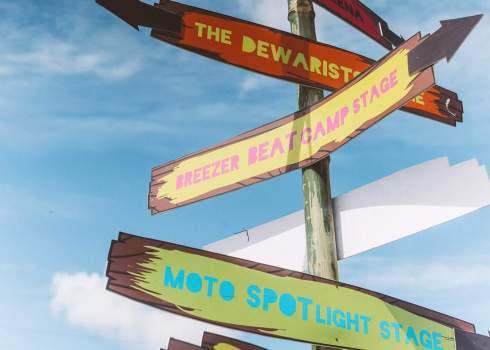
The venue this year was different, further away from the city centre and less accessible than the one which hosted the event last year. But on reaching the venue, we were surprised by how elaborately organised things were, right from vehicle parking provisions to free autorickshaw rides from the parking to the main arena. There were sufficient number of ticketing counters, all adequately staffed with crew members eager to help. Once we entered the venue after completing a thorough security check, we were greeted by the usual halcyon atmosphere. The entire ground was brilliantly decked up, with strategically placed pointers to the five main stages for the aid of music lovers running around trying to catch different acts, inflatable bean bags which came to the rescue of those aching legs, amazing food and beverage counters helping everyone to refuel their energy levels. What was good to see was the sheer diversity of the people who had turned up. The crowd included people from all age groups and all backgrounds, united by the love of music.

The biggies in the day 1 lineup included Kailash Kher and his band, Nucleya, Parikrama, the Baiju Dharmajan Syndicate and Cactus, representing the local rock music scene. Kailasa rocked the stage belting out his signature hits like Rand Deeni, Tauba Tuaba, Saiyaan and Teri Deewani. He even invited some girls on stage to shake a leg with him. Guess whose gig overlapped partly with Kailasa? It was Udyan Sagar aka Nucleya. While he has been in the music scene for almost 15 years now, it was the release of his EP Koocha Monster back in 2013 that placed him right in the centre of India’s rising EDM scene. The crowd lapped up everything he served, right from the bass-heavy tracks of Koocha Monster to the more futuristic ones from his most recent EP Bass Rani. Cactus shouldered the lone responsibility of showcasing Bengali rock at this year’s festival and man did they step up! The Bacardi arena was chock-a-block with people cheering and singing along to tracks like Holud Pakhi, Buddha Heshechhe and Shudhu Tumi Ele Na. The Baiju Dharmajan Syndicate and Parikrama also performed at the Bacardi arena amidst much adulation of Indian rock fans.

Baiju Dharmajan bends some strings

Baiju Dharmajan bends some strings

I was a tad bit disappointed with the former in the sense that it was less of a group act and more of a solo show, but then listening to the ‘God of the Small Strings’ is always a delight. Among some of the other quality acts which stood out were those by Nischay Parekh, Prateek Kuhad and Swarathma. One guy who deserved special mention was Jivraj Singh, who had two consecutive performances. He played with Nischay Parekh at first on the Jack & Jones All Star Jamm stage, and then followed it up with a mindblowing act on the Moto Spotlight stage as part of PINKNOISE. The band originally consisted of lead guitarist Amyt Datta, Jivraj on drums and his parents, bassist Gyan Singh and vocalist Jayashree Singh. However, since Gyan Singh passed away they have been playing as a trio. While the performance was quite impressive and refreshing to say the least, Jivraj shone brightly with his futuristic-looking drum setup and plethora of skills.

Day 2

With an even more action-packed lineup, the second day of Weekender kicked off with acts by Neeraj Arya’s Kabir Cafe with their neo-fusion rock set and The Bartender with their refreshing jazzy take on old Bollywood classics like Khoya Khoya Chand, Hawa Hawai, etc. Comparatively smaller local bands like Underground Authority, Neel and The Lightbulbs gave impressive performances as well. Two separate metal acts which added to the all-metal atmosphere were Zygnema and Undying Inc, both at the Bacardi Arena. They had metalheads going crazy, building on to the anticipation for the headlining act of the night. Amidst all the metal hullabaloo, there were a couple of biggies which stole the limelight by their own right. The first was Papon and The East India Company. Now while a few of their songs were quite well-received and got the crowd grooving and singing along to the folk-fusion on offer, personally I expected them to deliver a bit more. Shaa’ir+Func, lead by Monica Dogra delivered a powerful performance at the Motorola Indie stage. However, the biggest gig of the evening apart from Megadeth had to be the one by The Wailers. There is something transcendental about good reggae music. From the moment vocalist Dwayne ‘Danglin’ Anglin, Aston ‘Family Man’ Barrett and company started crooning, the whole ambience was transformed into a magical one. Get Up  Stand Up, Buffalo Soldier and No Woman No Cry got literally thousands of people singing along. The rastafari spirit was further augmented when they called Papon upon stage to accompany them in rendering the cult song Exodus.

The crowd from every nook and corner thronged to the Bacardi arena as soon as the Megadeth records started blaring out around 8:15 pm. The acoustic system sounded a lot like the JBL VTX series which debuted in India in the 2013 edition of the Delhi Weekender to me, but I couldn’t be sure. The chants of ‘Megadeth’ only grew louder by the minute and metalheads were almost on the verge of getting impatient when the band took stage. It was about 8:50 pm. They opened with Hangar 18, took a small break and came back to belt out consecutive electric performances of songs like In My Darkest Hour, Trust and Sweating Bullets. One of the highlights of the act was that Chris Adler, the drummer from Lamb of God, was collaborating with Megadeth as part of a world tour before the release of their joint studio album Dystopia, which is scheduled for release next year.

Megadeth

Megadeth

While Megadeth has never really had any one drummer for too long, Shawn Drover was doing a pretty good job for the last 10 years, which  also made him the third longest serving member of the band after Dave and David. Now while Shawn was one amazing drummer by his own right, I had always felt he was too technical for the style of music Megadeth stands for. Chris Adler, however, is in a different league altogether. A perfect blend of technique and soul, with some of the most killing kick techniques and double bass I have ever heard. That Chris didn’t have a lot of time to fully adapt to all the songs of the band was evident, as he did take a little time to slowly warm up. But by the time Dave had launched into Fatal Illusion, one of the songs from Dystopia, Chris had come into his own. What followed was 45 minutes of sheer frenzy, with back to back hits like A Tout Le Monde, Symphony of Destruction, Peace Sells But Who’s Buying, with the band choosing to end with Holy Wars. From some serious headbanging to moshpits, the Kolkata crowd matched the band’s enthusiasm every step of the way. Insane shredding from Dave, bass solos from David, it was the entire package alright. While the stage lighting could have been better, the screen in the background played clips from movies which had references to Megadeth, like Silver Linings Playbook and Wayne’s World 2, in between songs. By the time Megadeth were done and gracefully bowed out in true spirit of artists, the crowd had gone bonkers and were still screaming their lungs out for some more.

As the people sauntered back with sore throats, aching necks and numb legs, all I could hear was how amazing an experience they had had and how they could not wait for the next edition already. Music had won the day once again.

words: Sayandeep Majumder, pictures courtesy the NH7 Weekender Facebook page.

Sayandeep is the default bong you run into when you saunter around the streets of Calcutta on a lazy Saturday evening. At other times, you can find him riding his bike (which he adores), watching football, or pretending to read Nietzsche. Unlike a default bong, however, he spends a fair amount of time in front of the mirror, styling his hair. He also possesses an eclectic musical taste, which was, unfortunately, all we looked at.

The Gloaming live in Philadelphia, 11/10/2015

14 Oct

Traditional Irish is probably not a genre of music that I am very well acquainted with. Far from it, in fact – it’s a style of music that I’d honestly never heard before. But then, last weekend, I had the opportunity to go for such a concert, and given my propensity to explore newer styles and genres, I decided to make full use of it.

The Gloaming was formed in 2011 by an eclectic group of musicians who having already established themselves in their individuals careers, had decided to experiment with stretching the limits of traditional Irish music and presenting it to a wider audience. They are a five-man ensemble comprising of fiddle master Martin Hayes, guitarist Dennis Cahill, singer Iarla Ó , Lionáird, viola/hardanger innovator Caoimhin Ó Raghallaigh and New York pianist Thomas Bartlett.

The-Gloaming-Fergal-Ward-83

As I mentioned, I am a complete stranger to traditional Irish music, but the manner in which they  melded  Irish tunes into a rather contemporary arrangement was indeed commendable. The vocalist was a master of the classical sean-nós a-cappella song style, and his powerful, soaring vocals blended beautifully with the viola, the fiddle and the piano. Their lyrics, often haunting and emotionally charged, are drawn from old Irish literature and folklore. Hayes’ and Ó Raghallaigh’s mastery with the strings made for some delightful improvisations while Bartlett’s impassioned piano performance meant that he got so absorbed in his playing, that he managed to break the foot pedal twice in a frenzied bout of foot-stomping. The consummate ease with which he managed to repair it, during the performance was worthy of admiration as well.

The concert was definitely an ear-opener to a style of music that I had never been exposed to before.

Here’s a glimpse into their rich melodic oeuvre. 


Subhayan Mukerjee

A Wednesday’s Mix – Five Records to Get You To The End of the Week

11 Mar

It’s the middle of the week! Top Five Records is here to break up the monotony of your depressing existence with 5 (sort-of) new songs that will hopefully tide you over until the weekend!


Fuck Art, Let’s Dance! – “Atlas”

Fald

 Fuck Art, Let’s Dance! bring more to the table than just a colourful name and a call-back to Lawrence Ferlinghetti. “Atlas,” FALD!’s title track from their debut album (released in mid-2014), is a gorgeous testament to the art of understatement. The Hamburg-based quartet eschew their moniker’s call-to-arms (or legs, at least) and instead have created a song that mixes Nico Cham’s half-swallowed voice with simple drum-loops, clean guitar lines and some heavenly synth sounds that urge you to sit down and quietly contemplate your life. The song’s music video takes the urge further with its sparse visuals of chinese martial artists and dragons; all the action and movement somehow leaves you standing still.


Shubh Saran – “Mission Man”

Shubh Saran

India’s jazz scene is arguably one of the most malnourished of all the already-starved non-Bollywood music scenes, despite the existence of the Mahindra Blues Festival and sporadic city-based attempts to create a culture for it. This may explain guitarist Shubh Saran’s decision to seek greener pastures at Berklee College of Music. His debut EP, however, is an emphatic underlining of why this was the right call. A Room With a View is a beautifully crafted work of smooth jazz and neo-soul, with just enough world-music to not be obnoxious. Mission Man stands out as a killer track that makes amazing use of a saxophone, creating a jazzy hook that’s coupled with just enough piano and bass to fill out and accentuate the song. Admittedly not without a few rough edges and odd phrasings, Mission Man (and indeed the entire EP) is a great way to shut critics up who lament the modern jazz scene.


Young Wonder – “Intergalactic”

Young Wonder

Ireland’s musical gifts to the world just don’t seem to stop coming. Young Wonder are an electronic pop due from Cork whose new single is vibrant, haunting, and all other good things associated with the word “sparkling.” “intergalactic” dreamily begins its space-bound journey right from the first screeching synth sound, guided shortly thereafter by Rachel Koeman’s reverb-laden vocals that are dripping with whatever the ethereal version of honey is. Just shy of 4 minutes long, Intergalactic makes full use of both Rachel and Ian Ring’s considerable talents before allowing you to float gently back to the round, hungry for more.


Pond – “Man it Feels Like Space Again”

Pond

What is the city of Perth smoking? It’s hard to imagine, but Western Australia’s capital is home to some of the most talented psychedelic bands in the world right now. Pond have not quite managed to break into the cultural parlance beyond the island nation to the extent that their contemporaries Tame Impala have, but they’ve arguably pushed the psychedelic envelope a good deal further with their single “Man It Feels Like Space Again.” It’s 8 minutes of sheer, unadulterated bizarreness; a cacophony of discordant, disjointed instruments and effects and voices that fall just short of being grating and instead end up in a surreal, blissful territory that is its own. It’s so good it’s good. The only thing more perfectly twisted is the music video: it would be unfair to describe the outlandish, almost unsettling faux-kid’s show as Kafkaesque or Dadaist because that would just be lazy writing unworthy of the lysergide-infused spectacle.


The Bots – “All I Really Want”

There must be an inverse relation between band-size and overdrive, because two-piece LA outfit The Bots have some of the fuzziest, grittiest, energy-driven tracks this side of the White Stripes. It’s unfair (though quite common) to make such a comparison, though; where Meg and Jack White often seemed held back, caged, brothers Mikaiah and Anaiah Lei are unfettered and free to unleash their zeal. Their first single “All I Really Want” blazes by in two-and-a-half minutes and demands another listen, if only to keep those energy levels up. A jacked-up bass-line kicks in only to quickly segue into fuzzy guitars and Mikaiah’s deliberately-bored voice. What follows are crests and troughs of shout-singing followed by periods of short refractory, that are over all-too-quickly. The song is arguably anthemic for the milennial generation not just because of its lyrics (“Make a cup of tea/sit down and stare at the screen until I see something that relates to me/but it’s all so boring”) but with the music video: A Mac scrolling through a click-bait-titled Buzzfeed article. Literally the only time that image has made me happy.


And that’s our list! Love it? Hate it? Swept up by some third emotion we’ve failed to grasp? Leave comments below!