Archive | April, 2024

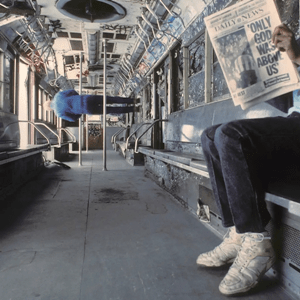
Only God Was Above Us

29 Apr

For an indie band, Vampire Weekend have been phenomenally successful critically and commercially over their 15-year career. Their excellent debut album Vampire Weekend (2008) offered a mix of prep-school vibes (the band formed at Columbia University), Afro pop, and classical instruments – a sound that was worldly yet elitist. Without letting go of their core ethos, they went on to win not one but two Grammys, for their third album Modern Vampires of the City (2013) and fourth album Father of the Bride (2019), with the latter even being nominated for Album of the Year.  

Much of the success of the prior albums has derived from the chemistry between Ezra Koenig, the band’s telegenic, bright frontman, and Rostam Batmanglij, a multi-hyphenate multi-instrumentalist that provided a lot of the band’s eclectic influences. Although Batmanglij left the band after Modern Vampires to launch the electro-funk band Discovery, he was still around to assist with the production and creation of Father of the Bride. The band’s fifth album, Only God Was Above Us, is the first to be created and recorded by the remaining threesome – Koenig, bassist Chris Baio and drummer Chris Tomson – and it was unclear whether the direction of the new music would suffer from one-half of the band’s erstwhile magic spark being out of the picture. 

Happily, though, Only God Was Above Us is some of Vampire Weekend’s best work since their debut album – and indeed, strongly reminded the author of that album. “Classical” would fit perfectly on the 2008 record, interspersing the band’s trademark indie-pop sound with chamber music-esque riffs. Although the lyrics are characteristically a tad oblique, Koenig’s “How the cruel, with time, becomes classical” makes one think of the song as a commentary on the famous Churchill quote “History is written by the victors”. And that’s classic Vampire Weekend for you – deceptively high-brow without being too pretentious. “Connect” begins with a twinkling piano and an asymmetric drum beat that will be familiar to long-time listeners of “Mansard Roof”. “Ice Cream Piano”, the album opener, starts off with fuzzy guitars and slow-paced intonations from Koenig, but speeds up into a lively indie-pop track backed by violins and string bass. 

Beyond callbacks to their own earlier music, there’s plenty of new ideas on here. Most of the band members are on the cusp of their 40s, and the gentle “Capricorn” refers to these milestones with lines like “Too old for dyin’ young / too young to live alone”. “Gen-X Cops” takes a leaf out of fellow New Yorkers The Voidz with its frenetic opening riff, although the middle sections are all trademark Vampire Weekend. “Hope”, the album closer, is a meandering 8-minute track (to put into perspective, that’s about a sixth of the album’s entire runtime) about forgiveness, growing up, and just rising above it all. It’s very different and very good.

The other songs on here are all decent in their own way. There are some interesting bits with the slow beats and echoing piano on “The Surfer” – the only collaboration on this album with ex-member Batmanglij – and there’s a lovely, alluring lightness to “Pravda”. This writer didn’t care much for the final single “Mary Boone” or for “Prep-School Gangsters, but they could be songs that blossom with time and repeated listens.

Apart from Koenig and Batmanglij, another keystone of the band has been their collaboration with Ariel Rechtshaid, who came in for Modern Vampires (the first two albums being produced by Batmanglij himself) and has produced all their albums since then. The partnership has clearly worked, gaining the band not just the two Grammys but also a wider, more diverse audience beyond the collegiate set from the initial years. As a side note, Rechtshaid was dating Danielle Haim from the band Haim during the Father of the Bride era, which directly led to her presence throughout that album including on the duet between her and Koenig on “Hold You Now”.

As another side note, Vampire Weekend debuted most of the songs from their new album on April 8th in Austin, Texas, three days after the album was released. Not only did the concert fall on Koenig’s 40th birthday – an interesting coincidence given the references to middle-age on this album – it was timed to the North American total solar eclipse. This writer was, fortunately, at that concert and can ascertain that it was a truly magical, otherworldly experience: one that truly brought meaning to the phrase “only God was above us”.

All in all, Only God Was Above Us is some of Vampire Weekend’s most self-assured, unique work since their first album. Also, in an era where big-name artists refuse to self-edit and insist on dumping all their ideas on listeners (looking at you, Beyonce and Taylor Swift), Vampire Weekend’s tightness is commendable. Although there are a couple of so-so tracks on here, Only God Was Above Us is a strong, tight and cohesive album, with each of the ten songs fitting well across the 47-minute run time. 

Rating: 8/10

Beyoncé – COWBOY CARTER (Nikhil’s Review)

18 Apr

Cowboy Carter starts on the wrong foot with “AMERIICAN REQUIEM”. I have never come across a music trend I dislike as much as pop music’s current fascination with mining out old hits. It made the last Ariana album unlistenable. There’s nothing clever about recognizing some of the most famous music of the past few decades and I’m insulted by pop musicians who think so little of me.

It’s further weakened by how thoughtless the samples are. If Beyoncé wanted to make an arena rock album, I would have found that exciting but the best thing I can say about adding Who samples to an ostensibly country album is that they just don’t fit.

This is the first question I run into when I try to be charitable to this album and I really want to be charitable to this album. I think Southern Beyoncé is her best version. I love “FORMATION”, I love her leaning into this identity, I love a lot of those pieces that come through in this album, even as I struggle with my dislike of the album as a whole.

This question is whether to approach the album as a country album or a Beyoncé album. I was really hoping for the former. I wanted her to further the shake-up of a moving but reactionary genre. I’m not going to fault her for choosing the latter though, especially when some of her Beyoncé music here is very good.

She sings well in “BODYGUARD” and the languorousness is so skillful. There’s no country in the track but good music is good music. “TYRANT” also doesn’t really fit in but is great pop. The beat is propulsive and giddy-up is a great call. it reminds me of “Savage” and I’d love to see her do more of this.

But even in her comfort zone, we start to see how overstuffed this album is. “II HANDS II HEAVEN” is too standard a ballad. “SPAGHETII” tries for a grit and menace that I know that Beyoncé has but cannot seem to bring to bear here. “LEVIIS JEANS” has just a touch of country but it’s too light to be interesting and the Post Malone feature is subpar and doesn’t fit with the album at all.

Too much of the country doesn’t hold up as well. “DESERT EAGLE” starts with a fantastic muddy blues guitar but it’s not allowed to grow over the course of the song and Beyoncé puts nothing interesting or fitting over it. The two parts don’t work together at all. It transitions very well into “RIIVERDANCE” though, which in turn takes an interesting concept but then doesn’t really do anything much with it. I needed less repetition from it. It’s fun guitar work but then the pop overwhelms it. Even ”16 CARRIAGES” is weak. It could have been interesting with Beyoncé’s voice over some simple instrumentation, it could have been what this album promised but there’s no evolution and so it runs out. She gets a lot of emotion into the ballad though

I really appreciate bringing Willie Jones in for “JUST FOR FUN”, but I would have liked him to have more space. It’s a good country track but his fragment stands out for being normal. I would have liked Beyoncé to try a bit of country singing herself. She was excellent in “Savage” for really leaning into triple-time and the album would have done better for a bit of the same here. This results in Miley outsinging her a bit on “II MOST WANTED”. Country always does well for some roughness in the vocals and Beyoncé is too smooth. I would like this track but the two voices jar against each other. I would have preferred just Miley on this.

There’s some solid music in the country turn though. “PROTECTOR” is what the album should have been, country elevated by Beyoncé many skills and a personal track to boot. It’s a great track and you feel the South in it. The rhyme of protector and projector is too flat but that’s a minor burr in a great song.

“DAUGHTER” is also quite good I really like the folk strings in the background and the personal story. Her flow is great and when she accelerates a minute in, that works very well. I see the opera turn as a poorly integrated swerve but the song does a lot of things well.

I also like the country twanging in “ALLIGATOR TEARS”. This is more of the sound that I was hoping for. She brings herself into it. The result is less modern than I expected, it feels like something off a Prince album more than anything, but that’s interesting in itself.

“TEXAS HOLD EM” is a standout and a great choice for a single. It’s a fun, modern take on country. It uses her voice very well. It’s not very complicated but it’s fun enough to forgive that and that fun is most of what is missing from this album. Early Beyoncé used to be fun and I really miss that. This album is largely far too serious and doesn’t justify it.

I’m glad then that she highlights “YA YA.” It rocks a lot more than the majority of the filler in this album. It’s unfortunate then that it’s music that Janelle Monáe did a decade earlier and did better. It’s a good song but overlong and overstuffed and the “Good Vibrations” interlude is unnecessary garbage.

This mining of music is at its worst in the two covers. “BLACKBIIRD” might have been something interesting when you take the civil rights history of the song and the collective singing but honestly the Beatles’ politics were always shallow and Beyoncé’s branded politics are not much deeper. More fatally though, she’s overproduced and overworked it. It’s a gentle song, it needs to be handled with delicacy and Beyoncé is clearly not in the mood for that with this album. Also, I still have no idea why there’s so much British rock in this album.

It’s “JOLENE” that’s unforgivable though. I hate “JOLENE” enough to ruin the whole album. To reframe the song in this manner is incredibly disrespectful and just incredibly dumb. The original was startling in its sincerity and its vulnerability. To convert it in the most trite girl-power framing possible is to miss the point. It would be unbelievable from the maker of the “Run the World (Girls)”, the pinnacle of the girl-power statement, were it not for the cynicism of the rest of this album.

Beyoncé’s goal with this album is not to push herself sonically or tune into her Southern roots or even to make great music. It is to consume country music with a look both to her legacy and to her bottom line. That’s why there’s a discourse-feeder like “JOLENE,” that’s why the Willie Nelson and Dolly Parton interludes are here, that’s why the album is overstuffed enough to game the charts and most damningly that’s why the album isn’t fun.

It largely succeeded at the goal too. It made a splash, it charted well and it might define an era for her. There’s even some solid music scattered here and there. I’d just like it if the music were the goal next time instead of merely the means to such an empty end.

Beyonce – Cowboy Carter

7 Apr

In 2022, Beyonce released her seventh studio album Renaissance, an ode to dance music as seen through a Black lens. The singer referred to the critically- and commercially-acclaimed album as her Act I – the first of a planned three-album thematic trilogy all through a similar lens.

All that to say, Beyonce has just released a new album called Cowboy Carter (which she, naturally, calls Act II: Cowboy Carter) and boy, is it an all-encompassing ode to country music. There’s country legends aplenty – if off the very top of your head you thought of Willie Nelson and Dolly Parton, you’d be correct – and Beyonce runs through genres and sub-genres like no one’s business. The rollicking lead single, “Texas Hold Em”, which you’ve undoubtedly heard already through Spotify, radio, or wherever you get your music, topped country charts, making Beyonce the first Black woman (!) to do so.

If you find it impossible to not tap your feet to the real-life boogie and the real-life hoe-down on “Texas Hold Em”, rejoice – for the rest of the album packs a similar punch. The other single, “16 Carriages”, is a slower ballad that offers a perfect vehicle (no pun intended) for Beyonce’s gospel-tinged vocals – shining light on another important element of growing up in the South. And of course, there’s “Jolene” – her striking cover of the most iconic country song in the world, introduced by Dolly Parton herself on the short “Dolly P” interlude. Beyonce’s cover has proved to be a little controversial (although clearly blessed by Dolly), mostly for the way that she changes the lyrics to imply that she’d, well, fuck Jolene up if she actually came near her man.

Perhaps the most interesting choice on the album was to structure it as a playlist on the fictional country music radio station KNTRY Radio Texas. Willie Nelson himself “introduces” various tracks throughout the album through his “Smoke Hour” interludes, including once for his own tender duet with Beyonce called “Just for Fun”.

Of course, with the multitudes within Beyonce’s musical repertoire, this couldn’t just be a country album. “Blackbird” is a beautiful cover of the famous Beatles track, with Beyonce’s strong vocals supported by a gentle choir of up-and-coming Black artists. (It all fits so beautifully that Paul McCartney personally congratulated Beyonce on it, which is no surprise given he purportedly wrote the track about Black women during the Civil Rights movement.) “Protector”, which opens with a spoken snippet by her second daughter Rumi, is a lilting, hymn-like track about protecting your children; one side of a coin with “Daughter”, a speed-picked track about how she, Beyonce, is herself her father’s (potentially violent) daughter. That track ends with (why not?) Beyonce singing a chilling snippet of an Italian opera song. “Genres are a funny little concept, aren’t they?” says Black female country pioneer Linda Martell on “Spaghetti”, an on-the-nose comment considering that this tonal-shift track could fall right into Cardi B’s next album and you’d be none the wiser. 

If there’s anything that takes away from the Cowboy Carter experience, it’s that the album is a touch too long. With 27 tracks (of course including the interludes), it’s clear that Beyonce has a lot to say, but a little editing could have gone a long way with taking this album from great to instant-classic. There’s too much on here, to the point where could-be-notable features with Miley Cyrus, Post Malone, and so many others just get lost in the mix. 

It’s important to note throughout the entire album that Beyonce is country. Her roots are intermixed between the Southern strongholds of Houston and New Orleans, both of which she regularly mentions in her music. She’s literally performed at the Houston Rodeo multiple times, and spent her formative years listening to country music deep in Alabama. She’s not being pretentious or stealing culture by making a country album – this is who she really is. Perhaps that’s the reason that Cowboy Carter often feels like a more natural album for Beyonce than Renaissance was – which was good, undoubtedly, but often felt like her setting out trying to make a Club Album™. So, for all the petty haters who didn’t want Beyonce on country music stations: in the bless-your-heart words of Willie Nelson, “go to the good place your mind likes to wander off to / and if you don’t wanna go, go find yourself a jukebox”.

Rating: 9/10