Tag Archives: jazz

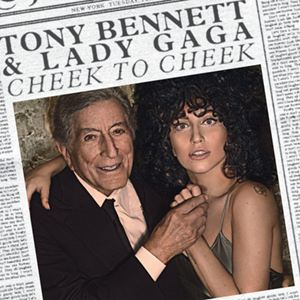
Tony Bennett & Lady Gaga: Cheek To Cheek

25 Jan

Tony_Bennett_and_Lady_Gaga_-_Cheek_to_Cheek

There’s a lot of promise in an album like this. The old American standards are often fantastic and the combination of an old stalwart like Tony Bennett and a pop star like Lady Gaga getting together to record an album of just these tunes seems like an excellent idea. It probably even is an excellent idea, but this is not the manifestation it deserves.

Cheek To Cheek manages to neither revitalize the standards with a modern outlook nor to recapture any of their past glory. Show tunes require confidence, personality and chemistry and while the first is present in spades, the other two are only ever briefly seen. The two trip over each other constantly and both alternate between hammy and formulaic. Listen to Ella Fitzgerald and Louis Armstrong’s version of the title track and you can hear a warmth and humanity entirely lacking in this album.

It’s not all lows though, the backing band does a very solid job. They lay down an upbeat, joyful jazz that is a pleasure to listen to. Also, both Lady Gaga and, surprisingly given his age, Tony Bennett are technically proficient throughout. Both of them still have great voices and are willing to draw upon them. Lady Gaga in particular has a wonderful solo in “Lush Life” that most singers, even renowned ones from the song’s own era, would struggle with.

All told, this is an acceptable album, but the standards are such for a reason and have all been played enough times to have versions that are undeniably classic. With this material, merely acceptable is just not enough.

@murthynikhil

David Bowie: Blackstar

18 Jan

Blackstar_album_cover

There’s a famous essay by Roland Barthes about separating an author from his work and on the futility of using the author’s identity to try to derive a single definitive meaning for a text. With Bowie, the persona was always a facet of the work, and an important one, but one that only furthered its enigma. Where some artists seem slaves to such direct analysis of their work, Bowie transcended it.

Bowie’s influence is everywhere, from the obvious trends in music and fashion to the art styles of movies, comics and video games, to even his direct influence in contemporary culture and mainstream acceptance of once-othered groups. Time and time again, Bowie pushed at the boundaries of what human culture had achieved. The world today is a far better place due to his work. His loss is tragic and heartbreaking, but his work and is influence are immortal.

Blackstar, his twenty-fifth and final album, is new territory even for him. This is a jazz album, not rock, and an excellent one at that. The music is challenging and more than deep enough to reward you for it. The variations laid down by his band are deep and interesting. The lyrics are cryptic, but highly evocative. The experience as a whole is direct and unsettling, but distinctly beautiful. His use of the form is deft and innovative, bringing in rock and spacey-electronica into a rich jazz foundation to create a work as claustrophobic as a dungeon and as difficult to escape.

His inversions of the form are fascinating. The sax solo of “Lazarus” centers the album. The slow, mournful chant of “I Can’t Give Everything Away” is cleverly undercut by the whimsical jazz strains underneath it and the guitar solo that provides much of the real variation in the song. The clear horn opening of “Dollar Days” shifts smoothly into a traditional rock ballad. This is an intelligent album and courageous enough to revel in it.

Excellent, challenging and novel, Blackstar is the swan song Bowie’s career deserves. I highly recommend it.

@murthynikhil

Kamasi Washington: The Epic

27 Dec

Kamasi Mike

I’m just so happy that this album exists. A jazz album in 2015 that is so deeply in love with the post-bebop era of jazz is an unexpected treat. Getting one of this quality just seems unfair.

Above everything else, Kamasi Washington plays a mean sax. Listen to just how impassioned “Final Thought” is and you could be forgiven for thinking that you were back in one of the peak eras of jazz. Similarly, “Change of the Guard” evokes Coltrane with his classic quartet. This is no throwback album though. Ideas enter it from all over the place, both within the history of jazz and without. This is an epic of an album at just under 3 hours and it makes good use of all of it.

It is at its best when it relaxes into hard bop though. The rhythm section lays down backing that manages to be intricate without overpowering the rest of the sound and their solos are fantastic. The bass solo on “The Magnificent 7” and the piano on “Leroy and Lanisha” are both excellent, skillfully setting a refrain and moving everywhere in the space they contain. Similarly, the dueling horns of the energetic “Re Run Home” dance around a central conceit in the greatest of jazz traditions.

From its first moment to its final one some three hours later, The Epic is very simply a jazz classic. I highly recommend it.

@murthynikhil

Five Fresh Songs for Your Feel-Good Sunday Morning Fix

13 Apr

We have already expressed our deep and undying love for Saturday mornings soundtracked to new music, so here’s a companion piece to that. This list is about those magical hours of optimism on a Sunday morning, right after a Saturday night party and right before the weekend rapidly fades away. And what better way to make the feeling last than with five fresh new songs? So, without further ado, here’s our suggestions for a soundtrack to your feel-good Sunday morning. And we promise it’ll only take 22 minutes and 6 seconds of your life to listen through it. Go on, then.

“Alley Cats” by Madboy/Mink

Madboy/Mink is a jazz-dance outfit from Bombay that has been blowing our minds since their debut EP All Ball dropped on SoundCloud last week. The group comprises the young and talented pair of Saba Azad (“Mink”) and Imaad Shah (“Madboy”). Azad has the perfect voice for electro funk/jazz: velvety, eccentric and deliciously retro at the same time. She’s worked with the legendary Blackstratblues before (source: Rolling Stone), and she seem to carry along that band’s nonchalant sense of joy in music with her. Shah has already created quite a following for himself as Madboy, courtesy a raw talent for musical arrangement (see: “Martinis in the dark”). He’s also otherwise known for being Naseeruddin Shah’s son (!).

Azad and Shah.

Azad and Shah.

“Alley Cats” is about snazzy, bowling cats with snazzy bowler hats, and the fun doesn’t stop there. The duo tells the silliest tale – of fish-stealing, rat-chasing cool cats – with such verve that you just can’t help feeling great just listening to the track. Madboy/Mink boasts at the end of the song, “Yes, this band is pretty tight/We’re the kings and they’re the rats,” and they may really be onto something there.

“Dont Stop” by Tankbund

The first minute of “Dont Stop” features lead singer Ritwik De vocalizing what could be the soundtrack to someone’s unsaid feelings on a rainy, lonely Saturday evening. His gauzy, warm voice lulls you into a false sense of introspection, so that when the song suddenly breaks into six-beats-a-second, you tend to feel just a touch of disorientation. De’s soulful, deep voice syncs perfectly with the stop-start, almost trip-hop electronica in the background. His plaintive request (“No, don’t stop”), stretched over several heartwrenching seconds, is persuasive, emotive and entirely lovely. If you loved this track, be sure to check out “Tres Bien”, also from their debut EP Inside. We’re definitely listening to more of this New Delhi band.

“Good to You feat. Siddharth Basrur” by Sandunes

Sandunes, aka Sanaya Ardeshir, is one of the most intriguing artists in the country. Her music is an eclectic confluence of influences: there’s a lot of Air and Zero 7 in there, with playful hint of old-school jazz thrown in for good measure. “Good to You”, featuring Goddess Gagged lead singer Siddharth Basrur, seems to be a post-break-up ode of promises and thinly-veiled remorse, backed by Ardeshir’s top-class production sensibilities.

Sanaya Ardeshir

Sanaya Ardeshir

“Good to You” breaks and crests and pulses at exactly the right places for exactly the right amount of time. There’s a point in the song, about two and a half minutes in, when Basrur’s repeated “I’ll be good to you” precisely syncs with splashes of woozy electronica, that especially blew our minds. Listen to it on a Sunday morning, and we promise it’ll leave you feeling chill the whole day. What more could you want?

“Fire” by Machli

Bangalore-based electro-acoustic outfit Machli is made up of design students who, true to stereotype, have an uncanny sense of aesthetics. “Fire” is a lush, ambient tapestry carried by Sandhya Visvanathan’s despondent, lilting voice and Aniruddh Shivakumar Menon’s percussive talents. The song is addictive and just perfect for half-sleepy Sunday mornings. Also check out their ‘Tigerbalm Mix’ (found here) for a more dreamlike, trip-hop take on the song.

“Epileptic” by 30ton Capacity

Bangalore has seen its fair share of talented post-rock bands lately: Space Behind the Yellow Room and Until We Last come to mind. With their debut EP Season One Episode Nil (you know, like S1E00 like at the beginning of a series), post-rock-veering-on-prog band 30ton Capacity joins the growing list. Our favorite track from the EP is “Epileptic”. The track starts with a quirky, Radiohead-like spoken-word sample (“Try to relax your toes, Gloria. Feel them tingle. Relax them one by one…”) that immediately sets the young band apart. Robin Srivastava’s shrouded vocals create a beautiful, delicate wall (curtain?) of sound, complemented ably by drummer Sumanth. We’ll definitely be listening to this band a lot more!

Here’s the full playlist for your easy listening pleasure.

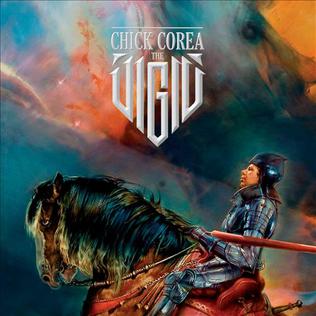
Chick Corea: The Vigil

31 Mar

Chick Corea is one of the few giants still left in jazz, and The Vigil shows no signs of him slowing down. It’s been quite a while since his time on In A Silent Way or Bitches’ Brew or his time with Return to Forever, but even at 72, he can still put out an exceptional jazz album.

The Vigil is his first recorded album with his new group after years of performing live together, and their time together shows. Intricate solos intertwine effortlessly, especially in the live “Hot House”. The music remains clever after many listens and manages to maintain that intelligence over an eclectic and varied track list. Fusion, modal and Latin and Spanish tinged jazz all find their place and mesh excellently over the course of the album. The entire album benefits greatly from the touches of Spain. “Pledge For Peace” in particular is very Olé Coltrane-esque.

A few missteps keep this from truly being a masterpiece. The vocals in Outside of Space mar an otherwise excellent song and the album is a touch predictable in places. Nevertheless, this is an excellent jazz album and showcases a highly talented group from whom I hope more is soon to come.

@murthynikhil

Derrick Hodge: Live Today

11 Nov

Live Today, Derrick Hodge’s debut album for Blue Note, is an extraordinary contemporary jazz album. It is not only eclectic, with roots ranging from Herbie Hancock to prog rock to neo-soul and hip-hop. This is that rare album that not only provides something for everyone, but provides something excellent for everyone.

The variety makes it very hard to pick out a specific highlight, as there is something that appeals to every taste and they are all impressively strong. If you are into progressive rock or the works of Bela Fleck, then Message of Hope will be more than you could have hoped for. Derrick Hodge keeps a memorable melody going throughout accompanied by the drums and keys and then the whole thing breaks down into what is essentially rock. The titular song Live Today shows Common off quite well to make some classic jazz-rap. Dances With Ancestors is a sprawling, brilliant ballad and there is even some straight-up folk-pop with Holding On To You.

This is a contradiction of an album, dense yet approachable, diverse yet focused, soothing yet provocative. This is the album you recommend to a friend to get him into jazz and the album you pull up to counter claims that jazz died in the sixties. This is the album you should recommend to everyone.

Milt Jackson and John Coltrane: Bags and Trane

30 Jun

Bags and Trane features, as the name may suggest, vibraphonist Milt Jackson and saxophonist John Coltrane in their only collaborative record. Together with Hank Jones on piano, Paul Chambers on bass and Connie Kay on drums, this is a classic hard bop album and showcases both leading musicians to great effect.

One of the defining characteristics of this album is the great respect Bags and Trane show each other. Their solos flow smoothly into each other and their conversations, especially the one in the composition Bags and Trane, are perfect. Despite the quality of their rhythm section, their solos are the thankfully omnipresent highlight of the album. Take for instance the beginning of Late, Late Blues. The bass perfectly sets the base of the song which Milt Jackson then follows and quickly expands into a full blown solo played over the backing of the rhythm. That passage is jazz in its purest form.

The name aside, the album was done with Milt Jackson as session leader and all of the original compositions are his. The result is more relaxed than much of the music John Coltrane was putting out at the time, but that is no way takes away from the quality. This is very clean bebop and though it may be unhurried, it is brilliant.

This is an album that justifies the reputation of the artists who made it and deserves much more notice than it gets. This is an immaculate album, and while it may not be quite the masterpiece that its contemporaries Giant Steps or My Favorite Things are, it is a classic that any jazz fan should be proud to own.

Wayne Shorter: Without A Net

18 Mar

Iconic jazz saxophonist Wayne Shorter has returned to Blue Note Records this year to release Without A Net. His first album with the label as bandleader in 43 years shows no trace of age and he is as dextrous and intelligent as ever.

The album is mostly from the Wayne Shorter Quartet’s 2011 Europe tour and as a result is a bit minimalistic. Only rarely are more than two instruments noticeable at once, but that merely gives each one space to shine. Wayne Shorter himself burns through the entire album. His lyricism is unparallelled here and his virtuosity is as undeniable as it ever was. The saxophone has had its fair share of masters and at eighty, Wayne Shorter can still stand with pride amongst them.

The album itself is consistently excellent. Plaza Real, for instance, is simply incredible. It goes all over the place and takes you along emotionally. However, although the album is extremely listenable, it is also quite complex. Unless you have some familiarity with jazz, I am afraid that this album may seem to mostly be noise. It is far from being John Coltrane’s Interstellar Space or Sun Ra’s Space Is The Place, but nevertheless is not for beginners (who should however check out our earlier article on albums to start jazz with). This is an extremely rewarding album though, and no matter your level of jazz knowledge, you cannot help but admire the technical proficiency of the quartet.

Wayne Shorter has delivered an album here that in every way lives up to the ones that came before. Hearing this, one can almost forget that it is no longer 1969. This may not be quite up to the true jazz classics, of which Wayne Shorter certainly has his fair share, this is still a great jazz album by the standard of any time.

– Nikhil

Top Five Jazz Records For Beginners

25 Nov

So, let’s imagine you have a friend who loves jazz, and just to make this vision a little more believable, let us make said friend 6’2″ and a little bit on the thin side. Now, you want to impress this fascinating young man with your knowledge of his loved genre of music, but you do not know where to start. I mean, you know what an untamed jungle jazz is when compared to your safe pop and rock, and yet, you know that you want to explore a little. You dream of running your fingers up and down a long, brass saxophone, or possibly putting your lips to a trumpet and giving it a blow and suddenly your guitar feels awfully small compared to the double bass next to it. Well, then my friend, you need help. Instead, because the world is not fair, what you will get is the Top Five Music Top Five Jazz Records For Beginners.

These five records are all not only jazz classics, but are also extremely accessible. These ones have been picked so that no matter what your background is, you can pick them up and most likely enjoy them. Jazz is an extremely rewarding genre of music if often a little challenging and getting a good start is essentially to enjoying it.

Ella and Louis – Ella Fitzgerald and Louis Armstrong

Louis Armstrong is undoubtedly the biggest star jazz has ever produced. He alone is the most responsible for bringing jazz to the public ear and pretty much every jazz musician after him has been directly influenced by his music. He is to jazz what The Beatles is to rock. Not content with mastery of the trumpet, he went on to invent the art of scat from which we have his best known hit, What A Wonderful World.

Ella Fitzgerald is the greatest singer there has ever been. You may prop up people like Aretha Franklin and Billy Holiday, or even modern day singers like Janelle Monae, and undoubtedly all their voices are certainly outstanding, but there has never been anyone to touch Ella Fitzgerald.

Together, the two of them make an excellent team in this album. There are touches of Satchmo’s trumpet, but the centerpiece is the two of them singing jazz standards. All in all, this is deservedly a jazz classic.

Try Moonlight in Vermont and They Can’t Take That Away From Me to get a feel of this album. Of the two, I prefer Moonlight in Vermont, even without the lyrics being entirely in haiku.

Takin’ Off – Herbie Hancock

Herbie Hancock is one of the more interesting people in jazz. Despite groundings in hard bop and a long stint under Miles Davis, Herbie Hancock has been about as much funk as jazz and a little bit of everything else on the side. He’s ranged all the way from the proto-industrial rockit to the Grammy award winning jazz take on Joni Mitchell River: The Joni Letters. Takin’ Off is his debut as a bandleader and contains what is possibly his signature tune, Watermelon Man. Try Three Bags Full and see if you like it.

Getz/Gilberto – Stan Getz, Joao Gilberto

This is one of only two jazz albums ever to win the Grammy for best album, one of the best-selling jazz albums of all time and nothing at all like any of the other albums on this list. This album brought together guitarist/singer João Gilberto and composer/pianist Antonio Carlos Jobim with American Saxophonist Stan Getz to result in the finest moment Bossa Nova, the Brazilian mixture of jazz and samba, has ever seen. This is the rare album that is not only critically acclaimed but is popular enough to spark its own craze. Doralice alone is of the class of music that will never leave your head, but The Girl From Ipanema is just perfect.

Time Out – Dave Brubeck

Dave Brubeck took a trip through Eurasia, and decided to make this album as an experiment in the musical style he saw there. His publisher gave it the green light on the condition that he would first record a more conventional album, Gone With The Wind. While the latter is now considered one of his lesser efforts, Time Out is one of the definitive Cool Jazz albums. Blue Rondo a La Turk‘s shifting time signatures are amusing enough to carry an entire album, but the top forty hit Take Five is very hard to beat.

Kind of Blue – Miles Davis

Miles Davis is one of the giants of music, one of those people who stand so tall over an art form that no one who follows can help but be influenced in some way by his work. For Kind of Blue, he had with him his ensemble sextet of Bill Evans on piano, Jimmy Cobb on drums, Paul Chambers on bass and both Cannonball Adderley and the incomparable John Coltrane on saxophone. This is the kind of album you define music by.

-Nikhil

John Coltrane: Olé Coltrane

12 Aug

Image

Coltrane’s final album under Atlantic, the studio where My Favorite Things and Giant Steps were recorded, Olé Coltrane is an often-overlooked album, which while not as impossibly good as, say A Love Supreme, is still an undeniable masterpiece.

The entire album stretches for four tracks; Olé, Dahomey Dance, Aisha and the bonus track To Her Ladyship. “Olé” is excellent, holding an energetic performance from the rhythm section over the entire eighteen minutes. There are plenty of Spanish sounds from the horn, rather reminiscent of the seminal Sketches of Spain, which was recorded a year before by Coltrane’s old bandleader Miles Davis. Eric Dolphy shines on this track with good playing throughout and a standout solo midway through. Coltrane’s playing in this album is everything that is signature about him. His frantic yet meticulously placed notes seem as though they are the saxophonist himself telling you what he feels you should know, and although it cannot flow fast enough, every word falls perfectly into place. Then, just as you are reaching your peak, he slides you back into the chorus. This crosses music, this crosses conversation, this is magic.

From here, we go to the much less challenging “Dahomey Dance”, which nevertheless starts excellently. The rhythm here keeps you moving, holding up to the dance music it derives from. An interesting base line sneaks around the quite good, if not quite inspired horn playing that holds the foreground.

“Aisha” though is just beautiful. There is no other word for music like this or Charles Mingus’ “Goodbye Pork Pie Hat“. Every single note is exactly where it should be. Nothing is out of place. Nothing is superfluous. Everything is perfect.

The bonus track of “To Her Ladyship” is a strong inclusion, featuring an excellent performance from Dolphy on the flute again and a very solid conclusion. However, the rhythm often feels dissonant, and the track as a whole is certainly the weakest of the album.

Verdict: Should you get this album? The answer is always yes, but if you are new to Jazz, then Davis’s Sketches of Spain would make a much easier starting point and if you are new to Coltrane, then A Love Supreme, My Favorite Things and Giant Steps are all better albums, of which My Favorite Things is the most approachable. However, even if it takes you some time to get to this album, once you do, it will reward you immensely.

– Nikhil